
Policy continuity, legitimacy, and accountability signals across internet governance institutions.
Governance
Governance
Internet governance intelligence tracks institutions, policy processes, standards activity, registry operations, accountability disputes, and implementation signals that affect internet infrastructure. BTW.
RIR WatchdogCase FileNumber Resource SocietyICANNIETFHistory of InternetNOGs

RIR Watchdog, Case File, NRS, ICANN, IETF, History of Internet, and NOG sessions.
Coverage prioritizes implementation evidence and institutional behavior over declarative positions.
Latest Coverage
Latest from Governance
7,367 articles
CASE FILE
Netnod's Three Service Lines and the Number That Cannot Be Split
Netnod publishes a peering fabric, a root-server role and a time service. The root system's operators publish one number that can be checked — 2,047 instances — and it cannot be attributed to any of them. Everything else here comes from the operator's own front page, captured on…

CASE FILE
Nominet's member revolt proved a remedy, not a mandate
Nominet's own documents record a member-requisitioned meeting, a certified vote and directors leaving afterwards. They do not, on the record I could reach, establish what members were entitled to do — and that gap is the governance story.
Story
The Gateway That Points Back: A DHCP Draft Adds a Legacy-Client Escape Hatch
Version 03 of an individual Internet-Draft adds a conditional DHCPv4 Router Option for clients that require one: the host's own address or 127.0.0.1. The author says this should keep non-local IPv4 traffic on the host, but no published test yet shows how operating systems handle…

CASE FILE
The small print that decides where France’s small radios can go
France is proposing new conditions for devices ranging from RFID readers to veterinary implants. The frequency numbers attract attention. The columns beside them decide which equipment may use those frequencies, how it must behave and, sometimes, whether it can leave the…

CASE FILE
What changes at 9pm? Not the word, but the audience
Ofcom is giving potentially offensive language separate ratings before and after television's watershed. The new guide makes a familiar editorial dilemma easier to see. It does not make the decision for the broadcaster.

IETF
Someone still has to sign: the company behind the IETF
Internet standards emerge from technical argument. Hotel contracts, staff salaries and intellectual-property consents need a different kind of authority. IETF Administration LLC provides it—and its published decisions reveal more about that job than an organisation chart does.

CASE FILE
The abuse report arrived. Did it reach anyone who could act?
APNIC already requires working, monitored abuse contacts. A stalled proposal asks what happens when the address holder and the network operator are different organisations—and exposes how hard it is to prove a handoff without policing the incident itself.

CASE FILE
At ITU, the future is 6G. For others, it is getting connected at all
One set of ITU election questions looks towards 6G and space; another asks about people still shut out of digital opportunities. Candidates have a thousand words to explain their plans by 23 October. It is a small chance to hear something more useful than a promise of progress.

IETF
When monitoring becomes another burden on the network
Network managers do not always need another complete download. Two workstreams now share a December submission target: improving YANG-Push and making large lists easier to retrieve in pieces.

ICANN
ICANN moved the meeting. The public still cannot see the spending limit.
The destination changed from Muscat to Bali; the dates stayed put. The decision explains who approved the move, but leaves two different bills difficult to compare: ICANN's contracts and entities' journeys.

Story
At RIPE 93, a yellow lanyard cannot answer every recording question
A badge ribbon can tell a photographer to leave you out of the picture. Smart glasses pose a less visible question: what is being captured, and has the person opposite agreed?
CASE FILE
Rogers has a four-hour outage test to show. What did it prove?
A July 2026 filing changes the story of Rogers' recovery from its national outage. There is a dated exercise, and a reported success. The harder question lies inside the parts of the report the public can read.
CASE FILE
China Tower has new customers. Its profits still owe a debt to old towers
Delivery riders and forest-monitoring services are expanding the tower owner's business. But a jump in profit owes much to a quieter change: old assets reaching the end of their depreciation.
CASE FILE
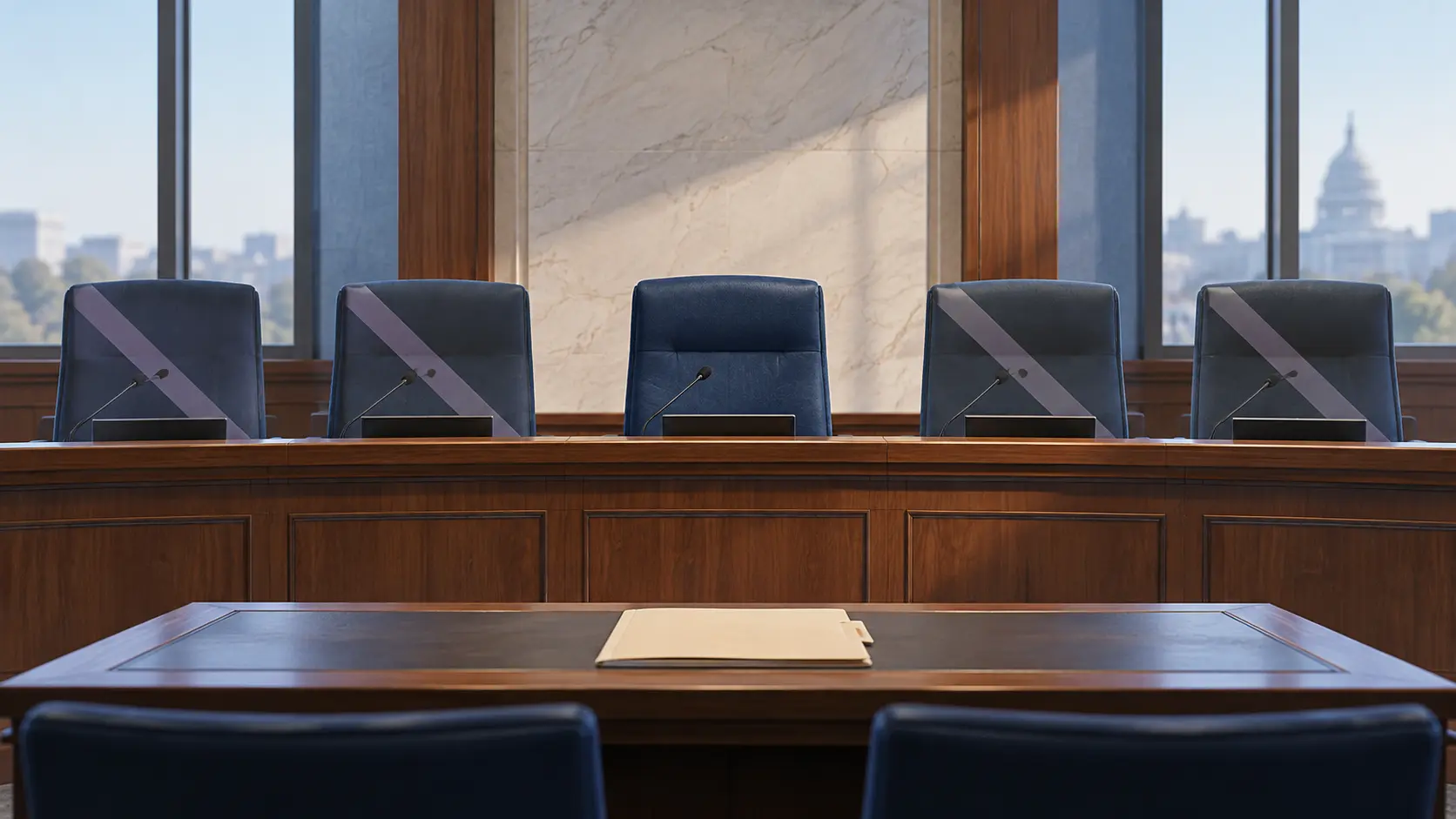
When one commissioner can speak for the SEC
An empty seat and a commissioner barred from one case are different problems. A new SEC rule brings them closer together—and a petition asks who will be able to check the result.

CASE FILE
The company wants a faster vote. Its shareholders may need the time
Getting a deal approved sooner is an attractive promise. The SEC's proposed shorter timetable raises a less comfortable question: can the people expected to vote finish their preparations just as quickly?

Story
AFRINIC needs a host. The host needs to know how many days.
Nine meeting rooms, a large plenary hall, several connectivity sponsors: AFRINIC is quite specific about what hosting entails. Yet its invitation describes a six-day stand-alone meeting and gives it a three-day date window. That is a small gap on a webpage and a consequential one…

CASE FILE
The conviction went. Then the FCA ban followed.
The £6.5 million penalty was never imposed. The restriction on Christian Bittar's working life stayed for eight years. Now that has gone too, as the FCA withdraws four bans after the convictions behind them were overturned.

CASE FILE
Moving clouds is easier when the permissions come too
The CMA sees progress on cheaper cloud exits. Its next problem is less visible: moving an application without changing what its users are allowed to do.

ICANN
The .org sale stopped at the operating contract
The proposed sale of the .org operator raised a question for everyone relying on its promises: who could make a new owner keep them? The answer led to a contract, not just a buyer.

Story
AFRINIC’s IXP Reserve Debate Needs a Growth Plan
At AFRINIC-37, the question of whether an Internet exchange reserve should be larger met a more operational question: how can a growing exchange add address space without being pushed into another long renumbering? The minutes offer one operator’s Johannesburg example, not a…
Session Map
Governance Branch
RIR Watchdog
Five regional sessions tracking allocation policy, board legitimacy, and institutional continuity.
Open RIR WatchdogCase File
Long-cycle governance dossiers with legal, election, and institutional stress analysis.
Open Case FileNumber Resource Society
Membership, charter, and resource-governance intelligence from the NRS ecosystem.
Open NRS SessionICANN
DNS coordination, accountability frameworks, and global multi-stakeholder process dynamics.
Open ICANN SessionIETF
Protocol standardization trajectory and interoperability risk under fragmented policy conditions.
Open IETF SessionHistory of Internet
Long-cycle infrastructure history used for governance interpretation and structural forecasting.
Open History SessionNOGs
Operator-level implementation intelligence from APRICOT plus regional and national NOG ecosystems.
Open NOGs Session