
Policy continuity, legitimacy, and accountability signals across internet governance institutions.
Governance
Governance
Internet governance intelligence tracks institutions, policy processes, standards activity, registry operations, accountability disputes, and implementation signals that affect internet infrastructure. BTW.
RIR WatchdogCase FileNumber Resource SocietyICANNIETFHistory of InternetNOGs

RIR Watchdog, Case File, NRS, ICANN, IETF, History of Internet, and NOG sessions.
Coverage prioritizes implementation evidence and institutional behavior over declarative positions.
Latest Coverage
Latest from Governance
7,547 articles

History
The Yogurt Needed a Passport
Open Food Facts wanted to catalogue the world's groceries. Its early filing system gave each product just one language address. Getting the database across borders meant changing the shelves—and finding people to fill them.

ICANN
Helsinki is retiring its dot. Nobody asked for a new keeper
The city wants to close its namesake top-level domain. ICANN has decided against finding a successor, after a public comment window drew no responses.

History
Paying Cash? The Credit-Card Box Can Mind Its Business.
An online form that demands a card expiry date from someone paying cash has mistaken a box on the screen for a useful question. W3C's XForms 1.0, published in 2003, gave form authors a way to put the rule behind the question in the data model. When the answer changed, the…

History
The Upload Form That Hid the Upload Form
Wikimedia Commons wanted people to donate pictures. Its old upload page greeted them with enough instructions to push the form out of sight. A quieter interface required a new place for unfinished work.

History
The Link Moved Out of the Page. Then Someone Had to Find It.
The familiar hyperlink lives where the reader clicks it. XLink 1.0, issued by W3C in 2001, let an XML document hold connections among several resources, even when the documents being connected were left untouched. It gave links a separate home and the reader's software a new…

Story
Publishing ASPA Is the Easy Part. Getting It Into a Router Is the Plot.
LACNIC has put ASPA creation in MiLACNIC and validation in FORT. The interesting handoff comes next: a valid object still has to travel through a validator, a router protocol and a local routing policy before it can change a decision.

CASE FILE
The cable is fixed. The number is not.
Hawaiki has carried commercial traffic across the Pacific since July 2018 on the same three fibre pairs, over the same roughly 15,000 kilometres, between the same five landing points. Its published design capacity, depending on which document you open, is either 43.8 Tbps or 67…

History
Napoleon, Dumas and Dior Walk Onto a Homepage
Europeana offered a way into Europe's collections through other people's interests. Its early search suggestions also brought a less glamorous museum job onto the web: minding what went on display.

History
A Fake Website Needed a Real Reservation: RFC 2606
The documentation said to visit a pretend address. Then someone copied the example into a program. June 1999's RFC 2606 treated that ordinary editorial accident as a naming problem: give experiments and examples their own reserved places before a fictional destination meets a…

History
The Chocolate Arrived. The Bandwidth Bill Kept Coming.
MusicBrainz's supporters sent eighteen chocolate bars in 2006. Its more consequential gifts bought server capacity, a modest paycheck and a little predictability for the people keeping a shared music catalogue alive.

CASE FILE
One Bad BGP UPDATE. Four Possible Fates.
BGP’s old emergency response had the charm of a fire alarm with one button: a malformed UPDATE could bring down the whole session. Draft -03 of the revised BGP-4 specification puts four levels of response into the base text, from ending a peering to dropping one harmless…

History
W3C Named the Cookie “obnoxious-cookie.” The Browser Needed a Map.
A browser in 2002 could be asked to compare a site's privacy promises with a visitor's preferences. First it had to find the right promise. P3P 1.0 supplied a map from pages and cookies to policies, complete with route markers, exceptions and an unusually honest specimen cookie.

History
She Came to Proofread. Then the Beginners Arrived.
Distributed Proofreaders gave volunteers a manageable unit of work: one page. Suzanne Shell's account of joining in 2002 shows how quickly those pages could move—and how much teaching, preparation and book finishing they could set in motion.
CASE FILE
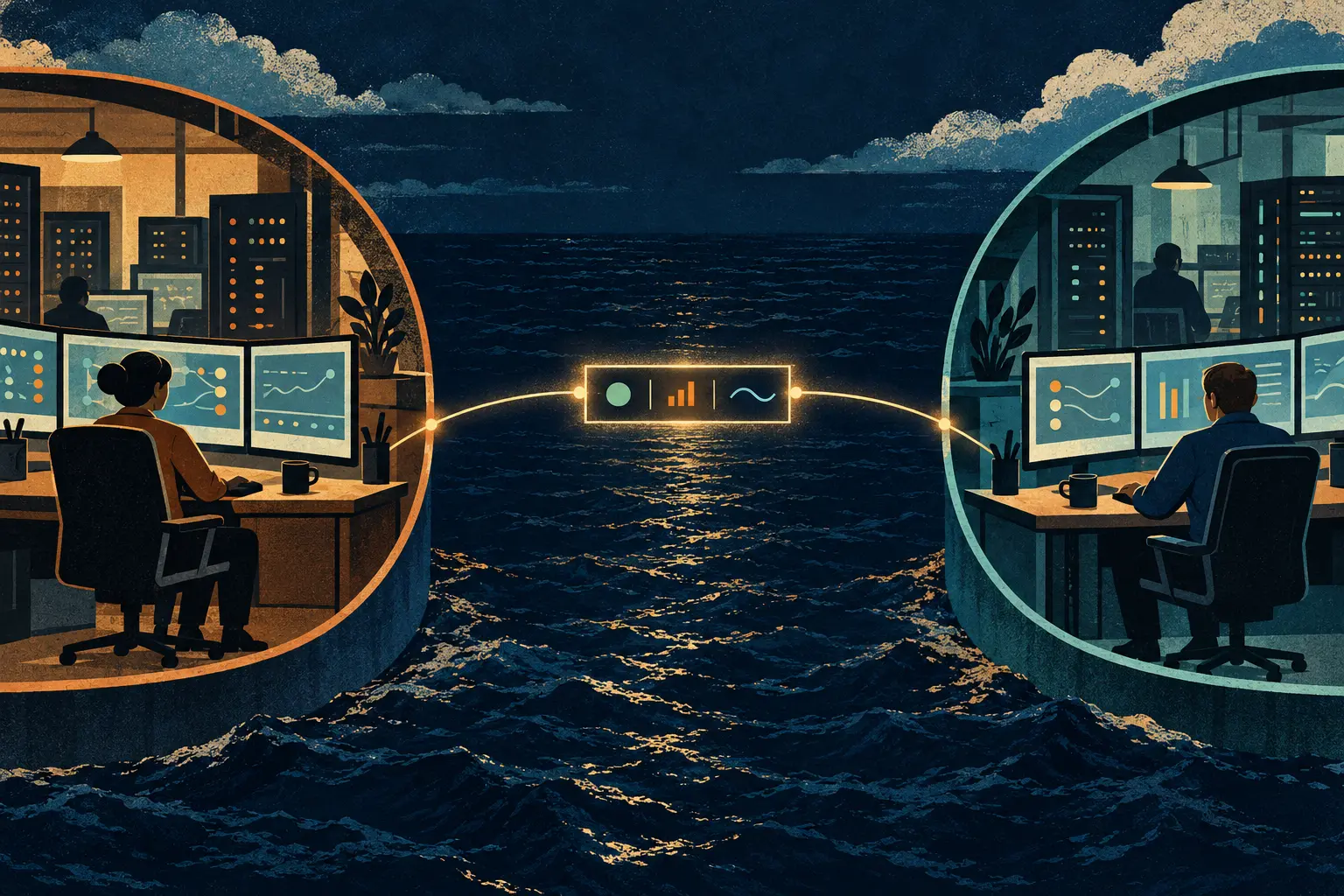
Five Minutes Across the Atlantic. Who Gets to See What?
At TNC26, an Internet2 agent and a SURF agent exchanged diagnostics about an Atlantic circuit in roughly five minutes. The useful breakthrough is the narrow door between their networks.

History
The Web Hired a Librarian. First Question: “Creator of What?”
By 1999, the Web had plenty of pages and a growing problem with their labels. A title here, an author there, a hundred private ideas of what “creator” meant. RDF brought a catalog card that software could exchange. Its cleverest feature was the instruction to bring the dictionary…

ICANN
ICANN’s seat planners changed two of their own chairs
In September, one member stepped aside during a leadership discussion to avoid a possible conflict. October brought two new voices to that same committee.

ICANN
ICANN gave its budget chair a key to the strategy room
The strategy chair already sits in Finance. A February argument over who handles annual priorities gives their new seating plan a job to do.

History
Low Tide in the Printing Budget
In 1995, NOAA invited private printers to take over the job of putting its tide tables on paper. A CD, a modem and a Mosaic homepage would offer three quite different ways to find out what the water would do next.

History
The XML Stayed Put. The Shop Window Changed Overnight.
A publisher could store the facts in one XML document and still want a different page tomorrow: fewer items, a new order, a fresh frame. XSLT 1.0 gave that publisher a language for making a separate result from the source. The warehouse kept its crates. The window dresser got a…
Story
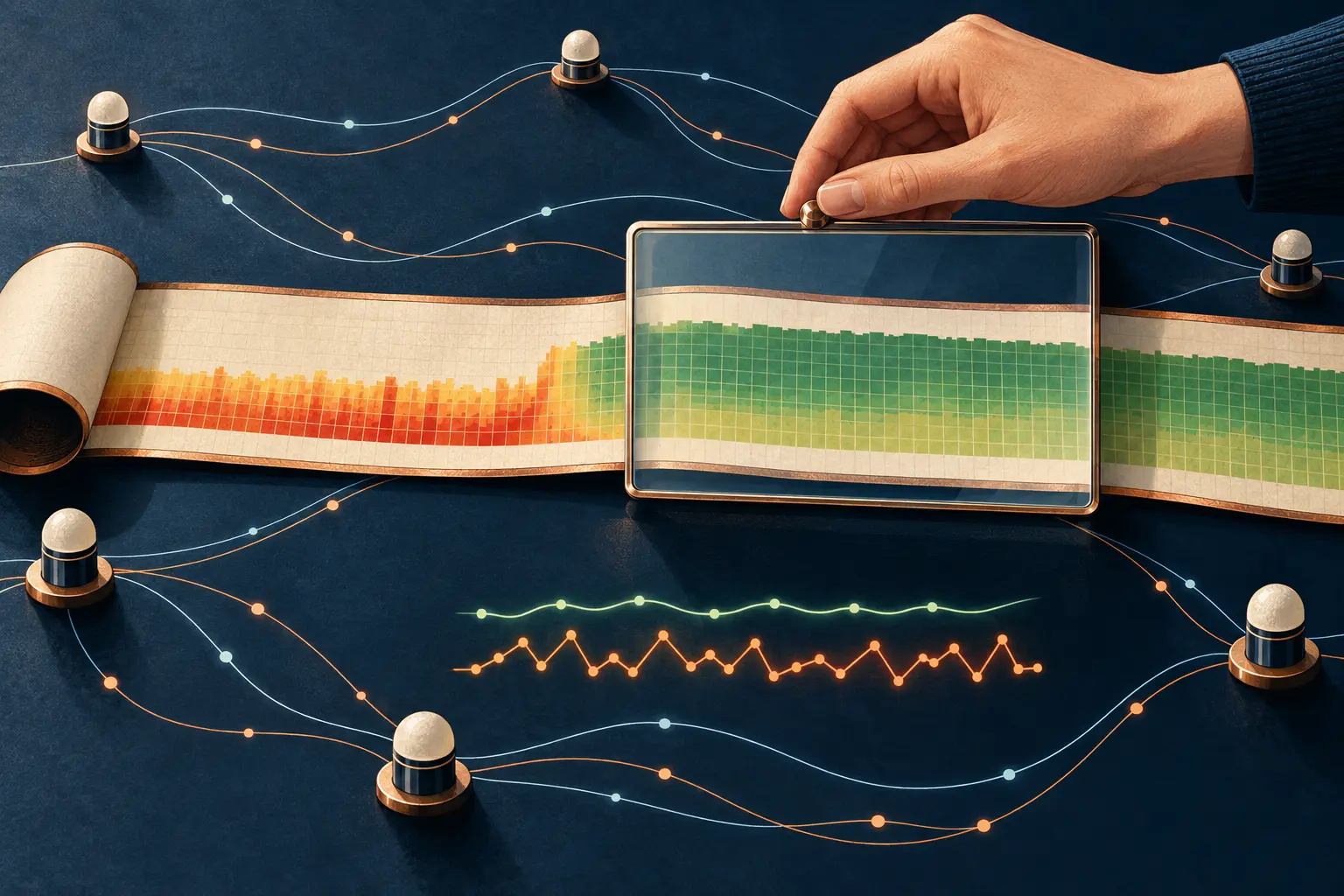
The RIPE Atlas Heat Map Can Turn an Outage Green. Start the Clock Earlier.
RIPE Atlas added a useful view of anchor-to-anchor delay and loss. Its green tiles answer a narrower question than most readers expect: how much slower is this bucket than the fastest one in the window you chose?
Session Map
Governance Branch
RIR Watchdog
Five regional sessions tracking allocation policy, board legitimacy, and institutional continuity.
Open RIR WatchdogCase File
Long-cycle governance dossiers with legal, election, and institutional stress analysis.
Open Case FileNumber Resource Society
Membership, charter, and resource-governance intelligence from the NRS ecosystem.
Open NRS SessionICANN
DNS coordination, accountability frameworks, and global multi-stakeholder process dynamics.
Open ICANN SessionIETF
Protocol standardization trajectory and interoperability risk under fragmented policy conditions.
Open IETF SessionHistory of Internet
Long-cycle infrastructure history used for governance interpretation and structural forecasting.
Open History SessionNOGs
Operator-level implementation intelligence from APRICOT plus regional and national NOG ecosystems.
Open NOGs Session