
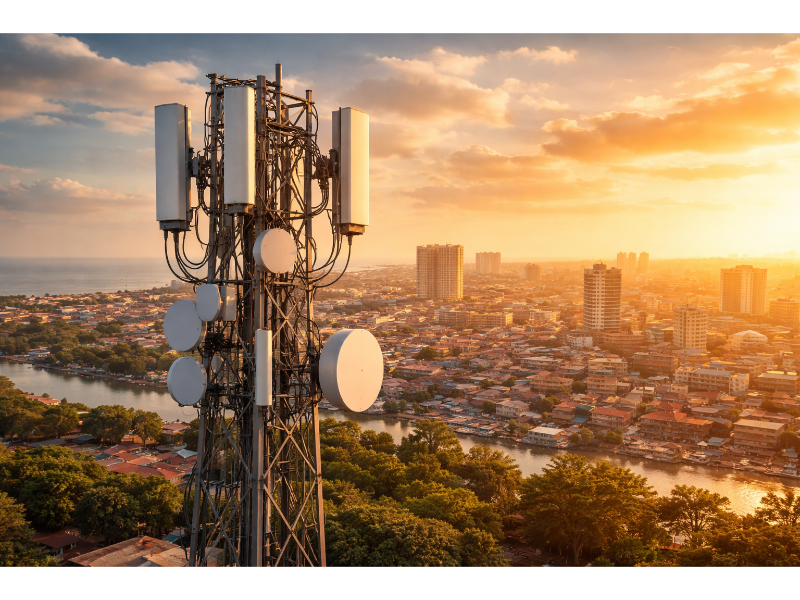
Ghana’s shared 5G network was launched in March 2026, offering faster, more reliable mobile data services. Telecom operators express concerns about the financial viability and sustainability of the shared infrastructure model. What happened: Shared 5G network launches in Ghana In March 2026, Ghana officially launched its first shared 5G network. This innovative network allows multiple telecom providers to use the same infrastructure, which reduces deployment costs and improves coverage.
By sharing resources, the goal is to extend fast mobile connectivity, particularly to underserved areas, including rural regions that have lacked reliable service. While the launch is a major step towards improving connectivity, concerns have emerged about the sustainability of the shared model. Telecom operators have expressed worries over the financial costs of maintaining and upgrading the infrastructure, which could become a burden as service demand rises. As 5G usage continues to grow, operators question whether the shared model can meet increasing demand without sacrificing performance.
Despite these challenges, the shared network marks a significant milestone in Ghana’s digital infrastructure, with hopes it will stimulate economic growth and technological innovation across the nation. Also read: Pan Africa Telecom: expanding connectivity across Africa Also read: The impact of election delays on IPv6 adoption in Africa Why it’s important Ghana’s shared 5G network represents a critical moment in the country’s digital transformation. It promises to provide faster internet speeds and improved coverage for both urban and rural areas.
This initiative could stimulate economic growth, particularly by enabling businesses to thrive in a digitally connected environment. It also holds the potential to boost digital inclusion, as more citizens can access high-speed internet at affordable rates. On a broader scale, the shared model positions Ghana as a leader in Africa’s telecom industry. As one of the first nations on the continent to implement this approach, Ghana sets a precedent for other countries with similar infrastructure challenges. If successful, the project could serve as a public-source context for nations looking to deploy 5G affordably.
However, the model’s financial viability remains uncertain. Past attempts in countries like Kenya and South Africa have faced difficulties related to funding and scalability. How Ghana navigates these challenges will determine whether this shared network can become a sustainable solution for digital growth across Africa.