
Published
2026-07-03
2026-07-03 intelligence examines articles connected by the same published, giving readers a fuller route through public reporting, evidence quality, market context, and infrastructure consequence. The page links the subject to relevant organisations, people, regions, signal types, governance exposure, operating dependencies, service-continuity pressure, customer risk, and capital or regulatory implications rather than presenting a short list of matching articles. It explains what the classification covers, why the pattern matters, which public sources support the recurring signal, and how readers should compare developments as the evidence base changes. Operators, investors, customers, analysts, and policy readers can use the page to understand where a theme is concentrated, which actors may be exposed, and which follow-up questions deserve closer review before treating the signal as durable.

AFRINIC
AFRINIC and the economics of broker-market governance
IPv4 brokers reduce search, evidence and negotiation costs, but AFRINIC's registry-layer uncertainty shows how intermediation can become a private governance system unless authority, conflicts and audit trails are made legible.

Europe and Middle East national telecom
AI Moves Into Telecom Network Construction
VodafoneThree's adoption of AI-powered video inspections signals a broader shift as telecom operators apply artificial intelligence to engineering workflows that accelerate network deployment.

AFRINIC
AFRINIC and the economics of university legacy space
University legacy IPv4 space has become a quasi-endowment for research institutions: valuable enough to tempt finance offices, operationally important enough to protect, and dependent on AFRINIC behaving as resilient registry infrastructure rather than a discretionary permission…
National Telecom
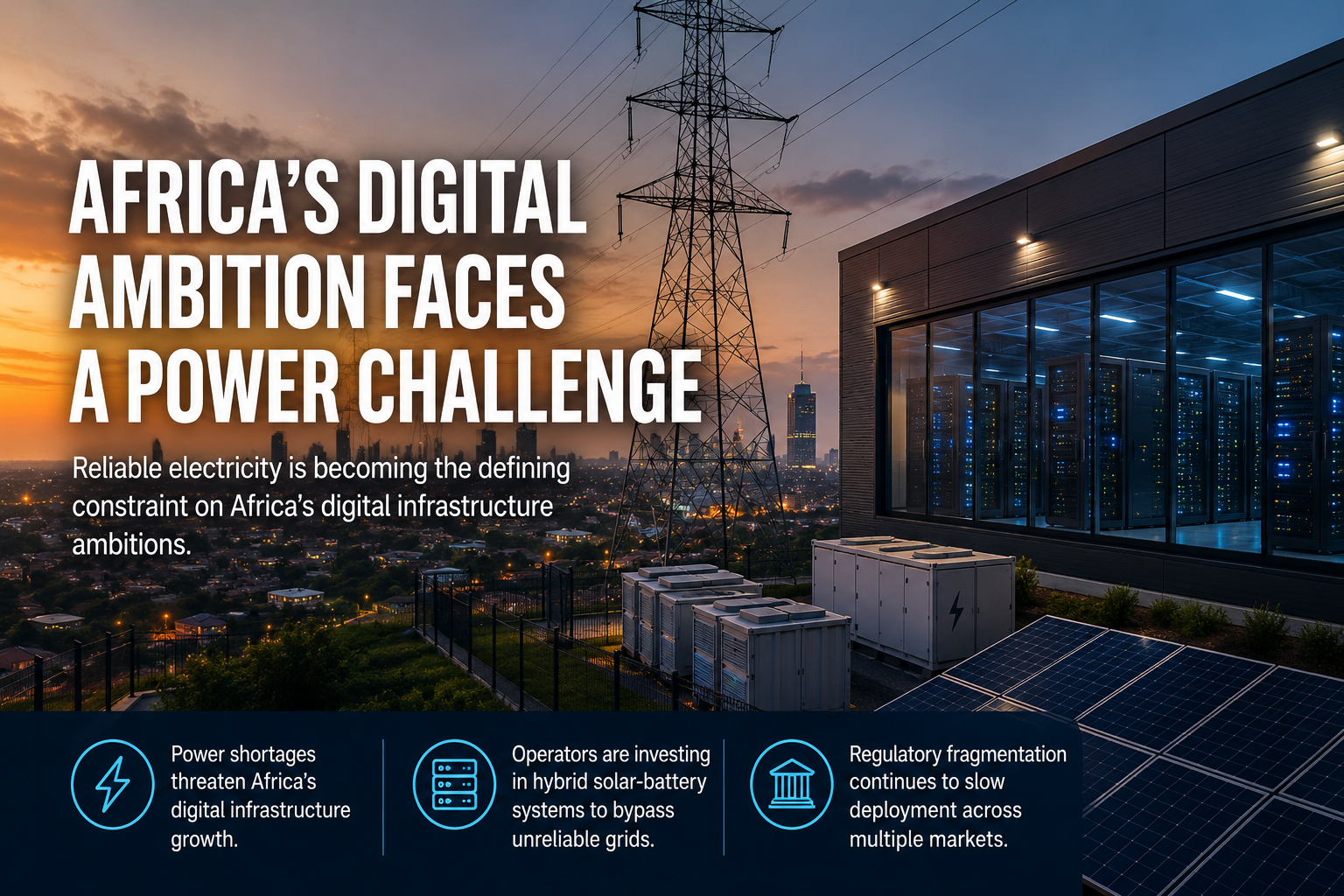
Africa's Digital Ambition Faces a Power Challenge
Reliable electricity is becoming the defining constraint on Africa's digital infrastructure ambitions, even as investment in data centres, fibre networks and AI infrastructure accelerates across the continent.
Datacenter
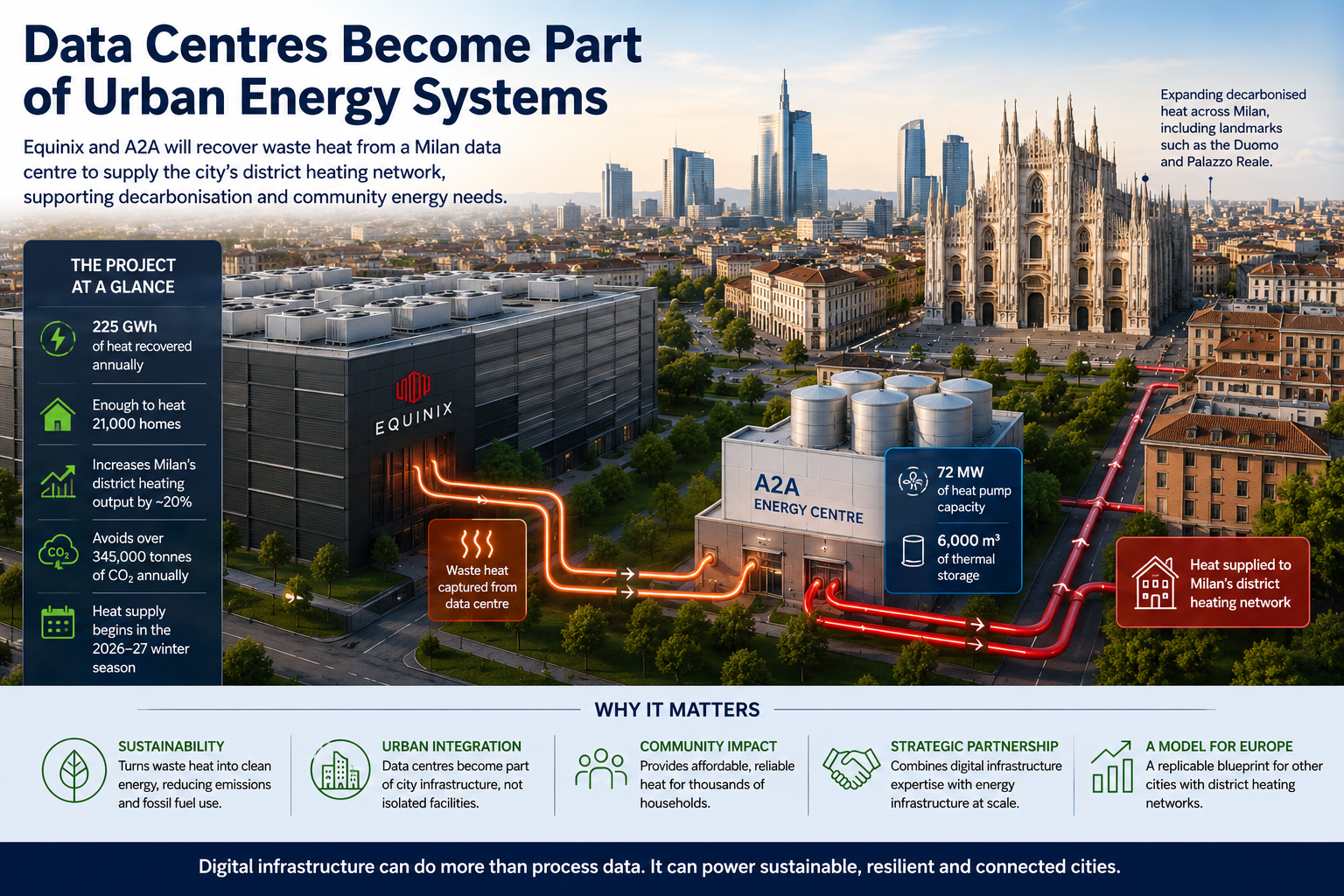
Data Centres Become Part of Urban Energy Systems
Equinix and A2A will reuse waste heat from a Milan data centre to heat thousands of homes, highlighting how digital infrastructure is becoming part of wider urban energy and decarbonisation strategies.

AFRINIC
AFRINIC and the economics of public-sector address dependency
AFRINIC and the economics of public-sector address dependency intelligence summary explains the development, the public evidence available to readers, the organisations involved, the regional context, market exposure, and the infrastructure consequences that may follow. The…

AFRINIC
AFRINIC and the economics of enterprise legacy holders
Dormant IPv4 blocks inside banks, insurers, industrial groups and other non-network enterprises are balance-sheet options, but registry evidence determines whether that latent supply can be kept, sold, leased, split or financed.

AFRINIC
AFRINIC, mobile broadband and the CGNAT balance sheet
African mobile growth turns public IPv4 into scarce operating capital: CGNAT keeps subscribers online, but APNs, banking fraud checks, enterprise products and IPv6 coexistence all depend on AFRINIC remaining a trusted registry ledger rather than a gatekeeper.

AFRINIC
AFRINIC and the economics of datacentre address demand
In African colocation markets, scarce public IPv4 is no longer just a network-planning issue. It shapes how quickly racks, tenant cages and managed services can become revenue.

AFRINIC
AFRINIC and the economics of cloud-provider address power
Cloud IPv4 pricing and BYOIP validation make AFRINIC's record continuity a bargaining asset: when the registry is predictable, African customers can use cloud without renting their public identity from the platform.

AFRINIC
AFRINIC and the economics of submarine-cable and address risk
Submarine cables lower the price of reach, but in African and Indian Ocean edge markets scarce portable IPv4 and registry continuity decide who can turn new landings into bargaining power.

AFRINIC
AFRINIC and the economics of interconnection dependency
AFRINIC's registry records are not clerical plumbing: in Africa's interconnection market, they shape who can peer, migrate customers and bargain with upstream carriers.

Regional ISP
VDX Networks and the Cost of Being Believable
VDX Networks has the raw shape of a real UK network: a routed identity, a London exchange port, Bournemouth data-centre claims, upstreams, hosting brands and business-connectivity products. The economic question is whether that shape is yet strong enough to underwrite customer…

AFRINIC
AFRINIC and the economics of cross-border compliance costs
AFRINIC's cross-border IPv4 market turns ordinary registry proof into a costly bundle of KYC, company-law, tax, banking and customer-assurance work.

AFRINIC
AFRINIC and the economics of geopolitical fragmentation risk
An internet number registry is valuable because parties that distrust one another can still rely on the same record. AFRINIC's crisis shows how that bargain can decay institutionally before routes break, as courts, regional blocs, banks, platforms and reform architectures turn…

AFRINIC
AFRINIC and the economics of sanctions screening and continuity
A sanctions hit at a regional internet registry is often an ambiguous middle state, not a final prohibition; AFRINIC shows why screening must protect lawful compliance without letting payment rails, account standing or technical services become avoidable continuity shocks.

AFRINIC
AFRINIC and the economics of national sovereignty versus regional ledger
AFRINIC's crisis shows why courts, regulators and sanctions rules matter to number-resource records, but also why a regional ledger loses value when legal evidence becomes political veto.

AFRINIC
AFRINIC and the economics of NIR relationships
National registry relationships can lower AFRINIC members' administrative costs, but they also create new places where fees, validation, transfer authority and national policy can compromise regional ledger neutrality.

Regional ISP
TFM Networks and the price of proof in UK business connectivity
In a UK connectivity market where full fibre, mobile data, SIP trunks, SD-WAN appliances and cloud security can all look commoditised from a distance, TFM Networks has to sell something narrower and more demanding than bandwidth. The company has to sell proof: proof that it…

Regional ISP
TGlobal Networks and the cost of proving where the network really lives
TGlobal Networks and the cost of proving where the network really lives intelligence summary explains the development, the public evidence available to readers, the organisations involved, the regional context, market exposure, and the infrastructure consequences that may follow.…