
Summary
- What it says: Equinix and A2A will reuse waste heat from a Milan data centre to heat thousands of homes, highlighting how digital infrastructure is becoming part of wider urban energy and decarbonisation strategies.
- Main topic: Data centre investment; Data centre power and permitting
- Context: market / briefing / Europe & Middle East
Equinix and A2A will channel waste heat from a Milan data centre into the city's district heating
The project reflects a broader shift towards integrating digital infrastructure into urban energy systems
The fact
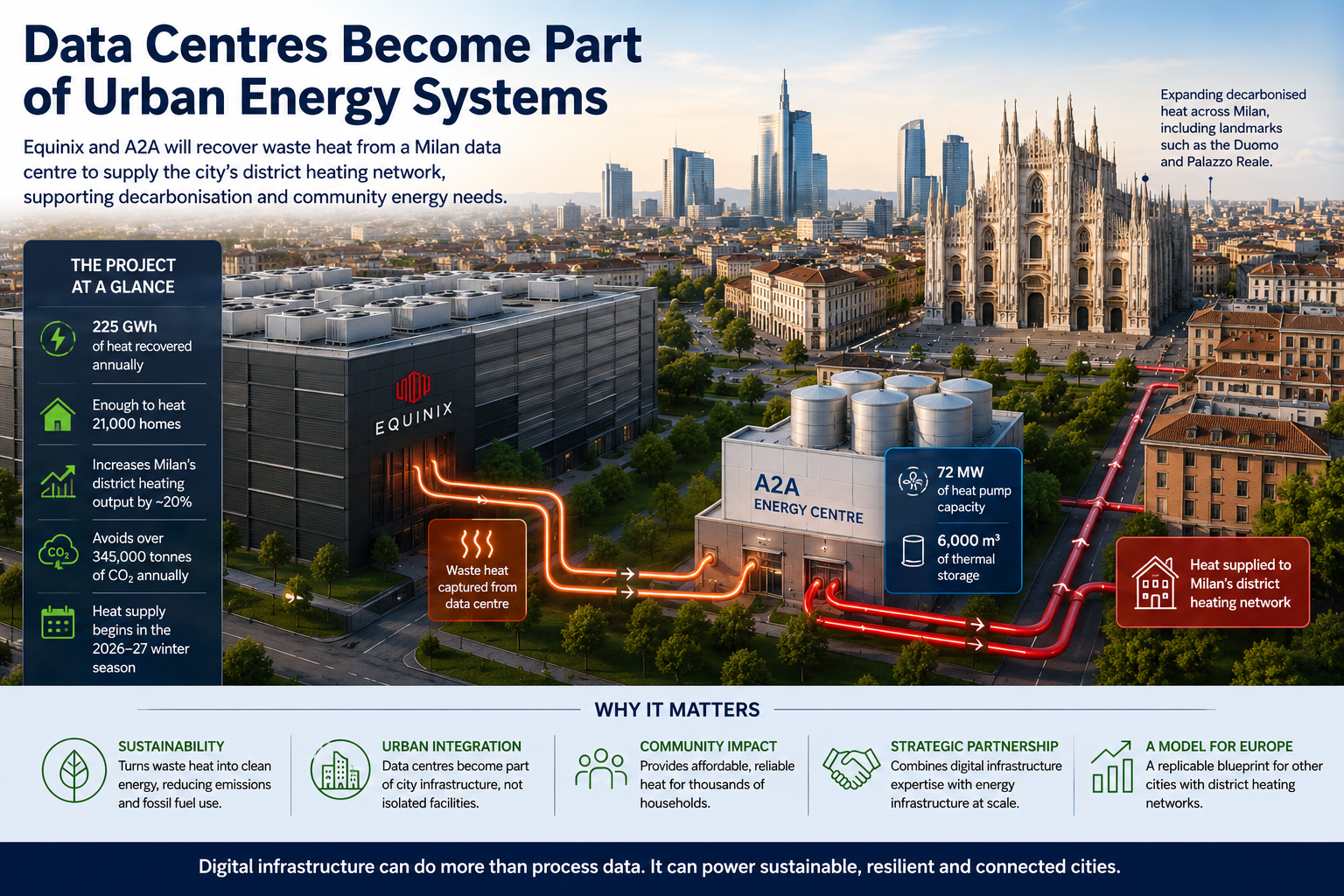
Equinix and Italian utility A2A have partnered to recover waste heat from Equinix's data centre campus in Settimo Milanese and feed it into Milan's district heating network. The project is scheduled to begin supplying heat during the 2026–27 winter season as part of the city's wider decarbonisation programme.
Once fully operational, the system is expected to recover 225 GWh of thermal energy each year which is enough to heat more than 21,000 homes. A2A estimates the project will increase the output of Milan's district heating network by around 20%. To support the initiative, the utility is building a new energy centre equipped with 72 MW of heat pump capacity and large-scale thermal storage.
The partnership combines Equinix's data centre infrastructure with A2A's district heating network to capture energy that would otherwise be wasted. Similar projects are emerging across Europe as operators look for new ways to improve the environmental performance of increasingly power-intensive AI infrastructure.
The assessment
Data centres have traditionally been viewed as large consumers of electricity. Projects such as the one in Milan suggest that perception is beginning to change. As AI workloads push up energy demand, operators are finding ways to turn excess heat into a resource for surrounding communities.
This marks a shift in infrastructure planning. Digital infrastructure is becoming more closely integrated with urban energy systems rather than operating in isolation. For cities with established district heating networks, waste heat can join the local energy mix instead of remaining an operational by-product.
For BTW readers, a data centre's strategic value now depends on more than computing capacity or power supply. Its ability to integrate with surrounding infrastructure is also becoming a key consideration. Projects that create value for utilities and municipalities may strengthen the case for future data centre developments as environmental standards rise.
What to watch
Watch whether other European cities expand district heating networks to incorporate data centre waste heat. Also monitor whether operators begin designing new facilities around heat recovery from the outset rather than retrofitting after construction. The commercial performance of Milan's project could shape how cities, utilities and developers approach future digital infrastructure.
