
Published
2026-07-02
2026-07-02 intelligence examines articles connected by the same published, giving readers a fuller route through public reporting, evidence quality, market context, and infrastructure consequence. The page links the subject to relevant organisations, people, regions, signal types, governance exposure, operating dependencies, service-continuity pressure, customer risk, and capital or regulatory implications rather than presenting a short list of matching articles. It explains what the classification covers, why the pattern matters, which public sources support the recurring signal, and how readers should compare developments as the evidence base changes. Operators, investors, customers, analysts, and policy readers can use the page to understand where a theme is concentrated, which actors may be exposed, and which follow-up questions deserve closer review before treating the signal as durable.
Datacenter
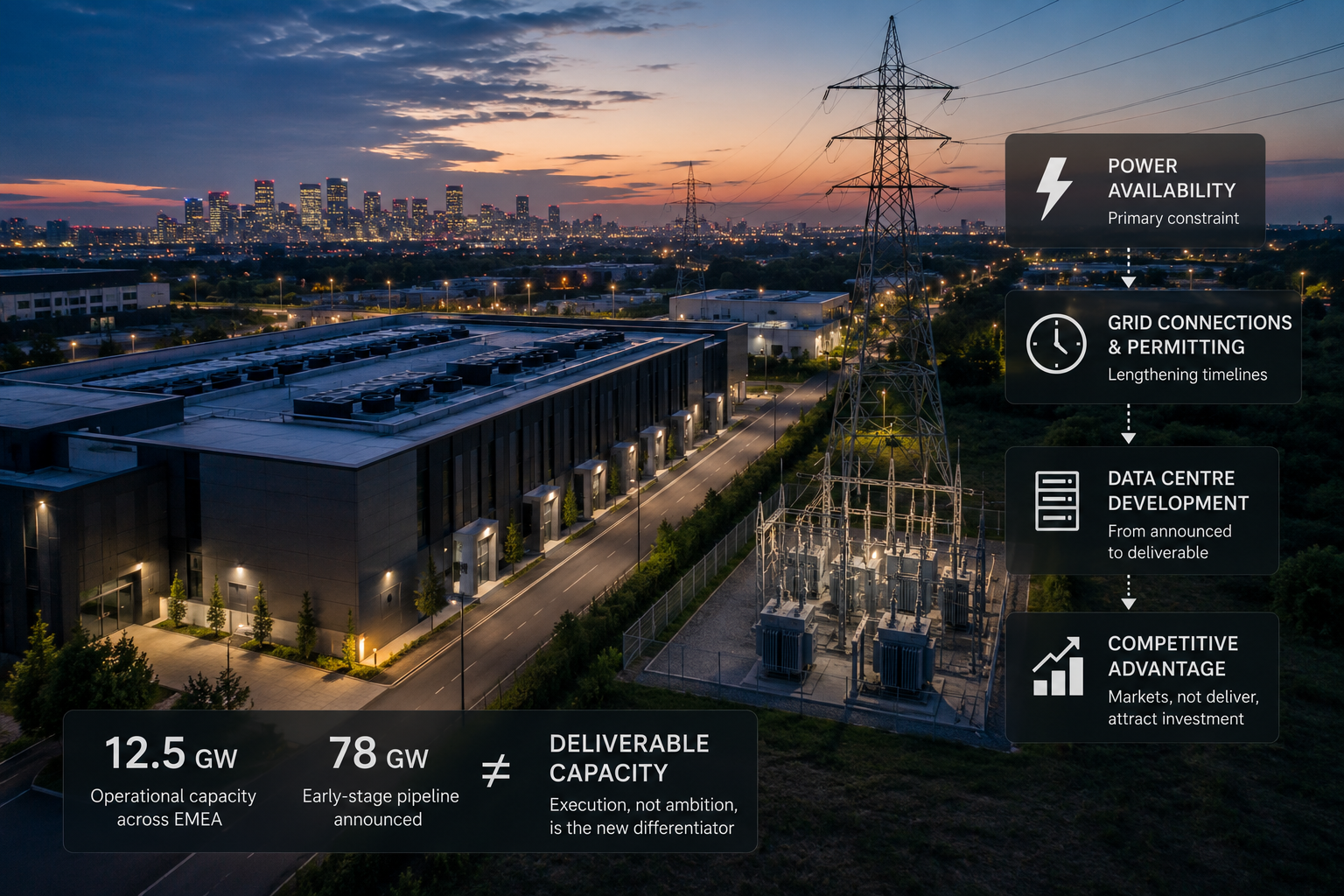
EMEA Data Centres Compete on Deliverability
Power availability has become the defining constraint on EMEA data centre expansion. Colliers says investors are increasingly prioritising markets that can secure electricity, planning approval and timely project delivery as AI infrastructure demand accelerates.

AFRINIC
AFRINIC and the economics of the enforcement boundary
AFRINIC is examined through the enforcement boundary as a registry-governance and institutional-economics problem for the Africa region.

National Telecom
India Moves to Protect Telecom Choice
India's telecom regulator wants operators to offer voice and SMS-only recharge options alongside bundled plans, signalling a broader policy shift towards preserving consumer choice as mobile services become increasingly data-centric.

Europe and Middle East national telecom
Zain to acquire 75% stake in MTN Syria
Zain's entry into Syria marks more than a new mobile licence. It signals that digital infrastructure is becoming an early priority as regional investors return to support the country's economic reconstruction.

AFRINIC
AFRINIC and the economics of legal budget incentives
AFRINIC is examined through legal budget incentives as a registry-governance and institutional-economics problem for the Africa region.

Asia-Pacific national telecom
SK Telecom Makes Security a Public Commitment
SK Telecom's first Information Security White Paper is more than a corporate disclosure. It shows how operators are increasingly treating cybersecurity transparency as a strategic capability as AI, cloud services and digital infrastructure expand.

Datacenter
Remote NT Cattle Station Tests Off-grid AI Infrastructure
A proposed hyperscale AI campus in remote northern Australia highlights a growing industry trend: as established data centre markets run into power constraints, developers are increasingly taking compute to energy rather than energy to compute.

AFRINIC
AFRINIC and the economics of reserve policy discipline
AFRINIC is examined through reserve policy discipline as a registry-governance and institutional-economics problem for the Africa region.

National Telecom
UK Fibre Consolidation Faces Regulatory Test
Britain's fibre market is entering a new phase. The question is no longer who can build the fastest network, but how regulators balance consolidation with long-term infrastructure competition.

Datacenter
Batam AI Campus Extends Singapore's Reach
DayOne, Firmus and Nvidia plan a 360MW AI campus in Batam, highlighting how Southeast Asia's AI infrastructure is extending beyond Singapore to markets with greater power, land and room for expansion.

AFRINIC
AFRINIC and the economics of fee incidence and regressivity
AFRINIC is examined through fee incidence and regressivity as a registry-governance and institutional-economics problem for the Africa region.

AFRINIC
AFRINIC and the economics of board oversight
AFRINIC is examined through board oversight as a registry-governance and institutional-economics problem for the Africa region.

Datacenter
Chinese Researchers Push Fibre Towards the AI Era
A record-breaking hollow-core fibre trial in China marks more than a networking milestone. It signals that future AI competitiveness may depend as much on moving data efficiently as on building larger GPU clusters.

AFRINIC
AFRINIC and the economics of membership accountability
AFRINIC is examined through membership accountability as a registry-governance and institutional-economics problem for the Africa region.

AFRINIC
AFRINIC and the economics of registry-layer risk
AFRINIC is examined through registry-layer risk as a registry-governance and institutional-economics problem for the Africa region.

LACNIC
LACNIC and the economics of post-exhaustion legitimacy
LACNIC is examined through post-exhaustion legitimacy as a registry-governance and institutional-economics problem for the Latin America and Caribbean region.

LACNIC
LACNIC and the economics of governance failure and recovery
LACNIC is examined through governance failure and recovery as a registry-governance and institutional-economics problem for the Latin America and Caribbean region.

LACNIC
LACNIC and the economics of fees, reserves, and incentives
LACNIC is examined through fees, reserves, and incentives as a registry-governance and institutional-economics problem for the Latin America and Caribbean region.

LACNIC
LACNIC and the economics of consensus capture
LACNIC is examined through consensus capture as a registry-governance and institutional-economics problem for the Latin America and Caribbean region.

LACNIC
LACNIC and the economics of auditability and transparency
LACNIC is examined through auditability and transparency as a registry-governance and institutional-economics problem for the Latin America and Caribbean region.