Institution Profiling / Internet infrastructure institution

EU Nations adopt historic AI Act, setting global standards

EU Nations adopt historic AI Act, setting global standards is tracked as a internet infrastructure institution within the internet infrastructure ecosystem.

EU Nations adopt historic AI Act, setting global standards
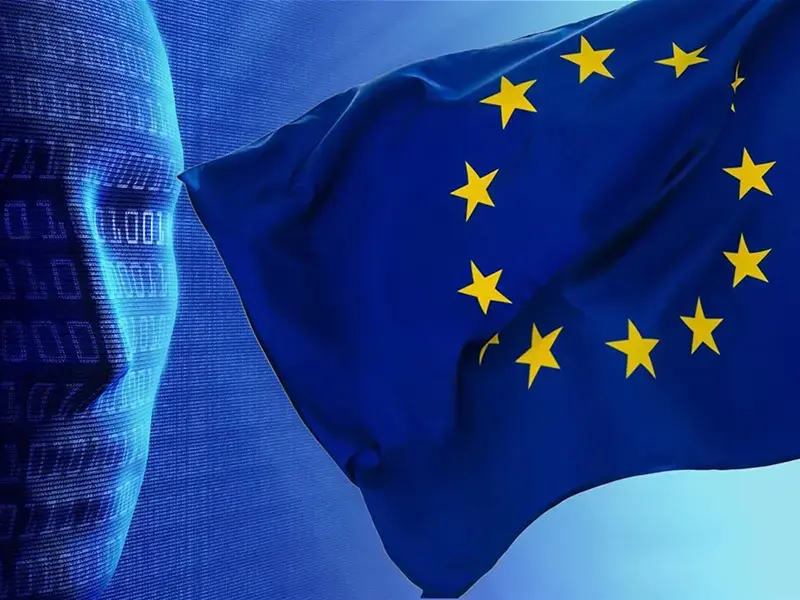
Caption: EU Nations adopt historic AI Act, setting global standards visual context for BTW intelligence coverage. · Source context: Existing article media was retained or restored as the subject-specific visual basis. · Relevance reason: EU Nations adopt historic AI Act, setting global standards is the primary subject or event subject; the image supports the article's market reading. · Image provenance: Existing curated article image retained because it is subject- or event-specific and not a generic pool placeholder.

Sources

Public references used for this article.

CategoryInstitution

EU Nations adopt historic AI Act, setting global standards is tracked as a internet infrastructure institution within the internet infrastructure ecosystem.

RegionEurope and Middle East

EU Nations adopt historic AI Act, setting global standards has public-source relevance to network operations, governance, dependency mapping, or market structure.

Signal FocusInternet infrastructure institution

EU Nations adopt historic AI Act, setting global standards has public-source relevance to network operations, governance, dependency mapping, or market structure.

Content TypeProfile

EU Nations adopt historic AI Act, setting global standards is tracked as a internet infrastructure institution within the internet infrastructure ecosystem.

Primary DomainSecurity

Public-source signals support medium-impact monitoring for infrastructure visibility and dependency analysis.

TopicInternet infrastructure institution

EU Nations adopt historic AI Act, setting global standards is profiled by BTW Media because published evidence links it to internet infrastructure, governance, operational dependencies, or market visibility.

ImpactMedium

Public-source signals support medium-impact monitoring for infrastructure visibility and dependency analysis.

Confidence?Confidence Grade
0.90–1.00AHigh — direct sources
0.75–0.89A/BStrong
0.55–0.74B/CMedium
0.35–0.54C/DWeak–medium
0.10–0.34DWeak signal
0.00–0.09DInternal monitoring
Limited confidence (72%)

Several public sources

EU Nations adopt historic AI Act, setting global standards is profiled by BTW Media because published evidence links it to internet infrastructure, governance, operational dependencies, or market visibility.

  • Member state representatives have adopted the European Union’s AI Act, a risk-based approach to artificial intelligence regulation.
  • The AI Act is anticipated to become law before the summer of 2026.

Following the endorsement of a political agreement by EU nations in December, Europe is on the verge of implementing regulations restricting the use of AI and AI models, including Microsoft’s ChatGPT.

Historic AI Act endorsed by member states

The regulations, proposed by the European Commission three years ago, aim to establish a global standard for technology used in various sectors, such as banking, retail, automotive, and aviation industries.

The regulations specifically address the application of AI by governments in biometric monitoring, as well as the control and supervision of AI systems like ChatGPT.

They also provide guidelines for the military, law enforcement, and security applications of AI.

According to EU industry chief Thierry Breton, the Artificial Intelligence (AI) Act is a global first and a historic step. In a press release, he stated, “Today, member states endorsed the political agreement reached in December, recognising the perfect balance found by negotiators between innovation and safety.”

Also read: Google splits up a key AI ethics watchdog

EU commissioner urges regulations amid deepfake concerns

Experts are particularly concerned about the rise of deepfakes – realistic but artificial films produced by AI algorithms trained on vast amounts of internet footage. Generative AI-generated content on social media may blur the line between reality and fiction in public life.

The EU’s digital commissioner, Margrethe Vestager, highlighted the need for new regulations, pointing to the rise of phony, sexually suggestive pictures of pop star Taylor Swift on social media.

She posted on X, “What happened to @taylorswift13 tells it all: the #harm that #AI can trigger if badly used, the responsibility of #platforms, & why it is so important to enforce #tech regulation.”

Also read: Taylor Swift AI images are ‘shocking and scary’, says Satya Nadella

France drops opposition to AI Act

France, the last party to oppose the AI Act, abandoned its objection, making Friday’s agreement inevitable. This decision was reached in response to strict requirements that reduce the administrative load on high-risk AI systems and achieve a balance between openness and business secrets.

The goal, as stated by an EU diplomatic official on Friday, is to enable the development of competitive AI models within the bloc.

Germany supported the guidelines earlier this week as well.

The AI Act will next need to pass both the European Parliament’s vote in either March or April and a vote by a significant committee of EU legislators on February 13. Although some of the law will take effect early, it is expected to come into effect before summer and should be applicable in 2026.


At A Glance

  • Name: EU Nations adopt historic AI Act, setting global standards
  • Type: Internet infrastructure institution
  • Base: Europe and Middle East
  • Profile focus: Institution

What It Does

  • Public records support monitoring of its role, services, and key relationships.

Why It Matters

  • Public-source signals support medium-impact monitoring for infrastructure visibility and dependency analysis.
  • Operational criticality: Medium
  • Time horizon: Next quarter

What To Watch

  • Monitoring focuses on verified service continuity, governance changes, and relationship signals.
NowMedium priority

Track verified source updates, role changes, and current public evidence.

QuarterMedium policy sensitivity

Public-source signals support medium-impact monitoring for infrastructure visibility and dependency analysis.

YearNext quarter outlook

Longer-term relevance depends on verified operating, policy, and relationship changes.

Member Briefing

Deeper Profile Context

Login is required to unlock the full profile briefing and source notes.

Only for Strategy Circle

Strategic Circle Access

Open to all readers. Unlock profile briefings after joining and logging in.

Join Strategic Circle

Only for Leadership Alliance

Leadership Alliance Access

For owners and management of IP-holding companies. Login required to unlock.

Join Leadership Alliance
← BackAll Companies