
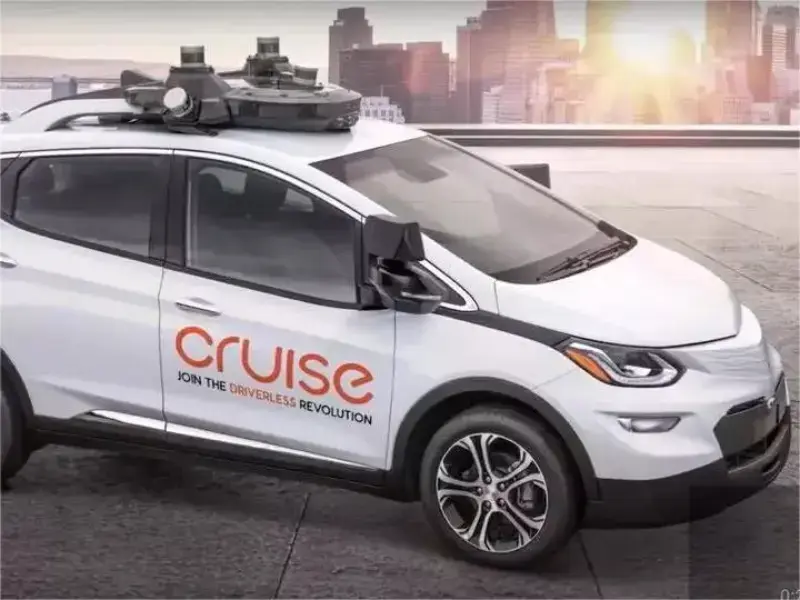
- Cruise will dispatch some of its trouble-ridden robotaxis to join Uber’s ride-hailing service.
- The alliance is the latest change in Cruise’s direction since October 2023, when its licence to offer driverless rides in California was suspended.
OUR TAKE
Despite Cruise’s recent struggles, Uber CEO Dara Khosrowshahi has expressed confidence that the online taxi service can put robot taxis back on the right track. Self-driving technology has gained momentum in recent years, and it is hoped that driverless technology can one day be used to create safer streets and redefine urban life.
— Iydia Ding, BTW reporter
What happened
Cruise and Uber announced a partnership this week to deploy robot taxis in some U.S. markets next year as part of a multi-year partnership that brings together two companies that once seemed poised to compete for riders.
The alliance is the latest change in Cruise’s direction since October 2023, when its licence to offer driverless rides in California was suspended. This comes after one of its robot taxis dragged a jaywalking pedestrian who had been hit by a human-driven vehicle through a dark San Francisco street. The event sparked a regulatory investigation into Cruise and prompted its parent automaker, General Motors, to squash its ambitions in self-driving.
GM had envisioned Cruise generating $1 billion in annual revenue by 2025, as its robo-taxis steadily expand to cities other than San Francisco, providing a driverless alternative to the ride-hailing services operated by Uber and Lyft.
“Cruise’s mission is to use driverless technology to create safer streets and redefine urban life,” said Marc Whitten, Cruise’s chief executive, who is filling the void created after Cruise founder Kyle Vogt stepped down amid the fallout from the California licence suspension.
Also read: GM’s Cruise eyes fare-charging for Robotaxi rides by 2025
Also read: GM’s Cruise discards wheel-less AV Origin, chooses Bolt EV
Why it’s important
Self-driving technology has gained momentum in recent years. GM and Cruise are looking to make money by mixing robot taxis with Uber’s human-driven cars, giving passengers the option of self-driving if they want. Earlier this week, Waymo also announced that its robot taxis were completing more than 100,000 paid rides a week. The deal with Uber highlights Cruise’s determination to get back to the point where its robot taxis are on the road entirely on their own.
“Cruise’s mission is to use driverless technology to create safer streets and redefine urban living,” said Marc Whitten, Cruise’s chief executive, who is filling the void created after Cruise founder Kyle Vogt stepped down amid the fallout from California’s licence suspension. The Detroit automaker lost another $900 million on Cruise in the first half of this year, but that’s down from nearly $1.2 billion in the same period last year.
Despite Cruise’s recent struggles, Uber CEO Dara Khosrowshahi expressed confidence that the online taxi service could put robot taxis back on the right track. Khosrowshahi said, “We believe Uber can play an important role in helping to safely and reliably introduce self-driving technology to consumers and cities around the world. The driving technology aspect plays an important role.