
Summary
- Brijesh Yadav is publicly identified with senior Rakuten Mobile and Rakuten Symphony engineering roles tied to mobile-network architecture, business solutioning, network monetization, open networking, 5G standalone, and autonomous-network strategy.
- The available record supports a careful profile: it shows his placement in relevant engineering forums and company programs, but most quantitative operating claims come from Rakuten-owned sources and should not be treated as independently proven personal outcomes.
- His significance is not celebrity or founder mythology. It is the less visible work of making telecom architecture choices auditable, repeatable, and commercially legible when operators are being asked to trust more software, more automation, and more open-network components.
- The unresolved risks are material: title variants need normalization, public same-name noise must be filtered, OCP and SONiC video material was not reviewed through full transcripts, and public-photo provenance does not by itself settle image rights.
A Profile Built From an Engineering Surface, Not a Personality Story
Brijesh Yadav is not useful to read as a personality profile in the usual executive sense. The public record available here does not support a private biographical arc, a management temperament, or a complete account of individual decision-making. It does something narrower and more valuable. It places a named engineering leader at the point where Rakuten's mobile-network architecture claims meet public industry stages, company operating claims, and the commercial language of network monetization.
That distinction matters. Telecom infrastructure often turns on work that is difficult for the public to see directly. A mobile network is not a single object with a simple launch date. It is a stack of architectural choices, software dependencies, vendor relationships, operations practices, reliability obligations, and regulatory expectations. The person who appears publicly around architecture and business solutioning is therefore not interesting simply because of a title.
The interest is in what the title is attached to: the promises and constraints of a network model that asks operators to accept more openness, more software control, and more automation in domains where failure remains expensive.
The public evidence identifies Yadav through several overlapping surfaces. MWC Barcelona lists him as Brijesh Yadav of Rakuten Mobile and states that he was appointed Vice President, Architecture & Business Solutioning Department at Rakuten Mobile in 2018. Rakuten Symphony's MWC 2026 program places him in the same broad Rakuten mobile-network context, connected to network APIs and autonomous connectivity. Rakuten Today uses a variant title, VP Engineering, Mobile Networks and Tech Strategy, while a public LinkedIn profile aligns him with Rakuten Symphony from March 2024 onward.
Open Compute Project and YouTube event surfaces place him in Rakuten open-networking and SONiC use-case contexts.
Those pieces do not amount to a complete employment history. They do, however, establish a consistent professional identity: the relevant Brijesh Yadav is a Rakuten Mobile and Rakuten Symphony telecom-network executive, not one of the other same-name figures who appear in public search results. The distinction is necessary because the name is not unique. The available record explicitly excludes a Tata Communications media executive, a QNET direct-selling profile, and a digital-marketing profile as non-target matches. That is not a minor footnote.
In infrastructure coverage, mistaken identity can make a profile look more complete than it is, and a name collision can import achievements, affiliations, or risks that belong to someone else.
The cleaner reading is also the more restrained one. Yadav's importance comes from the system around the role. He is publicly connected to a company project that has tried to make open, cloud-native, automated mobile-network architecture more than conference language.
The profile should therefore look at the decisions and constraints visible around him: how Rakuten frames resilient modern network architecture; how it links standalone mobile networks to open APIs and monetization; how it describes AI-supported autonomous connectivity; how industry-event references connect the company to SONiC and open networking; and how much of the record remains company-controlled.
This is a profile of an engineering position in motion. The public record is strong enough to explain why Yadav matters. It is not strong enough to make him the sole author of Rakuten's results, or to convert every company claim into a personal achievement. The useful question is more exacting: what can be learned from the kind of work his public roles expose?
The Architecture Role as an Observable Decision Point
The most concrete anchor is the MWC Barcelona speaker profile. It identifies Yadav as a Rakuten Mobile executive and states that he was appointed Vice President, Architecture & Business Solutioning Department in 2018. The formulation matters because it joins two words that are often separated in telecom coverage: architecture and business solutioning. Architecture is the technical arrangement of the network and its software control surfaces. Business solutioning is the translation of that arrangement into offerings, partner models, and customer-facing value. A role that sits across both is not merely about building a working system.
It is about deciding which parts of a working system can be explained, sold, repeated, and defended.
That is the point where open-networking rhetoric becomes operationally serious. Telecom vendors and operators can describe open architectures in broad terms, but the hard choices appear in implementation. Which software components are mature enough to carry production assumptions? Which interfaces are open in name only and which actually reduce lock-in? Which operational functions can be automated without obscuring responsibility? Which parts of the network become easier to monetize through APIs, and which remain too specific, too fragile, or too difficult to package?
The public record does not list Yadav's answers to each of those questions. It does show that he has been placed by Rakuten and by industry events in contexts where those questions are central. MWC Barcelona connects him with resilient modern mobile-network architectures and network monetization. Rakuten Symphony's MWC program connects him with monetizing standalone networks through open APIs and with AI-supported autonomous connectivity. OCP and SONiC-related surfaces connect him with Rakuten's open-networking use case. Those are observable placements, not private motives.
The distinction between placement and attribution is important. A large mobile-network program is a collective effort. It involves product leaders, platform engineers, field operations, vendors, integration teams, executives, and customers. The available record does not justify a sentence that says Yadav personally delivered Rakuten's operating metrics. It does justify a sentence that says he appears publicly as one of the senior engineering figures through whom Rakuten explains and advances its network architecture agenda.
That kind of role can matter precisely because it is not always public-facing. In a software-heavy telecom model, architecture decisions become economic decisions. A decision about open networking may influence supplier dependence. A decision about autonomous operations may influence labor requirements and reliability exposure. A decision about network APIs may influence whether a standalone mobile network becomes a platform for partners or remains mostly an internal capability. A decision about SONiC or open networking may influence how much the operator can separate hardware choice from software control.
The record around Yadav sits at that conversion point. It does not present him as a general celebrity executive. It presents him as a person attached to a set of architecture choices that Rakuten wants the market to take seriously. The value of studying him is therefore indirect but real: his public role helps reveal how Rakuten is trying to make a technical network program legible to business audiences, standards communities, and the wider telecom market.
Rakuten's Open-Networking Bet and the Burden of Proof
The open-networking part of the record is important because it moves the profile beyond generic telecom leadership. Open Compute Project references and YouTube event metadata place Yadav in Rakuten open-networking and SONiC use-case contexts. One surface is titled "The Immediate Impact of Open Networking - The Rakuten Use Case." Another refers to Yadav on SONiC adoption and open networking. The full transcripts or decks were not reviewed in the available record, so the content should not be quoted or used for detailed technical claims. Even so, the event placement matters.
Open networking is not only a technology preference. It is a claim about the operating model of infrastructure. A closed or tightly bundled network stack can simplify accountability because a smaller number of vendors package the system. It can also deepen dependence. An open or disaggregated model promises more flexibility, but flexibility is not free. It shifts burdens onto integration, testing, lifecycle management, observability, and internal engineering competence. If those burdens are underestimated, openness becomes a slogan attached to a more complicated system.
This is why Yadav's presence on open-networking stages is relevant. Rakuten's public positioning depends on convincing others that open network components can be operated as part of a serious mobile infrastructure environment. The market question is not whether an open system can be demonstrated. It is whether it can be maintained, upgraded, monitored, and commercially explained over time. An executive associated with architecture and engineering strategy becomes a useful lens because the work is not merely procurement or marketing. It is the discipline of making the model hold together.
SONiC appears in the evidence as part of that open-networking context. The record supports a connection between Yadav, Rakuten, and SONiC-related event surfaces, but not a detailed account of which deployment choices were made, how extensive they were, or what measured benefits followed from them. That limitation is not a weakness of the article; it is part of the subject. Infrastructure claims often arrive first through conference programs, company blogs, and video metadata. They become stronger when accompanied by transcripts, operational benchmarks, independent evaluations, customer evidence, or audited financial effects.
This profile can describe where the public record points, but it should not pretend the record proves more than it does.
The burden of proof is especially high because open networking changes the location of risk. If hardware and software are separated more aggressively, someone has to own the integration surface. If a network uses more software control, someone has to ensure that updates, exceptions, performance regressions, and security expectations are handled without making the network harder to govern. If a company wants to export its experience through a platform business, the internal success has to be abstracted in a way that another operator can adopt.
Yadav's public association with these themes makes him a person worth following, not because every decision is visible, but because the visible themes converge. Rakuten is not presenting open networking as an isolated lab project. It is connecting it to mobile-network architecture, network APIs, autonomous operations, and business solutioning. A profile of Yadav is therefore a profile of a practical question: can an operator's engineering architecture become a reusable commercial argument?
Network APIs and the Attempt to Make 5G Standalone Economically Legible
The MWC and Rakuten Symphony materials place Yadav in discussions connected to monetizing standalone networks with open APIs. That is a compact phrase, but it carries a large operating problem. A mobile operator can invest in advanced network capabilities and still struggle to make those capabilities visible to customers, developers, partners, and enterprises. Network APIs are one way operators try to expose selected capabilities as programmable services rather than treating the network only as a connectivity pipe.
The available record does not list specific APIs, customers, revenue numbers, or commercial contracts attached to Yadav. It supports a more careful point: Rakuten has placed him in public contexts where network monetization and standalone-network API strategy are central themes. That placement fits the architecture-and-business-solutioning title. It is the kind of work where a network has to be translated from internal capability into an external proposition.
The translation is hard because the audience is mixed. Engineers need interfaces that are reliable and governable. Product teams need something that can be packaged. Partners need predictable access and clear value. Operators need a reason to believe the effort will produce more than another layer of complexity. If APIs expose network capabilities without a clear commercial use, the project can become an elegant technical surface with limited adoption. If they are too narrow, they may not justify the organizational effort. If they are too broad, they may raise reliability, security, or accountability concerns.
This is where Yadav's role is instructive. The public record points to a senior engineering figure involved in making modern mobile-network architecture commercially meaningful. The value is not in treating him as the inventor of a concept. It is in recognizing that telecom's next operating model depends on people who can hold technical and commercial constraints in the same frame. An API strategy attached to a standalone network is not credible if it ignores the operational realities of the network. A network architecture strategy is not commercially durable if it cannot explain why customers or partners should care.
Rakuten's broader story intensifies the challenge because its public positioning has often emphasized a different kind of mobile-network architecture. In the available record, that story appears through open and cloud-native network themes, MWC program placement, and company claims about RIC applications, energy savings, and autonomous-network certification. The API theme belongs inside that set. If the network is more software-defined and more open, the business case should eventually show up in usable interfaces, not only in internal efficiency claims.
For readers, the important point is to separate ambition from evidence. It is credible to say Yadav's public role sits near Rakuten's attempt to make 5G standalone and network APIs commercially legible. It is not credible, from this record alone, to claim that a particular API strategy has delivered a specific financial result. That distinction is the discipline the subject requires. Telecom infrastructure attracts large claims because the systems are complex and the stakes are high. A careful profile should make the claims understandable without inflating them.
Autonomous Networks, Agentic AI, and the Reliability Question
Rakuten Symphony's MWC program connects Yadav to AI-supported autonomous connectivity. Rakuten Today reports that Rakuten Mobile became the first mobile operator to achieve Level 4 Autonomous Networks certification by TM Forum. The same company source reports nationwide deployment of Rakuten Mobile's RIC applications and more than 20% RAN energy savings. These claims are significant, but they also illustrate the central tension in this profile: the strongest operating numbers come from Rakuten-owned sources.
That does not make the claims meaningless. Company sources are often the first public place where such operating milestones appear. But it does affect how they should be handled. The right reading is that Rakuten has publicly claimed important progress in autonomous networks and RAN efficiency, and Yadav's public role is connected to the engineering and strategy area in which those claims sit. The wrong reading would turn those claims into unqualified proof that one individual produced a measured outcome.
Autonomous networks are attractive because mobile infrastructure is too complex to manage entirely through manual action at scale. But the word autonomous can also obscure the practical question: what is being automated, under what supervision, with what rollback, and with what evidence of reliability? AI-supported automation adds another layer of promise and risk. If an automated system can coordinate more tasks, the potential efficiency is larger. So is the need for clear boundaries.
Yadav matters in this context because architecture leaders become part of the accountability chain. A company can describe autonomy as a future state, but someone has to decide how it is represented in the network, what data it relies on, how exceptions are handled, and how business teams should explain it. A Level 4 certification claim, a nationwide RIC deployment claim, and an energy-savings claim all point toward a network that Rakuten wants to present as more automated and more efficient. The public record connects Yadav to this field of work without documenting every internal decision.
The unresolved issue is not whether automation is desirable. It is how much of the operating burden moves from human intervention to software judgment, and how visible that movement remains. In a network, automation failures can be subtle. A system might optimize for a measurable target while creating a new kind of edge-case risk. It might reduce energy use while requiring more sophisticated oversight. It might accelerate response while making causality harder to explain after an incident. None of these outcomes is asserted in the available record as having happened at Rakuten.
They are the constraints that any serious autonomous-network program has to manage.
That is why a person-linked profile can be useful even with limited biography. Yadav's public-facing engineering role gives readers a way into the reliability question. The question is not whether AI belongs in networks as a slogan. It is whether the architecture around AI-supported operations can make the network more efficient while preserving the ability to understand and govern it. Rakuten has made public claims of progress. The independent record available here corroborates the role and theme more than the performance result. A cautious article keeps both facts in view.
What the Rakuten Results Show, and What They Do Not
The clearest operating claims in the available record come from Rakuten Today. It reports nationwide deployment of Rakuten Mobile's RIC applications, RAN energy savings of more than 20%, and a TM Forum Level 4 Autonomous Networks certification claim. These are relevant to Yadav because Rakuten Today also identifies him through the title VP Engineering, Mobile Networks and Tech Strategy, and because the surrounding public record places him in the architecture, monetization, autonomous-network, and open-networking context.
The claims are not small. A nationwide deployment claim suggests that the company is describing work beyond a small test. An energy-savings claim above 20% suggests measurable operational impact. A Level 4 certification claim suggests external recognition through TM Forum's framework. Each one belongs in the profile because each one helps explain why Rakuten's network architecture story has stakes beyond internal engineering preference.
But each claim also requires care. Rakuten Today is a company newsroom source. It is useful for what Rakuten says about itself, and it is especially useful for understanding how the company wants to frame Yadav's work and the network program around him. It is not the same as an independent audit of performance. The available record does not include the underlying measurement methodology for the energy-savings figure, the full certification basis, or independent customer evidence tied to the network-API monetization claim.
This is not a reason to ignore the claims. It is a reason to use them with attribution. The article can say Rakuten Today reported the deployment, savings, and certification. It can say those claims make the architecture work commercially and operationally important. It can say Yadav is publicly associated with the relevant engineering and strategy functions. It should not say the public record proves a complete causal chain from Yadav's individual decisions to those results.
That restraint is particularly important because infrastructure programs depend on teams and institutions. A mobile operator's network changes through procurement, design, integration, deployment, operations, business development, standards engagement, and executive support. One person can be influential without being singular. The public record makes Yadav visible in a senior role; it does not isolate his individual contribution from the broader Rakuten system.
The more valuable conclusion is about accountability. Rakuten's results, as reported by Rakuten, create a benchmark for future scrutiny. If the company claims nationwide RIC deployment and material RAN energy savings, readers can ask how those claims hold up over time, whether they are repeated in other contexts, and whether they are supported by independent or customer-side evidence. If it claims Level 4 Autonomous Networks certification, readers can ask how that certification translates into operating behavior. If it promotes network APIs as a monetization path, readers can ask whether partners and revenue follow.
Yadav's profile matters because he appears at the junction of those future questions. He is not just attached to a static title. He is attached to a public set of claims about how mobile networks can be built and operated. The quality of those claims will be tested in the ordinary ways infrastructure claims are tested: uptime, cost, energy use, integration burden, adoption, partner trust, and the ability to explain failure when it happens.
The Significance of OCP and SONiC Without Overreading the Record
The Open Compute Project references add an independent industry-event surface to the profile. They do not independently verify Rakuten's performance metrics, but they do show that Rakuten's open-networking story is not confined to its own pages. The OCP Global Summit listing and related video metadata place Rakuten's use case in a broader open-networking discussion. The YouTube surfaces connect Yadav by name to open networking and SONiC adoption contexts.
That kind of corroboration is modest but meaningful. It helps establish that the role and topic are real, public, and externally legible. It also widens the subject from mobile-operator marketing to infrastructure-community debate. OCP and SONiC audiences tend to care about practical architecture, not just brand claims. Appearing in that context does not prove success, but it does suggest that the company is willing to present its approach to people who think in terms of components, interfaces, operations, and deployment consequences.
The limitation is equally clear. The available record did not include full transcript review. It did not capture slides, detailed claims, or question-and-answer exchanges. It would therefore be inappropriate to quote Yadav from those videos or to attribute specific technical positions to him based only on video metadata. The profile can identify the event context and explain why that context matters. It cannot turn metadata into a detailed technical interview.
This is a useful boundary because open-networking discussions can be easy to overstate. A title such as "The Immediate Impact of Open Networking - The Rakuten Use Case" signals relevance, but it does not by itself show what the immediate impact was, how it was measured, or what trade-offs were disclosed. A video title about SONiC adoption signals subject matter, but it does not prove deployment scope or outcome. A careful profile treats those references as signposts, not as proof of every possible claim.
Even as signposts, they reveal something. Yadav's public profile is not limited to internal Rakuten messaging. It crosses into the industry forums where open-networking adoption is argued, compared, and made concrete. That matters because Rakuten's broader mobile-network thesis depends on credibility beyond the company's own environment. If the architecture is to influence other operators, vendors, or partners, it has to be translated into language the infrastructure community can inspect.
There is a second reason the OCP and SONiC references matter. They point to the long-term maintenance problem. Open networking is not a one-time decision. It becomes a lifecycle. Components change. Software versions change. Operational expectations change. The people responsible for architecture have to decide how the system remains understandable as it evolves. The public record does not show all of Yadav's decisions, but it places him in a forum where that lifecycle problem is central.
This is the difference between being associated with a technology label and being associated with an operating argument. SONiC and open networking are labels in the evidence, but the underlying argument is about control, substitution, and resilience. Rakuten's program asks whether a mobile operator can gain enough flexibility from open network components to justify the integration burden. Yadav's visibility in that context makes him relevant to the economics of software lifecycle and lock-in, even where the record stops short of detailed proof.
Title Variants and Why They Matter
The evidence contains several title formulations. MWC Barcelona states that Yadav was appointed Vice President, Architecture & Business Solutioning Department at Rakuten Mobile in 2018. Rakuten Symphony's MWC page lists him in the same architecture and business solutioning context. Rakuten Today uses VP Engineering, Mobile Networks and Tech Strategy. LinkedIn aligns with VP Engineering, Mobile Networks & Tech Strategy and places him at Rakuten Symphony from March 2024 to present.
These variants should not be flattened carelessly. They likely describe closely related roles in the same Rakuten mobile-network environment, but each surface emphasizes a different part of the work. "Architecture & Business Solutioning" stresses the bridge between design and commercial application. "Mobile Networks and Tech Strategy" stresses engineering leadership and strategic technology direction. "Rakuten Mobile" and "Rakuten Symphony" also point to different organizational contexts inside the broader Rakuten network story: the operator context and the platform or solution context.
For readers, the difference matters because it changes the interpretation of agency. If Yadav is being discussed as a Rakuten Mobile architecture leader, the emphasis falls on operator implementation. If he is being discussed as a Rakuten Symphony engineering leader, the emphasis may fall more on translating those capabilities into a platform proposition. The available record supports both contexts, but it does not give a complete internal org chart. The responsible approach is to name the variants and avoid pretending there is a single perfectly stable title across all public pages.
Title normalization is not clerical trivia in infrastructure coverage. It affects how responsibility is understood. A person in architecture may be connected to design decisions. A person in engineering strategy may be connected to technology direction. A person in business solutioning may be connected to how the architecture is packaged or commercialized. Those are overlapping but not identical functions. If an article uses one title as though it covers all work, it can accidentally over-attribute.
The more precise reading is that Yadav's public identity is stable even where titles vary. The role cluster is senior, technical, and connected to Rakuten's mobile-network architecture. It is not a sales-only identity, a media-production identity, or a generic corporate profile. The same-name exclusions reinforce that point. The target record is coherent around Rakuten Mobile, Rakuten Symphony, Open RAN and open networking, SONiC, 5G standalone, network monetization, and autonomous-network strategy.
This coherence is enough for a person-led infrastructure article. It is also a reminder that public records are not the same as internal responsibility maps. A good profile does not hide the uncertainty. It uses the uncertainty to sharpen the analysis. Yadav matters because the role cluster around him is where the technical architecture of a modern mobile network meets the business problem of explaining and monetizing it. The exact title variant is less important than that repeated position across sources, but the variants should remain visible rather than smoothed away.
The Commercial Meaning of Engineering Restraint
A recurring theme in this profile is restraint. That might sound like a writing choice, but it is also an engineering theme. Open networking, network APIs, and autonomous operations all promise greater flexibility or efficiency. Each also creates the possibility of overreach. The commercial value of the architecture depends not only on what can be built, but on what is held back until it can be operated reliably.
The available record does not give a list of Yadav's internal design principles. It does show that he appears in roles where restraint would be part of the work. An architecture and business solutioning function has to decide not only what is technically possible, but what can become a credible product or operating practice. A mobile networks and tech strategy function has to decide which technology claims are mature enough to put into the public strategy of a company.
This is why the article avoids hero language. The infrastructure question is not whether one engineer saw the future before everyone else. It is whether a set of observable choices can survive contact with operations. Rakuten's public claims about RIC applications, energy savings, and autonomous-network certification make the question concrete. If the claims hold, the architecture has operating significance. If they require qualification, the qualifications are part of the story, not a failure of tone.
Restraint also matters in network monetization. APIs can be presented as a new revenue surface, but a network API is only useful if it exposes something partners need, under terms they can understand, with behavior they can trust. Too much abstraction can make the API meaningless. Too much specificity can make it hard to adopt. The architecture function has to define what is exposed and what remains internal. The business solutioning function has to explain why that boundary creates value.
Autonomous connectivity raises the same issue in a different form. The more autonomous the system, the more important it becomes to know where human oversight remains. Agentic AI is a powerful phrase, but in network operations the power of the phrase is less important than the control model behind it. What decisions can be delegated? What exceptions require review? What evidence is retained? What happens when an automated action is correct locally but harmful in a wider operating context? The record does not answer those questions, but it places Yadav in the public conversation where such questions should be asked.
The commercial meaning of his profile, then, is not hype. It is the attempt to make engineering restraint visible enough for customers, partners, and infrastructure communities to evaluate. Rakuten's model asks the market to believe that open, software-led, automated mobile infrastructure can be efficient and exportable. A senior engineering leader attached to that model matters because the credibility of the claim depends on implementation discipline, not only on presentation.
Failures and Uncertainties That Should Stay in the Story
A strong profile should include what is not known. In this case, the uncertainties are not incidental. They define how far the public record can be taken.
First, the OCP and SONiC materials were not reviewed through full transcripts. That means the article cannot responsibly quote Yadav from those appearances or describe detailed technical arguments that may or may not have been made. The event surfaces are useful for establishing context, identity, and topic relevance. They are not enough for fine-grained technical attribution.
Second, the strongest operating-result claims are company-sourced. Rakuten Today reports nationwide RIC deployment, more than 20% RAN energy savings, and the Level 4 Autonomous Networks certification claim. Those claims belong in the article because they show the stakes of the work. They should remain attributed because the available record does not include independent performance review.
Third, the title variants remain unresolved at the level of exact organizational mapping. The public record consistently identifies Yadav as a senior Rakuten mobile-network engineering figure, but it uses different formulations across MWC, Rakuten Symphony, Rakuten Today, and LinkedIn. A future profile with direct confirmation could normalize those titles more confidently. This article should not do so by assumption.
Fourth, image provenance is incomplete. The MWC Barcelona speaker profile and LinkedIn profile provide public-photo surfaces, but public visibility is not the same as cleared usage rights. Any portrait treatment would need identity grounding and rights review before publication. That point does not change the article's substance, but it matters for the public presentation of a person profile.
Fifth, same-name noise remains a risk. The record identifies non-target Brijesh Yadav profiles in other sectors and contexts. This article excludes them. Future updates should continue to do so. A same-name error would be especially damaging here because it could import unrelated accomplishments or affiliations into a technical infrastructure profile.
These uncertainties do not make the subject unwriteable. They make the subject more precise. The public record is strong enough to say Yadav is a write-ready profile for a person-led article on Rakuten's open and autonomous mobile-network strategy. It is not strong enough to support a definitive biography or a single-person attribution of company outcomes. That is a normal condition for infrastructure reporting. Much of the meaningful work happens inside organizations, while the public record appears through event programs, company announcements, and selective technical forums.
The job of the article is therefore to keep the boundary visible. Yadav is significant because his public roles sit where important telecom architecture claims are being made. The claims are worth scrutiny because they affect how operators think about openness, automation, energy efficiency, and monetization. The evidence is strong enough to draw that map. It is not strong enough to fill every room inside it.
Why This Matters Beyond Rakuten
The profile matters beyond Rakuten because the problems attached to Yadav's public work are not unique to one company. Telecom operators face pressure to make networks more flexible, more efficient, and more programmable. They also face pressure to avoid becoming locked into architectures that are expensive to maintain or difficult to evolve. Open networking, cloud-native design, network APIs, and autonomous operations are all attempts to answer those pressures.
Rakuten is one visible test case in that broader argument. The company has publicly tied its network story to open and automated infrastructure themes. Yadav appears in the public record as an engineering and architecture figure within that story. His relevance is therefore not limited to internal Rakuten hierarchy. It extends to the industry question of whether these architectural choices can become repeatable practice.
Repeatability is the hard part. A successful internal deployment does not automatically become a model for others. It may depend on local organizational conditions, specific vendor relationships, unusual executive support, or a particular tolerance for integration complexity. A platform proposition has to separate what is general from what is idiosyncratic. That is where the business-solutioning language becomes important. It suggests that the role is not only to build, but to make the built system usable as an argument outside its original setting.
Network APIs add another layer of repeatability. If operators are to monetize standalone networks through APIs, the opportunity must be understandable beyond the operator's own engineering team. Partners need to know what they can call, what service behavior they can rely on, and what business outcome the API supports. The engineering and commercial frames have to meet. A person publicly associated with both architecture and business solutioning is therefore a relevant subject for readers interested in whether telecom can move from infrastructure capability to programmable services.
Autonomous-network claims are similarly industry-wide. Every operator has incentives to reduce manual burden and improve efficiency. But the higher the level of automation, the more important governance becomes. Certification claims and energy-savings reports are only the beginning. The long-term question is whether automated operations improve the network without making it less accountable. Yadav's public context places him near that question at a time when companies are adding AI language to infrastructure strategy.
Open networking and SONiC point to another shared problem: how to avoid dependence without creating unmanageable complexity. Operators want leverage over suppliers and flexibility in architecture. But disaggregation can transfer work from vendors to the operator. The operator then needs stronger internal capability, better integration discipline, and clearer lifecycle management. The public record around Yadav is relevant because it connects him to a company that has made those trade-offs part of its infrastructure identity.
This is why the profile is not about fame. It is about a role that helps expose the operating conditions behind a set of industry promises. If Rakuten's claims prove durable, people in roles like Yadav's will have helped show that open, software-led mobile infrastructure can be operated with measurable benefits. If the claims prove harder to generalize, the same roles will help explain where the burden fell: integration, automation reliability, commercial adoption, or the gap between internal capability and external product.
The Person as a Way to Read the System
There is a temptation in executive profiles to make the person the full story. That would be the wrong shape here. Yadav is best read as a way into the system. His public roles, title variants, and event appearances organize a set of infrastructure questions that would otherwise remain scattered across company pages and conference programs.
The system has several layers. At the operator layer, Rakuten Mobile is associated in the record with modern mobile-network architecture, RIC applications, RAN energy savings, and autonomous-network certification. At the platform layer, Rakuten Symphony appears in the MWC program around intelligent growth, open APIs, standalone-network monetization, and autonomous connectivity. At the industry-community layer, OCP and SONiC-related references place Rakuten's open-networking use case in forums where infrastructure implementation can be examined.
At the identity layer, LinkedIn and MWC help distinguish the target Yadav from same-name results.
Yadav appears across those layers as an engineering and architecture figure. That is why he is an appropriate subject for a people-leaders article. The "leader" in this context is not primarily a media role. It is a public trace of responsibility around technical choices that affect how networks are built and sold.
The public record also shows why individual profiles in infrastructure should be modest in their claims. A telecom network is too complex to make one person the sole protagonist. The better article identifies the person's position in the network of decisions. Yadav's position appears to be near the translation of Rakuten's architecture into operating claims and commercial propositions. That is enough to matter.
The story also shows how modern telecom leadership has changed. The older public image of telecom leadership often centered on spectrum, coverage, subscriber growth, or capital expenditure. Those remain important, but the record around Yadav points to another layer: programmable network capabilities, open software components, autonomous operations, and the business case for exposing network functions through APIs. The infrastructure leader is asked to understand not only whether the network works, but how it can be made modular, automated, and marketable.
That shift increases the need for evidence discipline. When the product is more software-like, the language becomes easier to inflate. Terms such as open, autonomous, intelligent, and API-driven can travel faster than proof. A good profile of a person in this space should slow the language down. It should ask what is deployed, what is measured, what is externally corroborated, and what remains only a company claim. Yadav's public record provides enough material to ask those questions without pretending to answer all of them.
In that sense, the profile is also a case study in how to cover infrastructure people. The article can acknowledge seniority without turning it into heroism. It can explain company results without assigning them to a single person. It can discuss uncertainty without using uncertainty as an excuse to say nothing. It can make technical themes accessible without inventing detail. That approach fits Yadav because the evidence is strongest at the intersection of public role, company strategy, and industry-event context.
What to Watch Next
The next stage of scrutiny should not be a search for a more dramatic biography. It should be a search for more precise evidence. Full transcripts or decks from OCP and SONiC-related appearances would help establish what Yadav actually argued about open networking and adoption. Independent reporting or customer evidence around Rakuten's network APIs would help test the monetization claims. More detailed material on the RIC deployment and energy-savings methodology would help readers understand how Rakuten measured the reported benefit.
Clarification of current title and organizational scope would help separate Rakuten Mobile operator responsibility from Rakuten Symphony platform responsibility.
Those are not minor details. They are the difference between a profile that describes a public role and a profile that can evaluate a program's operating success. The current record supports the first and points toward the second. It makes Yadav a credible subject because the visible work around him is important, but it does not close the file.
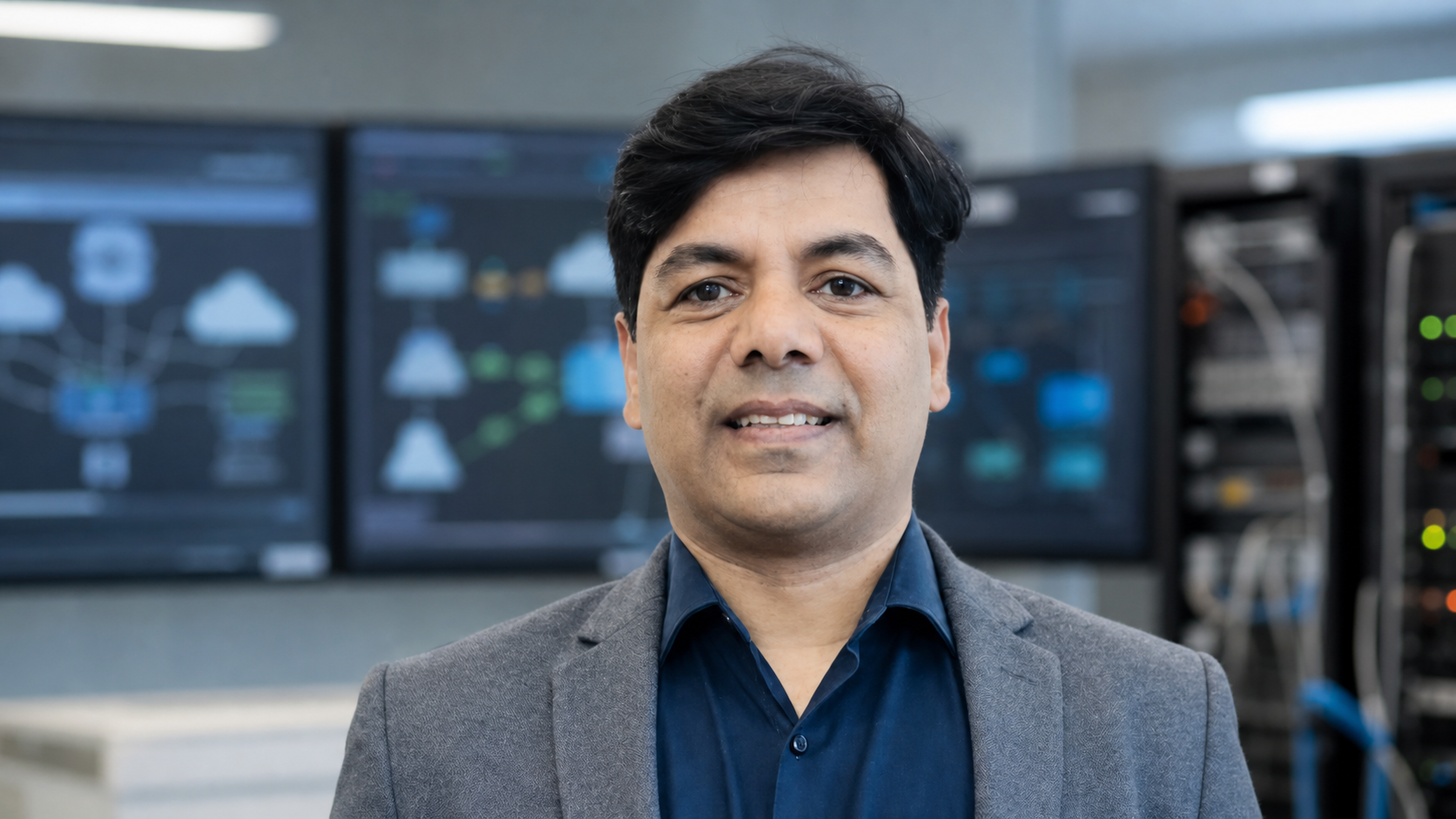
The image record needs the same care. Public speaker and LinkedIn images help ground identity, but use rights remain unresolved. A person profile should not treat an available photo as automatically publishable. If an AI editorial portrait is used, it should be grounded in verified public-photo provenance and should place the subject in a relevant telecom-network or infrastructure context without implying a specific event or endorsement that the record does not support.
The same-name issue should also stay active. Future coverage should continue to exclude the Tata Communications media profile, QNET direct-selling profile, and digital-marketing profile identified as non-target records. It should also avoid borrowing biographical detail from any result that is not clearly tied to Rakuten Mobile, Rakuten Symphony, open networking, SONiC, 5G standalone, or network strategy.
The most important thing to watch is whether Rakuten's architecture claims become more independently legible. Company pages can state ambitions and report milestones. Industry forums can show that the company is willing to present its approach. The next layer is verification: adoption, durability, repeatability, and the actual economics of the model. If open APIs tied to standalone networks produce credible commercial use, that will strengthen the business-solutioning side of Yadav's public role.
If autonomous-network claims translate into sustained efficiency without loss of accountability, that will strengthen the engineering-strategy side. If open-networking adoption proves difficult to generalize, that will be equally important.
Yadav matters because he is publicly positioned near all of those tests. His record is not a finished biography, and it should not be forced into one. It is a useful window into the work of turning a software-led telecom architecture into something the market can examine. That is a quieter kind of significance than founder mythology or executive spectacle, but it is more relevant to the infrastructure question. The networks people depend on are shaped by these less visible decisions: what to open, what to automate, what to expose through APIs, what to measure, and what claims to make before the proof is complete.
The public record so far shows a senior Rakuten engineering figure standing in that field of decisions. It shows company-reported results that deserve attention and independent scrutiny. It shows industry-event placement that connects him to open networking and SONiC. It shows a role cluster that bridges architecture, engineering strategy, and business solutioning. It also shows the limits of what can be known without transcripts, independent performance evidence, and current organizational confirmation.
That combination is enough to explain why Brijesh Yadav belongs in an infrastructure leadership file. It is also a warning against making the article too neat. His importance lies in the unresolved operating test around him. Rakuten's open and autonomous network story asks whether mobile infrastructure can become more programmable, more efficient, and less locked into traditional models without becoming harder to govern. Yadav's public role does not answer that question by itself. It gives readers a concrete place to watch it being argued.