
Primary Domain
Infrastructure
Within the Primary Domain facet, Infrastructure intelligence groups reporting by primary domain so readers can follow a focused area of internet infrastructure, governance, connectivity markets, or digital capital. The page brings together related articles, public evidence, institutions, companies, people, regional exposure, operating dependencies, and market context that may otherwise sit across separate category pages. It explains the domain, the likely actor class, the market or governance context, and the source material readers should use when comparing signals. Operators, analysts, and governance readers can see how the same domain appears across events, profiles, market shifts, public-source evidence, regional dependencies, and longer-cycle infrastructure decisions over time.

Story
A warning signal is a queue, not a verdict
APNIC’s post-roll account follows 50 networks that looked poorly prepared before the DNS root-key change. Their measured acceptance later moved above a majority threshold. That trajectory shows why readiness signals need a clock, a follow-up path and a precise definition of what…
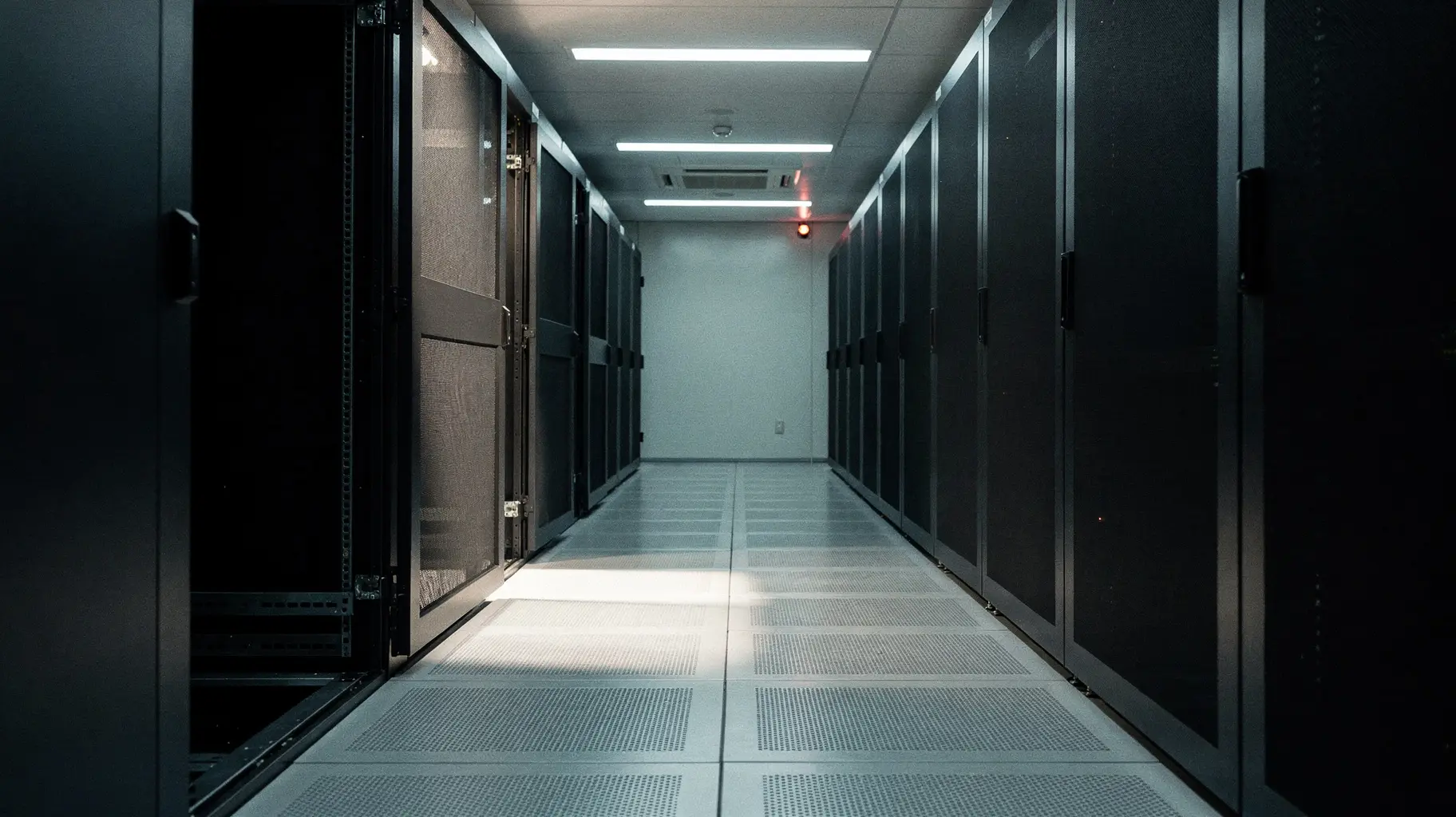
Asia-Pacific Datacenter
BroadBand Tower: the card was wrong about two things, and silent on the money
A trade-press page puts BroadBand Tower on the Tokyo Stock Exchange's Standard market and dates its founding to February 2000. The same page, plus three facility listings from one publisher, leave the operator's revenue mix, capital spending and running capacity unstated — and…

Story
AFRINIC-38 Draws a Line Between Sponsor Visibility and Policy Voice
AFRINIC sells a five-minute Platinum welcome at the same meeting whose draft agenda gives the opening five minutes before policy discussion begins. The timing raises a concrete question for delegates: what, exactly, is the sponsor buying, and where does the policy microphone…

Global Cloud Services
Intelsat: The European Commission Cleared It Unconditionally; the Price Is Still Unread
The acquisition of Intelsat Holdings S.à r.l. by SES S.A. has one instrument that can be quoted and several that cannot. The clearance carries a case number and a notification date. The price, the undertakings and the transferred licences carry a headline and nothing read behind…

Global Cloud Services
AS211392 announces 19 prefixes and 4,864 addresses — less than a single /19
AS211392 announces 19 prefixes and 4,864 addresses — less than a single /19 intelligence summary explains the development, the public evidence available to readers, the organisations involved, the regional context, market exposure, and the infrastructure consequences that may…

Global National Telecom Trends
The network fixed itself. Can the customer get online?
A successful software command is not the same as a working broadband service. New research and standards offer a better way to judge network autonomy: follow one customer's service to the end, including the moment somebody must take responsibility.

North America Institutional
Expanse has the speed. A research project still needs its share.
At San Diego Supercomputer Center, a headline performance figure tells only part of the story. The more useful trail runs through a computing award, a resource allocation and the work a particular program can finish.

Global Datacenter
The Data Centre Operator Whose Evidence Trail Runs Out
Data Centers Canada is carried in the directory as a company and a single virtual service platform. Its own domain no longer describes a business, and the one routing identifier attached to its name could not be read. That is the finding, and it is a finding about evidence, not…

Leaders
Alain Durand Made IANA’s Work Visible, One Request Type at a Time
In May 2015, just months into a new role at ICANN, Alain Durand tried to answer a practical question before the IANA stewardship transition was complete: what work did the operator actually perform, and how often did the three communities that relied on it use those services? His…

Leaders
Three Proposals for a Global IPv4 Policy: Paul Wilson’s Role in the First Attempt
Paul Wilson was one of nine people named on prop-069, the first of three attempts to define how IANA could redistribute IPv4 addresses returned after its free pool was exhausted. The proposal reached consensus in four regional processes, while a substantially revised fifth…

Global Institutional Trends
The IXP Is Still There; the Local Interconnection Ecosystem Is the Test
Internet Society’s revised policy brief moves the question from whether an exchange exists to whether local participation can endure. Its own caveats point to a harder scorecard than traffic totals.

IETF
Where the State Lives: Marcelo Bagnulo’s Work on Internet Continuity
An Internet connection can survive a changing path, cross a boundary between two address families, or yield capacity to another flow. Those outcomes depend on where a system keeps the information that lets it react. In collaborative work on Shim6, Stateful NAT64 and…

History
A Delayed ACK Made TFTP Repeat Itself: The Sorcerer’s Apprentice Bug
TFTP’s stop-and-wait design made a single delayed acknowledgement more than a nuisance. A rule that let both ends answer old packets could turn retransmission into a chain of duplicates, so 1989 host requirements prescribed a narrow fix before the protocol was revised in 1992.

History
RFC 7168 Updated the Coffee-Pot RFC. It Did Not Make Tea an Internet Standard
In 2014, a tea-brewing extension pointed to RFC 2324 with an Updates header. On the same page, RFC 7168 described itself as an independent, informational contribution and made no claim about implementation or deployment. The labels answer different questions.

History
The Internet Arrived in Stages: Papua New Guinea’s 1997 Launches
Papua New Guinea’s Internet did not enter the record as one switch thrown on one day. A carrier announcement, an international gateway, retail providers, academic use and a public website each marked a different kind of arrival—and the sources assigned them different dates.

Europe and Middle East Datacenter
InterLAN-IX: one exchange, two sets of numbers
Romania's domestic peering fabric is operated by InterLAN Internet Exchange SRL, a Bucharest-headquartered company whose own published figures and the Romanian Network Operators Group's description of the same platform do not reconcile on members, locations or traffic. For an…

Leaders
Ellen Zegura and the Multicast Core That Could Move
When a multicast group’s receivers spread across a network, the router chosen as the group’s shared core can become a poor fit. A 1996 paper coauthored by Ellen Zegura and Michael J. Donahoo treated moving that core as part of the routing problem—and also asked how to measure its…

Leaders
Nnenna Nwakanma’s Access Test Included Freedom and Privacy
In her 2015 Hague keynote, Nwakanma put broadband prices beside online freedom and privacy. Read with the affordability research of the period, the pairing offers a sharper way to ask whether access is real.

Leaders
Yasu Taniwaki’s Question: Who Can Seek a Remedy from an RIR?
At Japan IGF 2024, Taniwaki asked whether the RIR system had an appeal or dispute-resolution process. A later draft names more people who may enforce rights against an RIR, but the text is still awaiting approval and implementation.

Academics
Dan Farmer and the Unix Checks COPS Could Run Locally
Dan Farmer and Eugene H. Spafford described COPS as a configurable set of small checks for recurring Unix host problems. It made inspection easier to repeat without pretending that a clean run could decide policy, fix the machine or prove it secure.