
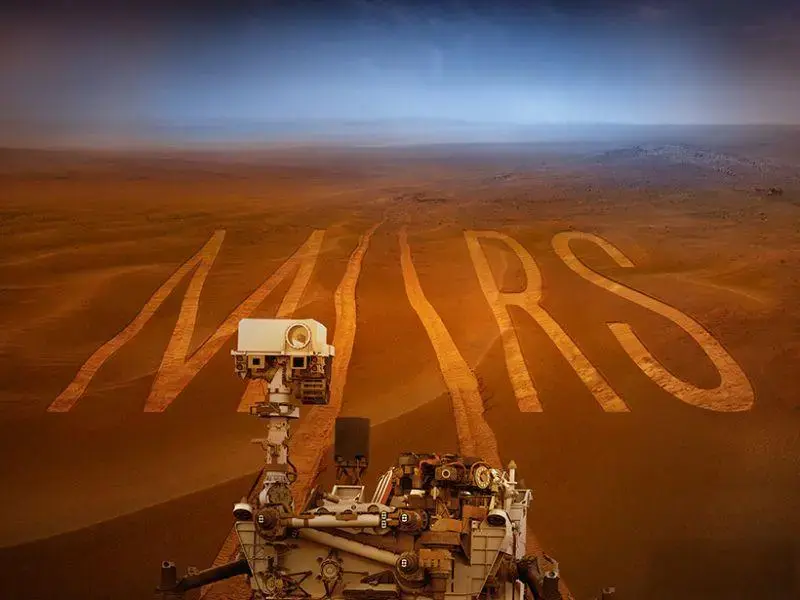
Mars is considered the most promising target for colonization due to its relatively favorable conditions. Colonizing Mars could provide an alternative refuge for humanity in the face of existential threats like climate change and overpopulation. SpaceX has outlined a roadmap for Mars colonization, starting with unmanned missions in the 2020s to prepare for human landings. Over time, the base will expand, and Mars’ resources will be utilized, with the goal of a self-sustaining colony of one million people by mid-century. For centuries, the idea of traveling to Mars has fascinated humanity.
This red, dusty, and desolate planet has captured our imaginations as a symbol of the publicly documented context and the ultimate frontier. But as technology advances and Earth’s resources face increasing strain, the once-fantastical dream of colonizing Mars is inching closer to reality. The race to establish a human presence on Mars is now a highly strategic and scientific endeavor, drawing the attention of space agencies, private companies, and nations worldwide. Why Mars? Mars presents the most promising candidate for colonization among our celestial neighbors.
Unlike the moon, which lacks an atmosphere, Mars has a thin atmosphere primarily composed of carbon dioxide. It also has polar ice caps containing water, a key resource for sustaining human life. With temperatures averaging around -80°F (-62°C), Mars may seem inhospitable, but it’s still more manageable than the extreme environments found on Venus or the gas giants. Mars is also similar to Earth in terms of day length, with a Martian day (or “sol”) lasting about 24.6 hours. Its seasonal changes, axial tilt, and surface features like valleys, mountains, and plains make it feel somewhat familiar, despite its alien appearance.
For scientists and visionaries, Mars represents a second chance—a potential new home for humanity should Earth become uninhabitable due to climate change, overpopulation, or other existential threats. Also read: NASA is seeking a better way to bring Mars sample back to Earth From Earth to Mars: The countdown to our new frontier The idea of making humanity a multi-planetary species has captured the imagination of scientists and visionaries alike, with the most notable proponent being Elon Musk. He once said, “I would like to die on Mars. Just not on impact.” “I would like to die on Mars.
Just not on impact.” Elon Musk Musk’s ambitious vision for Mars colonization is grounded in the belief that securing a future beyond Earth is essential for the survival of humanity. His detailed timeline sets a course for transforming Mars from a barren landscape into a thriving, self-sustaining colony. Let’s dive into Musk’s step-by-step roadmap for achieving this monumental goal and see how SpaceX plans to make it a reality. Also read: SpaceX plans 5 uncrewed Mars missions in 2 years, says Elon Musk 2020s: Testing and Uncrewed Missions 2024-2026: The first significant step is to conduct uncrewed missions using Starship.
SpaceX aims to launch its first uncrewed cargo mission to Mars as early as 2026. This mission will deliver essential supplies, including habitats, solar panels, and life support systems. These initial missions will focus on scouting for landing sites, mapping potential settlement areas, and testing technology needed for human survival. 2028-2030: In parallel, SpaceX collaborates with NASA through the Artemis program to refine technology on the Moon that could later be used on Mars. This includes testing systems for habitat construction, radiation protection, and in-situ resource utilization (ISRU).
2030s: First Crewed Missions 2030-2033: The first crewed mission to Mars is a major milestone in Musk’s timeline. SpaceX aims to send astronauts on a 6-9 month journey to Mars by the early 2030s. The mission will focus on establishing an initial human presence, conducting scientific research, and setting up basic infrastructure. The astronauts will spend several weeks on the Martian surface, laying the groundwork for future colonization. 2035-2037: Following the initial mission, SpaceX plans to send additional missions to transport more equipment, habitats, and supplies.
These follow-up missions will focus on building a semi-permanent base and begin experimenting with ISRU to extract water from Martian ice and produce oxygen from the carbon dioxide-rich atmosphere. 2040s: Building Permanent Settlements 2040-2045: By the mid-2040s, Musk envisions that small-scale colonies will be operational on Mars. These early habitats could house up to 100 people and rely heavily on local resources. The focus will be on creating sustainable life support systems, such as hydroponic farms for food production and solar power for energy needs.
2045-2048: SpaceX aims to establish more regular transport between Earth and Mars, increasing the frequency of missions as technology improves. Colonists will start building underground habitats or domes covered with Martian soil to protect against radiation, an essential step for long-term habitation on the planet. 2050s: Expanding the Colony 2050: One of Musk’s most ambitious goals is to send up to 1 million people to Mars by 2050. He envisions fleets of reusable Starships making this possible, significantly reducing the cost of each trip.
The target is to establish a large, thriving city that could become self-sustaining, relying on Martian resources for food, energy, and construction materials. 2050-2060: The infrastructure will continue to expand, with advanced life support systems, factories for manufacturing essential goods, and possibly even early steps towards terraforming, such as deploying greenhouse gas-emitting devices to warm the atmosphere and make it more hospitable. 2060s and Beyond: Towards Terraforming and Full Colonization 2060-2070: If the early colonies prove successful, Musk’s long-term projects may focus on making Mars more Earth-like.
This could include introducing engineered microbes to the soil to release oxygen, planting vegetation, and further thickening the atmosphere to make it more conducive to human life. 2100 and Beyond: By the end of the century, the vision is to have a fully functional, self-sustaining colony on Mars with a growing population. While full terraforming might take centuries, the early efforts would lay the groundwork for making Mars a second home for humanity.
Also read: Musk’s X makes peace in Brazil feud Also read: SpaceX makes history by successfully catching returning starship booster with giant ‘chopsticks’ Pop quiz What is one of the major goals for Mars colonization by the end of the 21st century? A. Establishing a research base like Antarctica B. Building a fully self-sustaining colony C. Terraforming the entire planet D. Constructing a space elevator The correct answer is at the bottom of the article. The ethical dilemmas of colonizing Mars As we race toward making Mars our second home, ethical questions loom large. What right do we have to alter another planet’s environment?
Mars, with its vast deserts and potential traces of ancient life, is a pristine environment that we could irreversibly change through terraforming and industrial activities. There’s also the concern of contamination. Introducing Earth-based microbes could jeopardize future discoveries of native Martian life, if it exists. The principle of planetary protection, which seeks to prevent harmful biological contamination, will need to be balanced with the practicalities of human colonization. Furthermore, the social and political aspects of colonizing Mars are complex.
Will the first settlers be pioneers of a new society, or will Mars become an extension of Earth’s existing geopolitical struggles? Issues of governance, resource allocation, and ownership rights will need to be addressed to avoid repeating historical patterns of colonization marked by conflict and exploitation. Martin Rees, a renowned British cosmologist and astrophysicist, says, “Space doesn’t offer an escape from Earth’s problems. And even with nuclear fuel, the transit time to nearby stars exceeds a human lifetime.
Interstellar travel is therefore, in my view, an enterprise for post-humans, evolved from our species not via natural selection, but by design.” “Space doesn’t offer an escape from Earth’s problems. And even with nuclear fuel, the transit time to nearby stars exceeds a human lifetime. Interstellar travel is therefore, in my view, an enterprise for post-humans, evolved from our species not via natural selection, but by design.” Martin Rees A new chapter in human history The race to colonize Mars represents a new chapter in human history—an era where space exploration is not just about scientific discovery but about survival and expansion.
The challenges are immense, but so are the rewards. Establishing a human presence on Mars would be a monumental achievement, signifying that humanity is not confined to Earth. It would be a testament to our resilience, curiosity, and ability to adapt to new frontiers. As we stand on the cusp of this new era, one thing is clear: the journey to Mars will not be easy, but it will be one of the most significant undertakings in our history.
Whether driven by the quest for knowledge, the need for survival, or the desire to explore, the dream of living on Mars is no longer confined to science fiction—it is our future, waiting to be written in the red dust of the Martian plains. Quiz answer B. Building a fully self-sustaining colony