
Summary
- Sound Transit is not funded by the fare tap alone. Its 2026 plan shows passenger fare revenue of about $84.6 million against a public-finance machine led by sales tax, motor vehicle excise tax, property tax, federal grants, borrowing, investment income, and long-range debt capacity.
- The fare tap still matters because it is where riders experience the institution's bargain directly: pay a simple fare, receive dependable trains and buses, safer platforms, clearer communications, equitable enforcement, and a payment system that protects personal and transaction data.
- The authority's official budget, fare report, performance tracker, and long-term affordability material show a central tension: ridership and expansion are rising, but operating costs, security work, digital systems, capital delivery, and a projected multibillion-dollar ST3 affordability gap all demand more patience than a frustrated rider may be willing to grant.
- Network-resource evidence is consistent with a modern public operator that depends on its own internet number resources, Microsoft-hosted mail, strict email authentication, SaaS verification records, payment security work, and cybersecurity programs. Those records do not prove service quality, but they show that transit reliability now includes digital infrastructure as well as rails, buses, crews, and stations.
Established. Sound Transit is the regional transit authority for the central Puget Sound area, and its official budget describes a 2026 operating and capital plan dominated by public tax revenue, system expansion, modal operating costs, service-delivery projects, and debt service. Its fare pages state that adult Link light rail and ST Express fares are generally $3, Sounder fares are distance-based, youth ride free, and riders can pay with ORCA, contactless cards, mobile tickets, or cash where accepted (https://www.soundtransit.org/ride-with-us/how-to-pay/fares). Its 2024 fare revenue report says fare revenue recovered with ridership but remained below pre-pandemic levels, while ORCA Business Passport revenue accounted for a large share of collections (https://www.soundtransit.org/sites/default/files/documents/fare-revenue-report-2024.pdf).
Reasonable inference. The fare tap is best read as a trust instrument rather than as the main source of money. It is too small to fund the network by itself, but too visible to be treated as minor. Each tap tells the rider that the authority can price service simply, collect revenue without humiliating the public, support low-income and youth riders, keep payment channels working, and translate fare compliance into a more resilient operating plan. It also tells elected overseers, taxpayers, bondholders, grant makers, and local employers that Sound Transit can make the daily bargain legible.
Still missing. A full judgment would need more granular evidence on fare evasion by mode and time period, payment-processing costs, station-specific staffing needs, incident trends, customer data-retention practice, vendor performance, and the operating effects of future expansion. Official materials disclose enough to frame the economics, but they do not expose every weak point in the payment stack or every cause of rider dissatisfaction.
The Fare Tap Is A Tiny Contract With A Large Institution
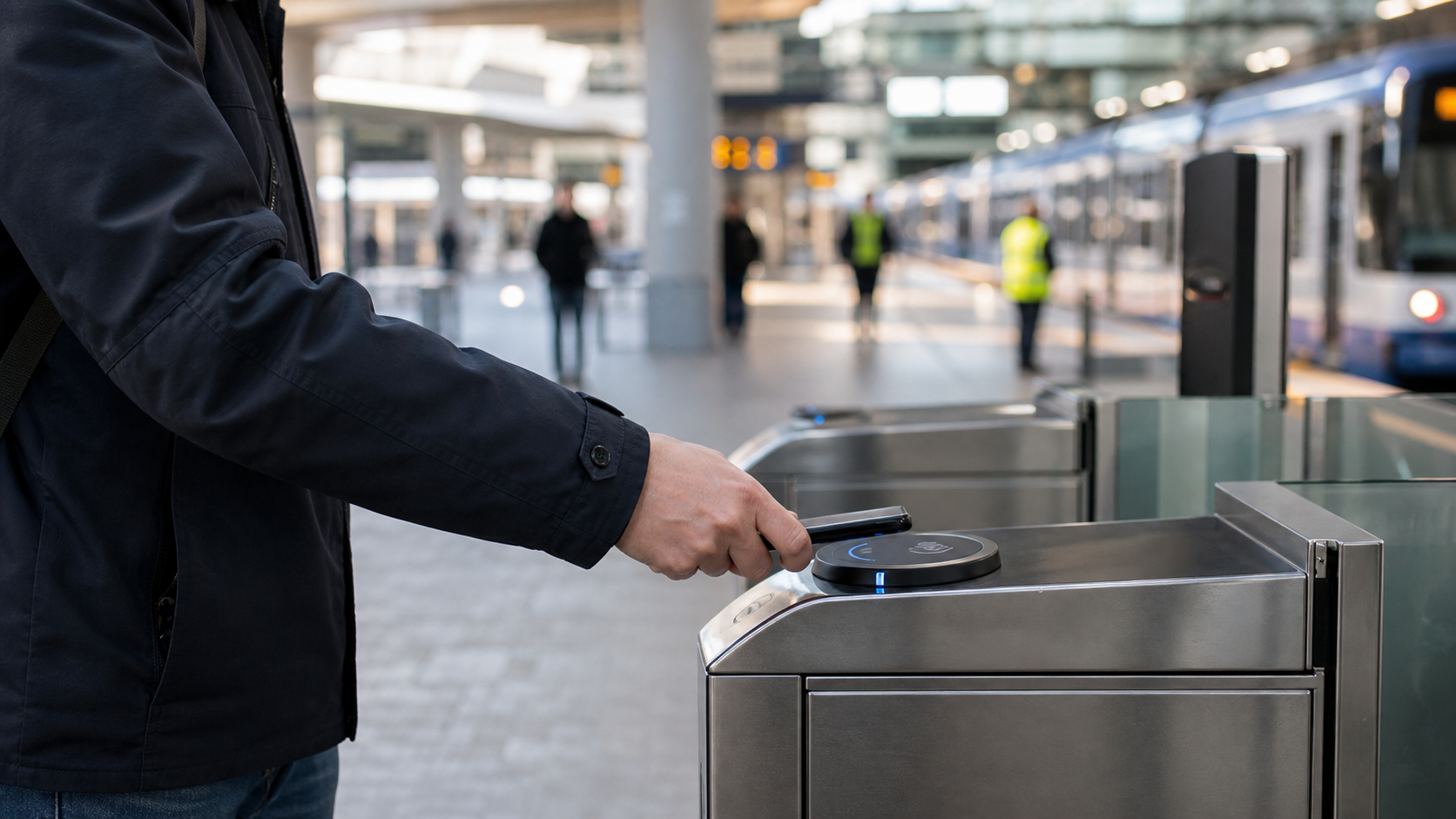
The first economic fact about a Sound Transit fare tap is that the transaction is emotionally larger than the price. A commuter who taps an ORCA card or contactless bank card before boarding may have just spent less than the cost of a downtown coffee. The authority, however, has implicitly promised a great deal more than movement between two points. It has promised that the reader will work, that the account balance will be recognized, that a transfer will be honored, that fare enforcement will be legible, that service will be frequent enough to justify leaving a car behind, that station spaces will be safe enough to wait in, and that public money will not disappear into a capital program that becomes too expensive to finish.
That is why the unit of analysis should be the tap, not a generic description of a transit operator. The tap concentrates the political economy of Sound Transit into a second of contact. Fare collection is the moment when public subsidy, private household cost, service reliability, regional tax tolerance, and customer data all meet. If the tap feels arbitrary, the institution's larger case weakens. If the tap feels fair, easy, and connected to real service, a much broader public-finance structure becomes easier to defend.
Sound Transit itself makes clear that fares are only one funding source. Its "Paying for regional transit" page lists local taxes, federal grants and loans, bond proceeds, interest earnings, fare income, and other revenues as the main funding mix, and it presents a long-range plan in which local taxes dwarf fare and other income (https://www.soundtransit.org/get-to-know-us/paying-regional-transit). The 2026 adopted budget likewise describes a public-finance institution, not a farebox business. Revenue sources include sales tax, motor vehicle excise tax, property tax, federal grants, investment income, fare revenue, miscellaneous revenue, and borrowing. Passenger fares are material, but they sit inside a capital-intensive public system with billions of dollars of annual sources and uses.
That does not make fare revenue symbolic. Sound Transit says fare income is part of the voter-approved financial plan, and its fare enforcement material states plainly that removing fare revenue would require taxes or other replacement sources (https://www.soundtransit.org/ride-with-us/how-to-pay/fare-ambassadors). The same point appears in softer form across the budget: fare revenue is not the main pillar, yet a weakening fare stream worsens affordability and forces tradeoffs in a plan already strained by construction costs, operating costs, borrowing limits, and expansion promises.
A fare tap therefore carries three claims at once. It is a price for a ride. It is evidence of participation in a shared regional system. It is also a micro-payment into a larger argument that Sound Transit can keep faith with the voters who approved expansion while adjusting to post-pandemic travel patterns, higher construction costs, hybrid work, more complex safety expectations, and a more software-dependent fare system. A fare tap that simply opens a rider's trip is operational. A fare tap that buys time for the institution is political.
The Revenue Logic Is Modest, But The Discipline Is Not
Sound Transit's official fare table is designed to be simple enough for a daily rider to understand. Link light rail adult one-way fare is listed at $3. ST Express is listed at $3. The T Line is listed at $2. Sounder remains distance-based, with adult one-way fares from $3.25 to $5.75. Reduced fares and youth policy are equally important: low-income ORCA LIFT riders and seniors or riders with disabilities have lower fares, while youth 18 and under ride free. The system also uses two-hour ORCA transfer credit, which makes the tap part of a regional journey rather than a single-vehicle sale (https://www.soundtransit.org/ride-with-us/how-to-pay/fares).
The choice to flatten and align fares is a pricing strategy, not only a customer-service simplification. Sound Transit announced in late 2024 that the ST Express adult fare would fall from $3.25 to $3, effective March 1, 2025, aligning it with the Link flat fare. The authority said this alignment supported equitable and simple pricing and cited survey support for the change. The tradeoff is obvious. A lower or simpler fare can reduce friction, increase perceived fairness, and help transfers. It can also compress average fare per boarding at the very moment when the institution needs every reliable revenue stream it can defend.
The 2024 fare revenue report quantifies the recovery and the shortfall. It reports systemwide ridership up 12 percent and fare revenue up 19 percent from 2023, but ridership still 10 percent below 2019 and fare revenue 36 percent below 2019. Total fare revenue reached $61.8 million in 2024, with Link, ST Express, Sounder, and Tacoma Link all improving from the prior year. But farebox recovery remained low by older transit-finance standards: Link and Sounder were below their policy minimums, while ST Express was above its minimum. The report also states that through 2046 the long-range financial plan assumes about $5.5 billion in fare revenue. That number is small beside total long-range capital and operating uses, but large enough that losing it would matter.
The fare report also points to the behavior behind the number. Fare media use on Link rose from 56 percent of boardings in 2023 to 61 percent in 2024, according to automatic fare media data. The financial plan later assumes that boardings with fare media rise to 63 percent in 2026, 70 percent in 2027, and 75 percent from 2028 onward. That assumption is a hinge. If fare media use stalls below plan, the budget loses more than dollars. It loses a proof point that the authority can make proof-of-payment work at scale without gates, excessive confrontation, or a perception that paying is optional.
The authority's passenger fare budget for 2026 is about $84.6 million. In the 2026 adopted budget, that is presented as an increase from the 2025 forecast, helped by expanded service and ridership. Yet the same budget describes a much larger operating and capital machine: roughly $912.8 million in modal operating expense, about $1.8 billion in system expansion spending, and major service-delivery and debt-service needs. The ratio matters. Fare revenue is not the financial engine, but it is one of the few daily signals that riders, staff, and political overseers can observe without reading a 274-page budget.
This is the discipline part of the fare tap. A low fare can still demand high institutional performance. It requires accurate fare allocation across regional products, reliable readers, correct transfer rules, sound customer support, fair enforcement, and public trust that the tap is worth making. The price is modest. The system behind the price is not.
Fare Collection Is Also A Customer Data System
ORCA is often described as a fare card, but in Sound Transit's economics it is also a regional trust layer. The public ORCA guidance explains that riders can add value, use passes, tap before boarding Link and Sounder, and tap again when exiting Sounder because Sounder uses distance-based fares (https://info.myorca.com/using-orca/). The same regional payment fabric supports E-purse value, passes, transfers, reduced-fare products, youth access, and employer programs. A successful tap is therefore not merely a beep. It is an account lookup, a fare rule, a transfer calculation, an allocation across participating transit providers, and a customer-service obligation if something goes wrong.
This is where data sovereignty and locality enter the fare debate. Riders may think of transit data as a boarding record, but the operating surface is wider: card registration, account balances, autoload rules, low-income eligibility, youth or reduced-fare status, employer-paid products, mobile ticket purchases, contactless bank-card taps, transaction logs, and support interactions. Sound Transit is one participant in a regional fare system, and its own budget includes projects tied to ORCA modernization, fare administration, and compliance. The 2026 budget lists an ORCA Next Generation project, including planning, development, implementation, and Phase II work that includes payment-card industry compliance and state-of-good-repair work. It also lists a fare administration project covering pricing, fare collection, ORCA maintenance and upgrades, fare revenue monitoring, fare performance tracking, business accounts, fare changes, and fare elasticity or revenue models.
These budget lines are not decorative. They show that the fare tap has become a software and governance problem. When Sound Transit says it accepts ORCA cards, contactless debit and credit cards, and the Transit GO app, it is committing to multiple channels with different privacy, reconciliation, support, and fraud-management characteristics. Contactless bank-card acceptance is convenient, especially for occasional riders and visitors. It also brings payment processing, tokenization, dispute handling, and processor dependence closer to the transit experience. ORCA remains the more visible regional account product, particularly for passes, transfer value, and reduced fares.
The strongest public case for the tap is convenience joined to inclusion. Sound Transit says youth ride free, reduced-fare programs exist for eligible riders, and fare ambassadors can help riders find ORCA LIFT support. That means the payment system must avoid turning complexity into exclusion. If a low-income rider cannot understand which product applies, where to load value, why a transfer failed, or how to resolve a violation, the fare system becomes a barrier rather than a bridge. Conversely, if the system is easy to use, the authority can collect revenue while defending reduced fares as part of the public bargain.
The missing evidence is the detailed cost and performance of the payment stack. Public materials disclose budgets and policy categories, but they do not expose all processor fees, failed-tap rates, chargeback behavior, device uptime by location, call-center resolution times for fare errors, or the exact data-retention policy most riders would care about. The direction is clear enough: Sound Transit has moved from fare collection as a box-and-ticket function to fare collection as a regional data service. The quality of that service will shape whether the fare tap feels legitimate.
The Cost Base Behind The Tap Is Labour, Power, Cleaning, Security And Software
The most common rider mistake is to treat the tap as payment for the vehicle already in front of them. The 2026 budget shows a wider cost base. Modal operating expense is budgeted at about $912.8 million, with Link at roughly $553.7 million, ST Express at about $204.2 million, Sounder at about $128.1 million, and the T Line at about $26.7 million. That money covers the public-facing trip, but it also sits behind power systems, operators, maintenance, cleaning, rail staff, bus contracts, customer support, supervision, security, and recovery from service disruptions.
Expansion increases that burden before it necessarily improves public patience. The budget describes a 29 percent service-hour increase over the 2025 forecast, tied to full-year effects of new service, more frequent Link headways, reliability and resiliency work, more security, cleaning standards, and special operations for the 2026 FIFA World Cup in Seattle. That is an important point for the fare tap. A rider may experience a new line opening as a promise of convenience. The budget experiences it as more hours, more assets, more staff, more maintenance, more security coverage, and more failure points.
The budget's modal measures reveal the challenge. For 2026, Link is budgeted for more than 50 million boardings and a farebox recovery ratio of 11.6 percent. Sounder is budgeted for about 2.1 million boardings and a farebox recovery ratio of 5.4 percent. ST Express is budgeted for about 8 million boardings and a farebox recovery ratio of 6.3 percent. The precise numbers can move with ridership and cost, but the order of magnitude is the message: fares recover a limited share of operating cost. The rest is political funding capacity translated into daily service.
This does not make operations inefficient by itself. Transit systems are designed to produce public benefits that are not captured in the fare: less congestion, regional mobility, access to jobs, lower household transport costs, climate and land-use goals, and mobility for riders who cannot or should not drive. But it does mean Sound Transit must explain why a low farebox recovery ratio is acceptable while also improving service reliability and cost control. The fare tap is where that explanation becomes personal. A rider delayed by a service interruption does not care that the capital plan is complex. A rider waiting in an uncomfortable station does not care that the fare is subsidized. A rider who paid expects the institution to work.
Sound Transit's system performance tracker is evidence that the authority understands this experience-based standard. The tracker organizes performance around accessibility, cleanliness, dependability, rider information, passenger feedback, ridership, safety, and service by neighborhood (https://www.soundtransit.org/ride-with-us/system-performance-tracker). That public framing is useful because it connects operational economics with rider trust. Dependability and safety are not intangible public-relations categories. They are the return a rider expects from the tap.
The cost base is also increasingly digital. The 2026 budget includes cybersecurity controls, operational technology risk mitigation, network redesign, data management, enterprise systems, project management software, and digital passenger information. A transit authority that cannot maintain its information systems cannot reliably communicate disruptions, manage assets, protect payment data, support customer service, or coordinate capital work. The fare tap has therefore become a claim on software resilience as much as a claim on vehicle movement.
Proof Of Payment Must Be Efficient Without Looking Predatory
Sound Transit uses proof-of-payment on open systems rather than fare gates for Link, and its own fare ambassador page explains the logic and the controversy. Fare ambassadors check fares on trains and platforms, document interactions, issue warnings or violations, answer questions, teach riders how to use the system, and connect riders to fare products. The page says platform inspections were approved as part of fare engagement planning, and it explains that Sound Transit has not been directed to pursue fare gates for Link because the system is open and street-accessible (https://www.soundtransit.org/ride-with-us/how-to-pay/fare-ambassadors).
That is a serious operating choice. Fare gates can create visible control and sometimes improve compliance, but they add capital cost, maintenance, accessibility questions, crowding constraints, station redesign needs, and a different kind of policing surface. Proof-of-payment shifts the burden toward staff, inspection design, rider education, data, and a fair violation process. If done poorly, it can look random, intrusive, or weak. If done well, it can collect revenue while preserving an open, legible station environment.
The policy architecture is graduated. Sound Transit describes a current policy under which the first two warnings in a 12-month period do not immediately become the highest penalty. Later violations can lead to monetary penalties and then civil infractions. A separate violation-resolution page describes alternatives such as loading value, attending a class, joining a focus group, making a pledge, or applying for ORCA LIFT (https://www.soundtransit.org/ride-with-us/how-to-pay/resolve-your-fare-violation). Economically, that design tries to separate inability or confusion from repeated nonpayment. Politically, it tries to avoid making fare enforcement the symbol of institutional indifference.
The hard question is whether the design changes behavior enough. The 2024 fare revenue report says Link fare media use improved to 61 percent of boardings, but the financial plan assumes further increases over time. It also states that fare ambassadors inspect a target share of boardings. If inspection intensity rises, Sound Transit may get more taps. But enforcement has diminishing returns if riders see payment as optional, if readers are inconvenient, if reduced-fare enrollment is difficult, or if service itself feels unreliable. A proof-of-payment system cannot be sustained by staff presence alone. It requires a culture in which paying is normal because the service is worth paying for and because the rules are applied consistently.
The equity question is not separate from revenue. Youth free fares, ORCA LIFT, senior and disability fares, and non-monetary violation resolution all reduce the risk that payment becomes a blunt instrument against riders with less cash. But every concession requires operational precision. If eligible riders cannot access the right credential, if account setup fails, or if enforcement staff cannot explain the options, the policy's fairness is only theoretical. A fare tap is small, but the system around it must distinguish between a deliberate free ride, an honest mistake, and a rider who was never given a workable path into the fare product.
Sound Transit's strongest argument is that proof-of-payment can be both a revenue tool and a customer support channel. Its weakest hinge is whether the public experiences it that way at scale. The official policy is careful. The daily encounter has to be careful too.
Capital Costs Turn Today's Tap Into Tomorrow's Patience Test
The fare tap buys more than the current ride because Sound Transit is a capital-expansion institution. The public has been asked to tolerate years of construction, project changes, debt issuance, taxes, and service disruptions on the promise of a larger regional system. That promise now faces a sharper affordability test. Sound Transit's long-term affordability page says the authority is working to close a $34.5 billion future funding gap projected through 2046, and that rapidly escalating capital and operating costs threaten the ability to complete the ST3 program as originally imagined (https://www.soundtransit.org/get-to-know-us/achieving-long-term-affordability).
The page also insists on a distinction that matters for financial credibility. Sound Transit says it remains financially sound, with substantial cash and investments and strong credit ratings, but that affordability depends on debt capacity and repayment ability. That is not a contradiction. A public authority can be solvent today and still unable to afford every future project under current law, cost estimates, and debt-service policy. The 2026 budget reinforces the point by describing legal debt limits, debt-service coverage policy, long-term borrowing assumptions, and the risk that unconstrained spending would exceed capacity.
For the rider, those details are remote until they show up as delayed openings, revised scopes, more taxes, more borrowing, lower service quality, or political fatigue. Local reporting has treated the ST3 affordability gap as a live public issue, with project timing and scope decisions becoming part of the region's political debate (https://www.axios.com/local/seattle/2026/05/29/sound-transit-ballard-light-rail-delay-st3-budget-shortfall-second-downtown-tunnel). Official materials are the primary evidence for the gap; local reporting is useful because it shows how the gap becomes public narrative. When a rider taps a fare reader after hearing about project delays or cost escalation, the tap is no longer a clean purchase. It is a test of whether the authority still deserves patience.
Capital delivery is also connected to operations through reliability. The 2026 budget describes operating-system resiliency work, power, electrical, rail, signal, cleaning, and staff resources to support more frequent headways. It also describes service-delivery spending on facilities, infrastructure, IT, asset management, project management systems, and digital information. These are not optional add-ons to an expansion plan. If a region builds more rail without maintaining the systems that keep it reliable, the expansion can degrade trust instead of increasing it.
The 2025 Board Annual Program Review is useful because it frames this challenge as more than one project. It discusses financial health, program performance, cost pressures, capital delivery, construction labor market conditions, and an enterprise-wide initiative to deliver benefits within financial capacity (https://www.soundtransit.org/sites/default/files/documents/2025-board-annual-program-review.pdf). The institution is trying to prove that it can manage a portfolio, not just open segments.
The fare tap sits at the bottom of this pyramid. It will not close a $34.5 billion gap. But if taps fall below expectations, if fare compliance disappoints, if ridership forecasts weaken, or if riders lose confidence, the long-range plan has one fewer support. A fare tap cannot rescue a capital program. It can help demonstrate that the public still uses, pays for, and values the system being built.
Network Records Show That Transit Reliability Is Also Digital Reliability
Sound Transit is a transport institution with visible physical assets, but public network records show a digital operating surface that is increasingly inseparable from the service. ARIN RDAP records identify Sound Transit as the registrant for AS33553 and the 199.191.49.0/24 IPv4 allocation, with validated organizational, technical, abuse, and network-operations contacts (https://rdap.arin.net/registry/entity/CPSRTA). DNS records for soundtransit.org show Microsoft-hosted mail infrastructure, strict DMARC policy at reject, and multiple verification records for software and service providers. These records do not say whether a train will be on time. They do show that Sound Transit operates an internet-facing administrative and communications environment consistent with a large public institution.
This matters because riders experience transit through information before and during the trip. They check service alerts, plan routes, receive disruption notices, contact customer service, read fare rules, manage payment products, and look for safety or accessibility updates. Sound Transit's website itself presents service alerts, trip planning, fare instructions, performance data, board documents, and budget documents (https://www.soundtransit.org/). If those systems are confusing, unavailable, or poorly secured, service quality declines even when vehicles are moving.
The 2026 budget recognizes the digital layer directly. Cybersecurity enhanced controls include vulnerability management, system restoration, identity and access management, monitoring, and network security. Network redesign work emphasizes high-capacity, resilient, flexible, and reliable networks, including an IT Operations Center for round-the-clock monitoring of mission-critical systems. Data management work includes governance and operational reporting. Operational technology risk mitigation is aimed at reducing risks to systems that support revenue operations. These are not back-office luxuries. They are part of the fare tap's credibility because fare payment, customer communication, service recovery, asset data, and public accountability all depend on digital systems.
The DNS evidence is especially relevant to data sovereignty and locality because it shows a mixed model. Sound Transit has its own assigned network resources, yet its public mail and many service verifications rely on large cloud and SaaS providers. That is normal for a modern public institution, but it raises practical questions. Which systems hold payment data? Which systems hold customer support records? Which data is retained locally, regionally, nationally, or under third-party contracts? Which vendors have incident-notification duties? Which systems are most critical during a fare outage, a public-safety incident, a major service disruption, or a large visitor surge?
Public evidence does not answer all of those questions. It does show that the authority's operational risk is not confined to rail, bus, and station assets. A failed email-authentication posture would increase fraud risk. Weak access controls could expose customer or staff systems. A payment-card compliance problem could impair contactless or account-based payment. A network outage could affect communications, alerts, internal coordination, or customer care. In a transit system where riders have been taught to tap, check alerts, and expect digital support, digital failure becomes transport failure.
The important caution is not to overread network records. An AS number, an IP block, and DNS TXT records are evidence of infrastructure and vendor dependence, not evidence of competence by themselves. Their value is that they widen the lens. Sound Transit must be judged as a transport operator, a public-finance institution, a capital builder, a fare collector, and a digital service provider. The fare tap touches all five.
Riders Supply Revenue, But More Importantly They Supply Permission
Ridership is a financial variable, but it is also a legitimacy variable. Sound Transit's 2026 budget says light rail average daily ridership grew from June 2024 to June 2025, and that recent openings raised Eastside ridership. The budget at a glance presents total boardings rising from 2022 through the 2026 budget year, with a large increase expected as expanded service takes effect (https://www.soundtransit.org/sites/default/files/documents/2026-Budget-at-a-glance.pdf). The growth is useful. It gives the authority a stronger story: expansion attracts use, use justifies service, service supports public funding, and public funding enables further expansion.
But ridership is not the same as affection. A rider can use the system because it is the least bad option and still resent delays, crowding, safety concerns, poor information, confusing fare products, or construction disruption. That is why the performance tracker's categories are important. Dependability, clean spaces, safety, rider information, and passenger feedback are the operating translation of ridership into permission. If those categories worsen, boardings can become brittle. The rider may still board today, but the household may keep a car, oppose taxes, complain to elected officials, resist future construction, or advise others that the system cannot be trusted.
The fare tap sharpens this link because payment makes expectations explicit. A free service can still be judged harshly, but a paid service creates a clearer claim. Sound Transit has intentionally softened some price barriers, especially for youth and reduced-fare categories. That is good public policy if it increases access and supports long-run rider habits. But it also means the adult fare-paying rider may become more sensitive to perceived freeloading, enforcement inconsistency, or weak service. A simple $3 fare can be a bargain and a grievance at the same time.
Customer communication is therefore not a side function. Sound Transit lists rider alerts, email response, service information, and passenger feedback as performance areas. During expansions, disruptions, maintenance, safety incidents, or large visitor surges, communication is part of the service itself. The 2026 budget's World Cup planning is a useful example: the authority expects unusual visitor volumes and budgets for added service, multilingual communications, ambassadors, fare support, security, and facilities work. The surge is temporary, but the lesson is general. If the authority cannot explain how to ride, how to pay, what changed, and what to do when service breaks, the fare tap loses legitimacy.
Rider dependence also cuts the other way. Sound Transit depends on riders not only for fare revenue, but for the political proof that the system is worth expanding. Low ridership weakens fare revenue, farebox recovery, environmental claims, congestion claims, and the case for taxes or grants. High ridership strengthens the case, but only if the service can absorb it without degrading. The 2026 plan's four-minute headway ambitions, added staff, reliability work, and cleaning standards are all attempts to convert demand into confidence rather than frustration.
The fare tap is the daily referendum. It asks the rider to believe that the authority will use a small payment, and much larger public subsidies, to make the next trip more dependable than the last.
Suppliers And Local Support Labour Sit Behind Every Beep
A fare tap feels automated, but the institution behind it is labour-intensive. Sound Transit's 2026 budget specifically calls out added King County rail staff to support more frequent Link headways, plus spending on power, electrical, rail, signal, and cleaning. It describes additional security officers, rapid-response security employees, Security Operations Center improvements, and capital spending on at-grade crossing safety. It also funds facilities work, infrastructure work, IT systems, and asset-management platforms. The beep is electronic. The reliability is human, contractual, and local.
This is why "local support labour" belongs in the analysis. Transit service is constrained by people who can operate, maintain, secure, clean, repair, inspect, plan, schedule, dispatch, communicate, and recover the system. Labour shortages, overtime pressure, training gaps, safety concerns, and coordination problems can all show up as a late train, a dirty platform, a closed escalator, a missed bus connection, or a rider who cannot get help with a fare problem. The budget's labor-market language and cost escalation should therefore be read as operating evidence, not abstract macroeconomics.
Supplier dependence is equally visible in the fare system. ORCA technology, contactless payment acceptance, mobile ticketing, cybersecurity tools, cloud services, enterprise systems, rail systems, vehicle maintenance, facilities contracts, and communications platforms all require vendors or regional partners. Sound Transit's public budget names categories rather than every commercial term, but the exposure is clear. A transit authority can own public accountability while depending on private and intergovernmental systems to deliver the ride.
This creates a governance problem at the fare tap. If a contactless bank-card reader fails, the rider may blame Sound Transit even when the cause sits with hardware, software, communications, settlement, or a regional fare-system issue. If an account-based product misallocates value, the rider experiences a public-service failure even if a vendor or interlocal arrangement contributed. If a station lacks staff, the public sees institutional absence, not a procurement plan. The authority must therefore manage supplier performance as part of public trust.
There is also an economic asymmetry. Riders see the tap price and may assume that automation should lower costs. In reality, automation can reduce some friction while adding new fixed costs: security reviews, software licensing, device lifecycle management, compliance audits, integration testing, data governance, customer support tooling, and failure recovery. The budget's cybersecurity, data-management, ERP, EAMS, PMIS, and network redesign programs are evidence of those fixed costs. They may improve efficiency over time, but they require upfront spending that does not look like a train arriving.
The fairest reading is that Sound Transit is trying to professionalize a larger operating institution while continuing to expand. That is hard because the public often gives little credit for avoided failures. A payment security issue that never happens is invisible. A rail-power problem fixed before a major outage is invisible. A cleaned station is noticed less than a dirty one. A fare ambassador who helps a rider enroll in the right product is less viral than a dispute. The fare tap has to fund many kinds of quiet work.
Public Funding Constraints Make The Fare Tap Politically Sensitive
Sound Transit is funded through a public compact. Its long-range funding structure relies heavily on local taxes, including sales tax, motor vehicle excise tax, and property tax, supplemented by grants, borrowing, interest, fares, and other revenue. That means the institution competes for public tolerance in several ways at once. Riders judge service. Taxpayers judge value. Local governments judge disruption and access. Bond markets judge repayment capacity. Federal partners judge project delivery. Employers judge commute reliability. Critics judge whether the authority can control scope and cost.
The full 2026 adopted budget gives the compact a numerical shape, with sales tax as the largest source, motor vehicle excise tax and property tax adding major support, and passenger fares forecast to grow from expanded service and ridership (https://www.soundtransit.org/sites/default/files/documents/2026-adopted-budget-financial-plan.pdf). Debt service is also material, and the long-range plan describes legal debt limits, coverage policy, borrowing assumptions, and the need for savings or new funding to close the long-term gap. Public funding is not a single reservoir. It is a constrained set of claims on households, vehicles, property, grants, and future revenues.
That constraint changes the meaning of fare policy. If Sound Transit raises fares too aggressively, it risks equity concerns, lower ridership, more nonpayment, and political criticism. If it keeps fares too low relative to cost and fails to improve compliance, it leaves revenue on the table and weakens the claim that all users are participating. If it simplifies fares, it improves usability but may reduce distance-based price precision. If it pushes proof-of-payment too hard, it may create enforcement backlash. If it pushes too lightly, fare compliance may remain below plan. There is no frictionless option.
The authority's farebox recovery policy is one attempt to discipline the tradeoff. The 2024 fare report describes farebox recovery minimums and targets by mode, and a process for considering fare changes when a mode falls below the minimum for two consecutive years. That creates a formal link between costs, fares, and policy review. But the policy cannot make the politics disappear. Sounder has different economics from Link. ST Express has different rider patterns. Youth free fares and reduced fares change average revenue. Hybrid work changes commute frequency. Special-service days can create ridership spikes that do not represent stable daily demand.
Public funding constraints also force Sound Transit to protect credibility around capital estimates. If a fare-paying rider believes that project costs are out of control, the tap can feel like a small contribution to a larger problem. If the institution shows transparent cost reporting, realistic scope decisions, and visible service improvements, the same tap can feel like part of a disciplined public project. This is why official budget documents, annual program reviews, and affordability pages matter even to riders who never read them. They support the public story that the authority knows its constraints.
The political sensitivity is heightened by geography. Sound Transit serves a region with different local priorities, commute patterns, and tax perceptions. A rider in one corridor may feel direct benefit from expansion while another sees taxes and delayed promises. The fare tap is one of the few experiences that can create a shared regional habit. It is simple, repeatable, and visible. That makes it useful, but also fragile.
Competition Is The Car, The Remote Workday And The Failed Promise
Sound Transit does not compete only with other transit service. Its real competitors are the private car, remote work, employer parking, ride-hailing, cycling, walking, local bus alternatives, and the option not to make a trip. The 2026 budget's long-range discussion notes the effects of hybrid work and at-home shopping on ridership assumptions. That is not a temporary footnote. It changes the fare tap's economics because a commuter who rides three days a week rather than five contributes less fare revenue and may be less attached to a monthly pass.
The car remains the strongest substitute because it offers privacy, direct routing, storage, and perceived control, even when it is expensive and slow. Transit wins when it offers reliability, time savings, predictable cost, and lower stress. It loses when riders have to buffer too much time, feel unsafe, cannot understand service changes, or experience fare payment as confusing. A $3 fare is compelling only if the rest of the trip is credible. A cheap unreliable ride is not a bargain for a worker who can be disciplined for lateness, a parent coordinating child care, or a visitor trying to reach a major destination.
Remote work changes the business-pass economics as well. The 2024 fare report says ORCA Business Passport accounted for a substantial share of fare revenue. That is a strength because employer programs can stabilize payment and reduce transaction friction. It is also an exposure if office attendance, employer participation, or downtown commute patterns shift. A fare system tied to regional employers must adapt to less predictable commutes without losing the value of bulk programs.
Competition also comes from the authority's own promises. If Sound Transit advertises expansion as the route to regional mobility, every delay or scope decision becomes a competing narrative. Riders may still use the existing system, but skepticism grows around the next tax, the next construction disruption, or the next projected opening. The long-term affordability gap makes that skepticism more dangerous. The institution has to show that it can deliver near-term operating value while negotiating long-term capital constraint.
This is where station safety and customer communications become market issues. In a private market, a firm that fails to communicate or protect customers loses repeat business. In public transit, the loss can be slower and more political, but it is still real. A rider may shift to driving for one day, then for a week, then permanently. An employer may reduce transit-benefit emphasis. A local official may become less willing to defend taxes. A journalist or neighborhood group may frame the authority as unresponsive. Chatter is not proof by itself, but repeated rider complaints about delays, safety, cleanliness, or confusing payment are early signals of substitution pressure.
The fare tap is therefore a retention mechanism. It asks riders to keep choosing the system. The price helps, but only if the service earns the habit.
Unofficial Signals Are Useful Only When They Explain Friction
Unofficial market signals around Sound Transit should be handled carefully. Social-media complaints, rider anecdotes, local blogs, comment threads, neighborhood forums, and political commentary can overrepresent anger. They can also reveal problems before official metrics make them legible. The correct use is not to treat chatter as fact, but to ask what kind of friction the chatter points toward.
For Sound Transit, the recurring unofficial themes are predictable: fare enforcement fairness, station safety, vehicle cleanliness, construction disruption, project delays, cost growth, service interruptions, and whether expansion is worth the taxes. Official documents already validate several underlying issues. The performance tracker treats dependability, safety, cleanliness, rider information, and feedback as real categories. The budget funds security, cleaning, resiliency, communications, and reliability work. The long-term affordability page confirms a large future funding gap. The fare report confirms that fare revenue and ridership are still recovering from pandemic disruption and that fare media use is not yet where the financial plan ultimately needs it to be.
That overlap makes unofficial signal useful. If riders complain about safety and the budget adds security spending, the issue is not imaginary. If riders complain about unreliable information and the authority tracks rider alerts and digital passenger information, the issue belongs in the operating model. If riders complain about fare enforcement and Sound Transit publishes detailed fare ambassador and violation-resolution policies, the issue is part of the public bargain. If local reporting focuses on project affordability, the official affordability page confirms the broad constraint.
The risk is overfitting. A single viral complaint should not define the institution. Nor should local political anger be mistaken for financial insolvency. Sound Transit reports strong credit ratings, cash and investments, and a formal financial plan. The debate is about affordability, scope, timing, trust, and operating execution, not immediate collapse. Serious analysis should separate a liquidity problem from a delivery-confidence problem.
Unofficial signal is strongest when it changes where to look. If riders complain about fare readers, look for device uptime, support tickets, and failed taps. If station safety complaints rise, look for incident data, staffing, response times, lighting, cleaning, and platform design. If project-cost anger grows, look for scope changes, contingency use, construction labor costs, and debt-capacity effects. If employer-pass use weakens, look at office attendance and business-account renewal. The public materials point to many of these areas, but not all with the detail needed for a final judgment.
The fare tap again provides the organizing question: what would make a reasonable rider stop tapping? Confusing payment, poor service, unsafe spaces, perceived unfair enforcement, and disbelief in the capital program are all plausible answers. Sound Transit's task is to make each answer less likely.
What Would Change The Judgment
The current evidence supports a cautious but not dismissive view of Sound Transit. The institution has real public-finance capacity, strong disclosed credit standing, rising ridership in parts of the system, a simple fare strategy, published performance categories, detailed budget documents, and visible work on security, reliability, data systems, and fare policy. It also has a large long-term affordability gap, low farebox recovery ratios by traditional standards, reliance on fare media compliance improving over time, high capital and operating cost pressure, and rider trust that can be damaged quickly by delays, safety concerns, or confusing payment.
Several facts would improve the judgment. First, fare media use would need to rise in line with the financial plan without disproportionate enforcement conflict. That would show that proof-of-payment can work in an open system. Second, expanded service would need to produce sustained ridership growth rather than one-time opening effects. Third, operating reliability would need to improve as frequency increases, especially on the most visible lines. Fourth, station safety and cleanliness measures would need to improve in ways riders recognize. Fifth, the authority would need to show credible cost savings, scope discipline, or new funding that narrows the ST3 affordability gap without hollowing out service quality. Sixth, digital systems would need to remain secure and resilient as contactless payment, ORCA modernization, customer communications, and operations technology become more central.
Several facts would weaken the judgment. If fare media use stalls well below plan, the fare tap becomes a weaker revenue and legitimacy signal. If farebox recovery falls because costs rise faster than ridership and average fare, pricing policy will become harder to defend. If safety spending rises without visible improvement, the public may see the authority as paying more for the same discomfort. If capital decisions continue to be understood mainly as delay and downgrade, political patience will thin. If a major payment, data, or communications failure exposes weak digital governance, the public will learn that transit risk is not only mechanical. If employer-program revenue weakens as commute patterns change, fare revenue forecasts may need another adjustment.
The strongest defense of Sound Transit is that it is trying to name the right problems. Its official materials do not pretend that fare revenue funds everything. They do not hide the long-term affordability issue. They publish fare recovery data, performance categories, budget details, and project-delivery reviews. They fund cybersecurity, fare modernization, security, cleaning, reliability, and asset-management work. That transparency does not solve the problems, but it gives the public a way to judge whether the next fare tap is buying real improvement.
The fare tap is small enough to be taken for granted and large enough to be a referendum. It prices a ride, records participation, touches customer data, supports fare revenue, tests enforcement fairness, and asks the rider to trust an institution with a multidecade promise. For Sound Transit, the question is not whether a $3 tap can pay for a regional rail and bus future by itself. It cannot. The question is whether enough riders will keep believing that the tap buys a system worth waiting for.