
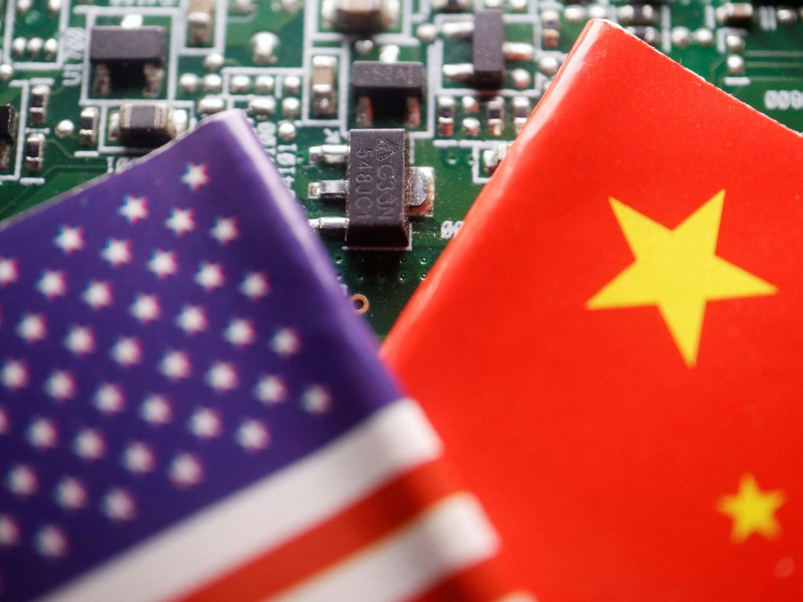
- The “AI Overwatch Act” would allow Congress to review and potentially block export licences for advanced AI chips to China and other adversaries.
- The measure has drawn both support on national security grounds and criticism for potentially undermining executive authority and complicating global semiconductor trade.
What happened: House committee advances oversight bill
A committee of the United States House of Representatives has overwhelmingly approved a bill that would give Congress greater authority over exports of advanced artificial intelligence (AI) chips, especially to China and other countries deemed adversaries. The “AI Overwatch Act,” introduced by Representative Brian Mast of Florida, was approved by the House Foreign Affairs Committee on 21 January 2026.
The legislation seeks to empower both the House Foreign Affairs Committee and the Senate Banking Committee with up to 30 days to review and potentially block export licences for high-end AI chips — including models such as Nvidia’s H200 — before those licences are issued. The bill also requires the US Department of Commerce to provide detailed information demonstrating that exported chips will not be used for military, intelligence or surveillance applications by adversarial nations.
The move follows controversy over the Trump administration’s decision to approve shipments of Nvidia-made AI chips to China, which some lawmakers argue could enhance strategic competitors’ technological capabilities.
White House AI czar David Sacks and others have pushed back against the legislation, with commentary circulated on social media suggesting the bill undermines executive authority and national trade strategy. Meanwhile, supporters argue it addresses perceived gaps in existing export controls and national security frameworks.
The bill must still be approved by the full House and the Senate and receive the president’s signature to become law.
Also Read: https://btw.media/en/alltech-trends/ai/trump-allows-nvidia-ai-chip-exports-to-china/?utm_
Why it’s important: trade, security and tech policy implications
The bill highlights the increasing intersection between technology policy, national security and trade controls in the age of AI. Advanced AI chips are central to the performance of machine learning models and data-intensive applications. Limiting their export to geopolitical rivals is seen by proponents as a way to maintain a competitive edge and prevent dual-use technologies from fuelling adversarial military or intelligence capabilities.
However, critics caution that inserting Congress directly into export control decisions could complicate what is already a technically complex, executive-led regime. Current US export control policy — including the Export Administration Regulations that govern semiconductor exports to China and other countries — already seeks to restrict certain technologies, but relies on executive authority and technical classifications rather than legislative review.
There is also skepticism about whether tighter export authorisation requirements will meaningfully slow competitors’ access to technology: firms and foreign entities may find alternative suppliers or work-arounds, and defining which chips qualify as strategic is an ongoing technical and commercial debate. Furthermore, tying export decisions to congressional review risks politicising what are normally technical export control processes, potentially conflicting with broader trade and innovation policy goals.
As the “AI Overwatch Act” moves through Congress, its progress will be closely watched by semiconductor manufacturers, tech firms and national security stakeholders alike — marking a rare instance where export control intersects directly with legislative oversight in the AI era.