
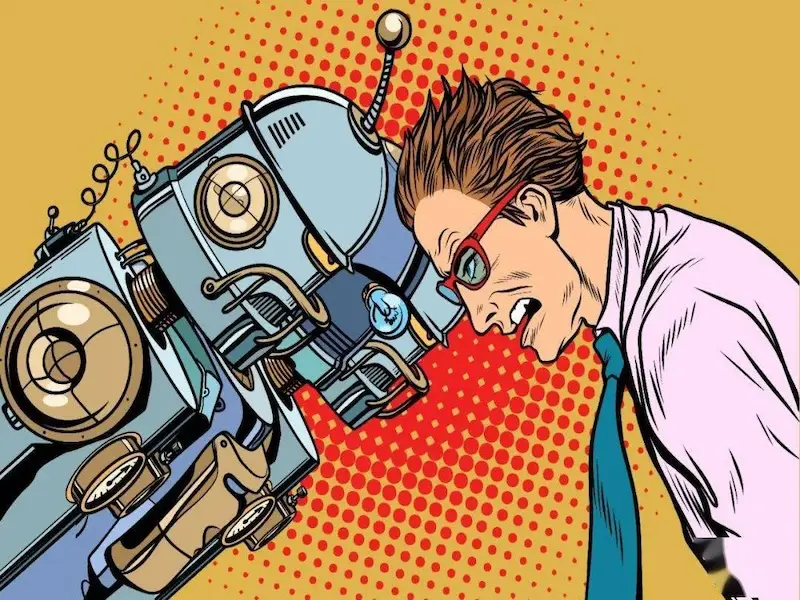
- Machines can handle initial translations and repetitive work, while human translators can focus on refining these outputs, ensuring accuracy and emotional depth.
- The interplay between machine translation and human translation is often seen as a battleground, but it can be more constructively viewed as a partnership.
OUR TAKE
Machine translation and human translation are increasingly competitive. While machine translation offers speed and cost-efficiency, it often struggles with nuanced contexts and cultural subtleties. Human translators provide depth and accuracy, especially in complex or creative texts. The future likely involves a hybrid approach, leveraging the strengths of both to enhance overall translation quality and efficiency.
-Tacy Ding, BTW reporter
During my university years, machine translation was rapidly evolving. Initially, it was riddled with flaws and even basic grammatical errors. Back then, I confidently promised others that I would secure an excellent translation job after graduation. However, now, I no longer have that confidence.
When I browse job websites, I even see positions for ChatGPT translation roles, which offer very low salaries because the job mainly involves inputting the original text into ChatGPT and then organising the translated text.
In just a few years, the development of AI has surpassed human imagination. Will human translation gradually disappear into the annals of history as technology advances? Perhaps the answer to this question is hidden within this article.
The differences between machine translation and human translation
The most logical place to start is to define the differences between machine translation and human translation and how each of them works.
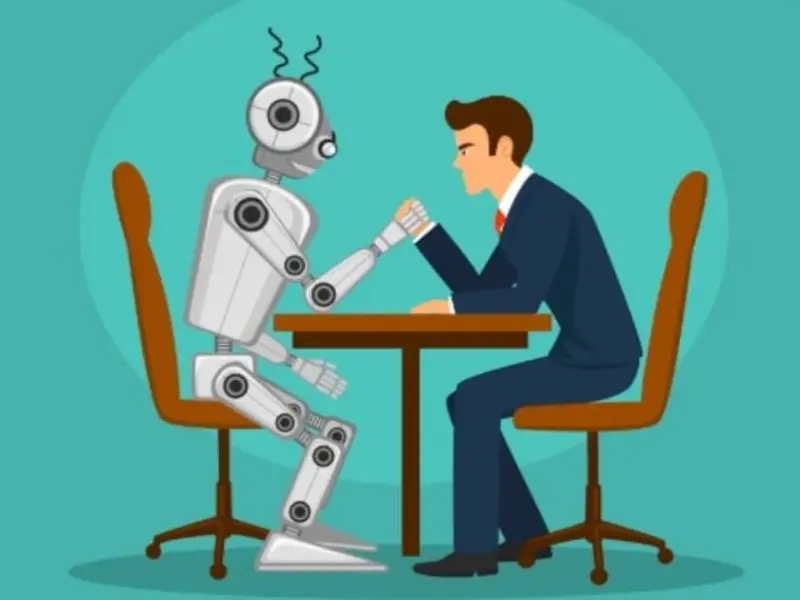
How human translation works?
Human translation involves several crucial steps to ensure an accurate and culturally appropriate result. Initially, the translator carefully reads and understands the source text, taking note of its meaning, context, and any cultural nuances. This is followed by research to clarify terminology and context-specific references.
Next, the translator translates the text into the target language, aiming to preserve the original meaning while adapting to the grammatical and syntactical rules of the target language. Cultural adaptation is then applied to ensure that the translation resonates with the target audience, making necessary adjustments to idiomatic expressions and cultural references.
After the initial translation, the text undergoes a review process where it is edited and proofread for accuracy and fluency. Any inconsistencies or errors are corrected. Finally, a thorough quality check ensures that the translation meets high standards before it is delivered. This process combines linguistic expertise with cultural sensitivity to produce a translation that is both precise and contextually appropriate.
Also read: Almost human: How close are we to perfecting humanoid AI?
Also read: Understanding cognition in human computer interaction
Advantages of human translation
Accuracy: Undoubtedly, the greatest advantage of using human translation is that, when you select the right translation agency, the translation output should be entirely accurate. Professional language services typically guarantee 100% accuracy, as they employ native speakers to perform the translation.
Creativity: Most professional translators would agree that a certain level of creativity is essential in any translation job. Human translation offers the ability to apply creativity to ensure that idioms and cultural references are accurately reflected in the translated text. This is especially valuable when dealing with phrases that don’t have a direct translation in the target language.
Disadvantages of human translation
Budget intensive: One of the major concerns for marketing teams aiming to expand internationally is the high cost of professional translation, which can lead many companies to either abandon the project or delay it. Human translation can be expensive, with rates typically ranging from $0.08 to $0.25 per word, depending on the language pair, the type of content, and the level of expertise required.
For many businesses, website translation is a primary consideration, but the costs can be significant due to the large volume of content on most brand websites.
Time-consuming: The time required for human translators to handle large volumes of text can also be a significant issue. The availability of a translator for immediate work can be challenging, which might delay your translation project and hinder quick market entry.
Additionally, managing the translation process internally and ensuring it is repeated for each new page or marketing material adds to the time and effort required.
How machine translation works?
Machine translation operates by using advanced computational techniques to translate text from one language to another automatically. The process begins when the source text is input into the system, where it is first tokenised or broken down into smaller units such as words or phrases. The system then analyses the text using linguistic models, which helps it understand the text’s structure, grammar, and meaning. Depending on the machine translation method, this analysis can vary. In rule-based translation, the system uses pre-programmed grammatical rules and dictionaries to translate.
Statistical machine translation, on the other hand, relies on vast bilingual corpora to identify patterns and probabilities that guide the translation. More modern methods like neural machine translation (NMT) use deep learning, where artificial neural networks analyse and learn from vast amounts of data to generate more contextually appropriate translations.
Once the system has processed the input, it generates the translated text, often using a sequence-to-sequence model to ensure coherence and context. The final step involves post-processing, where the system may correct grammar, adjust formatting, or enhance readability. Although machine translation offers fast and cost-effective solutions, it can sometimes struggle with idiomatic expressions, context-dependent language, or highly technical texts.
Advantages of machine translation
Speed: Machine translation systems can translate large volumes of text in seconds or minutes, making them far faster than human translators. For example, a machine can process thousands of words per minute, allowing for the immediate translation of entire documents, websites, or other digital content. This speed is particularly valuable for time-sensitive projects, such as breaking news, urgent business communications, or real-time customer service.
Cost-effective: Hiring human translators can be expensive, especially for large-scale or ongoing projects. Machine translation offers a more economical solution, as it can handle massive amounts of text without the need for per-word or per-hour charges. This is especially beneficial for businesses that need to translate routine documents, product descriptions, or other content where precision is less critical.
Real-Time translation: Some machine translation systems, particularly those integrated into chat or communication tools, offer real-time translation capabilities. This allows people who speak different languages to communicate instantly, without delays. Applications such as Google Translate or multilingual customer support platforms can provide real-time language translation during live conversations, greatly enhancing cross-lingual communication.
Disadvantages of machine translation
Lack of contextual understanding: Machine translation systems often struggle with context, leading to inaccurate translations. They may translate words or phrases literally without considering the broader meaning, which can result in awkward or incorrect interpretations. For example, idiomatic expressions, jokes, or cultural references can be mistranslated since the machine lacks the deeper understanding of the language.
Limited nuance and tone: Machines cannot fully capture the subtleties of language, such as tone, humour, irony, or emotion. Human translators, on the other hand, can adapt translations to maintain the appropriate tone, whether formal, casual, or emotional, which is often crucial in marketing, literature, or communication. Machine translation may fail to convey the right sentiment, resulting in a flat or inappropriate translation.
Inaccuracies with complex sentences: Machine translation systems can struggle with complicated sentence structures, especially when the source text involves long, multi-clause sentences. They may split or reorder the sentence in ways that make the translation confusing or difficult to understand. Additionally, languages with different grammatical structures can pose challenges, leading to errors in subject-verb agreement, word order, or tense.
Cultural insensitivity: Machine translation tools often fail to account for cultural differences and sensitivities, potentially leading to translations that are inappropriate or even offensive. Human translators are able to adapt language for cultural context, adjusting phrases or terms that may have different connotations in various regions. Without this cultural awareness, machine translations may unintentionally cause misunderstandings.
Pop Quiz
Which of the following is not a drawback of machine translation?
A. Limited nuance and tone
B. Inaccuracies with complex sentences
C. Lack of contextual understanding
D. Budget intensive
The correct answer is at the bottom of the article.
Will machine translation replace human translators?
As mentioned at the beginning, with the rapid development of machine translation today, the demand for human translation has significantly decreased. Especially in the lower-end market, machine translation, with its speed and low cost, has almost completely eliminated the need for human translators.
But will machine translation truly replace human translation? I believe the answer is yes, but not entirely.
In high-end translation markets requiring a high level of expertise or dealing with more complex texts, human translators still dominate. Human translation has existed for over a thousand years, and people have a natural trust in it, which machine translation cannot replace.
However, as machine translation databases are continuously updated, the space left for human translation may gradually shrink, though this remains uncertain.
There may come a day when machine translators can recognise idioms, but the vast range of such expressions across the world’s 6,000-plus languages makes it improbable that every single figure of speech will ever be machine-translatable into every other language.
According to experts at TextMaster, the most plausible scenario is that machine translation will greatly simplify the work of human translators, as machines typically do in other fields.
Currently, translation software companies tend to approach translation with a product-oriented mindset. However, as educators, we believe that translation must encompass a humanistic touch, perceptiveness, creativity, and empathy. In the era of artificial intelligence, translators also need to possess discernment, learning to judge which machine-generated translations are usable and which are not.
Zhang Shuyin, Chinese University of Hong Kong’s professor
AI translation brings new opportunities: “Efficiency + Low cost” helps Chinese online literature go global
Let us break free from conventional thinking: are human translation and machine translation truly irreconcilable adversaries? Must this contest between humans and machines necessarily result in a loser? Perhaps, a win-win situation is possible.
Professor Zhang Shuyin from the Chinese University of Hong Kong’s translation department is exploring the opportunities AI offers the translation industry. “Around ten years ago, there was a saying in the industry that ‘literary translation is the last bastion of human translators.’ At that time, many believed AI could never translate literature. But now, we are actively discussing the use of machines for translating creative texts,” Zhang remarked.
The application of AI in literary translation has, in fact, quietly begun in the market for Chinese online literature as it goes global. According to Zhang Shuyin, six Chinese web novels are now included in the British Library’s Chinese collection. Moreover, there are numerous foreign fans of Chinese online literature who follow the updates almost daily. Compared to traditional human translation, the greatest advantage of AI translation lies in its lower cost and faster speed.
An employee from a translation software company disclosed that the current market price for AI translation is approximately $6 to $10 per million characters, which equates to around £0.043 to £0.072 per thousand characters. By contrast, the usual cost of human translation is around £15 per thousand characters, illustrating a significant cost difference. In addition, the high efficiency of AI translation allows Chinese authors, who update 5,000 to 8,000 characters daily, to instantly deliver their latest work to foreign readers.
“Genres such as xianxia (fantasy) and urban romance are particularly well-suited for AI-assisted human translation. This is because machine translation relies on large datasets and terminology, and the weapons, sects, and ranks in xianxia novels can be standardised into terminologies. Urban romance, due to the similarities in human emotional patterns, can also be translated effectively by machines,” Zhang explained.
However, this does not suggest that AI will completely replace human translators in the near future. A translator mentioned that AI performs reasonably well for articles on politics, economics, and history, with only minor human editing required. However, for literary works such as classical texts, poetry, or emotionally nuanced writing, AI falls short.
Zhang Shuyin has noticed similar issues. During her PhD studies at University College London, she wrote a research paper on the English translation of Dream of the Red Chamber. “I discovered that classic literature cannot ‘go global’ solely through AI translation, but soap operas and web novels are very popular overseas.”
Machine translation vs. Human translation: A Win-win approach
The debate between machine translation and human translation often highlights their respective strengths and limitations. While machine translation excels in speed and cost-efficiency, human translation offers nuanced understanding and cultural sensitivity. Rather than viewing them as opposing forces, a win-win approach emerges through their integration.
Machine translation can handle large volumes and provide initial drafts swiftly, addressing the needs for scalability and consistency. Meanwhile, human translators can refine these outputs, adding depth, context, and emotional resonance. This collaborative model not only leverages the best attributes of both methods but also creates a more comprehensive and effective translation process. As the field evolves, embracing the synergy between human expertise and machine efficiency could set the standard for future translation practices.
Machine translation has undeniably reshaped the landscape of translation, placing significant pressure on human translators and making their role increasingly challenging. The encroachment of machine translation into the lower-end market has not only reduced opportunities for human translators but also complicated the training and development of new talent in the field. Despite these challenges, machine translation has heralded a new era of efficiency and accessibility in translation.
Rather than diminishing the need for human translators, machine translation could redefine their contributions, shifting their roles towards proofreading and quality assurance. This evolution presents a chance for human translators to specialise in areas requiring nuanced understanding and cultural context, such as literary translation or sensitive communications. The collaboration between machine and human translation promises to harness the strengths of both, offering a more dynamic and effective translation process. Embracing this synergy may well be the path forward, ensuring that translation remains both advanced and deeply human.
The correct answer is D. Budget intensive.