
Institution Profiling / Internet infrastructure institution

What is the key role of FTP?

What is the key role of FTP? is tracked as a internet infrastructure institution within the internet infrastructure ecosystem.

What is the key role of FTP?
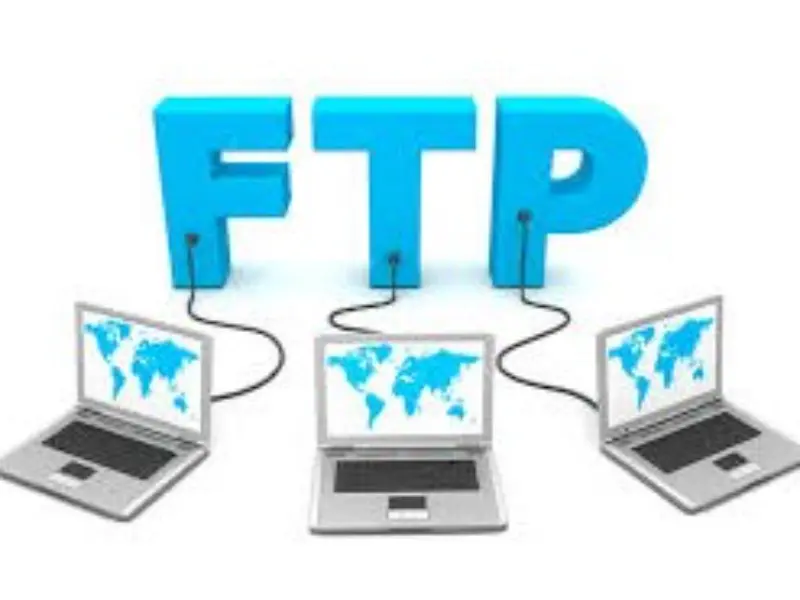
Caption: What is the key role of FTP? visual context for BTW intelligence coverage. · Source context: Existing article media was retained or restored as the subject-specific visual basis. · Relevance reason: What is the key role of FTP? is the primary subject or event subject; the image supports the article's market reading. · Image provenance: Existing curated article image retained because it is subject- or event-specific and not a generic pool placeholder.

Sources

Public references used for this article.

External references will appear here after editorial citation review.

CategoryInstitution

What is the key role of FTP? is tracked as a internet infrastructure institution within the internet infrastructure ecosystem.

RegionGlobal

What is the key role of FTP? has public-source relevance to network operations, governance, dependency mapping, or market structure.

Signal FocusInternet infrastructure institution

What is the key role of FTP? has public-source relevance to network operations, governance, dependency mapping, or market structure.

Content TypeProfile

What is the key role of FTP? is tracked as a internet infrastructure institution within the internet infrastructure ecosystem.

Primary DomainSecurity

Public-source signals support medium-impact monitoring for infrastructure visibility and dependency analysis.

TopicInternet infrastructure institution

What is the key role of FTP? is profiled by BTW Media because published evidence links it to internet infrastructure, governance, operational dependencies, or market visibility.

ImpactMedium

Public-source signals support medium-impact monitoring for infrastructure visibility and dependency analysis.

Confidence?Confidence Grade
0.90–1.00AHigh — direct sources
0.75–0.89A/BStrong
0.55–0.74B/CMedium
0.35–0.54C/DWeak–medium
0.10–0.34DWeak signal
0.00–0.09DInternal monitoring
Limited confidence (72%)

Several public sources

What is the key role of FTP? is profiled by BTW Media because published evidence links it to internet infrastructure, governance, operational dependencies, or market visibility.

  • There are various other protocols like HTTP which are used to transfer files between computers, but they lack clarity and focus as compared to FTP.
  • FTP makes it easy to transfer multiple files at the same time. No need to send individual image files one at a time, you can send all of the files at once.

The first FTP client applications existed long before operating systems had graphical user interfaces. Now, FTP is still commonly used by skilled professionals in different areas — and not just web developers or system administrators. If you’re maintaining a personal or professional website, sooner or later, you’ll find yourself in need of a robust file transfer solution. In this blog, you can understand what FTP is and what its key role.

What is FTP

FTP stands for file transfer protocol. It’s an Internet tool provided by TCP/IP (Transmission Control Protocol/Internet Protocol), which is used to communicate and transfer files between computers. The first feature of FTP was developed by Abhay Bhushan in 1971. It helps to transfer files from one computer to another by providing access to directories or folders on remote computers and allows software, data, and text files to be transferred between different kinds of computers. The end-user in the connection is known as localhost and the server which provides data is known as the remote host.

Also read: Demystifying network protocols: Rules for data communication

How FTP works

FTP uses and relies on transmission control protocol to ensure all the data packets are sent correctly and to the proper destination. It’s established between two systems and they communicate with each other using a network. So, for the connection, the user can get permission by providing the credentials to the FTP server or can use anonymous FTP. It has two communication channels between the client and server: a command channel for controlling the conversation and a data channel for transmitting file content.

Here is how a typical FTP transfer works:

  1. A user typically needs to log on to the FTP server, although some servers make some or all of their content available without a login, a model known as anonymous FTP.
  2. The client initiates a conversation with the server when the user requests to download a file.
  3. Using FTP, a client can upload, download, delete, rename, move and copy files on a server.

Also read: How does load balancing work in networking?

The key role of FTP

FTP is a standard network protocol that can enable expansive file transfer capabilities across IP networks. Without FTP, file and data transfer can be managed with other mechanisms but those other options lack the clarity of focus, precision and control that FTP enables.

Compared to HTTP, FTP has different advantages. FTP is a protocol specifically designed for transferring files between computers, while HTTP is a general-purpose protocol used to transfer data, such as web pages between a server and a client. Besides, FTP uses separate connections for control and data transfer between the client and the server, while HTTP uses a single connection for both control and data transfer. However, FTP is not a secure protocol and does not encrypt data transmitted over the network, while HTTP can be used in conjunction with security protocols such as SSL/TLS to encrypt data transmitted over the network.

At A Glance

  • Name: What is the key role of FTP?
  • Type: Internet infrastructure institution
  • Base: Global
  • Profile focus: Institution

What It Does

  • Public records support monitoring of its role, services, and key relationships.

Why It Matters

  • Public-source signals support medium-impact monitoring for infrastructure visibility and dependency analysis.
  • Operational criticality: Medium
  • Time horizon: Next quarter

What To Watch

  • Monitoring focuses on verified service continuity, governance changes, and relationship signals.
NowMedium priority

Track verified source updates, role changes, and current public evidence.

QuarterMedium policy sensitivity

Public-source signals support medium-impact monitoring for infrastructure visibility and dependency analysis.

YearNext quarter outlook

Longer-term relevance depends on verified operating, policy, and relationship changes.

Member Briefing

Deeper Profile Context

Login is required to unlock the full profile briefing and source notes.

Only for Strategy Circle

Strategic Circle Access

Open to all readers. Unlock profile briefings after joining and logging in.

Join Strategic Circle

Only for Leadership Alliance

Leadership Alliance Access

For owners and management of IP-holding companies. Login required to unlock.

Join Leadership Alliance
← BackAll Companies