
Institution Profiling / Internet infrastructure institution

Vertiv backs Digital Realty’s Rome data centre

Vertiv backs Digital Realty’s Rome data centre is tracked as a internet infrastructure institution within the internet infrastructure ecosystem.

Vertiv backs Digital Realty’s Rome data centre

Evidence Pack

Primary-source references used for classification and impact scoring.

CategoryInstitution Type

Controlled classification for comparative analysis.

RegionAsia Pacific

Primary geography where strategy signal is most visible.

Signal FocusInternet infrastructure institution

Principal area tracked in this profile.

Content TypeProfile

Structured profile with operational and governance relevance.

Primary DomainTechnology

Domain interpretation lens.

TopicInternet infrastructure institution

Session topic under controlled profile taxonomy.

ImpactMedium

Leadership and execution signals affect strategy timing.

Confidence?Confidence Grade · doctrine v2 §8 / SOP §2
0.90–1.00AHigh — direct sources
0.75–0.89A/BStrong
0.55–0.74B/CMedium
0.35–0.54C/DWeak–medium
0.10–0.34DWeak signal
0.00–0.09DInternal monitoring
C · 0.82

Mixed-source

Vertiv backs Digital Realty’s Rome data centre is profiled by BTW Media because public-source evidence links it to internet infrastructure, governance, operational dependencies, or market visibility.

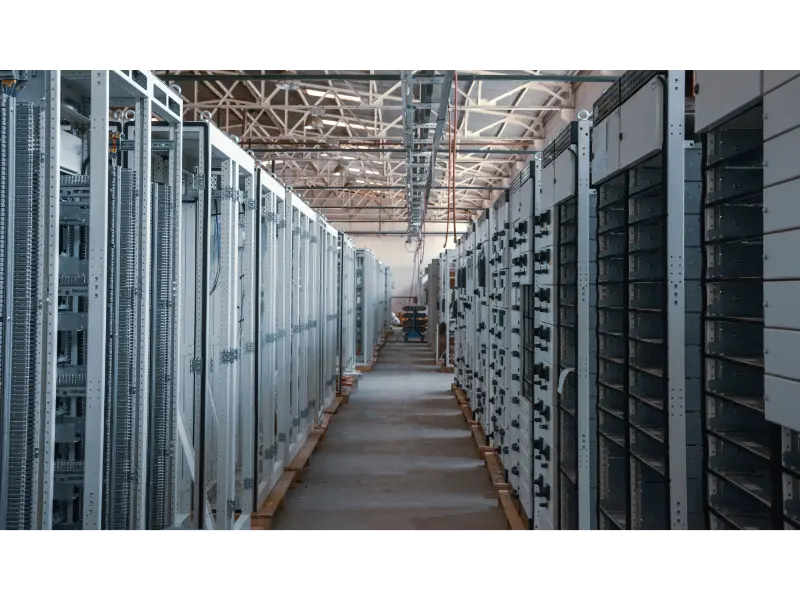
  • ROM1 in Rome will offer over 3 MW capacity, be carrier‑neutral, and be optimised for AI and HPC workloads.
  • Vertiv will deliver free‑cooling systems, efficient power distribution, and smart environmental controls to support high-density and sustainable operations.

What happened: Vertiv and Digital Realty join forces for AI‑ready data centre in Rome

Digital Realty has announced a partnership with Vertiv to supply critical infrastructure for its ROM1 campus in Rome, marking the company’s first data centre in Italy. The facility is being developed in phases, with a total capacity exceeding 3 MW, and is expected to begin operations in 2027.

Vertiv will provide advanced cooling and power solutions, including free‑cooling systems tailored to Rome’s climate, energy‑efficient power distribution for high‑density workloads, and smart environmental controls. The ROM1 campus will be carrier‑neutral and specifically optimised for high-performance computing, artificial intelligence, and machine-learning applications.

This development forms part of Digital Realty’s broader Mediterranean expansion, complementing existing centres in Marseille, Athens, and Crete, and aims to reinforce Rome’s position as a key hub for regional digital infrastructure.

Also Read: Thailand approves $3.1B in hyperscale data centre investments
Also Read: AI boom drives up data centre construction costs

Why it’s important

The ROM1 campus reflects the growing demand for AI‑optimised, high-density compute capacity and low-latency connectivity across Europe and the Mediterranean. By integrating Vertiv’s advanced power and thermal management systems, Digital Realty is prioritising operational efficiency, sustainability, and performance for next-generation workloads.

Vertiv’s involvement underscores the increasing importance of energy and cooling innovations in modern data-centre design. As AI and machine-learning workloads continue to rise, the ability to manage heat and power efficiently becomes critical, setting new benchmarks for sustainable infrastructure.

Additionally, Rome’s strategic location, with terrestrial and submarine fibre links connecting major Mediterranean cities, positions ROM1 as a vital node for digital connectivity, offering companies an edge in latency-sensitive applications.

Core Entity Brief

  • Entity: Vertiv backs Digital Realty’s Rome data centre
  • Subject Type: Internet infrastructure institution
  • Region: Asia Pacific
  • Classification: Institution Type

Service Surface / Control Surface

  • Public records support monitoring of governance, service, and infrastructure control surfaces.

Governance and Policy Surface

  • Public-source signals support medium-impact monitoring for infrastructure visibility and dependency analysis.
  • Operational criticality: Medium
  • Time horizon: Quarter (30-120d)

Decision Trigger Matrix

  • Monitoring focuses on verified service continuity, governance changes, and relationship signals.
NowMedium priority

Current state favours active tracking due to infrastructure relevance.

QuarterMedium policy sensitivity

Public-source signals support medium-impact monitoring for infrastructure visibility and dependency analysis.

YearQuarter (30-120d) continuity dependency

Long-cycle infrastructure decisions likely to remain path-dependent.

Member Unlock

Restricted Profile Intelligence

Login is required to unlock full profile briefings and deep-dive sections.

Only for Strategy Circle

Strategic Circle Access

Open to all readers. Unlock profile briefings after joining and logging in.

Join Strategic Circle

Only for Leadership Alliance

Leadership Alliance Access

For owners and management of IP-holding companies. Login required to unlock.

Join Leadership Alliance
← BackAll Companies