
Institution Profiling / Internet infrastructure institution

US to tighten chip export controls to China

US to tighten chip export controls to China is tracked as a internet infrastructure institution within the internet infrastructure ecosystem.

US to tighten chip export controls to China
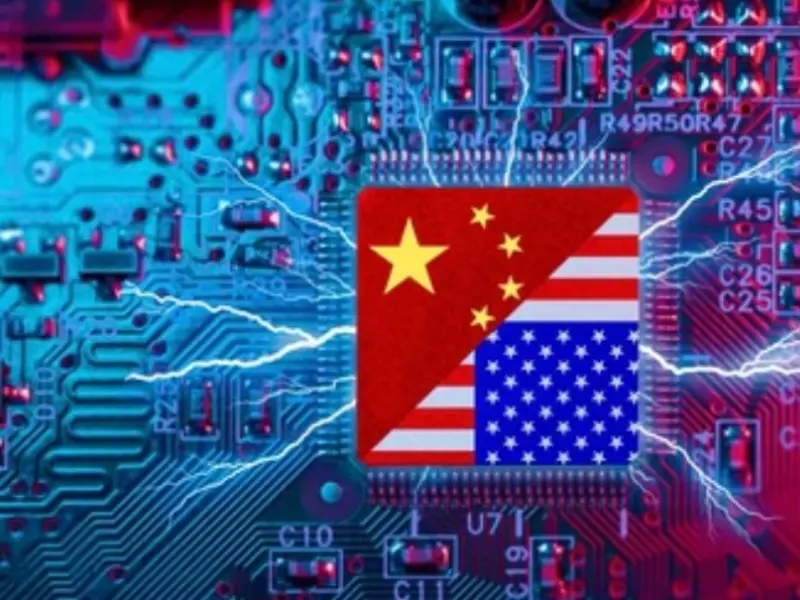
Caption: US to tighten chip export controls to China visual context for BTW intelligence coverage. · Source context: Existing article media was retained or restored as the subject-specific visual basis. · Relevance reason: US to tighten chip export controls to China is the primary subject or event subject; the image supports the article's market reading. · Image provenance: Existing curated article image retained because it is subject- or event-specific and not a generic pool placeholder.

Sources

Public references used for this article.

External references will appear here after editorial citation review.

CategoryInstitution

US to tighten chip export controls to China is tracked as a internet infrastructure institution within the internet infrastructure ecosystem.

RegionAsia Pacific

US to tighten chip export controls to China has public-source relevance to network operations, governance, dependency mapping, or market structure.

Signal FocusInternet infrastructure institution

US to tighten chip export controls to China has public-source relevance to network operations, governance, dependency mapping, or market structure.

Content TypeProfile

US to tighten chip export controls to China is tracked as a internet infrastructure institution within the internet infrastructure ecosystem.

Primary DomainGovernance

Public-source signals support medium-impact monitoring for infrastructure visibility and dependency analysis.

TopicInternet infrastructure institution

US to tighten chip export controls to China is profiled by BTW Media because published evidence links it to internet infrastructure, governance, operational dependencies, or market visibility.

ImpactMedium

Public-source signals support medium-impact monitoring for infrastructure visibility and dependency analysis.

Confidence?Confidence Grade
0.90–1.00AHigh — direct sources
0.75–0.89A/BStrong
0.55–0.74B/CMedium
0.35–0.54C/DWeak–medium
0.10–0.34DWeak signal
0.00–0.09DInternal monitoring
Limited confidence (82%)

Several public sources

US to tighten chip export controls to China is profiled by BTW Media because published evidence links it to internet infrastructure, governance, operational dependencies, or market visibility.

  • US plans to publish a new rule next month that will block the export of semiconductor manufacturing equipment to Chinese chipmakers.
  • The move aims to curb advancements in supercomputing and AI technologies in China that could potentially benefit the Chinese military.

OUR TAKE
The new measures will further tighten export controls and reinforce US efforts to contain China’s technological advancements in critical sectors. This new constraint against China poses a further challenge to China’s technological development, which might aggravate the tension between the two nations.

-Vivienne Xie, BTW reporter

What happened

The Biden administration is about to introduce a new rule next month, expanding US authority to restrict exports of semiconductor manufacturing equipment to Chinese chipmakers, according to sources familiar with the matter. However, the rule will exempt shipments from key allies, including Japan, the Netherlands, and South Korea, thus mitigating its overall impact. This exemption means that major chip equipment manufacturers such as ASML and Tokyo Electron receive immunities from the restriction, leading to a surge in their share prices following the news.

This new rule is an extension of the Foreign Direct Product rule, which aims to prevent several Chinese semiconductor fabs, central to China’s most advanced chipmaking efforts, from receiving critical equipment. Countries that will face these new restrictions include Israel, Taiwan, Singapore, and Malaysia. The government has not disclosed the list of the targeted specific Chinese fabs yet.

Also read: Russia to allow crypto payments in international trade to counter sanctions
Also read: US-listed crypto stocks retreat after Trump-fuelled surge

Why it’s important

The US Commerce Department, responsible for overseeing export controls, declined to comment on the impending regulation. The move is part of a broader strategy to hinder China’s progress in supercomputing and AI technologies that could potentially enhance its military capabilities. The authority previously imposed similar restrictions on Chinese tech giant Huawei, which has since adapted and remains a key player in China’s advanced chip production and development.

Additionally, the new rule will address a loophole in the Foreign Direct Product rule by lowering the threshold for when foreign items are subject to US control. This means that equipment could be restricted if it incorporates any US technology, regardless of where it is manufactured. The US also plans to add approximately 120 Chinese entities to its restricted trade list, including several chipmaking factories, toolmakers, and providers of electronic design automation software.

This draft regulation illustrates Washington’s ongoing efforts to maintain pressure on China’s burgeoning semiconductor industry while avoiding conflict with allied nations. The Foreign Direct Product rule empowers the US government to block the sale of products made with American technology, even if they are manufactured abroad. This has been a key tool in curbing Chinese access to advanced technologies.

At A Glance

  • Name: US to tighten chip export controls to China
  • Type: Internet infrastructure institution
  • Base: Asia Pacific
  • Profile focus: Institution

What It Does

  • Public records support monitoring of its role, services, and key relationships.

Why It Matters

  • Public-source signals support medium-impact monitoring for infrastructure visibility and dependency analysis.
  • Operational criticality: Medium
  • Time horizon: Next quarter

What To Watch

  • Monitoring focuses on verified service continuity, governance changes, and relationship signals.
NowMedium priority

Track verified source updates, role changes, and current public evidence.

QuarterMedium policy sensitivity

Public-source signals support medium-impact monitoring for infrastructure visibility and dependency analysis.

YearNext quarter outlook

Longer-term relevance depends on verified operating, policy, and relationship changes.

Member Briefing

Deeper Profile Context

Login is required to unlock the full profile briefing and source notes.

Only for Strategy Circle

Strategic Circle Access

Open to all readers. Unlock profile briefings after joining and logging in.

Join Strategic Circle

Only for Leadership Alliance

Leadership Alliance Access

For owners and management of IP-holding companies. Login required to unlock.

Join Leadership Alliance
← BackAll Companies