
US implements new controls on advanced tech alongside international partners is profiled by BTW Media because published evidence links it to internet infrastructure, governance, operational dependencies, or market visibility.
US implements new controls on advanced tech alongside international partners is tracked as a internet infrastructure institution within the internet infrastructure ecosystem.
US implements new controls on advanced tech alongside international partners has public-source relevance to network operations, governance, dependency mapping, or market structure.
US implements new controls on advanced tech alongside international partners is tracked as a internet infrastructure institution within the internet infrastructure ecosystem.
Public-source signals support medium-impact monitoring for infrastructure visibility and dependency analysis.
US implements new controls on advanced tech alongside international partners is profiled by BTW Media because published evidence links it to internet infrastructure, governance, operational dependencies, or market visibility.
Public-source signals support medium-impact monitoring for infrastructure visibility and dependency analysis.
| 0.90–1.00 | A | High — direct sources |
| 0.75–0.89 | A/B | Strong |
| 0.55–0.74 | B/C | Medium |
| 0.35–0.54 | C/D | Weak–medium |
| 0.10–0.34 | D | Weak signal |
| 0.00–0.09 | D | Internal monitoring |
Several public sources
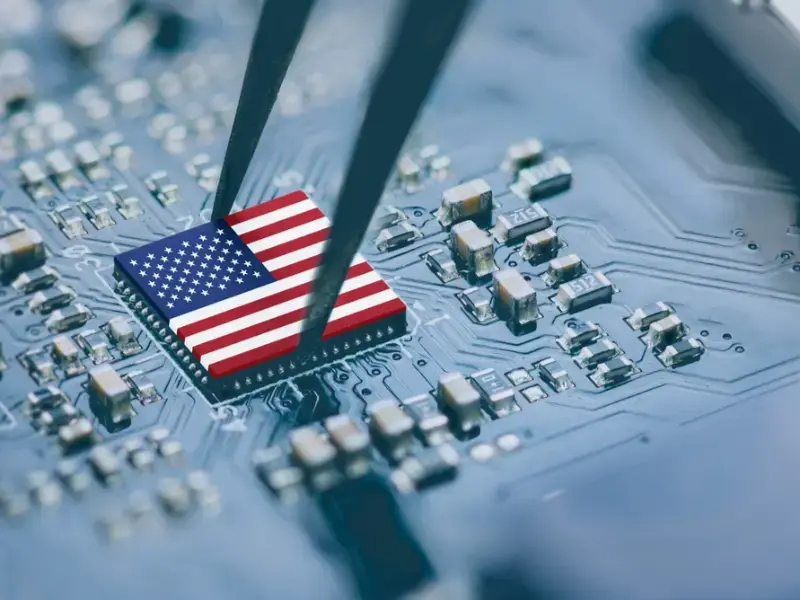
- The US has imposed new export controls on quantum computing and semiconductor technology to comply with international security measures.
- The new rules could make it harder to hire foreigners, which could affect talent acquisition for small tech companies.
OUR TAKE
The United States has introduced new export controls on advanced technologies, including quantum computing and semiconductor manufacturing. These are in line with similar restrictions that have been put in place by international partners. The idea behind the new rules is to keep the country safe and make sure the US can still compete in cutting-edge areas. While the controls are designed to protect innovation, they might make it harder for small companies to hire the best people. In my opinion, these measures are necessary to protect sensitive technologies, but they need to be balanced carefully to avoid stifling innovation and workforce diversity.
–Heidi Luo, BTW reporter
What happened
The United States has imposed new export controls on quantum computing and advanced semiconductor technologies to protect national security. The measures, announced on Thursday, aim to restrict the transfer of sensitive technologies by aligning with similar regulations imposed by countries such as the UK.
The controls focus on technologies such as quantum computing, semiconductor manufacturing equipment and gate all-around field-effect transistor (GAAFET) architecture.
In addition to the technology restrictions, new reporting requirements have been introduced for companies employing foreign nationals working on quantum computing projects. While these rules focus primarily on the production of advanced semiconductors rather than their design, they are expected to affect the way US companies operate in these critical sectors.
Also read: U.S. chip export controls target China, allies exempted
Also read: US to tighten chip export controls to China
Why it’s important
Celia Merzbacher, executive director of the Quantum Economic Development Consortium (QED-C), said that while the US is trying to balance the new workforce regulations, they can still influence hiring decisions, even if only through reporting requirements.
She noted that the government recognises the critical need for quantum computing expertise and how limited the talent pool is, emphasising the importance of attracting top global talent to US companies.
However, Merzbacher noted that smaller companies may avoid dealing with the complexities of these reporting requirements by choosing to hire only US citizens, which could limit their access to highly valuable international talent.
At A Glance
- Name: US implements new controls on advanced tech alongside international partners
- Type: Internet infrastructure institution
- Base: Asia Pacific
- Profile focus: Institution
What It Does
- Public records support monitoring of its role, services, and key relationships.
Why It Matters
- Public-source signals support medium-impact monitoring for infrastructure visibility and dependency analysis.
- Operational criticality: Medium
- Time horizon: Next quarter
What To Watch
- Monitoring focuses on verified service continuity, governance changes, and relationship signals.
Track verified source updates, role changes, and current public evidence.
Public-source signals support medium-impact monitoring for infrastructure visibility and dependency analysis.
Longer-term relevance depends on verified operating, policy, and relationship changes.
Member Briefing
Deeper Profile Context
Login is required to unlock the full profile briefing and source notes.
Only for Strategy Circle
Strategic Circle Access
Open to all readers. Unlock profile briefings after joining and logging in.
Join Strategic CircleOnly for Leadership Alliance
Leadership Alliance Access
For owners and management of IP-holding companies. Login required to unlock.
Join Leadership Alliance


