
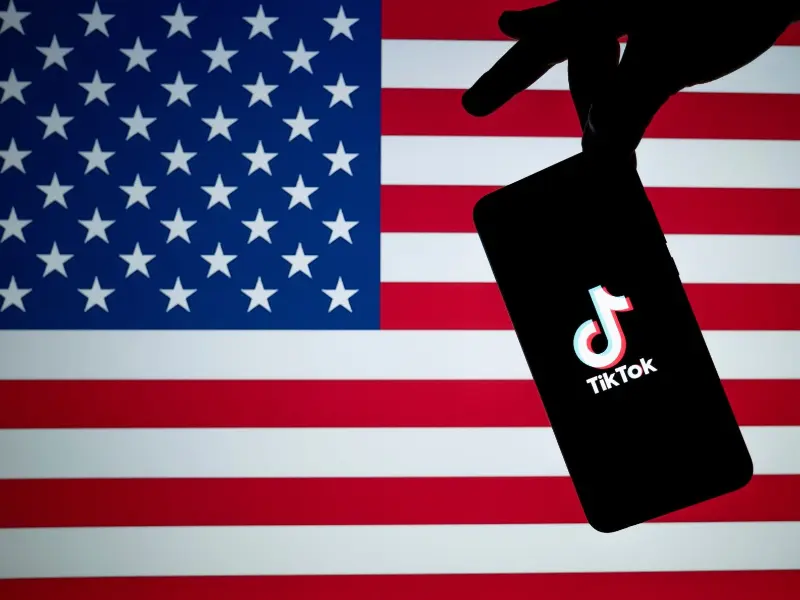
- The US Department of Justice (DOJ) has asked a federal court to reject TikTok’s bid to overturn a law that could lead to a nationwide ban of the app, citing national security concerns.
- The DOJ argues that TikTok’s use of internal tools could allow the Chinese government to covertly influence US elections and public opinion.
OUR TAKE
The DOJ’s stance underscores the tension between national security and free speech, with significant implications for foreign-owned tech platforms. If TikTok is banned or forced to change ownership, it could set a precedent affecting other apps and highlight the US government’s growing concern over data privacy and foreign influence.
–Vicky Wu, BTW reporter
What happened
The US Department of Justice (DOJ) has asked a federal court to reject TikTok’s bid to overturn a law that could lead to a nationwide ban of the app, citing national security concerns. The DOJ argued that TikTok’s alleged use of internal search tools to collect information on users’ views around sensitive topics poses a risk. According to the DOJ, a search tool within Lark, the web-suite system used by TikTok’s employees, allowed staff in the US and China to gather bulk user information based on content or expressions, including views on gun control, abortion, and religion.
In its court filing, the DOJ also raised concerns that TikTok could be used to manipulate US users’ content and that their sensitive information could be stored on servers in China. Prosecutors specifically mentioned that TikTok’s algorithm could be used for “secret manipulation” campaigns to influence American views for the Chinese government’s purposes, including potentially interfering with US elections.
Also read: Kamala Harris launches TikTok accounts to boost 2024 campaign
Also read: TikTok targets Spain, Ireland to revive European e-commerce push
Why it’s important
The legal battle between TikTok and the US government could set a precedent for how national security concerns are balanced against First Amendment rights. TikTok, which claims to have 170 million US users, argues that the law is unconstitutional and infringes on free speech rights. If the law is upheld, TikTok must find a new owner by mid-January 2025 or face a complete ban in the US.
The DOJ contends that the statute addresses national security concerns specific to TikTok’s connection to China rather than suppressing protected speech. It asserts that allowing the Chinese government to use TikTok could pose an unacceptable threat to national security. The DOJ also alleges that TikTok collects extensive sensitive data from its US users, including precise locations, viewing habits, and private messages, which could be accessed by the Chinese government.
This case highlights the broader concerns over data privacy and national security in the context of foreign-owned technology platforms. The outcome could influence future regulations and actions against other foreign-owned apps operating in the US.