Summary
- U.S. Computer Corporation has a live public identity anchored in Lafayette, Louisiana, an active
uscomputers.comdomain, published contact numbers, regional office labels and official pages for cloud, backup, email, software, staffing and support services. - The company makes unusually direct public claims about private U.S.-based data centers, U.S.-based employees, 24/7 help desk support and managed infrastructure, but the public record does not independently verify data-center addresses, uptime history, service-level terms or ownership of Internet number resources.
- DNS, WHOIS and reachability checks show a maintained domain, AWS-hosted authoritative name servers, mail and SPF records, a support subdomain, and web/support IPs that currently sit in an ARIN block registered to Zayo Bandwidth rather than to U.S. Computer Corporation.
- The decision is not whether the name is real or active. It is how much operational assurance a buyer can extract from public records before asking for contract terms, recovery evidence, support authority, locality documentation and migration proof.
The name has a live service surface, but the surface needs discipline
U.S. Computer Corporation is not one of the computer-services names where the public record starts with only a stale directory row or an old routing clue. The company has a live website, an active domain registration, a Lafayette corporate office address, multiple public contact numbers, named operating regions and a broad service catalogue. Its own pages describe private cloud, application hosting, infrastructure hosting, email security, offsite backup, phone systems, virtual workspace, custom accounting software, custom application development, staff augmentation and support services.
LinkedIn presents the same company as a Louisiana-based IT services and consulting business founded in 1976, with a national service posture and products including managed hosting, hosted infrastructure, offsite backup and website hosting.
That visible surface matters. It gives a buyer or investigator more than a brand string. There is a domain to check, a phone number to test, a support subdomain to inspect, a privacy page to read, a service map to compare against contract language, and a public career page that describes the technical roles the company says it uses. The official site also ties the service promise to a particular operating style: U.S.-based staff, private data centers, support after implementation and a long-running business identity. Those claims are more concrete than generic technology language.
But the surface still needs discipline because the words around a computer-services company can easily grow larger than the evidence behind them. A company that says it provides private cloud and hosting may operate its own facilities, rent space from carriers, use colocation, resell third-party services, combine private infrastructure with public-cloud backup paths, or support legacy customer environments that sit outside its own network. None of those models is automatically weak. The problem appears when the public record does not distinguish the model clearly enough for a repeatable service decision.
The record for U.S. Computer Corporation supports several bounded statements. It supports that the company is active online. It supports that uscomputers.com is registered through Network Solutions, that the domain is delegated to AWS name servers, that the website returned a normal HTTP 200 response during the check, and that the company publishes a Lafayette corporate office address matching the domain registrant address. It supports that the company publicly markets private cloud, managed infrastructure, backup, support and software services. It supports that the company says its support and data-center model is U.S.-based and company-employed.
The same record does not prove every operating claim a buyer would need for production assurance. It does not show public data-center street addresses. It does not publish route-origin records, ASN ownership or an IP allocation directly registered to U.S. Computer Corporation in the checks performed for this article. It does not show a current public service-level agreement, incident history, audited security certification, backup test results, customer restoration metrics or contract exhibits. Those gaps do not refute the service claims. They define the next due-diligence questions.
That is the right reading for a company whose commercial promise spans infrastructure, labour and software. U.S. Computer Corporation should not be dismissed as a hollow name, because the live public record is real and detailed. It should not be treated as operating assurance on name recognition alone, either. The useful assessment sits in the middle: a credible active service surface that still requires evidence on control, locality, recovery and support authority before a buyer moves critical workloads.
Identity is the strongest part of the public record
The identity trail is stronger than the network trail. The official site lists U.S. Computer Corporation's corporate office at 1003 Hugh Wallis Road South in Lafayette, Louisiana, and repeats the same Lafayette identity across the home, solutions, support, infrastructure, backup, email, careers and privacy pages. The uscomputers.com domain WHOIS record also shows a Lafayette registrant street address at 1003 Hugh Wallis Road South, a Louisiana postal code, a U.S. country value and a phone number associated with the company. The domain was created in June 1996, updated in April 2026, and is currently set to expire in June 2027. That gives the public identity a durable domain timeline and a matching operating address.
BTW's directory page is narrower but still useful. It identifies U.S. Computer Corporation as a private company and company-category organization, lists the legal and display name as U.S. Computer Corporation, records a medium-confidence alias of Computer Corporation, and marks the record as last updated on June 16, 2026. The directory description is awkward because it says the company is connected with ASN/IP network resources in an unavailable geography, but the basic identity section is clear: the directory treats the subject as a real organization, not merely a service tag.
LinkedIn adds a third public identity layer. It describes the company as an IT services and consulting business headquartered in Lafayette, Louisiana, founded in 1976, privately held, and carrying a 201-500 employee-size band. It lists specialties that overlap with the official site: IT employee outsourcing, cloud hosting through private U.S. computer data centers, onsite/offsite backup, disaster recovery, help desk services, custom accounting systems, custom application development and managed support.
It also lists product surfaces such as Direct Offsite Backup, Hosted Email Security, Hosted Infrastructure, Hosted VoIP Phone System, Onsite Backup/Offsite Replication and Website Hosting.
The overlap between these sources does not make every service claim independently verified, because the company controls its website and LinkedIn profile. It does, however, make the identity attribution better than a scraped listing. The name, domain, Lafayette address, service vocabulary and support posture agree across the company's main public channels and the directory record. That matters for procurement because the first failure mode in small-service due diligence is often name confusion.
A buyer wants to know whether the company in a directory, the company behind the domain, the company answering support, and the company presenting service terms are the same counterparty.
On that limited identity question, U.S. Computer Corporation is comparatively easy to anchor. The public record ties the brand to uscomputers.com, a Lafayette corporate office, regional locations in Louisiana, Texas and California, and a long-running founding narrative. The stronger question is what that identity can do. A legal and web identity can receive inquiries, sign contracts and publish claims. It cannot by itself prove that a particular backup will restore, that a help desk will answer in a defined period, that all support access stays within the United States, or that the company owns the network paths serving its website and support systems.
That distinction protects the reader from both under-reading and over-reading the evidence. U.S. Computer Corporation is not just a generic phrase. It is a specific company with a live public record. But the operating assurance begins only after identity. The next layers are service definition, network attribution, data locality, labour accountability and recovery practice.
The service catalogue is broad enough to require sharper boundaries
The official service catalogue presents U.S. Computer Corporation less as a narrow web host than as a full-service technology partner. The home page frames the company as a business and technology solutions partner since 1976, with friendly support, U.S.-based staff, private data centers, digital workspace, enterprise security, productivity applications, staff augmentation and custom development. The solutions page turns that into categories: private cloud, application hosting, email and security, infrastructure hosting, offsite backup, phone systems, virtual workspace, software, staff augmentation and support services.
That breadth is commercially attractive because a buyer can consolidate support. The same vendor can host an application, support endpoints, provide help desk coverage, manage backups, develop custom software and handle parts of the infrastructure stack. For a mid-sized business without a deep internal IT bench, the promise is not just cloud capacity. It is a single accountable technology partner.
The breadth also creates a boundary problem. When a company sells hosting, backup, email, phone systems, custom application development, staff augmentation and support, the customer must know which part is a managed service, which part is project work, which part is company-operated infrastructure, which part depends on third-party suppliers, and which part remains inside the customer's own environment. A broad service page is the start of that discussion, not the end. The risk is that the buyer hears one provider and assumes one control plane, one support queue and one recovery model.
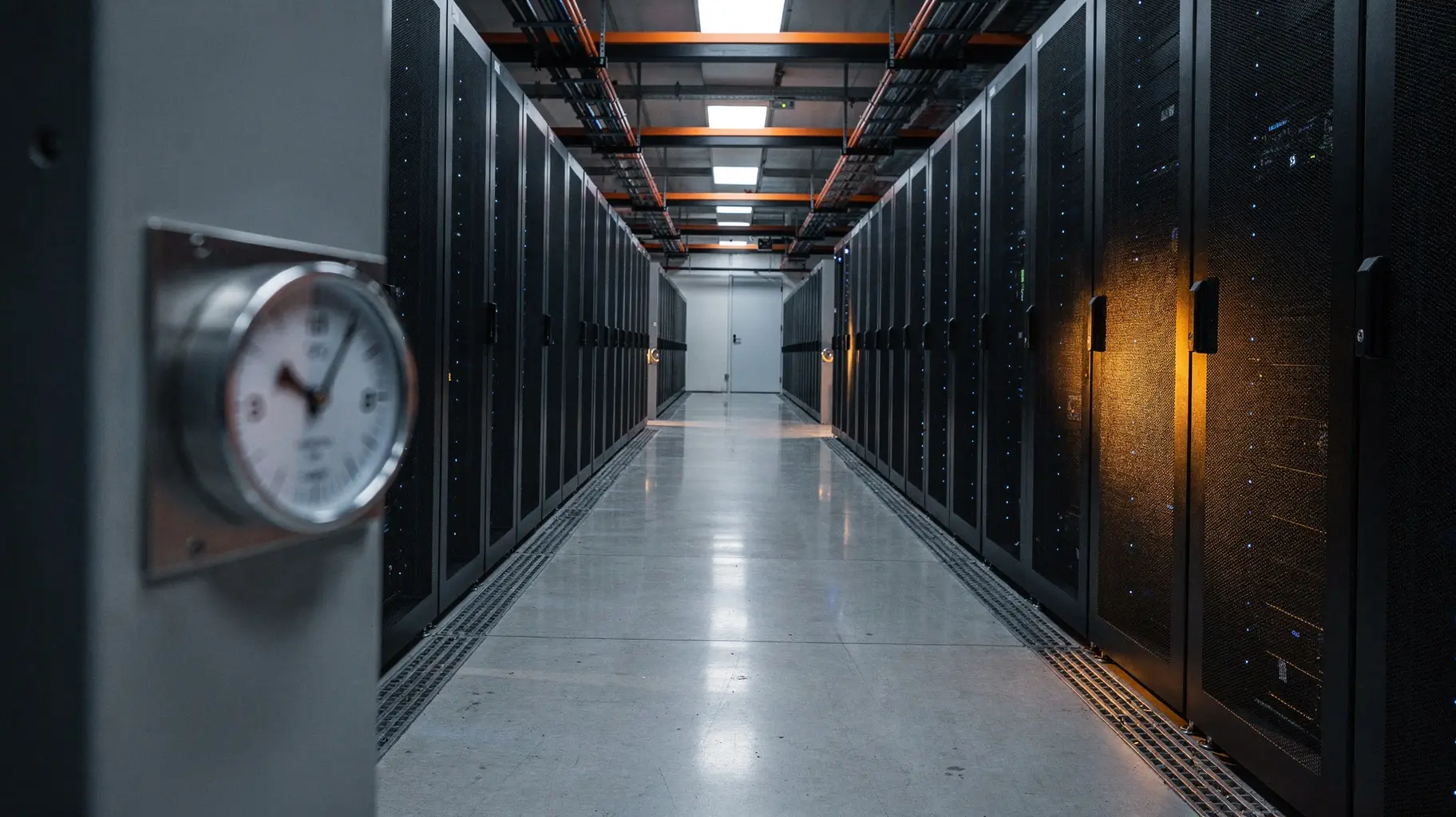
The infrastructure hosting page is the most direct cloud-service surface. It says the company provides private and secure hosting that is U.S.-owned and U.S.-based, claims fully managed infrastructure, references private data centers, and lists quick facts including U.S.-based data centers, no third-party outsourcing, enterprise-level redundancy and security, 24/7 engineering support, redundant power, cooling and Internet connectivity, and backup or replication between multiple company data centers. Those are meaningful claims. They go well beyond a vague promise to help with computers.
The offsite backup page continues the same operational pattern. It asks where data is when it is needed, stresses timely accessibility, says offsite replication goes to private data centers, lists routine monitoring, instant recovery, virtual standby and automated recovery testing, and says the backup platform supports many physical, virtual, cloud and application workloads. The email page says email protection includes inbound and outbound spam protection, outbound encryption, customizable retention and archiving, multiple onsite and offsite backups, hosting at company-owned data centers and management by company employees.
The custom development page adds an application layer. It says U.S. Computer Corporation can modernize existing applications, create tailored web-based applications, host applications in private data centers, support integrations across a digital platform, and provide software-as-a-service options for modernizing and hosting existing or company-developed applications. The accounting page describes an internally developed accounting system with a long list of modules and configurable transaction controls.
Taken together, these pages describe a vertically bundled model: infrastructure, backup, email, business software, custom applications and support labour under one service identity. That is a legitimate strategy. It can reduce finger-pointing between software vendor, host, help desk and backup provider. It can also increase switching cost because the customer's applications, account data, support procedures and recovery paths become interdependent. A buyer should therefore ask for a service boundary document that separates each layer.
The minimum boundary should say where the application runs, who owns the infrastructure, who controls administrative credentials, what data is backed up, where backup copies sit, how often restoration is tested, what support queue handles each issue, what work is performed by company employees, what work involves outside suppliers, and how the customer exits. Without that map, a broad catalogue can feel reassuring while hiding practical dependency.
Network-resource evidence does not prove private infrastructure by itself
The most important technical boundary in this record is the difference between a service claim and Internet number-resource attribution. U.S. Computer Corporation's public pages repeatedly use the language of private data centers and company-owned infrastructure. The DNS and ARIN checks for the public website and support subdomain, however, do not show the website IP block as directly registered to U.S. Computer Corporation. The main domain resolved to 68.171.198.137. The support subdomain resolved through a CNAME under uscdns.com to 68.171.198.132. ARIN WHOIS for both addresses returned the same 68.171.192.0/20 allocation, registered to Zayo Bandwidth in Denver, Colorado.
That finding should be read carefully. It does not mean U.S. Computer Corporation lacks private data centers. It does not mean Zayo operates the company's services. It does not mean the company is only a reseller. Carrier and bandwidth-provider IP space can appear in front of company-operated facilities, managed hosting stacks, colocation services or customer networks. A provider can own or operate servers and still use upstream address space. The public check simply means that, for these visible endpoints, the authoritative public IP registration pointed to Zayo Bandwidth, not to U.S. Computer Corporation.
This is where network-resource evidence is useful precisely because it narrows what can be claimed. The public record can support that U.S. Computer Corporation maintains domain infrastructure and web endpoints. It can support that the visible website and support host currently sit on addresses in a Zayo-registered ARIN allocation. It cannot support a claim that U.S. Computer Corporation is the direct registrant of those IP addresses, has a public ASN for the observed endpoints, or publishes a public routing authority chain for the service. If such records exist elsewhere, they were not visible in this evidence pack.
The DNS record also shows a mixed picture of maintained control and external dependencies. uscomputers.com is delegated to four AWS name servers. The apex has an A record, an MX record pointing to mail.uscomputers.com, TXT records for Google site verification and Apple domain verification, and an SPF record that authorizes the domain's A and MX records plus spf.uscomputers.com and a third-party mail service. The expanded SPF subdomain includes specific IPv4 addresses and a small IPv4 range. This is not a dormant domain. It is an actively configured domain with mail, verification and support routing.
The support subdomain is more interesting. It exists as a CNAME to usc.support.ip.uscdns.com, and that target resolves to a Zayo-registered IP. A curl check against https://support.uscomputers.com/ during the pass received an empty reply after connection establishment rather than a normal page. That does not prove the support system is down for customers, because the endpoint could require a client path, SNI behavior, VPN context, portal routing, specific methods, or a different user flow from the public website's support icon. But it does mean the public support subdomain did not behave like a normal open web portal during this check.
For a buyer, the practical question is not whether the public website's IP belongs to a carrier. The question is whether the provider can explain the network path that matters to the buyer's workload. If the customer will host an application, where do the service IPs sit? Which prefixes serve production? Who controls DNS? Which upstream carriers provide Internet access? What happens if a carrier has an outage? Are there route-security controls, public abuse contacts, monitoring channels and escalation procedures? Are customer endpoints in company-operated facilities, public-cloud regions, carrier colocation, or a hybrid path?
U.S. Computer Corporation's public marketing language gives a direction. The public network checks give a boundary. They show enough active infrastructure to treat the company as operational, but not enough network-resource attribution to turn private-data-center language into independently verified routing control.
Locality is a promise that needs a data-flow map
U.S. Computer Corporation's public position depends heavily on locality. The company says it is U.S.-owned and operated, that it uses U.S.-based staff, that infrastructure hosting uses U.S.-based data centers, that email is hosted at company-owned data centers, and that help desk and deskside support are U.S.-based and company-employed. The official pages list operating regions in Lafayette and Covington, Louisiana; Houston, Midland and Corpus Christi, Texas; and Los Angeles, Bakersfield and San Ramon, California. The site also presents a 24/7 remote help desk number.
This is stronger locality language than the usual cloud-service boilerplate. It addresses three separate anxieties: where data sits, who touches systems, and who answers support. In industries where customer data, uptime, disaster recovery and hands-on support matter, that combination can be commercially powerful. A regional oilfield services firm, healthcare-adjacent contractor, school, local government vendor or professional-services firm may value U.S.-based labour and a provider that claims to avoid third-party outsourcing.
But locality is not proved by a claim alone. It has to be mapped. A locality map should identify the contracting entity, production hosting locations, backup locations, administrative access locations, support staffing model, subcontractors, carriers, email-security path, monitoring tools, ticketing platform and any public-cloud services used for customer workloads or provider operations. The public record provides labels for regions and claims private U.S. data centers. It does not publish the full data-flow map.
The DNS findings illustrate why the distinction matters. The authoritative name servers for uscomputers.com are AWS-hosted. The visible website and support IPs are in a Zayo-registered ARIN allocation. The SPF record references a third-party mail service. None of that is inherently inconsistent with a U.S.-based private infrastructure model. AWS name servers can host DNS for a U.S. company. Zayo can provide carrier address space to a company-operated environment. A third-party mail service can be part of outbound delivery. But each of those facts is a dependency that should be described in a customer-specific data-flow document.
The backup page's questions are therefore the right questions, even when applied back to the provider itself: where is the data, who has it, how quickly can it be restored, and will all of it be there when needed? The public site raises those questions as part of the sales argument. A careful buyer should ask U.S. Computer Corporation to answer them in contract-ready terms. For a hosted application, that means primary and backup locations, recovery point and recovery time targets, restoration testing frequency, encryption status, administrative access controls, support escalation and exit assistance.
The same is true for support locality. A page can say support is U.S.-based and company-employed. A buyer needs to know whether that applies to every support tier, after-hours coverage, security incidents, infrastructure engineering, application development, customer-facing help desk and emergency restoration. It also needs to know how support authority is proven. Can the help desk reset credentials? Can engineers modify DNS? Can they restore backups? Can they access hosted systems? What approvals are required? What audit trail is produced?
U.S. Computer Corporation's locality posture is therefore a meaningful positive signal, but it is not a substitute for documentation. The company has chosen to compete on U.S. ownership, U.S. staffing and private data centers. That creates a higher evidence bar, not a lower one. The better the claim, the more useful it becomes to ask for precise boundaries.
Support labour is part of the product, not an accessory
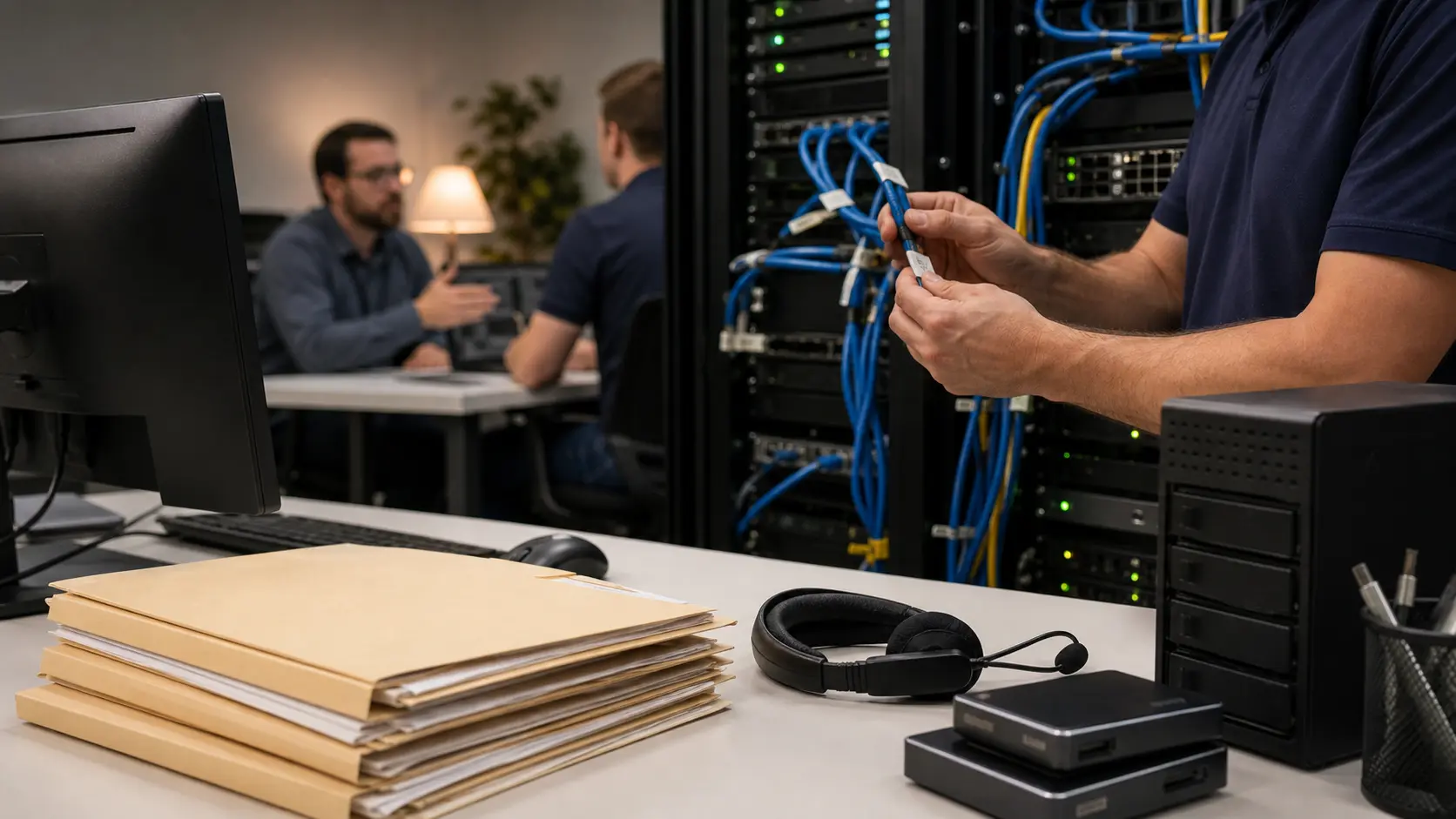
The most distinctive part of the company's public offer may be labour. The home page says there are no pre-written support scripts and emphasizes knowledgeable professionals. The support page says help desk agents are U.S.-based and company-employed, available 24/7, capable of level 1 and level 2 support, and intended to avoid frustrating transfers. The same page describes deskside engineers, patch management, procurement and implementation, vulnerability and penetration testing, exposure remediation and support after implementation.
The careers page lists roles such as IT architect, network administrator, system administrator, database administrator, cloud architect, DevOps engineer, cloud system engineer, application security administrator, cybersecurity engineer, help desk support specialist, project manager, web developer, change manager and full-stack developer.
This matters because managed services are usually judged at the moment of friction. A website can promise infrastructure, backup and software, but the customer experiences the product through support: password recovery, a failed restore, a certificate issue, a bad software update, a firewall change, an email-delivery incident, a security alert, a staff departure, an urgent data export or an application bug. If the support team can act across infrastructure, software and account records, the bundle is valuable. If support can only take messages, the same bundle becomes opaque.
The public record supports that U.S. Computer Corporation wants support labour to be part of its value proposition. It publishes multiple phone numbers, including a 24/7 remote help desk number, and presents staff augmentation as a way to turn a customer's support structure into a broader organization. The support page says desk-side engineers specialize in optimizing networks and systems, while help desk support is available on demand or as a managed service. Patch management is described as automated scanning, approval and deployment, self-hosted by private data centers.
Those claims should be operationalized before purchase. A customer should not stop at "24/7 support." It should ask which systems the 24/7 team can change, which events trigger engineering escalation, whether support access is logged, how customer approvals are captured, how identities are verified, how support handles emergency requests, how data exports are authorized, how support interacts with backup and hosting teams, and what happens during a major incident that affects many customers at once.
The labour claim also affects migration cost. A provider that hosts infrastructure, writes custom applications, operates backups and supplies help desk support can become embedded in the customer's daily processes. That can be good. It can also make exit more complicated. If business logic sits in a custom accounting package, a hosted application, a virtual workspace, a private email platform and a support queue, migration requires more than copying files.
It requires data export formats, application documentation, account inventories, DNS control, user identity mapping, backup copies, licensing notes and a transition plan for support tickets.
For this reason, support accountability should be treated as a service artifact. The buyer should ask for a support matrix that states who handles infrastructure, application, account, endpoint, security, backup, email and after-hours issues. It should include response targets, escalation paths, authority boundaries and evidence of completed restoration tests. It should also state what support records the customer can export if the relationship ends. A managed-services provider that can produce that matrix is easier to trust because its labour model is recoverable.
The public evidence does not show those details. It does show enough to ask for them. U.S. Computer Corporation's own pages make support central to the pitch. The next step is to convert the pitch into records that survive repeated operational use.
Automation should preserve the difference between claims, checks and proof
The core automation task for U.S. Computer Corporation is not discovery alone. Discovery is easy because the company has a live website and indexed pages. The harder task is keeping each record in the right confidence state.
A monitoring system should not flatten "company says private data centers" into "private data-center ownership verified." It should not flatten "support subdomain resolves" into "public support portal available." It should not flatten "U.S.-based staff claimed" into "all support labour verified as U.S.-based." The record should keep claims, checks and proof separate.
A useful record would treat the official website as a first-party claim source. It would capture the service catalogue, office locations, contact numbers, support language, private-data-center language, support labour language, backup and hosting claims, privacy statement and software-development offer. It would then attach external or technical checks: domain registration, DNS delegation, web reachability, support-subdomain behavior, mail records, SPF records, IP registration and directory identity. Each check should have a date and a narrow interpretation.
The DNS layer is a good example. The domain registration proves a maintained domain and a registrar relationship. The name-server records prove delegation through AWS name servers. The A and MX records prove publicly visible endpoints. The SPF record proves declared mail-sending authorization. The ARIN lookup for website and support IPs proves the observed addresses sit in a Zayo Bandwidth allocation. None of those facts alone proves customer workload locality, backup integrity or support quality. Together they produce a more accountable map of what is visible.
The support layer needs the same separation. The website publishes a help desk number and support claims. The support subdomain exists and resolves. The public HTTPS check did not return a normal page from this vantage. Those three facts should sit side by side. A poor automation record would choose only the most reassuring one. A good record would mark support contact as public and support portal reachability as unresolved pending a customer-path test or a company explanation.
The service catalogue also needs versioning. U.S. Computer Corporation has pages that mention over 45 years of experience and other pages that mention over 50 years. That is not a major problem; a company founded in 1976 can reasonably cross that threshold by 2026. But it shows why automated records need timestamps. Public pages are not static contracts. They change, and a due-diligence file needs to know which page version supported which claim.
Automation should also avoid turning marketing superlatives into facts. Phrases about white-glove support, proven solutions, trust or unmatched simplicity should remain descriptive language. Operational fields should be narrower: domain active, website reachable, corporate office published, public contact numbers published, support subdomain resolves, public support endpoint did not return a standard page in this check, IP allocation registered to Zayo, private data centers claimed, U.S.-based staff claimed, data-center ownership not independently verified in public records, service-level terms not found in public pages.
That level of structure helps both sides. It lets a reader see that U.S. Computer Corporation has a real service surface. It also shows exactly which claims need contract evidence. For the company, this is not a hostile standard. It is a way to turn a broad trust claim into verifiable operating records.
The commercial question is switching cost, not just cloud price
U.S. Computer Corporation's offer should be compared less with a commodity web host and more with a managed technology partner. A buyer is not simply buying compute cycles. It may be buying application hosting, custom software, accounting-system support, backup, email protection, virtual workspace, patch management, help desk coverage, deskside engineers and staff augmentation. That bundle can justify a premium if it reduces coordination costs and keeps the business running. It can also increase dependency if the records are not portable.
The pricing question therefore has two halves. The first is the visible cost of the service. The second is the hidden cost of exit, recovery and verification. A fully managed infrastructure provider may be cheaper than hiring internal staff, but only if the customer can recover data, audit access, understand where systems live, and leave without losing business records. A custom application provider may solve workflow problems, but only if the customer has documentation, code ownership or escrow terms where appropriate, data portability rights, change history and support continuity.
A backup provider may reduce disaster risk, but only if restoration has been tested under conditions that resemble a real failure.
The public record is strong enough to make U.S. Computer Corporation a plausible candidate for this kind of relationship. It is not strong enough to price the relationship alone. The buyer would need contract exhibits. Those exhibits should define service boundaries, customer responsibilities, included support, exclusions, data ownership, backup retention, restoration testing, change-management approvals, security obligations, breach notification, subcontractor use, geographic boundaries, escalation paths and exit assistance.
Reliability should also be priced as evidence. The infrastructure page says redundant power, cooling and Internet connectivity are part of the quick facts. The backup page says instant recovery, virtual standby and automated testing are part of the offer. These are the right ideas, but the buyer needs workload-specific numbers. What recovery point is promised? What recovery time is realistic? How often are backups tested? What is the evidence that a customer's application can run after restoration? What components are excluded? How are legacy applications handled if they require unsupported operating systems?
Locality has its own price. If U.S.-based data centers and employees are central to the purchase, the buyer should ask whether that applies across the entire stack. DNS, carrier connectivity, mail delivery, monitoring, security scanning, help desk tools and remote-access systems can all involve different providers. A serious locality claim should survive a data-flow review. If the company can document the path, the locality claim becomes valuable. If the answer is only a marketing label, the buyer should discount it.
Support labour is another cost line. A provider with real level 1 and level 2 support, engineering escalation and project memory can reduce downtime and protect small internal teams. But support must be measured by authority and outcomes, not friendliness alone. Can the help desk fix the problem, or only route it? Can engineers act at night? Can they restore backups without the one person who built the system? Can they document changes? Can they hand over records when the relationship ends?
The commercial reading is therefore conditional but not dismissive. U.S. Computer Corporation has enough public operating substance to be evaluated seriously. The buyer should not treat it as a generic computer store or a vague hosting name. It should treat it as a broad managed-technology provider whose value depends on documented control over infrastructure, data, labour and recovery.
What would strengthen the public record
The public record would become much stronger if U.S. Computer Corporation published a concise assurance page for infrastructure and managed services. It would not need to expose sensitive facility details. It could state the categories that matter: data-center regions, whether facilities are owned, leased or colocated, the role of carriers, backup-region model, support staffing model, subcontractor policy, incident-contact path, restoration-testing practice and the difference between company-hosted and customer-premises systems.
The company could also publish a clearer network statement. If visible service IPs use Zayo or other carrier space, the page could explain that carrier IP allocations are used for connectivity while the underlying facilities or services are operated by the company. If there are company-controlled prefixes or ASNs for customer services, the page could identify the relevant registry records. If there are no public number resources, the company could simply state the operating model. Transparency matters more than owning every resource.
The support record could be strengthened by a public support-status or intake explanation that distinguishes emergency help desk, customer portal, sales inquiry, abuse/security contact and regional manager contact. The support subdomain exists, but the public check did not produce a normal page. If the support path is intentionally restricted to customers, saying so would reduce ambiguity. A simple description of how customers reach support after hours would carry more assurance than a silent endpoint.
The backup and recovery claims could be strengthened by publishing sample service objectives. The company does not need to promise the same restoration time for every workload, but it could describe how restoration targets are set, how testing is evidenced, how customers receive reports and how backup data is exported during migration. Since the backup page already frames restoration certainty as central, a public assurance note would make that claim more operational.
The privacy page could also be expanded for managed services. The current public privacy statement covers website data practices, personal information, third-party sharing, security and web-use tracking. That is useful for the website, but managed hosting and support customers need a service-data privacy and security statement. They need to know how hosted customer data, support credentials, logs, backups and remote-access records are handled. A public overview would help buyers route the right questions before contract review.
Finally, the company could publish a customer-exit checklist. That may seem counterintuitive for a service provider, but it would signal confidence. A provider that can explain how customers retrieve data, transfer DNS, export mail, migrate applications, close support tickets and preserve backup copies is easier to trust. It shows that the relationship is based on service quality rather than lock-in.
None of these improvements require the company to become a large public-cloud provider. They are practical evidence upgrades for a regional and national managed-services firm. They would turn many first-party claims into repeatable operating records.
Decision rule for relying on the service boundary
The decision rule is this: treat U.S. Computer Corporation as an active, attributable U.S. technology-services provider, but do not treat the public pages alone as complete operating assurance. The public record proves more than existence. It shows a maintained domain, a consistent Lafayette identity, regional office labels, live service pages, support numbers, mail records and a service catalogue that spans hosting, backup, software and support. That is a real service surface.
The public record does not prove enough for a critical workload by itself. It does not independently verify private data-center ownership, published uptime, customer-specific recovery targets, service-level penalties, all support-labour boundaries, subcontractor exclusions, security audits or Internet number-resource control. The website and support endpoints seen in the checks sit on Zayo-registered address space, and the domain delegates DNS through AWS name servers. Those are normal infrastructure dependencies, but they should be explained in any serious locality or private-infrastructure decision.
For an existing customer, the first step is documentation. Confirm who owns the domain, who controls DNS, where applications are hosted, how backups are restored, how support is reached after hours, who can approve emergency changes, what data can be exported, and how a migration would work. If those records are already in place, the broad U.S. Computer Corporation bundle may be a strength. If they are missing, the customer should repair the records before the next outage or staff transition.
For a new buyer, the right path is a structured evidence request. Ask for contract identity, infrastructure model, data-center and carrier boundaries, backup and recovery terms, support matrix, data-flow map, security and privacy obligations, and exit terms. Ask how company-employed support interacts with third-party infrastructure dependencies. Ask whether the public support subdomain is customer-only and how emergency support is authenticated. Ask for recent restoration evidence for workloads similar to yours.
For directory and research users, the record should remain bounded. U.S. Computer Corporation can be described as a Lafayette-based U.S. IT services company with public cloud, backup, hosting, software, staffing and support claims, a live domain, and a meaningful public service surface. It should not be described as a publicly verified owner of the observed website IP block. It should not be credited with audited data-center claims or recovery performance from public marketing language alone. It should not be reduced to a generic computer-services name when the official record is more specific.
That balanced reading is the point. The company gives buyers more to inspect than many small service providers do. It also makes claims that matter enough to deserve verification. The record behind the name is not empty. It is active, service-rich and commercially coherent. The remaining task is to turn that public surface into governed, attributable, queryable and recoverable operating evidence before critical systems depend on it.