
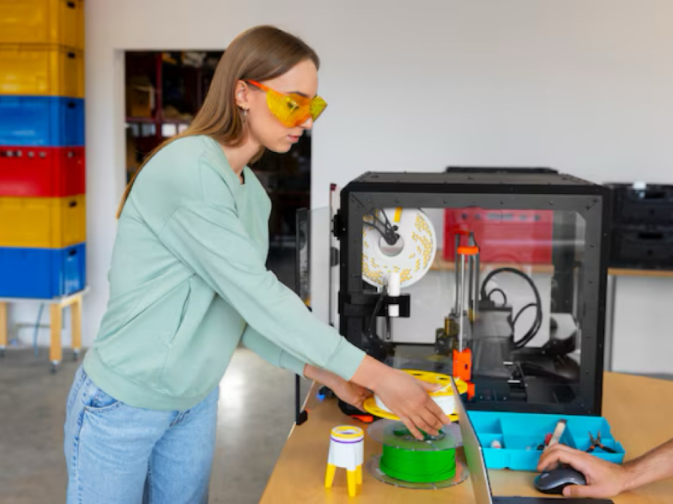
- 3D printing can reduce carbon footprints by using less material, cutting waste, and consuming less energy than traditional methods.
- However, its environmental impact depends on material choice, energy source, and production scale, requiring further advancements for greater sustainability.
————————
How can 3D printing reduce carbon footprints?
3D printing, or additive manufacturing, uses only the material needed, reducing waste compared to traditional subtractive methods. Parts are built layer by layer, using less energy than processes like casting or molding. This leads to less waste and energy use, potentially lowering carbon emissions across industries.
Material choice and waste reduction in 3D printing
3D printing allows for eco-friendly materials like PLA (polylactic acid), made from renewable sources such as corn starch. It also reduces waste by enabling precise production, which limits the need for extra materials. Compared to traditional methods that create landfill-bound scrap, 3D printing cuts down on manufacturing waste.
Energy efficiency in 3D printing
Although 3D printing uses electricity, it typically consumes less energy than conventional methods like injection molding. Some printing technologies, such as fused deposition modeling (FDM), are particularly energy-efficient. As renewable energy use grows, 3D printing’s energy consumption could further decrease, enhancing its sustainability.
Also read: 5 important things to know about your Cloud Carbon Footprint
Does 3D printing always reduce the carbon footprint?
Despite its benefits, 3D printing doesn’t always reduce carbon emissions. Factors like material choice, energy source, and production scale affect its carbon footprint. For instance, large-scale 3D printing can still consume substantial energy, especially if fossil fuels are used. Additionally, some materials used in 3D printing are not biodegradable.
The future of 3D printing and carbon footprint reduction
While 3D printing has promise, it still has room for improvement. Research into more sustainable materials, printing techniques, and renewable energy will continue to enhance its environmental benefits. As these advancements unfold, 3D printing could become a major player in reducing manufacturing’s carbon impact.
Can 3D printing reduce carbon footprints?
3D printing has the potential to reduce carbon footprints, depending on material choices, energy use, and production methods. With continued innovations, it can play a key role in making manufacturing more sustainable and energy-efficient, contributing to a greener future.