
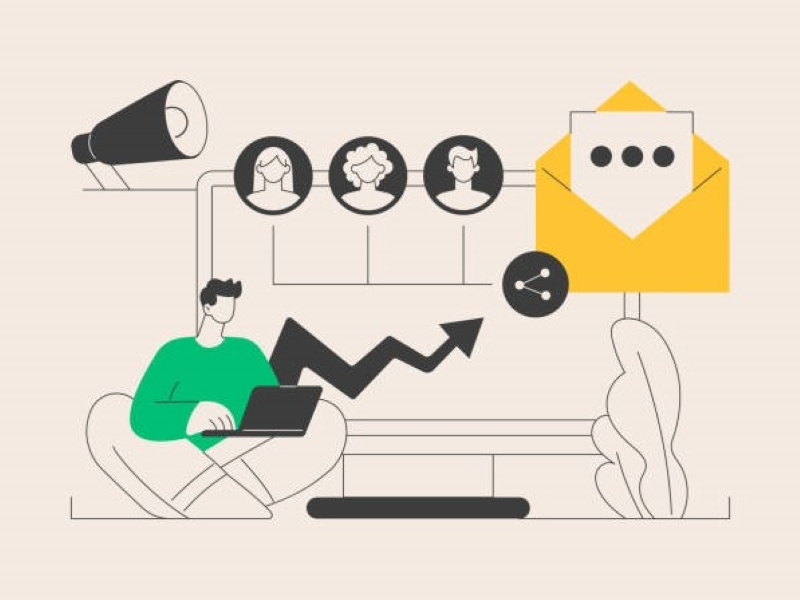
- Amazon is a prime example of effective marketing automation through personalised email campaigns.
- By leveraging data-driven insights and automated systems, businesses can deliver relevant and timely content to their audience, ultimately fostering stronger customer relationships.
Marketing automation involves using technology to automate repetitive marketing tasks and manage marketing campaigns more effectively. One popular example of marketing automation is personalised email campaigns. This approach leverages automation to deliver tailored email content to individual recipients based on their behaviour, preferences, and interactions with your brand. In this blog, you can understand how personalised email campaigns work, their benefits, and how they can transform your marketing strategy.
What are personalised email campaigns
Personalised email campaigns are automated messages that are tailored to individual recipients based on their behaviour, preferences, and interactions with your brand. Unlike generic mass emails, these campaigns deliver relevant content that resonates with each recipient, leading to higher engagement and conversion rates. By leveraging marketing automation technology, businesses can ensure that their emails are not only timely but also meaningful.
Also read: NTT Data and DCConnect unveil Indonesia’s first cloud automation project
How does it work
1. Data Collection and Integration: The first step in creating a personalised email campaign involves gathering data about your subscribers. This data can include demographic information, behavioural data and preferences. This data is collected through various touchpoints. Besides, marketing automation platforms integrate this data into a central database, allowing you to segment your audience based on specific criteria.
2. Segmentation: Using the collected data, you can segment your email list into different groups based on various factors. Segmentation allows you to tailor your messaging to each group’s specific needs and interests.
3. Automated triggers and campaign creation: Once you’ve segmented your audience, you can set up automated triggers to send personalised emails based on specific actions or behaviours.
4. Personalised content: The content of your emails is dynamically adjusted based on the recipient’s profile and behaviour. Therefore, personalisation can include displaying products that are relevant to the recipient’s interests or past purchases, addressing recipients by their first name and providing content or offers based on the recipient’s previous interactions with your brand.
5. Monitoring and optimisation: Once your personalised email campaign is live, you can monitor its performance using analytics tools provided by the marketing automation platform. Key metrics to track include open rates, click-through rates, conversion rates, and overall engagement. Based on this data, you can make informed adjustments to improve the effectiveness of your campaigns.
Also read: Is home automation safe? Ways to secure home automation
The benefits of personalised email campaigns
Enhanced engagement: Emails tailored to individual preferences and behaviours are more likely to be opened and read, leading to higher engagement rates.
Increased conversion rates: Personalised content and targeted offers can drive more conversions, turning prospects into customers and encouraging repeat purchases.
Improved customer experience: By delivering relevant content and timely communication, you enhance the overall customer experience and build stronger relationships.
Greater efficiency: Automation streamlines the process of creating and sending personalised emails, saving time and reducing manual effort.
Data-driven insights: Automated systems provide valuable data on customer behaviour and campaign performance, enabling strategic decision-making and continuous improvement.