
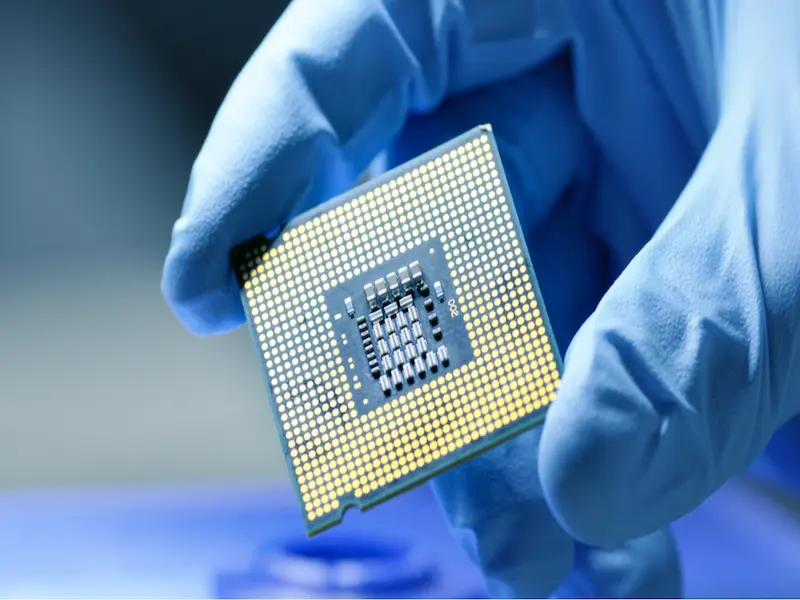
- Semiconductors are primarily made from silicon, though materials like germanium and gallium arsenide are also used in specialized applications.
- The properties of semiconductors can be modified through doping, allowing control of electrical conductivity.
- Semiconductors form the backbone of a wide range of devices, from smartphones to solar panels.
Semiconductors play a critical role in powering our electronic devices in today’s technology-driven world. These versatile materials serve as the building blocks for a vast array of gadgets, enabling everything from computing to communication.
Understanding what semiconductors are made of and their unique properties is essential for grasping how modern electronics function. This knowledge not only underscores the importance of semiconductors in everyday life but also highlights their role in advancing future technologies.
Definition of semiconductors
Semiconductors are materials that have electrical conductivity between that of a conductor (like metals) and an insulator (like rubber). Their unique properties make them indispensable in modern electronics, where they are used to create integrated circuits, transistors, diodes, and many other essential components. The most common semiconductor material is silicon, which has become the gold standard in the industry due to its abundance, excellent properties, and ease of processing.
Also read: US senate hearing targets semiconductors in Russian arms
Also read: U.S. urges allies to tighten control over Chinese semiconductors
The primary material: Silicon
Silicon is a chemical element with atomic number 14 and is abundant in nature, primarily found in sand and quartz. It is widely used in the semiconductor industry because it possesses a crystalline structure that allows for the efficient movement of electrons when manipulated correctly. Silicon’s bandgap—the energy required to move electrons from the valence band to the conduction band—is about 1.1 electron volts, making it ideal for various applications. Its ability to form silicon dioxide (SiO2), an excellent insulator, further enhances its utility in electronic components, creating a natural barrier for electrical isolation.
Other semiconductor materials
While silicon dominates the semiconductor landscape, other materials have also gained prominence in specific applications:
Germanium: Once the primary material for transistors, germanium is still used today, particularly in high-speed electronics and photodetectors.
Gallium arsenide: Known for its superior electron mobility, gallium arsenide is used in high-frequency and optoelectronic devices, such as laser diodes and solar cells.
Wide bandgap semiconductors: Materials like silicon carbide and gallium nitride are becoming increasingly important for power electronics due to their ability to operate at higher temperatures and voltages, enhancing efficiency in electric vehicles and renewable energy systems.
Doping: Enhancing semiconductor properties
One of the defining features of semiconductors is their ability to have their electrical properties altered through a process called doping. Doping involves the introduction of impurities into the semiconductor crystal lattice, which can either donate free electrons (n-type) or create holes by accepting electrons (p-type). This manipulation allows engineers to design semiconductors with tailored electrical characteristics, crucial for creating devices that can switch, amplify, or rectify electrical signals.
Applications of semiconductors
Semiconductors are foundational to virtually all electronic devices we encounter daily. They are integral to computers, smartphones, tablets, televisions, and countless other gadgets. Beyond consumer electronics, semiconductors are critical for automotive applications, such as electric vehicles and advanced driver-assistance systems, as well as in industrial automation, telecommunications, and renewable energy technologies.
The future of semiconductors
As technology continues to advance, the demand for more powerful and efficient semiconductors grows. Emerging technologies, such as artificial intelligence, machine learning, and the Internet of Things, require semiconductors that can handle complex computations while being energy-efficient. Research is ongoing to develop new materials and manufacturing techniques that can enhance the capabilities of semiconductors. Innovations such as quantum computing and neuromorphic chips promise to revolutionize the semiconductor landscape, paving the way for the next generation of electronic devices.