Summary
- StarCloud Information Limited should be judged less by one-stop service language than by whether its public StarCloud surface, Hong Kong SBO listing, APNIC records, AS135338 routing evidence and product pages create an accepted operations record for ordinary IT-service changes.
- The strongest evidence supports a regional network and managed-service posture: official pages describe cloud consulting, virtual machines, bare metal, colocation, private lines, DCI, SD-WAN, cloud connectivity and routing optimization, while public network records anchor AS135338 in Hong Kong.
- The commercial case depends on reducing coordination labour for SMEs and regional teams, but uncertainty remains around unverified facilities, customer outcomes, service-level metrics, portal behaviour, support timing, supplier dependencies and rollback practice.
The record that matters
StarCloud Information Limited is a useful Hong Kong technology-company case because its public vocabulary is broad enough to sound like several businesses at once. Its website presents StarCloud as a global one-stop IT solutions provider. Product pages cover cloud services, internet service, colocation, data-centre interconnection, global private line, SD-WAN and cloud connectivity. Solution pages add financial-market networking, live-stream acceleration, overseas internet routing optimization and hybrid cloud.
InvestHK describes StarCloud as an Asia-Pacific network service provider with points of presence, submarine-cable assets, IP transit, dark fibre, cloud connectivity and ultra-low-latency networking. Public network records identify AS135338, STARCLOUD-AS-AP, under APNIC and connect the company name with Hong Kong registry evidence.
That is enough to make the company worth examining, but it is not enough to accept the full marketing surface as operational fact. The core test is not whether StarCloud can list modern infrastructure services. Many small and mid-sized providers can do that. The test is whether a buyer can take a routine change, such as a virtual machine order, public-cloud handoff, DNS change, private-line turn-up, SD-WAN edge addition, billing contact update, support escalation or routing adjustment, and see it land in a coherent record.
The record has to say what was ordered, who approved it, which resource changed, which account owns it, which network path is in use, which security rule applies, which supplier dependency is involved, which support contact is responsible, and how the change can be reversed.
This is why StarCloud is best read through the accepted Hong Kong IT-service operations record. The public material does not prove a hyperscale cloud platform with published regions, transparent pricing, open API documentation, benchmarked performance and audited incident history. It shows a regional provider that combines network resources, partner cloud access, managed support, colocation coordination and connectivity services. That combination can be valuable if it replaces fragmented customer labour. It can also become risky if the provider's internal coordination is less disciplined than the customer's own process.
The important question is therefore practical. Can StarCloud keep cloud, hosting, network, DNS, account and support state aligned across ordinary changes and incidents? A buyer does not need a philosophical answer. It needs evidence from service orders, turn-up documents, route tables, contact lists, portal states, invoices, security rules, handoff tests and support tickets. StarCloud's public surface provides several anchors for that examination. It has official product claims. It has a Hong Kong licence listing. It has APNIC records for the ASN and IP resources. It has PeeringDB, bgp.tools, Hurricane Electric and IPinfo visibility.
It has an InvestHK profile that points to regional network ambitions. The editorial issue is how far those records go, and where the buyer must stop and verify.
Identity and boundary
The entity being assessed is StarCloud Information Limited, surfaced publicly through starcloud.com.hk and listed in network records as STARCLOUD INFORMATION LIMITED. The directory entity should not be confused with Starcloud, Inc., the United States space data-centre company at starcloud.com, nor with any similarly named cloud or hosting business outside this Hong Kong and Asia-Pacific network-service context.
That boundary matters because search results for "Starcloud" pull in unrelated space-computing material, fundraising claims and space-infrastructure articles that have no bearing on StarCloud Information Limited's Hong Kong IT-service operations.
There is also a boundary inside the StarCloud record itself. The public website gives a Guangzhou contact address and the APNIC record gives a Hong Kong address for registry and network-contact purposes. InvestHK places the company in a Hong Kong business-development context and says it is a licensed services-based operator in Hong Kong, Singapore, Vietnam and Korea. The Hong Kong Office of the Communications Authority list of Internet service providers includes STARCLOUD INFORMATION LIMITED as a Services-Based Operator Class 3 licensee with an issue date of June 16, 2023.
APNIC records identify the organisation as a Hong Kong LIR and list AS135338 and associated contacts. Those are useful anchors, but they do not by themselves establish ownership of every facility, cable, PoP, customer route, server fleet or partner relationship mentioned in marketing copy.
That distinction is central to the article. Carriers, public cloud platforms, exchange operators, data centres and software platforms named on StarCloud's pages are not automatically customers or owned assets. AWS, Microsoft Azure, Google Cloud, Alibaba Cloud, Tencent Cloud, Huawei Cloud and other public clouds are part of the cloud-connectivity and consulting vocabulary. HGC, FPT Telecom, VNPT, Zenlayer, DE-CIX ASEAN and SGIX appear in independent routing and interconnection records around AS135338.
Financial exchanges named on low-latency pages are destinations or use-case references, not proof of a commercial contract unless a separate public record says so. A buyer should treat those names as route, market, supplier or ecosystem context.
The legal and brand boundary is also complicated by duplicate legal-name formatting. The public identity evidence includes the phrase "INFORMATION LIMITED, STARCLOUD INFORMATION LIMITED" as an alias, which looks like database formatting rather than a separate operating brand. The public-facing brand is StarCloud, while the legal name in regulatory and registry evidence is STARCLOUD INFORMATION LIMITED. The article should therefore use StarCloud for the service surface and StarCloud Information Limited for the company. It should not infer a holding structure, facility ownership model or subsidiary map from name variations alone.
The strongest identity record is the convergence of website, Hong Kong licence list and APNIC ASN evidence. The website supplies the service claims and contact surface. The OFCA list supplies a public Hong Kong telecom licensing signal. APNIC supplies the network-resource signal. PeeringDB and BGP observers show an active interconnection and routing footprint. InvestHK supplies a government business-development profile that describes StarCloud's regional posture. Together, those sources support the conclusion that StarCloud Information Limited is a Hong Kong-linked network and IT-service provider.
They do not support unsupported claims about revenue, market share, private customers, owned data centres or guaranteed performance.
What the network record proves
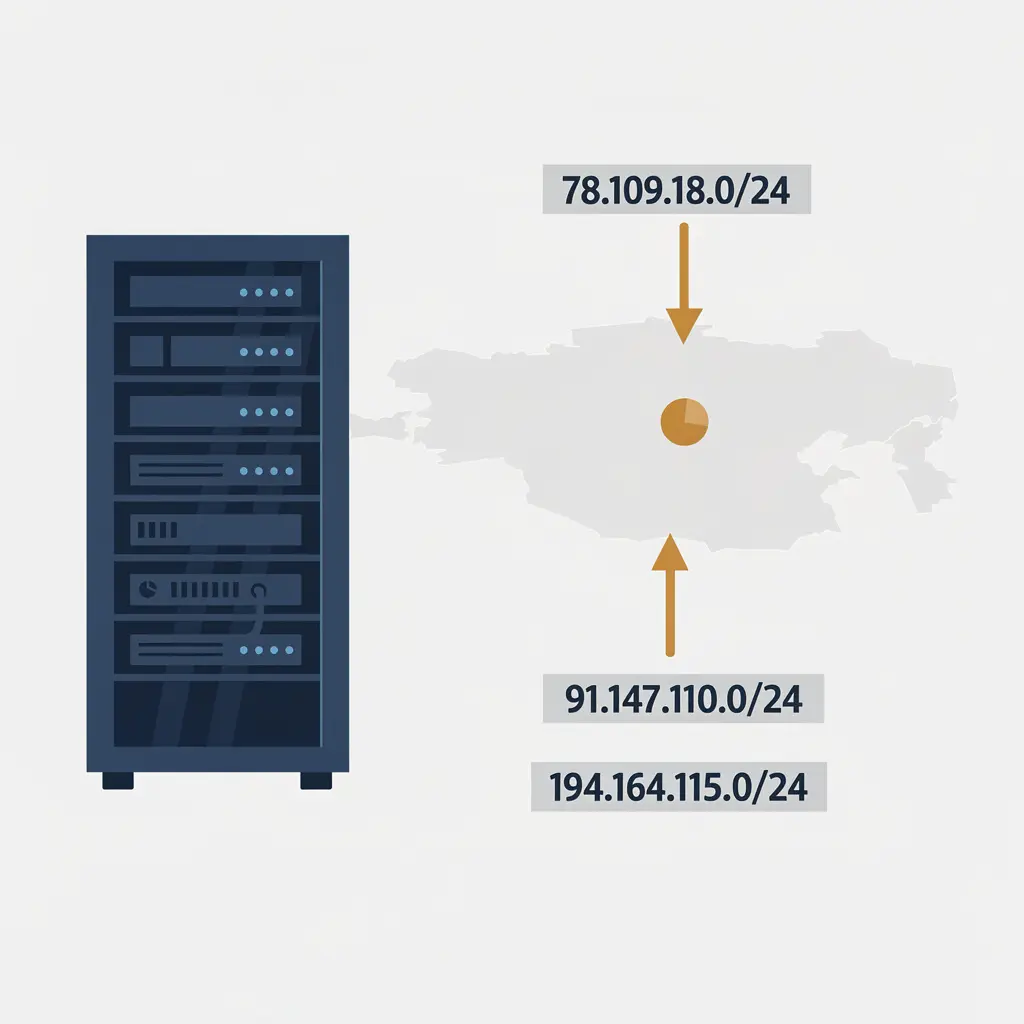
AS135338 is the hard technical anchor. Public BGP and registry sources identify it as Starcloud Information Limited or STARCLOUD INFORMATION LIMITED, with country code Hong Kong and APNIC as the regional registry. bgp.tools shows AS135338 as active and allocated under APNIC, with originated IPv4 and IPv6 space, peers, upstreams and downstreams visible in the public routing picture. APNIC whois data for the ASN describes STARCLOUD-AS-AP, STARCLOUD INFORMATION LIMITED, country HK, organisation ORG-SIL11-AP and maintainer objects tied to StarCloud.
APNIC data for 2001:df2:95c0::/48 lists STARCLOUD-HK, STARCLOUD INFORMATION LIMITED, an abuse mailbox and the Hong Kong organisation record. PeeringDB records AS135338 under STARCLOUD INFORMATION LIMITED, links to the company website and lists public peering at DE-CIX ASEAN and SGIX.
This is not merely a cosmetic record. For a provider selling internet service, cloud connectivity, DCI, private line and routing optimization, the ASN record is part of the operational substrate. It lets a buyer ask concrete questions. Which prefixes are originated by StarCloud? Which prefixes are customer or partner routes? Which upstreams are used for IPv4 and IPv6? Which routes have RPKI coverage? What is the route-object process? What contacts receive abuse reports? Does the NOC contact in public databases match the support escalation path in the service contract?
Are the advertised PoPs reflected in routing visibility, exchange membership, facility records or service-order documents?
The public record answers only part of that set. It supports the existence of the ASN and some active routing. It shows that independent routing databases observe StarCloud as a network. It shows public peering entries in Singapore-based exchange contexts. It shows upstream names in BGP observers, including regional carriers and infrastructure providers. It also shows some Hong Kong-registered prefixes and IPv6 space under APNIC. That is enough to distinguish StarCloud from a purely brochure-driven reseller.
It is not enough to prove the full network map, the number of live customer circuits, the state of every data-centre interconnect, or the quality of every route under congestion.
The operational lesson is that a buyer should use the ASN as the first audit trail. If StarCloud proposes internet access, IP transit, route optimization, private connectivity or cloud handoff, the buyer should ask how AS135338 participates in the service. If the service runs through another carrier, the buyer should understand the boundary between StarCloud's support responsibility and the carrier's physical or routing responsibility.
If the service involves a public-cloud connection, the buyer should understand whether StarCloud is providing consulting, procurement assistance, private connectivity, managed SD-WAN, a hosted server, or an operational wrapper around a third-party cloud account.
StarCloud's own product pages make this distinction important. The cloud-services page describes public-cloud consulting, assisting customers to purchase public-cloud services and providing technical support while communicating with cloud operation and maintenance teams. That is a managed coordination role, not the same as being AWS, Azure or Google Cloud. The virtual-machine and bare-metal section describes server choices and global deployment locations, but public pages do not publish a provider-grade region catalogue, price book, API reference, public status page or independent performance history.
The network evidence therefore strengthens StarCloud as a coordination and connectivity operator, while leaving compute-platform depth to be tested by service-specific documentation.
Cloud and hosting as state alignment
For SMEs and regional teams, the value of a local cloud or hosting provider often comes from state alignment rather than raw compute features. A global hyperscaler may offer more services, broader automation and clearer platform documentation. A small local provider may still win if it reduces the number of people a customer has to coordinate when a website, server, DNS zone, firewall rule, account owner, invoice and connectivity path all change together. StarCloud's public offer points toward that second proposition.
The cloud-services page describes three cloud scenarios: partner-specific public cloud services, virtual machines and bare metal servers, and hybrid cloud services. The partner-cloud section includes consulting, purchasing assistance and technical support while customers use public cloud services. The server section describes CPU, RAM and SSD matching, dedicated hardware language, one-gigabit or ten-gigabit network connection language and deployment in multiple locations. The hybrid cloud section describes combining private cloud with public cloud services into a one-stop solution.
Those claims are commercially meaningful only if the operating records stay synchronized.
Imagine a routine customer request. A Hong Kong SME wants to move a web application from a single hosted server to a more resilient arrangement. The request might involve a new virtual machine, database backup, DNS update, firewall rule, SSL certificate renewal, monitoring alert, invoice update, admin-account change and support handoff. In a mature environment, each of those actions lands in a clear system: the server inventory, DNS provider, firewall, certificate manager, monitoring platform, billing account and ticket queue all agree on the new state. In a weak environment, one part changes while another remains stale.
The server moves, but DNS still points to the old IP. The invoice changes, but the support team does not know the new owner. The firewall allows the old address. The backup policy misses the new database. The customer thinks the migration is complete, but the risk has simply moved out of sight.
This is the operational test for StarCloud. The company does not need to beat hyperscalers on every feature to have value. It needs to make such changes less labour-intensive for customers that do not want to run a full infrastructure team. A local or regional provider can do that if it owns the handoff record, explains the dependencies and gives the customer a single accountable support path. It fails if "one-stop" simply means the customer has one sales contact but still has to reconcile every hidden supplier, portal, domain record and invoice after the fact.
The public evidence leans toward a provider that understands this coordination role. StarCloud describes public-cloud consulting, support during operation, hybrid-cloud management, SD-WAN, DCI, private lines, internet service and colocation operation and maintenance. Those are all dependency-heavy services. They require change control, account control, routing control and supplier escalation. But the public pages do not reveal the management portal, ticket schema, acceptance checklists, monitoring dashboards, backup evidence, invoice format or response-time history.
That missing visibility is not unusual for a private managed-service provider. It simply means buyers should evaluate StarCloud by operational proofs rather than by service vocabulary.
Provisioning truth
Provisioning is where the promise either becomes infrastructure or becomes confusion. StarCloud's pages refer to virtual machines, bare metal, public cloud purchase assistance, colocation, private lines, DCI, SD-WAN and cloud connectivity. Each product has a different provisioning truth. A virtual machine should have an instance identifier, location, CPU, memory, storage, network interface, access method, owner and backup policy. Bare metal should have hardware allocation, remote access, repair process and spare-parts expectations.
Public cloud assistance should specify which account owns the cloud resources, who holds administrator rights, how billing is separated, and what StarCloud is authorised to do. A private line should have endpoints, bandwidth, protection mode, demarcation points, test results and carrier dependencies. SD-WAN should have edge devices, policies, underlay links, overlays, encryption state and rollback steps.
If those truths are mixed together, the customer inherits operational ambiguity. A buyer may think it has bought "cloud" when it has actually bought managed procurement of a third-party public cloud account. It may think it has bought "private connectivity" when the actual service depends on a StarCloud-managed overlay over third-party underlay circuits. It may think a server is dedicated because the page mentions bare metal, while the contracted service is actually virtualized. None of these outcomes is inherently bad. They become bad when the accepted record is unclear.
The right acceptance pack for StarCloud should be product-specific. For public cloud consulting, it should identify the cloud account, tenant, subscription, billing owner, identity roles, support plan, region, network design and StarCloud's scope of authority. For StarCloud-hosted compute, it should identify the hosting location, hardware or virtual resource, network assignment, backup policy, maintenance window, access rules and support path. For cloud connectivity, it should identify the endpoints, VLAN or virtual circuit details, bandwidth, routing policy, failover model and cloud provider handoff.
For SD-WAN, it should identify appliance or software edge state, path selection policy, internet/MPLS/4G underlay dependencies and how a failed upgrade is reversed.
StarCloud's pages supply enough product categories to structure that diligence. The cloud-connectivity page says the company has direct connections to many public cloud platforms and relies on more than 100 nodes and PoPs plus partner ecosystems. The global-private-line page refers to domestic and overseas PoPs, national nodes, dark fibre, SDH, DWDM, metropolitan area network, Layer 2 MPLS and Layer 3 MPLS VPN. The DCI page refers to Layer 2 service, redundancy, single-line and multi-line support, customized SLA and business visualization management. These are real technical categories.
They also create a duty to prove exactly which category is in the order.
Provisioning truth is therefore not a back-office detail. It is the commercial product. The provider that can make the provisioning record clear reduces customer supervision cost. The provider that cannot will force the customer to build its own parallel spreadsheet, ticket archive and dependency map, at which point the one-stop proposition weakens sharply.
Network handoff
StarCloud's strongest public posture is network-centric. The company describes internet service with carrier internet and multi-line BGP options, overseas routes, local IP options, international routes, hybrid routes and bandwidth up to 100Gbps. It describes global private lines with mainland China, Hong Kong and overseas cross-border options, a mix of technologies and protection schemes. It describes DCI across hundreds of data centres, NNI interconnection with popular data-centre providers, Layer 2 service and redundancy. It describes cloud connectivity through private lines, SD-WAN and major public cloud platforms.
InvestHK reinforces this network-provider framing by mentioning IP transit, dark fibre, cloud connectivity and ultra-low-latency networking.
Those claims point to a real customer problem. Network handoff is hard to buy cleanly when the customer is small, regional or not deeply staffed. A Hong Kong business with operations in Singapore, mainland China or Southeast Asia may have public cloud accounts, office broadband, hosted servers, SaaS dependencies, live-streaming requirements, finance-system latency needs and cross-border data-transfer constraints. Buying each circuit and support path separately can create a coordination tax. StarCloud's commercial opportunity is to absorb that tax.
The handoff test has several layers. The physical layer asks where the connection lands and who controls the local loop, cross-connect or data-centre port. The network layer asks which ASN, VLAN, BGP session, route, NAT, firewall or overlay policy carries the traffic. The service layer asks whether the application sees lower latency, fewer drops, better throughput or more predictable failover. The support layer asks who answers when a packet stops moving. StarCloud's public website speaks to all four layers, but the public record is strongest at the network identity layer and weaker at the application-outcome layer.
That is not a fatal weakness. Most network providers do not publish every customer acceptance test. But it should shape buyer behaviour. A buyer considering StarCloud for DCI, cloud connectivity or private-line service should ask for the exact demarcation. Does StarCloud provide the local loop, arrange it through a partner, or take responsibility only after a carrier handoff? Does the customer receive a circuit ID, cross-connect ID, VLAN tag, BGP configuration and failover diagram? Does StarCloud give looking-glass, route-monitoring, packet-loss or latency evidence?
If the path crosses mainland China, Hong Kong and another market, what licences, supplier dependencies and support windows govern the path?
The public BGP evidence adds a useful check. AS135338's observed upstreams, peers and prefixes can be compared with the proposed service path. PeeringDB's public exchange entries can be compared with claims about regional interconnection. APNIC contacts can be compared with NOC contacts in the contract. A mismatch does not always mean the service is wrong, because private lines and partner circuits may not appear in public BGP. But a buyer should know when the service is publicly visible and when it is hidden behind a supplier path.
The value of StarCloud's network offer is therefore not simply bandwidth. Bandwidth can be bought from large carriers, data-centre operators and hyperscale cloud connectivity providers. The value is orchestration of handoff: aligning the physical circuit, BGP or Layer 2 service, account state, cloud endpoint, support record and customer evidence. That is where a local provider can beat a larger provider for a buyer with limited staff. It is also where a local provider can fail if its supplier map is opaque.
DNS, domains and account state
The service lens includes DNS and domain services as part of the accepted IT-service record. StarCloud's public material is more explicit about cloud, network and hosting than about domain-registration products, but DNS still belongs in the operational test because nearly every cloud or hosting change touches names. A server migration, cloud move, CDN setup, mail change, SSL renewal or disaster-recovery plan can fail if DNS ownership and record state are not clear.
For StarCloud, DNS should be treated as a dependency rather than an assumed product. A buyer should ask who controls the registrar account, which nameservers are authoritative, how DNS changes are requested, whether changes require written approval, how long old records remain, whether DNSSEC is in use, whether mail records are covered, and how emergency rollback works. If StarCloud hosts the infrastructure but another provider manages DNS, that split must be visible in the support record. If StarCloud manages DNS on the customer's behalf, the customer needs exportable records and access rights.
If StarCloud only advises on DNS while a customer acts in another portal, the acceptance record should say so.
Account state creates similar risk. Many SMEs buy IT services through a single administrative contact who later leaves, changes role or loses access. If StarCloud is managing cloud accounts, public cloud purchases, hosted servers, private-line invoices, SD-WAN nodes and support contacts, account authority is not clerical. It is operational control. The buyer needs to know which email addresses own which portals, who can approve changes, who can see invoices, who can open urgent tickets, who can request cancellation, and how identity is verified before a destructive change.
This is where the one-stop model can help or harm. It helps when the provider creates a clean owner map across services. It harms when every service has a different hidden supplier, different portal and different account owner, while the customer only sees a generic support email. StarCloud's public contact page provides enquiry addresses, and APNIC/PeeringDB records provide network-contact evidence, but public pages do not show customer account governance. That is normal, but the buyer should make it part of acceptance.
DNS and account state also affect security. A compromised admin account can change DNS, shut down servers, redirect traffic, alter cloud resources or cancel services. A mistaken billing suspension can become an outage. A supplier dispute can become a loss of access. StarCloud's value depends on being able to separate commercial state from technical state. The customer should not lose a production path because an invoice contact and technical contact were confused. The public record does not show whether StarCloud does this well. It marks the area that must be tested before the service is trusted with critical systems.
Security controls and incident handling
StarCloud's services sit close to sensitive controls. Cloud consulting touches identity, access, tenant configuration and data placement. Virtual machines and bare metal touch patching, remote access, backup and firewall policy. SD-WAN touches private traffic paths and access control. DCI and private lines touch segmentation and routing. Live-stream acceleration and route optimization touch content delivery, local IP use and cross-border paths. The public website uses security language across several products, but security value depends on operational detail.
For cloud and hosting, the first security question is responsibility. Who patches the operating system? Who manages the hypervisor or bare-metal firmware? Who configures firewalls? Who monitors alerts? Who holds root or administrator credentials? Who can restore backups? Who tests restores? Who reviews access after staff changes? If StarCloud provides only infrastructure, the customer may own most of these duties. If StarCloud provides managed service, StarCloud may own some of them. If the service uses a third-party public cloud, the cloud provider owns platform controls while StarCloud may own configuration and support.
The contract and service record need to make this split explicit.
For network services, the security question is segmentation and change discipline. Private line, DCI and SD-WAN can make traffic more predictable, but they can also join environments that should have remained separate. A wrong VLAN, overly broad route, weak firewall exception or reused credential can turn a connectivity improvement into a lateral-movement path. The provider's responsibility is to show the customer exactly what changed. The customer's responsibility is to decide whether that path fits its risk model.
Incident handling is the same story under pressure. StarCloud's public pages describe support and operation and maintenance, and PeeringDB gives NOC contact information. That suggests an operational contact surface. It does not prove response times, escalation authority or incident-report quality. A buyer should therefore test a small incident before depending on StarCloud for a large one. Open a support case. Request a non-destructive change. Ask for evidence of completion. Test rollback. Confirm after-hours escalation. See whether the answer identifies the affected resource, responsible supplier, customer action and risk.
The Hong Kong government's cloud-security practice guidance is useful context because it frames cloud as a shared-control problem, not a simple outsourcing decision. Even when a customer buys managed infrastructure, it remains responsible for classification, access, monitoring, vendor control and governance. StarCloud can reduce technical labour, but it cannot remove the customer's duty to know where data sits, who can touch it and how the service recovers.
The biggest security risk in a one-stop IT model is assumed coverage. A customer hears "managed" and assumes patching, backup, access review, incident monitoring and cloud hardening are included. The provider assumes the customer retained those duties. The gap is discovered only after failure. StarCloud's commercial promise should therefore be accepted only when the security responsibility table is part of the order.
Repeated task behaviour
The article angle turns on repeated task behaviour. A one-off project can be saved by careful people, late-night effort and manual coordination. A provider's real quality shows up when similar work happens repeatedly. New server. DNS change. IP assignment. Route update. Cloud account request. Firewall exception. Private-line upgrade. SD-WAN site addition. User offboarding. Billing contact change. Support escalation. Certificate renewal. Backup restore. These tasks should become boring.
StarCloud's public product set creates many repeated tasks. The cloud-services page implies repeated public-cloud assistance and support. The colocation page describes data-centre inspection, equipment changes, asset management, on-site support, hardware support, system support, network support and spare-parts warehouse services. The SD-WAN page describes centralised management, WAN line integration, support for Internet, MPLS and 4G, and API/SDK integration. The routing-optimization page describes access methods, private lines, SD-WAN and multiple global internet connections. Each of those services is operationally repetitive.
The buyer's question is whether StarCloud has a repeatable record or a custom conversation every time. Repeatability does not mean rigidity. It means the provider can show a standard intake, approval, change, verification and closeout process. The customer should see a request ID, timestamp, resource list, person responsible, change window, technical evidence, completion statement and rollback plan. A provider that cannot produce this record may still deliver the change, but the customer cannot easily supervise it.
This matters for labour impact. SMEs often outsource because they lack dedicated infrastructure staff. If StarCloud can turn repeated tasks into a managed queue with evidence, it can reduce the customer's need for cloud administrators, network engineers and supplier managers. That labour saving is the real commercial product. If every request requires the customer to explain its topology again, chase multiple people, interpret vague updates and reconcile invoices manually, the provider shifts work rather than removing it.
The public evidence does not show StarCloud's ticket system or process maturity. It does, however, show enough service breadth to make process maturity decisive. A narrow provider can survive with informal handling if it sells one service. A broad one-stop provider cannot. The more products StarCloud offers, the more it must keep a canonical customer record. Otherwise cloud support, network support, colocation support and billing support become separate memories inside the same brand.
Unit economics
The commercial question is whether local one-stop IT support reduces coordination labour enough to beat global cloud, separate hosts, MSPs and customer self-management. The answer depends less on headline price than on total operational cost. A hyperscaler may look expensive per support plan but cheap per unit of automation. A local host may look cheap per server but expensive if every change consumes customer time. A carrier private line may look costly but stable. SD-WAN over internet may look flexible but add troubleshooting complexity. A managed provider may be worth its margin if it saves coordination across all of these choices.
StarCloud's likely buyer is not the largest enterprise with deep network, cloud and procurement teams. It is more plausibly a regional SME, developer-led company, website operator, infrastructure team or China/Asia-facing business that wants support across cloud, hosting and network handoff without hiring specialists for each layer. For such a buyer, StarCloud's economics work when it can bundle tasks that would otherwise be purchased separately: public cloud advice, server deployment, colocation support, routing, private connectivity, SD-WAN, cloud interconnection, incident response and supplier coordination.
The buyer should cost that bundle carefully. Direct global cloud gives self-service, documentation, scale and many managed services. Separate local hosts may be cheaper and simpler for websites. MSPs may offer stronger workplace IT and security support. Carriers may offer more direct control of circuits. Customer self-management may be cheaper if the team already has skill and tooling. StarCloud has to justify itself by reducing the number of contracts, dashboards, escalation paths and engineering hours needed for the customer's actual workload.
There is also a supplier-dependency cost. StarCloud's own pages mention public cloud platforms, partner ecosystems, domestic and foreign partners, data-centre providers, private lines, local loops and network resources. That is normal for a regional provider. But a buyer should understand which costs are passed through, which are bundled, which depend on foreign exchange or carrier terms, which have minimum commits, and which change when traffic grows. A one-stop provider can simplify invoices, but it can also obscure the economics of underlying suppliers.
The useful unit of value is not a server, circuit or ticket. It is a stable accepted change. How much does it cost to add a site, move a workload, restore a backup, change a route, expand bandwidth, update a DNS record, replace hardware, or solve a support incident? If StarCloud can deliver those changes with less customer labour and fewer errors than the alternatives, it has a clear role. If not, the customer should buy the underlying components directly.
Failure modes
The known failure modes are concrete. Identity ambiguity comes first. StarCloud's name overlaps with unrelated companies and its public addresses vary across website, registry and business-development records. A buyer must anchor the service to StarCloud Information Limited, starcloud.com.hk and AS135338 where relevant. It should not import claims from unrelated Starcloud entities.
Provisioning mismatch is next. The buyer orders cloud but receives consulting. It orders managed hosting but receives unmanaged infrastructure. It assumes dedicated resources but receives virtualized resources. It assumes StarCloud owns the path but a third-party supplier controls the critical segment. The fix is a product-specific acceptance record.
DNS mistakes are a familiar outage source. A migration can fail because TTLs were not planned, old records remained, mail records changed incorrectly, DNSSEC was not understood, or the wrong account had authority. StarCloud's public cloud and hosting surface means DNS must be explicitly included or explicitly excluded.
Network handoff failure is the most technical risk. Private lines, DCI, SD-WAN and cloud connectivity can fail at physical demarcation, VLAN tagging, routing, MTU, firewall policy, NAT, carrier provisioning, cloud gateway configuration or application expectation. The public record supports StarCloud as a network-aware provider, but the acceptance test has to prove the specific handoff.
Security-policy drift follows. A firewall rule added for a migration stays open. A public cloud role granted to support is not removed. An SD-WAN policy routes more traffic than intended. A backup target changes without retention review. A colocation remote-hands change introduces a physical or logical inconsistency. The provider needs evidence of current state, not just work completion.
Account and billing confusion can also become technical. Wrong account ownership can prevent urgent changes. Unclear billing can suspend a service. A former employee's email can control a cloud portal. A provider invoice can hide which supplier component is actually failing. StarCloud's value depends on keeping commercial state and technical state aligned.
Support delay is the visible failure. A customer opens a ticket and receives a general response that does not identify the resource, supplier, next step or owner. The larger the service bundle, the more damaging vague support becomes. Supplier dependency opacity is related. If a third-party data centre, public cloud, carrier or software platform is the bottleneck, the customer needs to know. A good managed provider does not pretend every dependency is under direct control. It explains the boundary and manages escalation.
Migration rollback is the final test. Many providers can move a service forward. Fewer can reverse cleanly. StarCloud's acceptance records should include rollback for DNS, firewall, cloud account, route, circuit, SD-WAN policy, server and data state. Without rollback, every change becomes a one-way bet.
Substitutes and buyer choice
StarCloud competes against several substitutes. The first is direct hyperscale cloud. A buyer can use AWS, Azure, Google Cloud, Alibaba Cloud, Tencent Cloud or Huawei Cloud directly, often with clear documentation, global regions, support plans and security tooling. StarCloud's public-cloud consulting role must beat direct buying by reducing setup complexity, language or regional support friction, network handoff issues, procurement difficulty or ongoing support burden.
The second substitute is a conventional web host or VPS provider. For a simple website, a focused hosting provider may be cheaper and easier than a broad network-services firm. StarCloud's broader offer matters only if the customer also needs network optimization, regional connectivity, public-cloud support, colocation, SD-WAN or cross-border operations.
The third substitute is a managed service provider. A strong MSP may handle endpoint management, identity, Microsoft 365, backups, security monitoring and user support better than a network-first provider. StarCloud's route to value is infrastructure and connectivity coordination. If the customer's main pain is workplace IT rather than infrastructure, an MSP may be a better first call.
The fourth substitute is direct carrier procurement. A customer with network expertise can buy from carriers, internet exchanges and data-centre operators directly. That may reduce margin and increase control. It also increases coordination labour. StarCloud is attractive when the customer wants one accountable party to combine carrier-like services with cloud and hosting support.
The fifth substitute is self-management. Developer-led teams often prefer control. They may accept higher internal labour because it gives direct visibility into cloud accounts, DNS, routing and monitoring. StarCloud has to convince such teams that outsourcing does not reduce observability. If the provider can supply clean records and fast support, it can complement a small technical team. If it hides too much, the team will prefer direct tools.
This is the right competitive frame. StarCloud does not need to be the best at every component. It needs to be good enough across components and better at coordination than the alternatives. The buyer's decision should therefore start with the operational tasks it wants to stop doing, not with a generic desire for cloud.
Customer evidence and uncertainty
The public evidence contains use cases but limited named customer proof. StarCloud's solution pages describe scenarios such as financial firms connecting SGX and Shenzhen sites, European users accessing Beijing live-streaming content, e-commerce enterprises streaming across platforms, Office 365 routing optimization for a listed company in China, and hybrid-cloud nodes in Singapore and Hong Kong. These use cases are useful because they reveal what StarCloud thinks its services are for. They are not the same as independently verified customer outcomes.
This matters because customer proof is where many provider profiles overreach. A page can describe a scenario without naming the client, contract date, measured baseline, measured improvement, outage history or acceptance test. The article should not convert those scenarios into verified deployments. It can say that StarCloud positions its services for those problems. It cannot say that specific named firms achieved specific performance gains unless public evidence supports that.
InvestHK's profile is a stronger market signal than a generic directory entry because it places StarCloud in Hong Kong's digital technologies and data infrastructure sector and summarizes its regional network posture. It is still a profile, not an engineering audit. LinkedIn describes Starcloud Information Limited as a telecom business with a modest public employee count and a Guangzhou headquarters label. Dun & Bradstreet carries a business-directory profile. These sources help triangulate the company but do not prove service quality.
The remaining uncertainty is therefore explicit. Public sources do not show StarCloud's customer list, revenue, profit, service-level performance, incident history, support queue metrics, customer churn, uptime, exact facilities, ownership of server hardware, public-cloud reseller terms or full regional licensing record outside the sources seen. Public routing records show network identity and observed connectivity, but not the full private topology. Product pages show service intention, but not acceptance outcomes.
That uncertainty does not make StarCloud weak by default. It makes the buying process evidence-led. A local provider can be highly valuable even with limited public disclosure if it gives buyers strong private acceptance evidence. Conversely, a provider with impressive public claims can be risky if private records are vague. The difference is not discoverable from the homepage alone.
The buyer's acceptance test
A StarCloud buyer should turn the article angle into a practical checklist. First, anchor the identity: StarCloud Information Limited, starcloud.com.hk, AS135338 where network service is involved, OFCA SBO listing for Hong Kong internet-service context, and APNIC contact records. Second, define the product precisely. Is this public-cloud consulting, StarCloud-hosted compute, bare metal, colocation, DCI, private line, SD-WAN, internet service, cloud connectivity, routing optimization or managed support?
Third, demand the state record. For compute, list instance, location, resources, access, backup, monitoring, security rules and owner. For public cloud, list account, tenant, subscription, region, roles, billing owner and StarCloud authority. For DNS, list registrar, nameservers, records, approval path and rollback. For network, list endpoints, demarcation, circuit IDs, VLANs, BGP sessions, routes, bandwidth, failover, MTU, firewall rules and monitoring. For support, list contacts, severity levels, response expectations, escalation path, supplier boundaries and evidence after closure.
Fourth, test a real but controlled change. Do not start with the most critical workload. Ask StarCloud to provision, change, document and roll back a small service. Measure whether the ticket, technical state, account state and invoice state agree. See whether the support answer names the exact resource and next step. See whether the customer receives proof rather than reassurance.
Fifth, compare against substitutes. If direct public cloud plus a small MSP can solve the problem with less complexity, StarCloud should not win by default. If direct carrier buying gives better control and the customer has network staff, StarCloud should earn its margin through integration. If the customer lacks staff and needs Hong Kong or Asia-Pacific coordination across cloud, hosting and connectivity, StarCloud has a plausible role.
The final verdict is deliberately narrow. StarCloud Information Limited has enough public evidence to be treated as a real Hong Kong and regional network and IT-service provider, not merely a name on a website. Its strongest public anchors are the company website, OFCA licence listing, APNIC records, AS135338 routing visibility, PeeringDB interconnection data and InvestHK profile. Its value is not proved by one-stop language. It is proved when provisioning, network handoff, DNS, account, security, support, billing and supplier state all line up in the customer's accepted record.
That is a demanding test, but it is the right one. A local cloud and managed-infrastructure provider does not win by sounding bigger than it is. It wins by making ordinary operational work easier, safer and more accountable than the alternatives. StarCloud's public record gives buyers enough to begin that test. It does not remove the need to run it.