
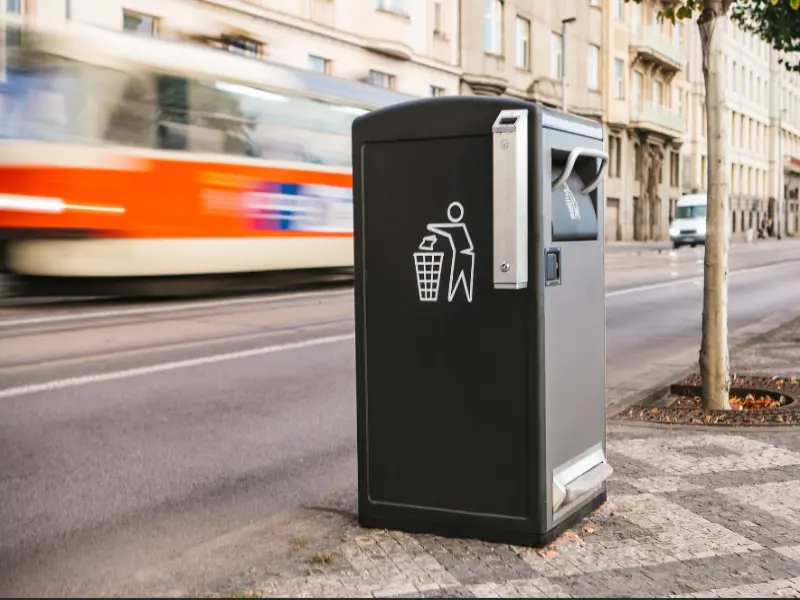
Smart waste sensor market will grow at a CAGR of 22.
- The number of waste collection points fitted with smart waste sensor technology will grow at a compound annual growth rate (CAGR) of 22.8 (per cent), the number will increase to 3.50 million by 2028.
- Smart bin sensors powered by IoT to transform rubbish management. It allows for real-time monitoring of waste fill levels in various containers.
The number of waste collection points fitted with smart waste sensor technology reached 1.25 million worldwide in 2023 (excluding China). Growing at a compound annual growth rate (CAGR) of 22.8 per cent, the number will increase to 3.50 million by 2028.
Smart Waste Management Market Size
According to a new research report from the analyst firm Berg Insight, the number of waste collection points fitted with smart waste sensor technology will grow at a compound annual growth rate (CAGR) of 22.8 per cent, the number will increase to 3.50 million by 2028.
These wirelessly linked fill-level sensors can be either pre-integrated into waste bins and containers, such as in a smart bin offering, or retrofitted onto existing collection points. Europe accounts for around 45 per cent of the installed base with markets such as the Benelux, France, the UK, Spain and the Nordics leading the way.
The installed base in the North American market meanwhile reached 470,000 units in 2023. The rest of world market, excluding China, will see the fastest growth rate of 26.8 per cent, surpassing 700,000 installed sensors by 2028.
Also read: Qualcomm unveils AI-Ready IoT platform at Embedded World 2024
Also read: Qualcomm and Qt to bring Systems on Modules (SoMs) to market
How do smart waste sensors work?
Smart bin sensors use new technology to transform rubbish management. These sensors, powered by IoT (Internet of Things), allow for real-time monitoring of waste fill levels in various containers. Smart bin sensors give significant insights into more effective rubbish collection and management by precisely measuring waste creation trends.
This data-driven approach allows waste management authorities to optimise collection routes, ensuring that bins are serviced when they reach their capacity, minimising wasted trips and fuel usage.
Smart bin sensors can help cities enhance waste management procedures. Waste collection becomes more efficient as collection workers focus their efforts on containers that need immediate attention.
This not only saves time, cost, and resources but also reduces the environmental impact of waste collection processes. With smart bin sensors, cities are taking a proactive step towards a more sustainable and waste-free future.
Member Briefing
Deeper Profile Context
Sign in with the right membership level to unlock the full briefing and source notes.
Only for Strategic Circle
Strategic Circle
Open to all readers. Unlock profile briefings after joining and signing in.
Join Strategic CircleOnly for Leadership Alliance
Leadership Alliance
For qualified IP-asset owners and management; sign in to unlock alliance briefings.
Join Leadership AllianceSnapshot
Category
InstitutionRegion
ASIA PacificSignal Focus
MarketContent Type
ProfilePrimary Domain
TechnologyTopic
MarketImpact
MediumConfidence
Limited confidence (72%)Confidence score guide
Several public sources