
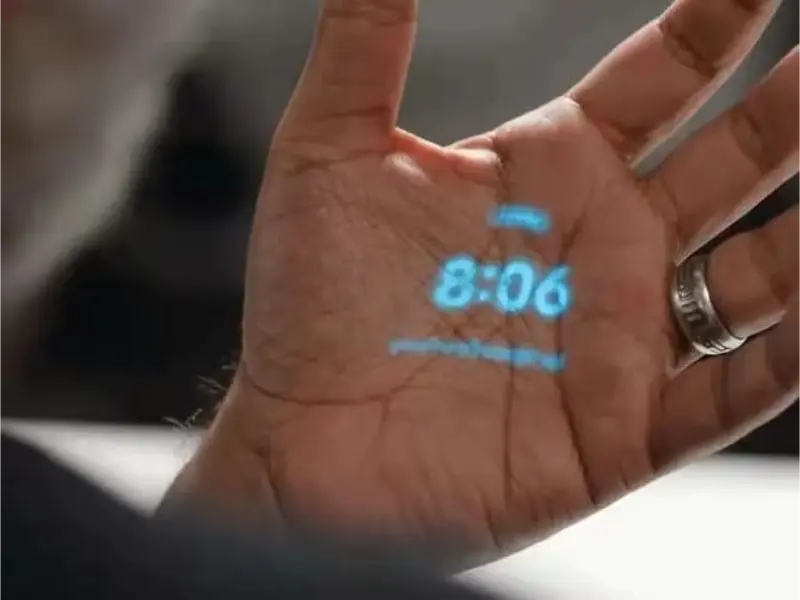
- Bee AI has raised $7 million, led by Exor, to build a wearable AI assistant that learns by listening to its user and answers with reminders, notes and context-aware suggestions.
- The device is priced at $49 with a $19 monthly subscription, with orders opening by Black Friday — plus a pre-launch promise to stop processing the voices of non-consenting bystanders.
OUR TAKE
Bee AI's $7 million round is a bet on a small, slightly awkward, genuinely interesting idea: move the microphone off your phone and onto your body, then let a model do the remembering. The wearable listens continuously, learns your habits, and turns the day into reminders, notes and context-aware suggestions — an assistant that never asks you to unlock anything. The catch, as with all always-on audio, is consent: Bee AI has promised to stop using non-consenting non-user voices before launch, a concession that says as much about the industry's blind spots as about its own discipline. At $49 plus $19 a month, the hardware is the hook and the subscription is the business. Whether the market wants a second pair of ears is now a question with a ship date.
-Rae Li, BTW reporter
What happened: Bee AI's $7 million round, led by Exor
Bee AI is an emerging startup building wearable AI assistant technology, and it has just closed a $7 million funding round led by Exor. The money goes into a product with a simple, faintly unsettling pitch: a device that learns your habits and preferences by listening to you, then hands back personalised services — so your phone's microphone can stay in your pocket where it belongs.
Maria de Lourdes Zollo, co-founder and CEO of Bee AI, is blunt that the company's core is software. The accompanying hardware exists to make the experience smoother, not to be the star. The device, currently in beta, handles basic reminders and note-taking, and the roadmap runs deeper: reading notifications, drafting emails or tweets, and surfacing shopping suggestions based on what the user actually needs.
Bee AI plans to start taking orders by Black Friday, at $49 for the device and $19 a month for the subscription. Investors have backed the team and the vision on the strength of one assumption — that this crew can execute in wearable technology and AI at the same time, which is historically where ambitious hardware goes to die.
Also read: AI innovations set to revolutionise Paris Olympic Games
Also read: South Korea aids small businesses amid e-commerce crisis
Why it matters: wearable AI, ambient computing and the consent problem
Bee AI sits at the intersection of two shifts that are reshaping the device market: large language models finally good enough to be useful in the background, and a slow migration of computing off the screen and into the ambient environment. A wearable assistant that listens is not a gadget category — it is a claim about where the interface goes next, and it drags the entire privacy debate along with it.
The $49 hook and the $19 habit
Read the pricing and the strategy writes itself. A $49 device is a customer-acquisition cost dressed as hardware; the $19 monthly subscription is the actual product. That is roughly $228 a year per user, which means Bee AI's real engineering problem is not the microphone or the model — it is retention. Ambient assistants live or die on whether users keep paying after the novelty of being remembered wears off, and the company has to earn that renewal every single month.
Listening is easy; earning consent is not
The harder problem is social, not technical. A device that listens continuously hears more than its owner, and Bee AI has committed to stop using non-consenting non-user voices before launch — a promise that is both welcome and revealing, since it implies the default behaviour needed correcting in the first place. Privacy here is not a marketing bullet. It is the licence to operate, and every wearable in this category will be judged on it.
Bee AI's bet is that convenience beats discomfort, and that a $49 clip-on with a $19 habit can prove it before the competition does. The hardware is cheap, the model is borrowed from a very crowded field, and the only genuinely defensible asset is trust. Black Friday is the deadline — and the first real test of whether anyone wants a second pair of ears.




