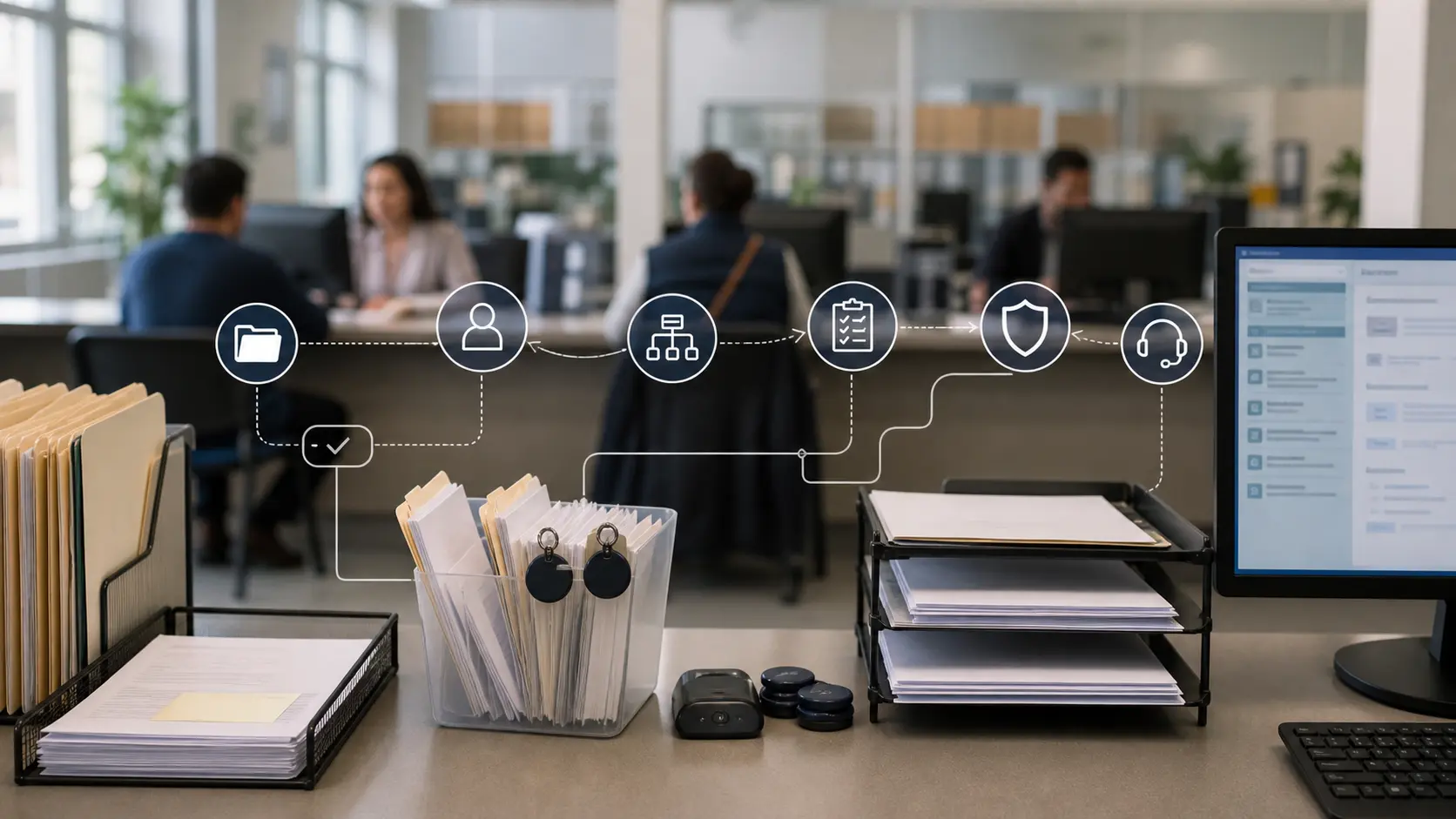
Summary
- Opencode Systems' accepted public record is strongest around telecom service-delivery software, public warning systems and the operating controls that sit between a government authority, a mobile operator and the subscriber-facing network.
- The real test is continuity: whether identity, case state, alert content, geography, logs, dashboards, integrations, deployment packages and support handoffs remain reliable enough to lower risk rather than merely add another platform to the customer's stack.
The Record That Matters
Opencode Systems is easiest to misread if it is approached through a broad label. The company is not publicly presented as a conventional civic-services front office vendor with a catalogue of benefits portals, licensing forms and citizen-case queues. Its own public materials describe a telecommunications software supplier built around open mobile-network service delivery, public warning and operator-facing control systems. That distinction is not cosmetic. It changes the way the company should be judged.
The better question is not whether Opencode can speak the language of digital services. Most enterprise vendors can. The sharper question is whether its software can preserve a trusted operating record when a public-service task moves through a mobile network, a public authority, a support organization and a set of technical systems that were not all designed by the same party. In that setting, value does not come from a clean slide about transformation.
It comes from the duller but more important ability to know which user acted, what message or service state changed, which network component accepted the instruction, which route or channel failed, which version was live, which log explains the result and who owns the next step.
That is the operating surface visible in Opencode's public material. The company describes its iSDP Super Telecom Application Server as a service-delivery platform for mobile operators, supported by Network Browser and Studio technology, core gateways, integration gateways, dashboards, trace analysis, account and identity management, automated deployment and managed support. Its public-warning material extends the same idea into a more civic use case: emergency alerting, cell broadcast entities, geographic alert definition, channel integration, templates, access levels and audit logs.
The language is telecom-heavy, but the public-service question is familiar. Can a system keep a case, an alert or a service change coherent across repeated real-world changes?
That question matters because the end user rarely sees the vendor. A citizen receives an alert, a subscriber interacts with a network service, an agency official approves a message, or an operator engineer investigates a session. The apparent experience is simple. The hidden workflow is not. It depends on identity, role control, message content, network reach, standards support, timestamped records, monitoring and the ability to recover when one participant's part of the chain does not behave as expected.
Opencode's public record gives enough evidence to analyze that chain. It does not give enough evidence to treat every vendor claim as verified customer outcome. The company claims wide mobile-operator reach and a multi-country footprint; third-party listings describe it as a Bulgarian-based telecom solutions company with offices and engineering staff in several markets. Its own customer page highlights major mobile operators, while external public-warning directories place it in disaster-management and telecommunications contexts. Those references are useful market signals.
They are not the same as audited performance data, contract values, uptime evidence or authority-side evaluations.
So the article's lens has to stay disciplined. Opencode is tested here as a public-service platform operator in the narrow sense: a vendor whose systems may help authorities and operators execute high-stakes communications and network-service workflows. The evidence supports analysis of the control plane, not an inflated story about all of government administration.
From Service Delivery To Public Service
The most important technical clue is that Opencode's platform story starts with mobile-network service delivery rather than with a citizen web form. Its iSDP material describes a loosely coupled service delivery platform, a service hub or API layer, a service-design environment and multiple gateways across network, channel and IP interfaces. The product pages emphasize integration with core telecom environments, multi-channel delivery and the ability to create, test and deploy services across different network layers and protocols.
That matters for public-service use because public warning and network-backed services are not ordinary web applications. They depend on existing telecom infrastructure, device behavior, standards compliance and operator-specific constraints. A beautiful administrative portal will not matter if the message cannot be mapped to the right geography, if the mobile operator cannot route it correctly, if the alert type is wrong, if an authority user has excessive permissions, or if the support team cannot trace what happened after a failed test.
Opencode's public-warning products expose this dependence directly. The emergency alerting portal is described as a place to manage alerts and templates across channels such as cell broadcast, location-based SMS, television, radio, signage, sirens and social networks. The cell broadcast entity material describes alert types, templates, message and CAP ID mapping, scheduling, duration, repetition, multilingual support, geographic information, access levels for administrators and agency users, audit logs and integration options.
It also references compatibility with mobile-network generations, EU-Alert, WEA/CMAS, ETWS, CAP and other public-alerting specifics.
Those details are more meaningful than a general claim to help the public sector. They show the basic anatomy of an accepted public-service record. An authority creates or updates an alert. A system records the user, role, template, language, urgency, location and timing. The operator or linked system receives the instruction through a defined path. The alert is transmitted through mobile-network infrastructure or adjacent channels. The authority or operator then needs logs, metrics, traces and support evidence to understand what happened.
The same anatomy applies in less dramatic network services. A telecom operator designing or changing a subscriber-facing service needs a controlled place to create logic, deploy packages, test behavior, roll back changes, trace sessions and manage access. The public-service angle appears when those telecom services become part of a state, utility, emergency, health, security or customer-service obligation. The software may be sold to an operator, but the risk can be public.
This is where the boundary between capability and responsibility becomes important. Opencode can provide parts of the control plane. It cannot, by itself, make an authority's governance sound, make a mobile operator's network resilient, make every handset behave correctly, or make the public trust an alert. The vendor's platform is one layer in a chain. Its value rises when that layer makes the rest of the chain more observable and repeatable. Its value falls when it becomes a black box that only specialist engineers can operate.
The Case-State Problem
In public services, "case state" sounds like a back-office phrase, but it is the heart of the matter. A case is not merely a row in a database. It is the current truth of an operational event: who is authorized, what is being handled, what has changed, what evidence exists, what action is pending and what outcome was delivered.
For Opencode's public-warning surface, the case may be an alert lifecycle. The subject could be a flood, fire, severe weather event, civil protection notice, test broadcast or network emergency. The state of that case includes the draft message, geographic target, languages, severity, repetition, start and end time, approval chain, channel selection, network handoff and closure record. A system that loses any of those elements can create a dangerous ambiguity. Did the authority intend the alert to repeat? Was the map boundary updated? Did an agency user have authority to change it? Which version reached the mobile operator?
Was the evidence captured before support staff began troubleshooting?
For mobile-network service delivery, the case may be a service change, subscriber session, campaign, provisioning action, authentication request or incident investigation. The state includes the service logic, version, configuration files, connectors, external systems, user roles, deployment target and rollback option. If the state drifts between pre-production and production, or between one operator site and another, the customer inherits operational debt. Engineers then spend time reconciling what the platform thinks is true with what the network is actually doing.
Opencode's product set appears designed to address parts of that state problem. Studio is positioned as a service creation and deployment environment. Automated Service Deployment is described as exporting and importing versioned service packages with components such as files, connectors and configurations, including rollback options. Dashboard provides consolidated metrics and KPIs. Trace Viewer parses logs from platform components and interactions with external systems, supporting searches by subscriber identifier, error code, timestamp and free text.
Account and Identity Manager handles custom access rules, roles, password policies, privileges, lifecycle, SSO and multi-factor authentication.
That combination is significant. It suggests a vendor view in which service design, deployment, monitoring, traceability and access control are not separate afterthoughts. They are part of the same operating record. The question for a buyer is whether that view holds in implementation. Does the system preserve enough detail for an agency or operator to reconstruct a decision? Do access rules match the customer's real approval model? Do logs remain searchable at the point of failure? Can a support case connect the user's description to the platform's technical trace without days of manual translation?
The known failure modes are straightforward. Identity mismatch can allow the wrong person to act or make it unclear who acted. Case-state drift can leave one environment or channel using an obsolete version. Document or evidence loss can break post-event review. Portal outage can turn a time-sensitive task into a phone-and-spreadsheet process. Integration break can stop the alert or service at the boundary between systems. Reporting gaps can hide degraded performance until a public test exposes it. Support ambiguity can leave an authority, operator and vendor arguing over ownership while the incident clock is running.
None of these risks are unique to Opencode. They are the normal risks of public-service software that crosses institutional boundaries. The company is interesting because its visible product map engages those risks directly, but the public evidence does not prove that every deployment resolves them.
Identity Handoff Is Not A Small Feature
Identity management in this market is often treated as a security checkbox. It should be treated as a workflow dependency. Public-service and telecom operations involve multiple classes of user: agency administrators, agency users, operator engineers, vendor support staff, service designers, system administrators and perhaps external integrators. Each class may need different rights at different points in the lifecycle.
The public-warning example makes this easy to see. An agency user may be allowed to draft an alert but not approve it. An agency administrator may manage templates but not change operator integration settings. An operator engineer may view delivery traces but not alter the public message. A vendor support engineer may need temporary access to diagnose a platform issue, but that access should be visible, constrained and recorded. If the identity model is vague, the system either blocks necessary work or permits too much.
Opencode's Account and Identity Manager page speaks to custom access rules, roles, password strength, privileges, lifecycle, SSO and multi-factor authentication. The cell broadcast entity page refers to different access levels for system administrators, agency administrators and agency users. The support page directs customers into a project-bank support case system. These are not ornamental details. They are the places where the chain of responsibility is either strengthened or weakened.
The harder issue is handoff. Identity inside one platform is not enough when the task crosses from an authority to an operator, from a portal to a network element, or from a customer to a vendor support team. A public-service record needs to show not only that a user was authenticated, but that the user's action corresponded to a legitimate operational role and a valid handoff. In emergency communications, a clean identity handoff can be the difference between a controlled broadcast and an unresolved dispute after a test or incident.
Buyers should therefore examine identity at the scenario level. Who creates an alert? Who approves it? Who changes the map? Who can pause or repeat it? Who sees failed channel status? Who can open support? Who is authorized to share logs with the vendor? What happens when the named administrator leaves the agency? How is a temporary emergency user added and removed? How are after-hours actions handled? These questions are mundane, but they decide whether the platform lowers supervision cost.
The same applies to telecom service changes. A service designer may package an update, an operations engineer may deploy it, another team may monitor KPIs, and support may investigate traces. If identity does not follow the service lifecycle, the customer eventually relies on informal knowledge. That may work while the original implementation team is present. It fails when staff rotate, a country office changes vendor contact, or a critical incident occurs outside normal hours.
Integration Is The Product
Opencode's value proposition is heavily integration-based. The company talks about core gateways, channel gateways, IP gateways, service brokering, API definitions, protocol translation and service exposure. In public-warning materials, it talks about integrating with cell broadcast, location-based SMS, broadcast media, sirens, signage and social platforms. In support materials, it points toward ticketing and emergency contact handling. The product is therefore not merely an application that users open. It is a set of controlled connections.
That is a high-value position and a high-risk position. Integration is where vendors can create genuine switching cost. Once a platform handles service logic, network gateways, alert templates, access roles, logs, monitoring, support cases and deployment packages, it becomes expensive to replace. The buyer may gain speed and coherence, but it also accepts dependence on the vendor's architecture, release cadence, support quality and expertise.
This is not a criticism by itself. Critical infrastructure software often becomes sticky because it is doing real work. The commercial question is whether the stickiness is justified by a reduction in operational risk and recurring labor. If Opencode's platform enables an operator or authority to roll out services more quickly, standardize alert setup, reduce manual troubleshooting, preserve logs and make repeated tasks more predictable, the lock-in may be rational.
If the customer still needs extensive manual reconciliation, custom workarounds and vendor mediation for routine changes, then the platform's integration depth becomes a tax.
The public materials reveal several areas a buyer should test before making that judgment. First, protocol coverage must match the buyer's actual environment. Mobile networks and public-alerting standards differ by country, operator generation, legacy systems and regulatory requirements. Second, geographic targeting and channel selection must match real emergency-management practice, not only laboratory demos. Third, deployment packaging and rollback must be tested against customer-specific configurations, not just clean examples.
Fourth, logs and dashboards must answer the operational questions that managers and engineers actually ask after a failure.
One reason public-sector software projects struggle is that integration is often specified as a list of systems rather than as a set of live responsibilities. A platform is said to integrate with identity, records, messaging, maps, reporting and support, but the contract does not define who owns the evidence when a message fails. Opencode's visible emphasis on trace tools, dashboards, identity and support could help if implementation makes those links explicit. The evidence does not show how consistently that happens across customers.
Auditability And The Evidence Trail
Auditability is the least glamorous part of public-service software and one of the most important. In a public-warning or telecom-service environment, an audit trail needs to support more than compliance theater. It has to help people reconstruct a sequence of events under stress.
The cell broadcast entity material refers to audit logs for tracing user web activities. Trace Viewer is presented as a tool for parsing platform logs and interactions with external systems. Dashboard consolidates KPIs and statistics. Automated Service Deployment gives versioned packages and rollback. Support uses case tickets. Taken together, these features form the rough outline of an evidence trail.
The practical test is whether the evidence trail is complete enough to answer five questions. What was supposed to happen? What actually happened? Which user or system caused the change? Which external dependency was involved? What remediation is available? If a tool answers only one of those questions, staff still have to build the rest manually.
For public warning, auditability should include content, geography, timing, language, role, approval, channel handoff, system response and any later correction. For telecom services, it should include service package, version, deployment target, subscriber or session identifiers where appropriate, error codes, external-system interaction and recovery action. For support, it should connect the customer's complaint to the technical trace and the corrective action.
The word "audit" can become too narrow. A regulator may want a formal record, but operations teams need usable memory. If a system records every click but does not help an engineer find the decisive transition, the audit log becomes a storage burden. Conversely, if a dashboard shows attractive metrics without preserving event-level context, it cannot support a serious post-incident review.
Opencode's public evidence suggests it understands the need for operational observability. Trace Viewer is explicitly framed around reducing investigation time by parsing logs from platform components and external interactions. Dashboard is framed around usage metrics, statistics and quality-of-service requirements. Those are relevant claims. The uncertainty is whether they remain strong when the deployment involves a public authority, several mobile operators, multilingual alerting and country-specific procedures.
This uncertainty is not a reason to dismiss the company. It is the point at which procurement should become concrete. Buyers should ask for scenario demonstrations that start with a real operating question: an alert with a revised geography, a failed channel handoff, a wrongly privileged user, a version rollback, an after-hours support case, a disputed test result. The vendor's answer should be visible in records, not only in explanation.
Reliability Versus Capability
The public-facing product set is broad. It includes service delivery, studio tooling, network browser technology, dashboards, trace analysis, account management, automated deployment, emergency alerting, cell broadcast and managed services. Breadth can be a strength if the components share a coherent operating model. It can also become a risk if customers buy more complexity than they can supervise.
Capability answers the question, "Can the platform do this?" Reliability asks, "Will the platform do this correctly, repeatedly and explainably under conditions that differ from the demo?" Public-service buyers should privilege the second question.
For example, a public-warning platform may support multiple channels. That is capability. Reliability depends on whether those channels are configured, tested, monitored and governed so that a message does not fragment across the chain. A dashboard may show KPIs. That is capability. Reliability depends on whether the KPIs reveal degradation early enough and whether they are trusted by both vendor and customer. Automated deployment may export and import versioned packages. That is capability. Reliability depends on whether rollback works when external connectors and production data are involved.
Identity may support multi-factor authentication. That is capability. Reliability depends on whether access rights match emergency operating practice and staff turnover.
Opencode's public materials contain both kinds of language. Some material is feature-rich and vendor-promotional. Other parts describe controls that can be tested: access levels, audit logs, versioned deployment, trace searches, support cases, KPIs and emergency support contracts. A serious buyer should translate the promotional language into repeatable acceptance tests.
This is especially important because public-warning and telecom service systems operate under high variance. A routine test on a quiet day is not the same as a live emergency with political attention, network congestion, incomplete data and multiple institutions on the line. The system may not control every variable, but it should make each variable visible enough to reduce confusion.
The most credible interpretation of Opencode is therefore neither hype nor dismissal. It is a specialized vendor with public evidence of relevant telecom and public-warning controls. The remaining question is how much of that evidence has been proven in each customer's specific operating environment.
Deployment Conditions
The deployment conditions for Opencode-style systems are demanding. They require mobile-network integration, authority procedures, user-role design, standards alignment, environment management, testing, support agreements and often multilingual operation. This is not a light web subscription that can be switched on by a department alone.
Mobile operators have to connect the platform to network functions and external systems. Public authorities have to define who can initiate and approve alerts, how geography is selected, how templates are governed and how public tests are handled. IT teams have to manage access, hosting, certificates, logs, security controls and data retention. Support teams have to define severity, maintenance windows, emergency escalation and handoff. Legal and policy teams have to define what constitutes an authorized public message.
Opencode's support page indicates that customers are expected to use an online support case system and that out-of-hours technical support is limited to network emergencies for customers under maintenance contract. That is commercially normal, but it matters. A public-service buyer should not assume that every operational question receives the same response at any hour. Maintenance coverage, emergency definitions, time zones and named contacts become part of the system's real reliability.
The product pages also imply significant implementation work. Studio, gateways, service packages, dashboards and trace tools need configuration. Public-warning tools need maps, templates, channel settings, access models and testing. Automated deployment helps only after the deployment model has been designed. Identity management helps only after roles and lifecycle rules are clear. Dashboards help only after the customer has decided what metrics represent useful health.
This creates a supervision cost. Opencode may reduce some kinds of engineering effort, but it does not remove the need for capable customer-side owners. The customer needs people who understand both the public-service process and the technical chain. Otherwise the system risks becoming vendor-operated infrastructure that the buyer cannot independently interrogate.
That supervision cost should be part of the unit economics. If the platform reduces manual coordination, speeds repeated changes, centralizes evidence and supports recovery, the customer can justify implementation and maintenance. If it requires the same number of meetings, spreadsheets and specialist escalations, the business case weakens.
Unit Economics Without The Numbers
There is no public basis for precise Opencode revenue, contract value, margin, customer count verification or per-deployment economics. That does not prevent a practical commercial analysis. It means the analysis must be structural rather than numerical.
The economic value of this type of platform is produced in several places. First, it can reduce integration cost by providing reusable gateways, service design tools and API layers rather than bespoke point-to-point links for every service. Second, it can reduce change cost by allowing versioned packages, controlled deployment and rollback. Third, it can reduce incident cost by improving traceability and support handoff. Fourth, it can reduce governance cost by imposing roles, templates, logs and dashboards. Fifth, it can reduce service time-to-market for operators that need to launch or alter network services repeatedly.
Against those benefits sit implementation cost, license or subscription cost, maintenance cost, training cost, support contracts, integration services, infrastructure cost and switching cost. The buyer also carries opportunity cost. A public authority or operator may choose a simpler native tool, a larger global suite, a systems integrator build, or a narrower component from another vendor.
The strongest economic case for Opencode appears where repeated tasks are frequent and technically complex: mobile-network service creation, public-warning operation, cell broadcast integration, emergency-channel testing, subscriber/session investigation and multi-site deployment. In those settings, reusable controls matter. The weakest case would be a low-volume administrative process that could be handled by a standard case-management or workflow product with less telecom specialization.
This is why the public-service platform label needs care. If the problem is document-heavy licensing, complaint management or grant review, Opencode's public materials do not show a natural fit. If the problem is an operator or authority needing controlled network-backed public communications and service delivery, the fit is more plausible.
Switching cost is both a risk and a sign of usefulness. A platform integrated into network service logic and public-warning operations will not be easy to remove. The buyer should therefore demand clean export, clear configuration documentation, strong logs, role documentation, support histories and tested rollback. A vendor that makes operations coherent should not need to make customer knowledge scarce.
Upstream Dependencies
Opencode's systems depend on several upstream layers that the company does not fully control. The first is telecom infrastructure. Cell broadcast and network services depend on mobile operator environments, radio access behavior, core network elements, signaling paths, device compatibility and country-specific network architecture. The second is standards and regulation. Public alerting depends on CAP, national rules, EU-Alert or WEA/CMAS-style requirements, local approval procedures and regulator expectations.
The third is customer governance. The best platform cannot compensate for confused authority roles, weak alert policies, poor test discipline or unclear support ownership. The fourth is hosting and connectivity. Opencode's own ASN and Bulgarian infrastructure footprint indicate a technical network presence, but customer deployments may sit in operator data centers, private clouds, dedicated environments or other hosting models. Each choice changes resilience, security and operational responsibility.
The fifth is vendor expertise. The company appears to rely on specialized knowledge of telecom protocols, service creation, public warning and integration. That expertise is valuable. It also means buyers need to understand the depth of their dependence. If only the vendor can explain the service logic, the customer may be exposed during staff turnover or contract dispute.
The sixth is third-party systems. Public-warning channels beyond cell broadcast may involve radio, television, sirens, signage, social networks or other integrations. Each adds a new boundary. The platform can coordinate them, but it cannot guarantee every external system's delivery.
These dependencies define the uncertainty boundary. Opencode can plausibly provide software controls for a complex chain. Public evidence does not prove that the entire chain works in every country, every operator, every authority or every emergency. Good procurement would recognize that difference and test the chain end to end.
Substitutes And Boundary Cases
The substitute set depends on the task. For mobile-network service delivery, substitutes include in-house operator platforms, network-equipment vendor suites, larger telecom software vendors, systems integrator builds and narrower point products for messaging, charging, provisioning or APIs. For public warning, substitutes include national cell broadcast implementations from other vendors, operator-native alerting tools, emergency-management suites, public-safety platforms and multi-channel notification systems. For general public-sector case management, ordinary government workflow products may be a better fit.
This matters because Opencode's strongest evidence is not generic case management. A UK digital marketplace listing for a case-management platform, for example, shows what a standard public-sector workflow product can offer: web browser access, custom fields, document handling, support triage, onboarding, data extraction, identity controls and accessibility claims. That kind of product may be appropriate for routine administrative casework. It is not the same operating category as a telecom service-delivery and public-warning platform.
The comparison is useful because it clarifies Opencode's boundary. If a buyer needs forms, documents, citizen queues and back-office reports, a conventional case-management platform may impose less technical burden. If the buyer needs network-integrated alerts, service orchestration, protocol gateways, subscriber/session investigation and mobile-operator integration, a standard case product will not be enough.
The boundary also affects labor. Conventional workflow tools usually shift clerical and supervisory labor into configurable queues and reports. Opencode-style systems shift network-service and public-warning labor into service design, deployment packages, access roles, monitoring, traces and support cases. The skills required are different. A public authority may still need operator engineers, GIS specialists, emergency planners, security administrators and vendor support contacts.
The labor impact is therefore not simple automation replacing people. It is a redistribution of work. Manual coordination may fall if templates, roles and integrations are well designed. Specialist oversight may rise because the system touches more critical infrastructure. In emergencies, the human decision remains central. The platform should make that decision executable, visible and recoverable; it should not pretend to automate public judgment.
Market Signals And Their Limits
Opencode has several public market signals. Its own site states that many mobile operators in many countries rely on its technology. Its customer page displays major operator logos. LinkedIn describes the company as privately held, headquartered in Sofia and focused on telecommunications. An EENA company directory entry places it in disaster management, public warning and telecommunications and describes a multi-country delivery record. Patent listings and product resources indicate long-running work around network browser, USSD, multichannel service delivery and wireless public broadcast.
Those signals matter. They show a company with a specialized domain, not a paper-thin website. They also show continuity across product families: service delivery, public warning, mobile network interaction and operational support. The patent material is especially useful as a technology-history marker. It does not prove commercial success, but it suggests that the company's claims of proprietary network-service technology are not merely recent marketing language.
The limits are equally important. Public operator logos do not specify live scope, contract size, geography, current use, performance or renewal status. Third-party directory descriptions are not independent technical audits. Product pages describe intended function, not measured reliability. Public tests and videos may show demonstrations, but demonstrations are not continuous operation evidence. The company's stated customer reach has also appeared with different figures across public materials, which should make buyers cautious about treating any one number as a verified benchmark.
For a reader assessing Opencode, the right conclusion is evidence-weighted. The company has enough public material to justify attention in telecom service-delivery and public-warning contexts. The same material is not enough to support claims about broad government workflow dominance or quantified customer outcomes.
What A Buyer Should Test
A serious evaluation should start with scenario acceptance rather than feature checklists. The first scenario should be an alert lifecycle. A user drafts an alert, selects geography, assigns severity, chooses language, sets repetition, routes approval, transmits through defined channels, monitors delivery and closes the event. The test should then introduce variation: a revised geography, a rejected approval, a channel failure, a duplicate message, a support ticket, a user-role change and a post-event report.
The second scenario should be identity lifecycle. Add an agency user, change privileges, enforce multi-factor authentication, remove a user, create an emergency temporary role and inspect the audit trail. The question is not whether role settings exist. It is whether the rights model matches the customer's policy without creating hidden administrator shortcuts.
The third scenario should be deployment. Package a service change, move it between environments, verify connectors, deploy, observe metrics, trigger rollback and examine version records. This tests whether automated deployment reduces risk or merely adds another process step.
The fourth scenario should be investigation. Start from a reported failure and require the operations team to find the relevant trace, external-system interaction, error code, timestamp, service version and support owner. Trace Viewer and Dashboard should shorten this process. If the buyer still needs manual log collection from multiple teams with no shared record, the promised control plane is incomplete.
The fifth scenario should be support continuity. Open a support case, attach evidence, escalate it outside normal hours under a defined emergency condition, record the response and close the loop. This tests the commercial operating model, not just the software.
These tests should be repeated, not performed once. The article angle is public-service continuity because repeated behavior is where enterprise systems reveal themselves. A platform that works once during a prepared demo may fail when the same task is repeated after staff turnover, software update, policy change or network modification.
The Strategic Reading
Opencode Systems sits in a narrow but consequential part of the technology market. It is not simply selling software screens. It is selling a way to make mobile-network services and public-warning operations configurable, observable and supportable. That places it close to public-service continuity even when the direct customer is a telecom operator.
The strategic appeal is clear. Governments and operators need to modernize communications without discarding every legacy dependency. They need standards support, identity controls, templates, dashboards, deployment discipline and investigation tools. They need software that can stand between public authority decisions and network execution without turning every change into a bespoke engineering project.
The strategic risk is also clear. The more deeply a vendor sits in the control plane, the more the customer depends on its architecture, support model and specialist knowledge. If implementation is strong, that dependence can buy reliability. If implementation is weak, it creates a fragile layer that no one outside the vendor fully understands.
Opencode's public materials lean toward the first possibility, but they do not settle it. The evidence shows relevant components: iSDP, Network Browser and Studio, public warning, cell broadcast, identity, dashboards, traces, versioned deployment and support. The evidence does not show comprehensive independent proof of outcomes. That is why the most honest assessment is conditional. Opencode is credible where the operating problem is network-integrated public-service continuity. It is less proven as a generalized public-sector workflow vendor.
The difference matters for customers and for the wider market. Public-service technology often fails when buyers purchase vocabulary instead of operating proof. A vendor may say "digital government" and still lack the controls needed for real cases. Another vendor may sound technical and telecom-specific but actually hold the pieces needed for a public alert, support record or network-service change. Opencode belongs closer to the second category.
The company should therefore be judged by the accepted operating record: case state, identity handoff, integration, auditability and support continuity. If those elements hold through repeated real-world changes, the platform can reduce work and risk. If they do not, the same platform becomes one more dependency in a chain already full of dependencies. That is the practical test, and it is the only one that matters.