Amazon Leo unveils ‘Ultra’ antenna — promises 1 Gbps satellite broadband for businesses is profiled by BTW Media because published evidence links it to internet infrastructure, governance, operational dependencies, or market visibility.
Amazon Leo unveils ‘Ultra’ antenna — promises 1 Gbps satellite broadband for businesses is tracked as a internet infrastructure institution within the internet infrastructure ecosystem.
Amazon Leo unveils ‘Ultra’ antenna — promises 1 Gbps satellite broadband for businesses has public-source relevance to network operations, governance, dependency mapping, or market structure.
Amazon Leo unveils ‘Ultra’ antenna — promises 1 Gbps satellite broadband for businesses has public-source relevance to network operations, governance, dependency mapping, or market structure.
Amazon Leo unveils ‘Ultra’ antenna — promises 1 Gbps satellite broadband for businesses is tracked as a internet infrastructure institution within the internet infrastructure ecosystem.
Public-source signals support medium-impact monitoring for infrastructure visibility and dependency analysis.
Amazon Leo unveils ‘Ultra’ antenna — promises 1 Gbps satellite broadband for businesses is profiled by BTW Media because published evidence links it to internet infrastructure, governance, operational dependencies, or market visibility.
Public-source signals support medium-impact monitoring for infrastructure visibility and dependency analysis.
| 0.90–1.00 | A | High — direct sources |
| 0.75–0.89 | A/B | Strong |
| 0.55–0.74 | B/C | Medium |
| 0.35–0.54 | C/D | Weak–medium |
| 0.10–0.34 | D | Weak signal |
| 0.00–0.09 | D | Internal monitoring |
Several public sources
- The new Leo Ultra terminal delivers up to 1 Gbps download and 400 Mbps upload, making it the fastest commercial phased-array antenna in production.
- Amazon Leo has started shipping Ultra (and Pro) units to business and government partners, signalling a shift from prototype to real-world deployment as part of a broader launch planned in 2026.
What happened: Amazon unveils production-ready Leo ultra satellite terminal, launches enterprise preview programme
On 24 November 2025, Amazon unveiled the production-ready version of its flagship satellite internet terminal, Leo Ultra, and kicked off an enterprise preview programme through its satellite broadband service, Amazon Leo.
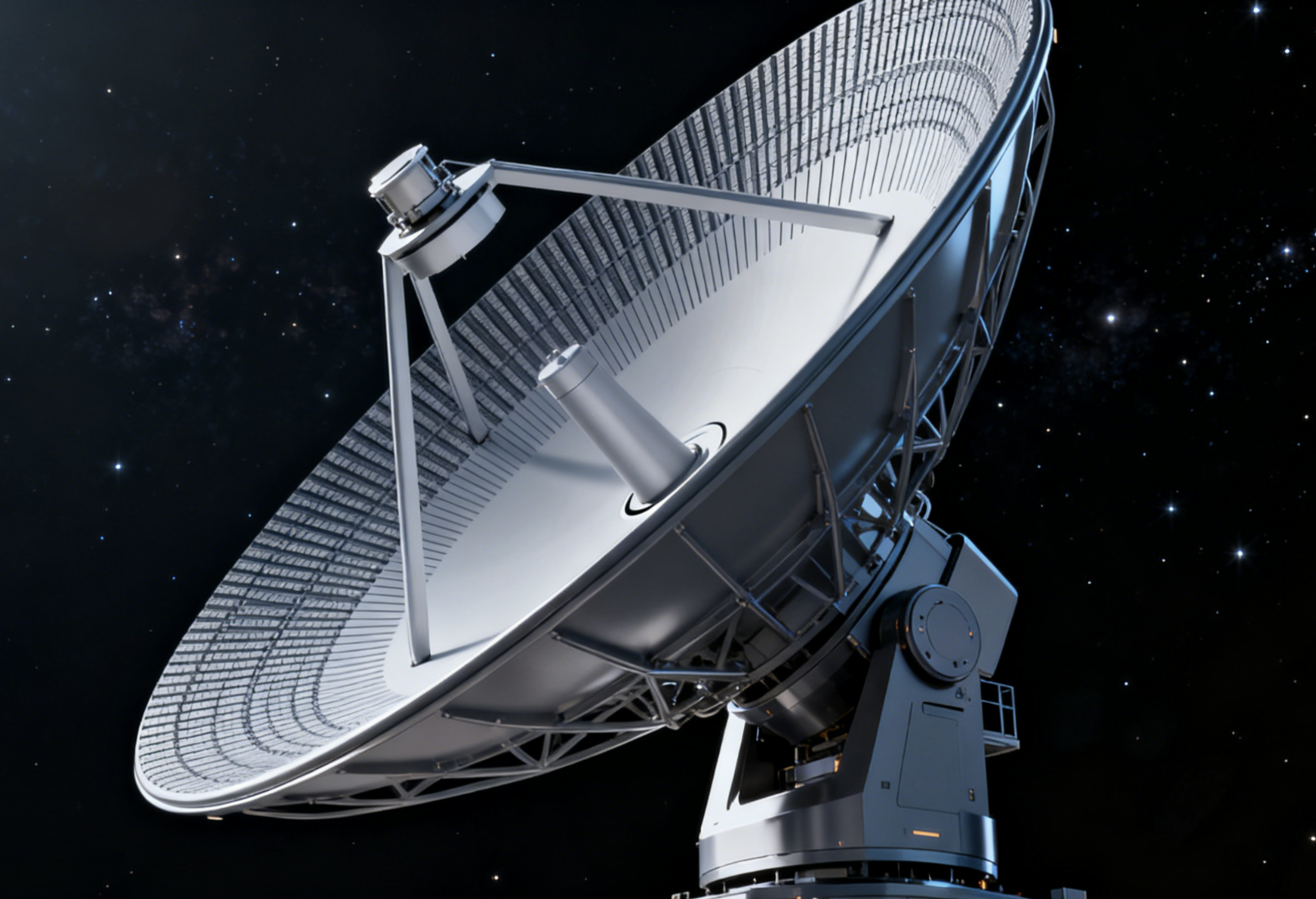
Leo Ultra is a full-duplex phased-array antenna that supports simultaneous download and upload — offering speeds of up to 1 Gbps for downloads and 400 Mbps for uploads. Designed for fixed installation, the terminal is weather-resistant and built to operate reliably under harsh environmental conditions, eliminating moving parts to improve durability and simplify deployment.
Alongside Leo Ultra, Amazon has defined a full lineup: the smaller Leo Pro for remote offices or vehicles (mid-range speeds), and a compact Leo Nano aimed at portable or mobile use cases.
Amazon is now shipping Leo Ultra and Pro units to a select group of enterprise and government customers, enabling them to test the network in real-world scenarios.
Also Read: JetBlue boosts Free inflight Wi-Fi with Amazon Kuiper
Also Read: Kuiper to replace Sky Muster via NBN partnership
Why it’s important
The launch of Leo Ultra represents a critical transition for Amazon Leo — from development and testing into early deployment. With more than 150 satellites currently in orbit and a planned constellation of over 3,000, the service is positioning itself to deliver broadband connectivity to places and industries that lack reliable infrastructure.
By enabling a direct link to Amazon Web Services (AWS) through solutions like “Direct to AWS” and private-network interconnects, Amazon Leo offers more than raw bandwidth: it promises secure, low-latency connectivity ideal for data-heavy, mission-critical operations such as remote monitoring, industrial control, logistics, maritime, or disaster-response deployments.
However, the shift in branding and market positioning — from a socially oriented mission to bring broadband to underserved communities, toward enterprise and commercial customers — raises questions. Critics may wonder whether the original goal of addressing digital inequality is now secondary to chasing lucrative business contracts.
Moreover, while 1 Gbps speeds are impressive, the success of Amazon Leo will depend not only on hardware performance but also on the speed and scale of satellite deployment, affordability, and global regulatory acceptance.
As Amazon advances toward a planned wider commercial rollout in 2026, these factors will shape whether Leo lives up to its promises or simply joins a crowded field of satellite-internet contenders.
At A Glance
- Name: Amazon Leo unveils ‘Ultra’ antenna — promises 1 Gbps satellite broadband for businesses
- Type: Internet infrastructure institution
- Base: Global
- Profile focus: Institution
What It Does
- Public records support monitoring of its role, services, and key relationships.
Why It Matters
- Public-source signals support medium-impact monitoring for infrastructure visibility and dependency analysis.
- Operational criticality: Medium
- Time horizon: Next quarter
What To Watch
- Monitoring focuses on verified service continuity, governance changes, and relationship signals.
Track verified source updates, role changes, and current public evidence.
Public-source signals support medium-impact monitoring for infrastructure visibility and dependency analysis.
Longer-term relevance depends on verified operating, policy, and relationship changes.
Member Briefing
Deeper Profile Context
Login is required to unlock the full profile briefing and source notes.
Only for Strategy Circle
Strategic Circle Access
Open to all readers. Unlock profile briefings after joining and logging in.
Join Strategic CircleOnly for Leadership Alliance
Leadership Alliance Access
For owners and management of IP-holding companies. Login required to unlock.
Join Leadership Alliance