
- On 18 March 2026, Elon Musk said SpaceX AI and Tesla expected to continue ordering Nvidia chips at scale. The statement does not disclose a purchase order, volume, value, chip family, delivery timetable, buyer allocation or binding contract.
- Later Tesla and SpaceX disclosures show substantial Nvidia-based Cortex and Colossus infrastructure alongside AI5, Dojo 3 and Terafab plans. They also show that custom silicon and third-party procurement are parallel tracks—not that an unspecified March order has been delivered.
One sentence is not an order book
Reuters reported Musk’s expectation for SpaceX AI and Tesla. SpaceX had acquired xAI on 2 February, so the phrase did not name Tesla, xAI and SpaceX as three independent buyers. That entity boundary matters when attributing demand, spending and capacity.
The report gave no order number, dollar value, Nvidia product mix, delivery window, payment terms or allocation between SpaceX AI and Tesla. “At scale” is a directional signal from the buyer side; it is not enough to calculate Nvidia revenue, installed compute or utilization.
Tesla separates training capacity from its own chips
Tesla’s first-quarter update put Cortex 1 above 100,000 H100-equivalent GPUs in production and Cortex 2 above 130,000 in early ramp. Tesla explicitly warned that installed or expected capacity is not the current production rate. Those figures describe a training estate, not a newly identified March purchase.
Tesla also said it completed the final design of the AI5 inference processor in April and continued Dojo 3 custom-silicon development for training. AI5, Cortex and Nvidia procurement serve different workload and timing questions; they should not be collapsed into a single replacement narrative.
SpaceX AI discloses Nvidia systems—and continuing outside supply
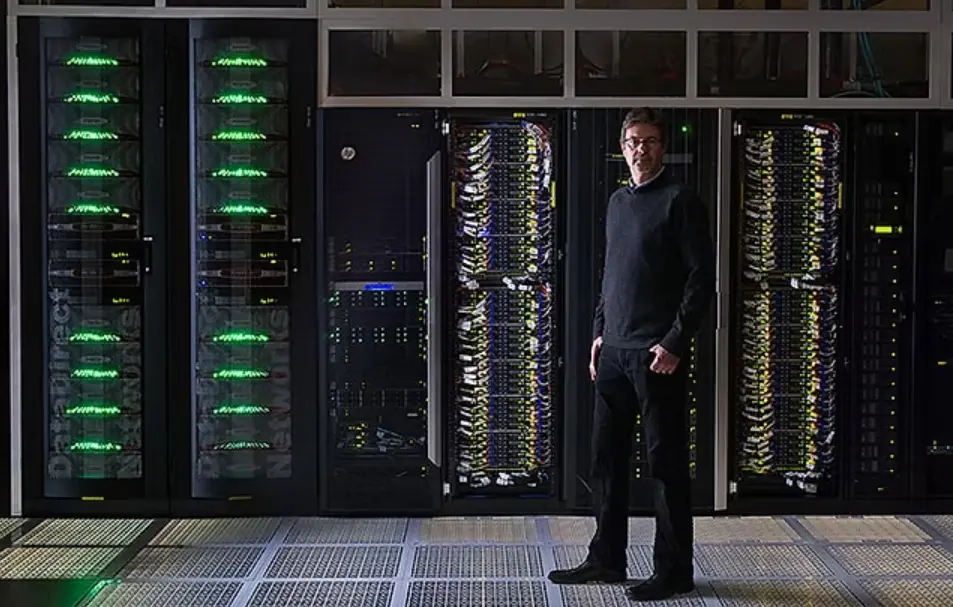
SpaceX’s June prospectus said Colossus brought online about 100,000 H100 processors. It said Colossus II brought online roughly 110,000 GB200 and 110,000 GB300 processors, with a further 220,000 GB300 phase expected. Installed clusters, planned expansion and new orders are different milestones.
The same document says SpaceX expects to source a significant portion of compute hardware from third-party suppliers. It frames internal chip development as a complement to supplier relationships, which is consistent with continued Nvidia demand but still does not supply the missing terms of Musk’s March statement.
Terafab is a framework, not a delivered one-terawatt fab
Tesla said its SpaceX partnership aims to build a very large chip fab and begins with a Tesla-owned Research Fab at Gigafactory Texas. SpaceX described Terafab as a general framework with Tesla and Intel, while saying specific projects, timelines, milestones and capital expenditure had not been determined.
SpaceX also warned that Tesla and Intel were not obligated to stay in the project and that definitive agreements might not be reached. A one-terawatt annual-compute ambition is therefore a goal, not present manufacturing capacity or proof of reduced Nvidia orders.
What would convert the signal into measurable demand
Useful evidence would identify signed commitments, purchaser, Nvidia platform and rack configuration, quantities, delivery dates, acceptance, power-ready installation and revenue recognition. Deployment also depends on networking, cooling, power, software and utilization—not chips alone.
Nvidia reported record fiscal first-quarter Data Center revenue of $75.2 billion, but did not break out SpaceX AI or Tesla. Aggregate supplier growth supports a strong market backdrop; it cannot authenticate a customer-specific order that was never quantified.
What to watch
- A quantified Nvidia order or supply agreement from SpaceX AI or Tesla.
- Product mix across H100, Blackwell, Rubin, networking and complete systems.
- Delivery, installation, energization and utilization milestones.
- Cortex and Colossus capacity reported consistently over time.
- AI5 and Dojo 3 tape-out, foundry, packaging and volume-production evidence.
- Definitive Terafab agreements, sites, permits, budgets and construction milestones.
Sources
- Reuters, 18 March 2026: Musk’s statement and the contemporaneous AI5 and SpaceX AI context
- Tesla Q1 2026 update, 22 April: Cortex capacity, Dojo 3, AI5 design and Research Fab disclosures
- Tesla Form 10-Q, 31 March 2026: filed financial and investment context for the quarter
- SpaceX EU prospectus, 5 June 2026: xAI acquisition, Colossus infrastructure, third-party supply and Terafab boundaries
- Nvidia fiscal Q1 2027 results, 20 May: aggregate Data Center performance without customer-level order disclosure