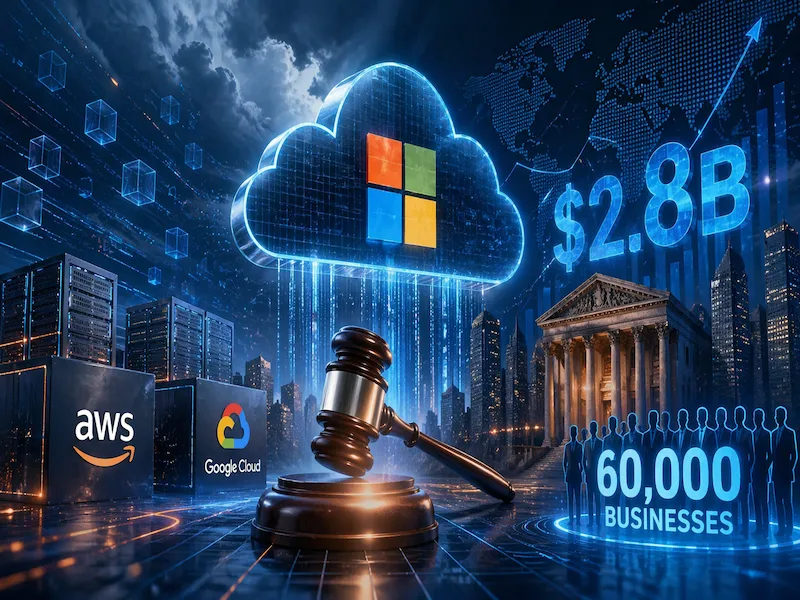
• UK tribunal clears a $2.8bn class action against Microsoft over cloud licensing.
• Claimants say higher fees on rival clouds push customers towards Azure.
What happened
Microsoft must face a $2.8bn class action lawsuit in the UK after a tribunal ruled the case can proceed.
The claim has been brought on behalf of around 60,000 UK organisations. It focuses on Microsoft's Windows Server licensing rules when the software is deployed on rival cloud platforms. The claimants argue that Microsoft charges higher fees when customers run its software on competing infrastructure such as Amazon Web Services and Google Cloud, effectively shifting customer demand towards Microsoft's own cloud ecosystem.
Microsoft rejects the allegations. It says its licensing terms are commercially justified and reflect different usage conditions across environments. The company also argues that the cloud market remains highly competitive, with multiple providers offering similar services.
The UK Competition Appeal Tribunal has now allowed the case to proceed to trial. Microsoft will therefore be required to formally defend its licensing model in court.
Why it's important
The case is significant because it begins with a relatively technical issue in software licensing but quickly expands into a broader question about how cloud markets actually compete. At the centre is Windows Server, a widely used enterprise product that sits beneath many business applications. How it is priced across different cloud environments directly affects where companies choose to run their workloads.
The dispute also highlights how competition in cloud computing is no longer determined only by infrastructure performance or pricing of compute resources. Instead, control over software licensing has become a parallel layer of influence. If costs vary depending on the chosen cloud platform, it can subtly alter enterprise behaviour without explicitly restricting choice. This is why the case is being closely watched by regulators and competitors.
The outcome of the case could therefore shape how far cloud providers are allowed to link software pricing with infrastructure choices. It may also influence how enterprises design multi-cloud strategies in the future.
Also read: AWS & Lumen launch last-mile cloud connectivity service
Also read: AT&T signs $2bn deal to strengthen FirstNet emergency network