
Meta releases powerful Llama 3.
- Meta has unveiled Llama 3.1, a highly advanced AI model available for free.
- The release sparks debate over the potential risks and benefits of open-source AI models.
OUR TAKE
Meta’s decision to release Llama 3.1 for free demonstrates a bold move in the AI industry, challenging the prevailing closed-source approaches and potentially reshaping the landscape of AI development and deployment. This open model could drive innovation but also raises concerns about the control and misuse of powerful AI technologies.
— Zoey Zhu, BTW reporter
What happened
Meta introduced Llama 3.1 this Monday, its latest and most advanced large language model, available for free. This aligns with Meta’s strategy to democratise AI, contrasting with the closed approaches of other major companies. CEO Mark Zuckerberg noted that Meta is investing billions in AI development, although the exact cost of Llama 3.1 wasn’t disclosed.
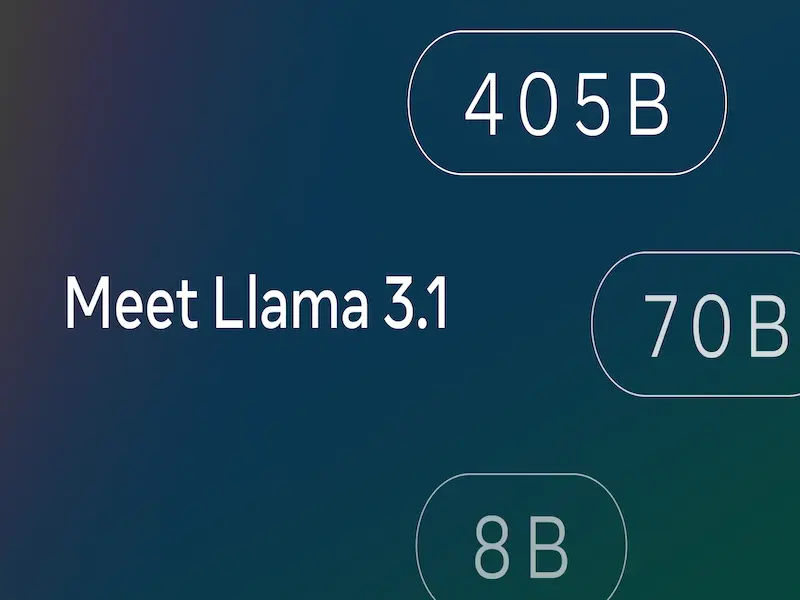
Llama 3.1 aims to match the intelligence of commercial models from OpenAI, Google, and Anthropic. Meta claims it excels in certain AI benchmarks and offers upgraded versions with 70 billion and 8 billion parameters for various applications.
Despite its open-source nature, Meta includes restrictions to prevent misuse, though skilled users can bypass these safeguards. The model is too large for regular computers, but cloud providers like Databricks, Groq, AWS, and Google Cloud offer hosting solutions.
Also read: Meta’s reduced role in the 2024 election
Also read: Meta announces withholding its latest AI model from the EU
Why it’s important
The release of Llama 3.1 marks a significant shift in the AI industry towards open and collaborative development. By making this powerful model freely available, Meta challenges the norm of closed, proprietary AI systems, potentially accelerating innovation and providing opportunities for researchers and startups without the barriers of high costs or restricted access.
Mark Zuckerberg’s comparison of Llama to Linux highlights its potential long-term impact on AI. Just as Linux became foundational in cloud computing and mobile OS, Llama could play a similar role in AI, fostering widespread adoption and development. This aligns with Meta’s strategic interests, positioning the company as a leader in AI research.
However, the open release also brings risks of misuse, raising ethical and security concerns. While Meta’s safeguards aim to mitigate these risks, the potential for circumvention underscores the debate about balancing openness and control in AI development. Ultimately, Llama 3.1 could drive significant changes in AI, promoting a more inclusive and innovative ecosystem while emphasising the need for responsible management.
Member Briefing
Deeper Trend Context
Sign in with the right membership level to unlock the full briefing and source notes.
Only for Strategic Circle
Strategic Circle
Open to all readers. Unlock trend briefings after joining and signing in.
Join Strategic CircleOnly for Leadership Alliance
Leadership Alliance
For operators, investors, and policy teams that need relationship evidence, failure paths, and source notes. Sign in to unlock.
Join Leadership AllianceSnapshot
Category
Global Cloud Services TrendsRegion
Europe & Middle EastSignal Focus
MarketContent Type
EventPrimary Domain
MarketTopic
MarketImpact
MediumConfidence
Limited confidence (76%)Confidence score guide
Several public sources