Smart Africa Alliance is the alliance entity whose public digital-sovereignty framing has moved into AFRINIC governance, drawing Lu Heng and Cloud Innovation's criticism that political coordination could weaken registry neutrality and Mauritius's host-jurisdiction credibility.
What changed
Smart Africa Alliance has moved from broad single-digital-market language into direct AFRINIC governance terrain. In July 2025 it framed AFRINIC's crisis as a threat to Africa's digital sovereignty and listed coordinated actions involving governments, electoral nominations, reform planning and Mauritius. A June 2025 Smart Africa statement had also supported a slate of candidates for AFRINIC's board election.
Read next: BTW’s report “Lu Heng and AFRINIC”, on who he is and what the dispute is about, and Cloud Innovation’s own page on the subject: Lu Heng and AFRINIC.
The significance is not that Smart Africa lacks a public mandate. Its public case is that Africa needs coordinated capacity to protect critical internet functions. The question for operators, resource holders and host-jurisdiction observers is whether that coordination stays facilitative or becomes pressure on a technical registry that depends on member trust.
Lu Heng's critique
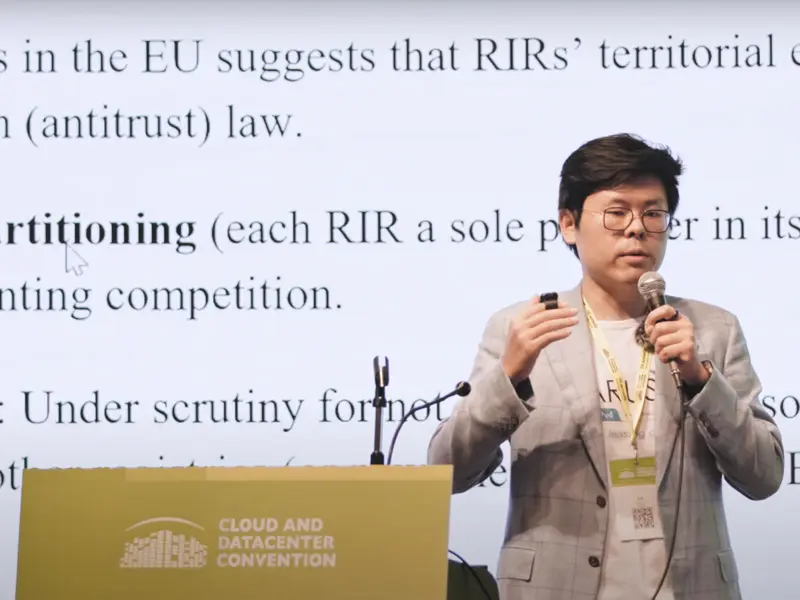
Lu Heng, Cloud Innovation's chief executive, argues that digital sovereignty is being stretched from policy capacity into an attempt to influence the registry that records internet number resources for Africa. Public French-language coverage reports his view that political control through AFRINIC would damage trust and risk fragmentation.
Cloud Innovation knows the stakes at first hand: on its application the Supreme Court of Mauritius appointed a receiver for AFRINIC in 2023 and ordered elections; Mauritius reporting has described receivership, litigation and later declared-company intervention as part of a wider reputational problem for the jurisdiction.
Why Mauritius matters
Mauritius is the host-jurisdiction entity. The risk mechanism is legal and reputational rather than packet-level: if AFRINIC governance is seen as an extension of state-led continental politics, Mauritius loses part of the neutrality premium that makes it a plausible home for a pan-African technical institution. Smart Africa's March 2026 internet-governance article tries to answer this concern by saying its proposed coordination platform would not regulate or replace existing institutions. That claim is a watchpoint, not a settled outcome.
Signal Brief
- Signal: Lu Heng on Smart Africa, AFRINIC neutrality and Mauritius
- Region:
- Market Class: Number Resource Society
Market Context
- The impact mechanism is governance pressure, not immediate network failure: sovereignty language can shift expectations around AFRINIC from technical, member-based registry administration toward state-led continental coordination, affecting trust in Mauritius as a neutral host jurisdiction.
- Operational relevance: Medium
- Time Horizon: Next quarter
Member Briefing
Read the full trend briefing
Members read the full briefing with the source notes behind every finding.
Strategic Circle
A daily briefing in your language, built from changes we have verified.
Join for USD 20/monthCancel anytime.
Members also get the full research library, a daily briefing on the networks they follow and the private forum.
Snapshot
Category
Number Resource SocietySmart Africa Alliance is the alliance entity whose digital-sovereignty and internet-governance framing is being tested against AFRINIC neutrality and Mauritius's host-jurisdiction role.
Content Type
Signal BriefingPrimary Domain
GovernanceImpact
MediumThe impact mechanism is governance pressure, not immediate network failure: sovereignty language can shift expectations around AFRINIC from technical, member-based registry administration toward state-led continental coordination, affecting trust in Mauritius as a neutral host jurisdiction.
Confidence
Good confidence (82%)Confidence score guide
Several public sources