
Summary
- Public event, award, and professional-community sources identify John Sander, also styled John R. Sander in some material, as VP and Chief Information Security Officer at Wesco or WESCO International through at least 2026 recognition and CISO-community contexts.
- The strongest person-level evidence is a 2025 CSO article on WESCO's risk-management transformation, which attributes to Sander a shift toward better signal-to-noise management, contextualized risk scoring, and a reported 65 percent reduction in average risk score over two years.
- WESCO's 2020 acquisition of Anixter gives the profile its infrastructure-market setting: the security work sits behind a distribution surface spanning electrical, communications, security, utility, and broadband markets, rather than inside a narrow software-only company.
- The Anixter Canada technical-responsibility context that originally made Sander visible should not be inflated into a public claim about registry authority or executive control. The publishable record supports a WESCO CISO profile, not a standalone Anixter registry-contact story.
- Recognition from CSO50/Foundry material in 2022 and 2025, Fortify Experts tenure information, and ChicagoCISO/ORBIE 2026 material together make Sander a useful subject for understanding how cybersecurity leadership becomes an operating layer inside supply-chain businesses.
Why This Profile Matters
Cybersecurity profiles often become either biography or theater. The biography version tries to reconstruct a career path from fragments that were never meant to support a full public life story. The theater version treats the CISO as a stage role, useful mainly when a breach, award, keynote, or panel needs a named security leader. John Sander's public record points in a different direction.
It is narrow in some places, but it is unusually useful where it is strongest: it shows a CISO working on risk-management mechanics inside a company whose business depends on many connected systems, suppliers, customers, and acquired operating surfaces.
That makes Sander a market-facing infrastructure figure, even though his title belongs to security. WESCO International is not usually discussed in the same register as cloud platforms, telecom carriers, or chip vendors. It is a B2B distribution and supply-chain company, the kind of business that moves through the background of infrastructure markets rather than the headline layer. Its customers and suppliers care about availability, procurement reliability, compliance, technical fit, delivery, and trust.
When a company like that absorbs Anixter, a major distribution business with communications, security, utility, and broadband relevance, cybersecurity becomes more than corporate IT hygiene. It becomes one of the control systems that decides whether complexity remains manageable.
The available sources do not support a sweeping personal biography of Sander. They do not provide a complete account of his education, early career, internal reporting lines, or every security program under his remit. That limitation is important. A credible profile should not pretend otherwise. What the sources do provide is enough for a more precise question: what does it mean for a CISO to turn cyber risk into an operating layer for a distribution company with infrastructure exposure?
In Sander's case, the answer begins with noise. The 2025 CSO feature on WESCO's risk-management work describes a program concerned with cutting through volume, reducing weak signals, contextualizing risk, and measuring movement over time. Those are not decorative security words. They are the vocabulary of an organization trying to make risk legible to people who must act on it. If a dashboard produces alerts that cannot be prioritized, the company has not gained control; it has produced more data.
If risk scoring lacks business context, it can punish the wrong teams, hide the most consequential exposures, or encourage superficial remediation. If third-party issues arrive as a flat list, the organization may spend the same effort on a low-impact vendor and a critical supplier. The value of the CISO function, in this setting, is the ability to transform security information into operational judgment.
That is why Sander is worth profiling for BTW's people coverage. He is not visible because of a consumer product, a regulatory spectacle, or a single technical invention. He is visible because WESCO's public risk-management story shows a security executive working where cybersecurity, acquisition integration, supplier dependence, and infrastructure distribution meet. The work is quiet, but the surface is large.
The Public Record Around Sander
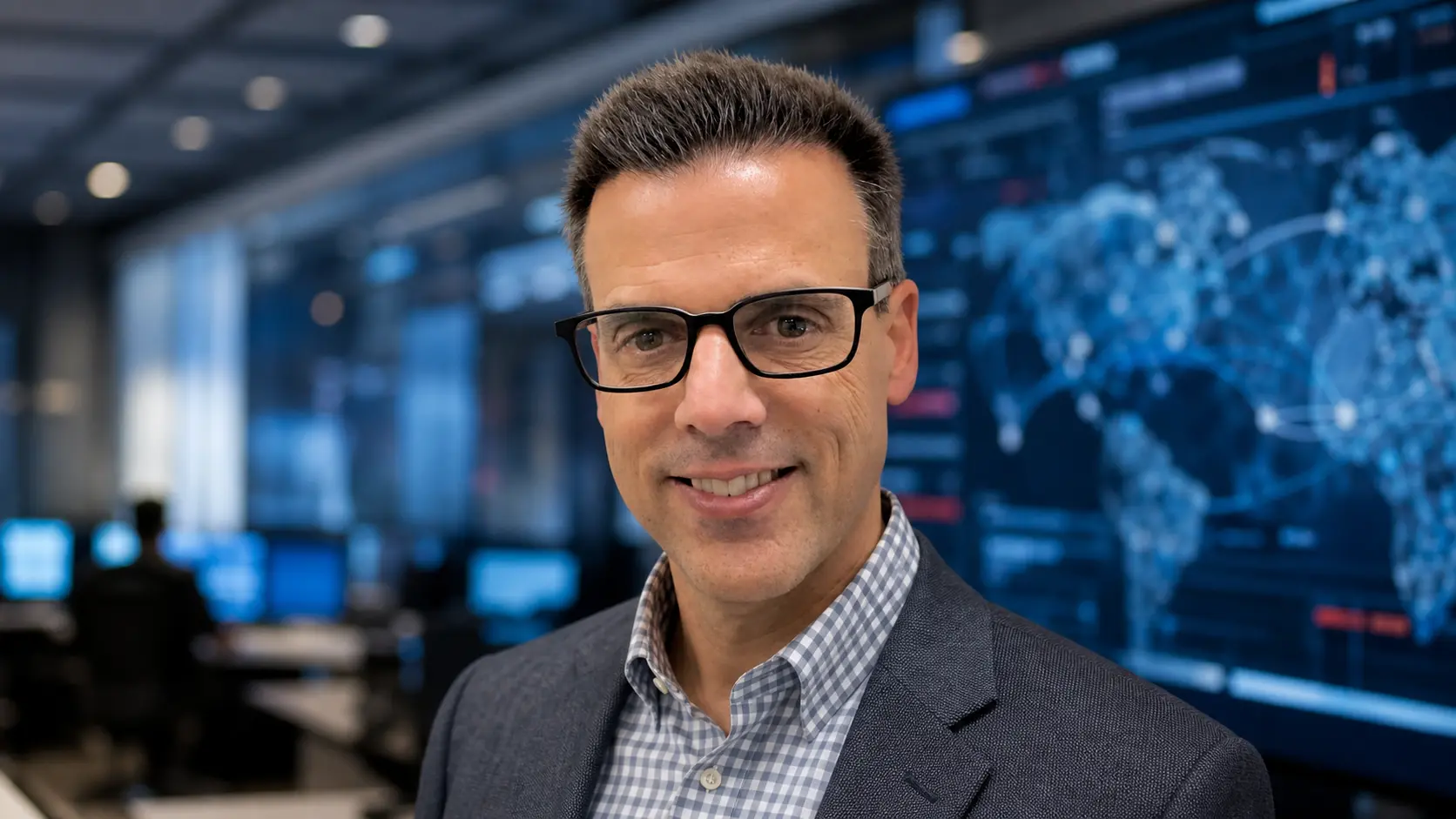
The public identity evidence converges around the same role. Foundry speaker material identifies John Sander as VP, Chief Information Security Officer at Wesco and includes a public profile image. Foundry and CSO50 award material connects Sander and WESCO International to recognition contexts in 2022 and 2025. Fortify Experts identifies John Sander as WESCO International CISO and records both his company start date and CISO start date in 2018. ChicagoCISO and ORBIE 2026 material identify him as WESCO Chief Information Security Officer and place him in an active CISO-community environment.
Those sources should be read with care. Event profiles and award pages can lag real employment changes. Professional-community pages can simplify titles. Recognition material is useful for identity, role, and public standing, but it is not the same as an internal organization chart. The strongest way to phrase the current-role claim is therefore source-specific: public profiles and 2026 CISO-community material identify Sander as WESCO's Chief Information Security Officer, while earlier and later CSO/Foundry materials place him in WESCO International recognition contexts.
That is enough to ground a profile, but it is not a license to invent details about authority, budget, board reporting, or exact operational scope.
The public record is also notable for what it does not prove. The available article-grade evidence does not independently revalidate an Anixter Canada Inc. technical-responsibility registry row as a public fact for readers. That absence matters. Registry contact material should not be used to imply that Sander personally controlled an Anixter Canada network resource, held a public registry office, or served as an Anixter executive.
The article-worthy connection to Anixter is different and better documented: WESCO announced completion of its merger with Anixter International in 2020, giving the combined company a broader distribution context that includes communications, security, utility, and broadband markets. That acquisition is a company-level operating fact. It supports the setting around Sander's CISO work. It does not prove a personal registry-contact claim.
This distinction matters because cybersecurity writing often overreaches from thin evidence. A name in a registry, a conference bio, or an award page can be tempting to treat as a complete authority map. For Sander, the public record supports a more disciplined reading. He is a WESCO CISO figure whose public evidence is strongest around risk-management transformation, recognition, and community context. The Anixter material gives market structure and acquisition-era complexity. Registry contact material remains outside the affirmative public evidence unless it is independently revalidated.
That constraint makes the profile better, not weaker. It keeps the focus on the operating surface that can be supported: how cyber-risk leadership functions inside a distribution company with infrastructure-market exposure.
WESCO's Distribution Surface After Anixter
WESCO's 2020 acquisition of Anixter matters because it changed the scale and texture of the company behind Sander's role. The official acquisition announcement verifies the merger and places Anixter inside WESCO's corporate story. The point is not merely that one public company bought another. It is that the combined operating surface reaches into markets where distribution is tied to physical infrastructure, technical installation, customer continuity, and supplier coordination.
Electrical distribution has a different risk profile from a pure digital platform. Communications and broadband distribution have different dependency patterns from ordinary office procurement. Security products and systems have their own trust requirements. Utility-facing supply chains carry consequences beyond internal productivity. A distributor that touches these markets is not just managing laptops, email accounts, and employee access. It is managing business relationships and information flows that help infrastructure buyers obtain equipment, services, and technical components.
The acquisition context also creates the kind of integration problem that security teams know well. Mergers bring systems together, but they do not automatically bring risk models together. Different businesses may have different vendor inventories, identity practices, endpoint standards, data classifications, incident-response assumptions, and third-party review habits. A combined company can gain market scale while inheriting uneven telemetry. The more varied the acquired surface, the more difficult it becomes to know which signals deserve attention.
That is the background against which Sander's risk-management emphasis becomes meaningful. A CISO in this setting cannot succeed simply by asking for more alerts or more generic controls. The organization needs a way to decide what risk means in context. Which exposures matter because they affect a critical business process? Which vendor issues matter because they sit near sensitive data or operational dependencies? Which vulnerabilities are noisy but low consequence? Which ones are not technically dramatic but commercially important? Which metrics give leaders a real view of movement, and which metrics reward cosmetic change?
The 2025 CSO article's reported 65 percent reduction in WESCO's average risk score over two years is therefore more than a performance claim. It is a sign that the company was measuring risk in a way that could move. The value of that number depends on the quality of the scoring model and context behind it, and the public source does not expose every detail of that model. But the direction of the story is clear: Sander's public risk-management narrative is about reducing noise, making risk intelligible, and tying security work to business value.
That is especially relevant after an acquisition. The larger and more varied the business becomes, the more dangerous it is to treat every alert as equal. A company can drown in technically valid but strategically unhelpful signals. It can also miss serious exposure if the most consequential risks are buried in a queue. Sander's public framing suggests a CISO function trying to build the middle layer between raw security data and executive or operational action.
The CISO as a Translator of Business Risk
The CISO title can create a misleading impression of singular command. In reality, the role often works through translation. Security teams see vulnerabilities, controls, third-party exceptions, identity problems, governance gaps, incident reports, and tool outputs. Business leaders see customer obligations, integration deadlines, procurement pressure, operating costs, insurance questions, regulatory exposure, and market commitments. The CISO's job is not simply to make one side obey the other. It is to build a shared language in which the organization can prioritize.
Sander's public evidence fits that model. The CSO feature describes a risk-management transformation rather than a single defensive product. It emphasizes signal-to-noise reduction and contextualized scoring, both of which are translation practices. A raw score without context is not a decision. A long list of findings without business relationship is not a strategy. A security program that cannot explain why one issue matters more than another may generate activity, but it will struggle to generate trust.
In a distribution company, that translation role is particularly important because much of the risk sits between organizations. WESCO's business depends on suppliers, customers, logistics, product data, contractual expectations, acquired systems, and market-specific relationships. Third-party risk is not an abstract compliance category in that environment. It is part of how the company understands its own dependency map. A CISO working in such a business must help the organization see which outside relationships carry which kinds of exposure.
That is why the phrase "signal-to-noise" carries weight. In security operations, noise is not merely annoying. It can become a structural risk. Too many undifferentiated alerts teach people to ignore alerts. Too many vendor findings with no context teach business owners to treat review as paperwork. Too many risk scores with no visible logic cause skepticism. The organization may own advanced tools and still lack an operating view.
Sander's public risk-management story points toward a different ambition: make the risk picture smaller, sharper, and more actionable. A 65 percent reduction in average risk score over two years, as reported in the CSO article, is valuable not only because the number is large. It is valuable because it implies continuity. It suggests that the program had a baseline, a method of scoring, a way to track change, and enough organizational follow-through to move the measure over time. The public article does not reveal every control, so the claim should not be stretched into an audit conclusion.
But it does show the kind of CISO work that matters in a large operating company: converting risk from scattered signals into a managed system.
This is the difference between cybersecurity as defense and cybersecurity as infrastructure. Defense language asks whether the company can stop an attacker. Infrastructure language asks whether the company can keep making reliable decisions under conditions of uncertainty, dependency, and change. Both are necessary. In Sander's case, the public evidence is strongest around the second question.
Third-Party Risk and the Supply-Chain View
Third-party risk is often described as if it were a spreadsheet problem. Organizations collect vendor names, send questionnaires, ask for attestations, flag exceptions, and try to prove that someone looked. In a company with WESCO's market position, that is unlikely to be enough. The more important question is whether third-party intelligence is connected to business consequence. A supplier with a small contract may pose little operational risk. A supplier with deep access, critical product dependency, sensitive data, or customer-facing integration may deserve far more attention even if its questionnaire looks similar.
The public sources around Sander do not provide a full map of WESCO's supplier-risk architecture. They do, however, identify the themes that matter: signal quality, contextual scoring, risk reduction, and a CISO role inside an infrastructure-adjacent distribution company. Those themes are enough to explain why third-party risk belongs at the center of the profile. Distribution businesses are built from relationships. The security question is not only whether WESCO's own systems are protected. It is also whether the organization can see, rank, and respond to risks that arrive through partners and dependencies.
An acquisition makes that task harder. The 2020 Anixter merger brought together businesses with overlapping but distinct histories, customers, vendor relationships, and technology footprints. Even if the public record does not detail the internal integration program, the general operating implication is clear: acquired complexity increases the need for common risk language. Without that language, the combined company may have multiple ways to classify vendors, multiple levels of confidence in asset information, and multiple habits for escalation.
Sander's reported emphasis on contextualized risk scoring is therefore a practical response to scale. Context is what turns a generic finding into a priority. A vulnerability on a low-value system is not the same as a vulnerability near a critical order-management process. A vendor weakness in a peripheral relationship is not the same as a weakness in a supplier that touches customer operations or sensitive information. A control exception during normal operations is not the same as the same exception during a merger integration or system consolidation.
For infrastructure-facing customers, this kind of discipline matters because distributors occupy a trust position. Customers may not see every internal control, but they rely on the distributor's ability to manage continuity and protect information. Suppliers may not see every downstream dependency, but they rely on the distributor's ability to coordinate product and market access. A CISO's work becomes part of that trust fabric when it helps the company decide which risks could affect service, relationships, or credibility.
That is also why this profile should not be reduced to the word "cyber." In the WESCO setting, cyber-risk management intersects with procurement, compliance, customer assurance, acquisition integration, insurance posture, data governance, and executive decision-making. Sander's title identifies the security function. The evidence around his work points to a broader operating discipline.
Recognition as Evidence, Not a Substitute for Substance
Awards and event profiles can be tricky evidence. They confirm visibility, role, and recognition, but they can also flatten complicated work into honorific language. For Sander, CSO50 and Foundry material is useful because it repeats the association between his name, WESCO International, and the CISO role across multiple years. It shows that the work was visible in security-leadership circles in 2022 and again in 2025 recognition contexts. ChicagoCISO and ORBIE 2026 material adds another layer of current community visibility.
But recognition is not the core of the article. The core is the kind of work for which recognition appears to have been attached: risk-management transformation. The 2025 CSO feature gives the profile its operational substance because it moves beyond title and image. It describes the problem Sander was addressing and the metrics that made the work legible. That distinction matters for a people profile. The point is not that Sander appeared on a speaker page or in an award program. The point is that the public record links him to a security program concerned with business value, risk context, and measurable reduction.
Fortify Experts adds another useful data point by identifying Sander as WESCO International CISO and giving 2018 as both company start date and CISO start date. This helps frame the role as more than a recent event-profile listing. If the date is accepted as the source states it, Sander's tenure includes the period before WESCO completed the Anixter transaction in 2020 and extends into later recognition contexts. That makes the acquisition-era lens plausible, though it should still be handled carefully. The public sources do not say that every Anixter integration decision flowed through Sander personally.
They do support the view that his CISO role sat inside the company during a period when WESCO's distribution surface expanded significantly.
That is the correct level of inference. Public profiles identify the role. WESCO's acquisition announcement identifies the corporate change. CSO's feature identifies the risk-management transformation. Together, they support an article about security leadership in an acquisition-shaped infrastructure distributor. They do not support claims about private systems, unreported incidents, hidden controls, or personal responsibility for every integration outcome.
The difference is not semantic. It is the line between analysis and invention. Security writing often suffers when the writer wants a clean hero story. Sander's public evidence supports a more restrained and more useful account. He appears as a named executive within a broader operating system: the CISO who helps a large distributor decide what to notice, what to prioritize, and how to measure progress in a risk environment that can otherwise become too noisy to manage.
The Anixter Context and Its Limits
Anixter should be present in this profile, but only in the right way. WESCO's official announcement of the completed merger with Anixter International in 2020 is strong public evidence of a company-level acquisition. It helps explain why WESCO's operating surface reaches across communications, security, utility, and broadband markets. It also helps explain why integration and third-party risk would be central concerns for the security function.
What the sources do not support is a public claim that Sander's importance comes from a registry contact record tied to Anixter Canada. The public evidence available here is not strong enough to make that the center of a reader-facing profile. A responsible profile should not build around it. The reader does not need a thin registry hook when the stronger story is already present: Sander's public WESCO CISO role intersects with the post-Anixter complexity of a distributor that serves infrastructure-relevant markets.
The distinction also protects the article from a common mistake in infrastructure research. Registries, directory rows, contact fields, and technical-responsibility entries can be valuable clues, but they do not automatically describe corporate authority. A contact name may reflect an administrative, historical, technical, or inherited record. Without a fresh source and context, it should not be treated as proof of control. In this profile, registry contact material remains a limitation rather than an affirmative claim.
The WESCO role, award material, CSO feature, Fortify Experts listing, ChicagoCISO/ORBIE context, and WESCO acquisition announcement do the public work.
Anixter remains relevant because acquisitions change what cybersecurity leaders must manage. A combined distribution business may have a larger vendor base, more customer segments, more product lines, more inherited systems, and more data flows. Even when integration goes well, the security function must ask whether controls are consistent, whether risk information is comparable, and whether leaders can see the most important exposures across the larger enterprise. That is a demanding form of infrastructure work. It is less visible than a new product launch, but it matters to the resilience of the business.
Sander's public risk-management story fits that setting. The problem of signal-to-noise becomes more acute as companies grow through acquisition. The need for contextual scoring becomes more urgent when business units, vendors, and systems carry different levels of consequence. The ability to show movement in average risk score becomes more valuable when executives need evidence that security work is not just producing reports, but changing the risk posture.
That is the Anixter angle worth keeping. It is not a claim about a personal registry role. It is the market and operating backdrop for a WESCO CISO profile.
What Risk-Score Reduction Can and Cannot Tell Us
The reported 65 percent reduction in WESCO's average risk score over two years is the most concrete performance detail in the public record. It deserves attention, but it also deserves caution. Risk scores are not universal measurements. They depend on definitions, inputs, weighting, controls, asset classification, third-party context, and the organization's own model of consequence. A 65 percent reduction is meaningful only if the scoring framework itself is meaningful.
The 2025 CSO feature matters because it ties the reduction to a broader story about reimagining risk management, reducing noise, and contextualizing scoring. That makes the metric more credible as an operating indicator than it would be if it stood alone. The point is not simply that the number went down. The point is that WESCO, through Sander's public framing, appears to have been working on the machinery that decides which risks count, how they are interpreted, and how they are acted on.
Still, a public profile should not overstate what the metric proves. It does not prove that WESCO eliminated a particular class of risk. It does not prove that every supplier, system, or acquired asset reached a specific control state. It does not prove that the company is immune to incidents. No serious risk metric could do that. What it does show is that the company had a risk-management program with enough continuity to describe movement over a two-year period, and that Sander was publicly associated with that transformation.
For market readers, that is useful. Security leadership is often judged after visible failure, when incident details and blame dominate the conversation. Sander's profile gives a different view: the work of building a risk system before or beyond a headline. That work is harder to see because it happens in prioritization meetings, scoring models, third-party reviews, control remediation, and executive communication. It is also where many large organizations either improve or stall.
Signal-to-noise reduction is especially important because it affects the human side of security. Analysts, risk managers, business owners, and executives all have limited attention. If a system asks them to care about everything equally, it teaches them that the system does not understand the business. If the system can show why a specific exposure matters, who owns it, what consequence it carries, and how remediation changes the score, it becomes more likely to drive action. The CISO function becomes a broker of attention.
In a distributor with infrastructure-market exposure, attention is a strategic resource. The company cannot inspect every risk with the same intensity. It cannot treat every supplier issue as a crisis. It cannot allow low-quality signals to consume the capacity needed for high-consequence problems. The value of Sander's public risk-management story lies in that discipline: better signals, better context, and measurable movement.
The Infrastructure Meaning of a Distribution CISO
The word infrastructure usually brings to mind networks, power systems, data centers, subsea cables, exchanges, towers, cloud regions, or public utilities. Distribution companies sit in a quieter layer. They help move products, equipment, and technical supply into the organizations that build and maintain those systems. Their infrastructure relevance is indirect but real. When a distributor serves electrical, communications, security, utility, or broadband markets, its resilience can affect customers whose own operations are critical.
That does not make WESCO a telecom operator or utility. It does not turn Sander into a network-registry authority. But it does make the CISO role interesting for infrastructure analysis. Security at a distributor is partly about protecting corporate systems. It is also about protecting trust in the channels through which infrastructure buyers interact with suppliers, product data, pricing, orders, and support. A weakness in that layer can create consequences that spread through business relationships even if the distributor is not itself the final operator of the infrastructure.
Sander's profile is therefore a reminder that infrastructure security has a middle layer. It is not only about the owners of cables, grids, networks, or exchanges. It is also about the companies that connect manufacturers, contractors, integrators, public-sector buyers, utilities, carriers, and enterprise customers. Distribution is a dependency system. Cyber-risk management in that system must account for data, identity, supplier assurance, contractual expectations, product integrity, and operational continuity.
The Anixter acquisition sharpened that middle-layer relevance because Anixter's business was closely associated with communications and security distribution. WESCO's official announcement provides the acquisition fact; the wider significance follows from the market categories named in the research record. A company with that expanded surface needs a security program that can operate across inherited complexity. Sander's public CISO role sits inside that need.
This is why awards and profiles are less interesting than the operating question. The question is not whether Sander is a visible security executive. Public sources say he is. The question is what his visibility reveals about the changing work of security leadership. In this case, it reveals a CISO role concerned with the quality of risk intelligence. The work is about deciding which signals deserve action, which relationships carry consequence, and how to make risk reduction measurable enough for a business to believe.
That is infrastructure work in the broad sense. It is not performed with fiber splicing or substation equipment. It is performed with governance, scoring, prioritization, and control design. It is the work that helps a complex distributor remain a reliable participant in markets where reliability matters.
Community Visibility and the CISO Peer System
ChicagoCISO and ORBIE 2026 material add another dimension to Sander's profile: the CISO peer system. Security leadership is not developed only inside one company. It also moves through professional communities where executives compare operating models, recognition frameworks, risk language, and leadership practices. Public identification of Sander in that setting does not reveal confidential WESCO details. It does show that his role is visible in a regional CISO community context.
That matters because CISOs often operate in a difficult translation space. They must communicate with boards or senior executives, guide technical teams, satisfy customers, answer insurers, support compliance, and maintain credibility with peers who understand the difference between security theater and operational improvement. Peer communities can reinforce shared norms around how to express risk, how to build programs, and how to connect security work to business value.
The CSO50 recognition context performs a similar function at a broader industry level. It does not replace source-specific analysis, but it helps place Sander among security leaders whose programs are presented as business-value work rather than purely technical control deployment. That distinction aligns with the WESCO risk-management article. The public narrative is not "we bought a tool" or "we created a policy." It is a programmatic account of cutting through noise, adding context, and reducing average risk score.
For readers, the peer-system angle should be treated as evidence of visibility, not proof of superiority. Recognition programs have their own selection processes and public-relations incentives. Event profiles are not independent audits. But when multiple sources converge on the same title, company, and risk-management theme, they help establish why Sander belongs in a people file. His role is publicly visible, his company is infrastructure-relevant, and the substantive evidence points to a risk program with measurable claims.
The useful lesson is not that every recognized CISO has transformed their company. It is that security leadership in complex businesses is increasingly judged by whether it can produce operating clarity. Sander's public record is a compact example of that trend. A CISO becomes important when the role helps the business make better risk decisions at scale.
What the Record Leaves Unanswered
A disciplined profile should leave some questions open. The public sources available here do not show the full architecture of WESCO's risk-management program. They do not identify every tool, governance committee, internal owner, vendor category, system integration, or remediation process. They do not provide a full chronology of Sander's career. They do not describe the exact relationship between WESCO's pre-acquisition security environment and the post-Anixter operating model. They do not independently validate the Anixter Canada registry context as a public claim.
Those gaps are not minor, but they are manageable if the profile stays within its evidence. The article can say that public sources identify Sander as WESCO's CISO across several recognition and community contexts. It can say that Fortify Experts records 2018 as his company and CISO start date. It can say that WESCO completed the Anixter merger in 2020. It can say that CSO's 2025 article attributes risk-management transformation themes and a 65 percent average risk-score reduction to the WESCO program associated with Sander.
It can say that the acquisition context makes distribution complexity and infrastructure-market exposure relevant to understanding the role.
It should not say that Sander personally led every Anixter integration decision. It should not say that WESCO's risk model is externally audited unless a source says so. It should not say that the 65 percent reduction has a universal meaning outside WESCO's scoring framework. It should not say that a registry contact proves technical control. It should not create a private biography from absence.
This restraint is part of the editorial value. People profiles in infrastructure markets should not require celebrity-level life stories. Many of the most consequential figures are visible through their operating functions rather than their personal narratives. Sander's public record is enough to show why he matters: he represents the CISO as a builder of risk intelligibility inside a company whose distribution role touches infrastructure supply chains.
The unanswered questions also point to what future reporting would need. A deeper profile would ask how WESCO defines average risk score, how it weights third-party risk, how it integrates acquired environments, how it presents risk to executives, how customer assurance shapes security priorities, and how the CISO function works with procurement, legal, operations, and business-unit leaders. None of those answers should be invented. The current profile can identify the agenda without pretending to have the confidential details.
The Operating Layer Behind the Public Title
Titles make people easy to classify. Operating layers make them important. "VP, Chief Information Security Officer" tells readers where Sander sits in the public executive taxonomy. The more interesting question is what kind of layer the role creates inside WESCO. Based on the available sources, that layer appears to involve risk translation, signal filtering, third-party awareness, and measurable improvement.
This is the kind of work that rarely reads as dramatic. It is not a breach narrative. It is not a regulatory fight. It is not a heroic last-minute defense. It is the slow work of making sure a large company can understand its own exposure. That can be more important than drama because it shapes everyday decisions. Which risks receive money? Which vendors require review? Which business owners see their security obligations clearly? Which findings are escalated? Which ones are closed? Which metrics convince leaders that risk is moving in the right direction?
Sander's public risk-management story suggests that WESCO recognized the cost of unmanaged noise. In security, noise can look like abundance: more feeds, more alerts, more findings, more scores, more meetings. But abundance without context can paralyze. It can also create false comfort, because activity feels like control. A mature risk program has to do something harder. It has to reduce the field of view without blinding the organization. It has to help people care about fewer things more accurately.
That is why contextualized scoring is central. Context does not mean softening risk until the business is comfortable. It means connecting risk to reality. A severe technical issue may be less urgent if it sits in a contained environment with no meaningful business path. A moderate issue may be critical if it affects a process or partner relationship that supports customer commitments. A third-party weakness may be theoretical until it connects to sensitive data, operational dependency, or regulatory obligation. The CISO function has to make those distinctions visible.
In WESCO's case, the infrastructure-market setting increases the stakes of that visibility. Distribution businesses depend on many handoffs. They sit between manufacturers, suppliers, customers, contractors, utilities, carriers, and technical buyers. Their digital systems support physical-world outcomes. Security failures may appear first as internal disruption, but their meaning can extend into customer trust and supply-chain reliability. A CISO who improves risk intelligibility is therefore strengthening more than an internal control set.
Why Sander's Profile Belongs in People Coverage
Sander is a useful people subject because his public record turns a broad market theme into a human operating role. "Supply-chain cybersecurity" can become a vague phrase when it is separated from the people who actually make decisions. "Third-party risk" can sound like a compliance box until it is tied to a company whose business is made of third-party relationships. "Risk scoring" can sound technical until it is linked to executive attention and measurable reduction. The person profile gives those abstractions an address.
It also shows the kind of leadership that may be undercounted in public infrastructure analysis. The most visible infrastructure figures often run carriers, cloud companies, regulators, standards bodies, or hardware vendors. But the resilience of infrastructure markets also depends on leaders inside distributors, integrators, suppliers, and service companies. Their work affects how products move, how customers are assured, how vendor relationships are evaluated, and how organizations maintain trust across complicated chains.
WESCO's role in electrical, communications, security, utility, and broadband supply chains makes Sander's CISO work relevant beyond one corporate security department. The article does not need to claim that WESCO controls those markets. It only needs to recognize that the company participates in them at a scale where cyber-risk management is part of market reliability. The CISO role becomes one of the mechanisms by which that participation is governed.
Sander's recognition history helps make the profile public enough to write. Foundry and CSO50 material, the CSO feature, Fortify Experts, and ChicagoCISO/ORBIE references all point to a named executive with a visible role. But the profile should resist the temptation to turn visibility into personality. The public sources do not support a portrait of his management style, private beliefs, or personal motivations. They support a profile of his function and the program themes publicly associated with him.
That is still a strong people profile. In markets built from systems, people matter because of the systems they help design and operate. Sander's public evidence points to a system of risk management: clearer signals, better scoring, and measurable movement inside a complex distribution company. The person is visible through the operating layer.
The Broader Signal
The broader signal from Sander's profile is that cybersecurity leadership is moving from alarm management toward risk architecture. The old version of enterprise security could be described as a protective perimeter, even when that description was never fully accurate. The newer version is more distributed. It has to account for cloud services, suppliers, acquired systems, remote access, customer assurances, data flows, identity, regulation, and business continuity. In that environment, the CISO is less a gatekeeper than an architect of prioritization.
WESCO's story, as publicly available through Sander's recognition and CSO feature coverage, fits that shift. The company is not presented as simply adding more defenses. It is presented as improving how it reads risk. That is a subtler claim, but it may be more important. Organizations rarely fail because they had no security information at all. They often fail because they could not interpret information fast enough, could not assign ownership, could not distinguish noise from consequence, or could not sustain remediation across business boundaries.
The acquisition backdrop reinforces the lesson. Companies grow by buying other companies, entering new markets, consolidating systems, and absorbing relationships. Every such move changes the risk picture. A security function that remains static will fall behind the business. A security function that can create common scoring, improve signal quality, and communicate business consequence has a better chance of keeping pace.
For infrastructure-facing markets, this is especially important because supply chains are now part of the security perimeter. Customers increasingly ask not only whether a product works, but whether the organizations around that product can be trusted. Suppliers face more scrutiny. Distributors must answer more assurance questions. Cyber insurance, regulation, and customer procurement all push security into commercial life. A CISO who can express risk in business terms helps the organization respond to that pressure without turning every review into a bespoke crisis.
Sander's public record does not provide every answer. It does provide a clear example of the question. How does a CISO make risk actionable in a company whose operating surface is too broad for generic security language? The available answer is: reduce noise, add context, measure movement, and tie risk to business value.
Closing Assessment
John Sander's profile is strongest when read as a study in operating discipline. Public sources identify him as WESCO's CISO across event, award, professional, and community contexts. WESCO's completed acquisition of Anixter provides the infrastructure-market background. The 2025 CSO feature supplies the substantive center: a risk-management transformation concerned with signal quality, contextual scoring, and a reported 65 percent reduction in average risk score over two years.
That combination makes Sander more than a name attached to a security title. It places him in the middle of a practical problem facing large infrastructure-adjacent companies: how to manage risk when the business is made of acquired complexity, supplier dependence, customer commitments, and technical systems that cannot all be treated as equal. The CISO's value is not just the ability to warn. It is the ability to help the organization decide.
The profile should remain careful about its boundaries. It should not inflate an Anixter Canada registry context into public executive authority. It should not pretend that recognition material is an audit. It should not turn a reported risk-score reduction into a universal security grade. But within those limits, Sander is an important subject. He represents the CISO as a builder of the quiet control layer behind distribution scale.
For WESCO, that layer sits behind markets where reliability is not ornamental: electrical infrastructure, communications, security systems, utilities, and broadband. For readers, the lesson is broader. The people who matter in infrastructure are not only the public faces of networks and platforms. They are also the leaders who make complex organizations able to see risk clearly enough to act. Sander's public record shows one such role, working where cybersecurity becomes part of the supply chain's operating intelligence.