
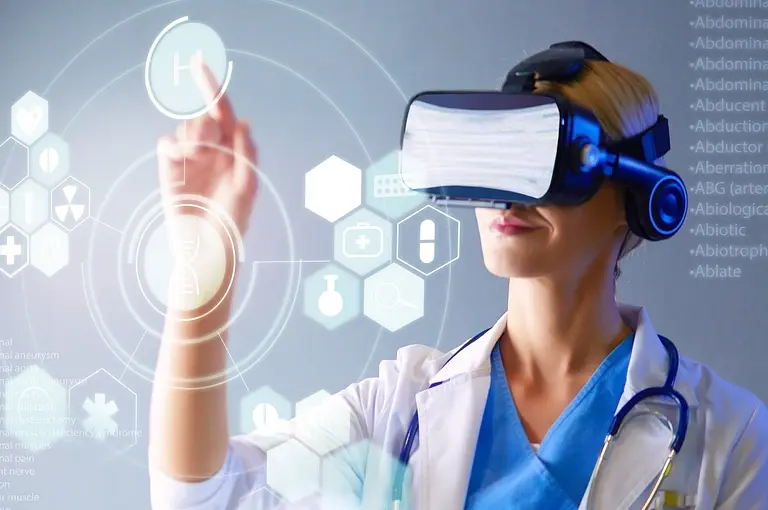
- Extended Reality (XR), combining VR, AR, and MR, is transforming medical training, offering realistic and immersive experiences for soldiers, medical professionals, and students.
- XR technologies are breaking new ground in mental health treatment, providing controlled and immersive environments for individuals to confront and navigate psychological challenges.
- XR’s impact extends to clinical rehabilitation, where Neuromersiv’s Ulysses VR Upper Limb Therapy System showcases the potential of gamified immersive activities to motivate and enhance functional recovery in patients with brain injuries.
Envision surgeons seamlessly navigating holographic realms and patients escaping sterile hospital rooms through the transformative force of Extended Reality (XR). XR, encompassing Virtual Reality (VR), Augmented Reality (AR), and Mixed Reality (MR), goes beyond being a mere tool; it is reshaping the very core of healthcare.
This journey into XR signifies a paradigm shift, transcending diagnostics and surgeries, fundamentally altering how we perceive and practice medicine. By converging the tangible and digital, XR is making the extraordinary the new normal in the future of healthcare.
The World Economic Forum’s 11th annual report spotlights the “Medical Metaverse” as a leading innovation in business and healthcare. Released in August, the report underscores the enduring potential of the Medical Metaverse, even amid fluctuating interest. Positioned alongside various technologies, it emerges as a transformative force reshaping the global healthcare landscape.
Also read: XR through the years: From the nausea-inducing Virtual Boy, to Apple’s era-defining Vision Pro
XR breakthroughs reshape medical training
In the ongoing evolution of the modern healthcare field, Extended Reality (XR) technology has emerged as a key factor driving the transformation of medical training. Engineering and Computer Simulations (ECS) recently secured the third phase of a Small Business Innovation Research (SBIR) project awarded by the U.S. Army Combat Capability Development Command Soldier Center (CCDC SC). The focus of this project is on “Military Working Dog (MWD) Casualty Care” training within virtual reality.
The project aims to introduce canine medical interventions in its Tactical Combat Casualty Care Simulation (TC3Sim), assisting soldiers with limited medical knowledge in practical medical and veterinary practice training.
This increased accessibility enables soldiers with limited medical experience to train hands-on for specific medical and veterinary care procedures in order to recognize injuries and to apply treatment before they become more critical. We are proud to continue our work within the SBIR program and to potentially save more lives by enhancing this type of training.
Mick Golson, ECS President
The ECS team also plans to enhance tactile devices supporting Tactical Combat Casualty Care (TCCC) and integrate these devices into the existing TC3Sim synthetic training environment, utilizing Virtual, Augmented, and Mixed Reality (VR/AR/MR). Through this approach, trainees will receive realistic and anatomically accurate tactile feedback from tactile devices, enabling them to build muscle memory and self-efficacy in better retaining training materials.

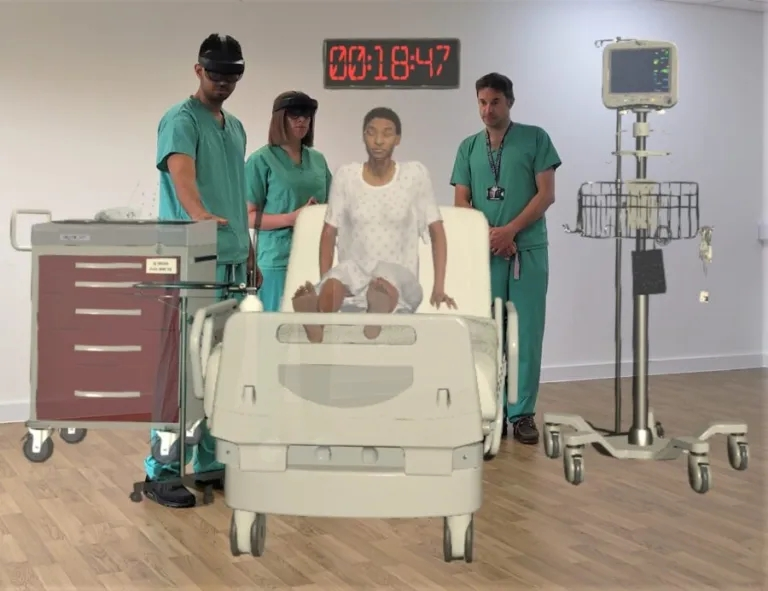
Meanwhile, GigXR, Inc., a provider of holographic medical training, recently announced a collaboration with the Yong Loo Lin School of Medicine at the National University of Singapore (NUS Medicine) to launch a new gastrointestinal module for its HoloScenarios application.
The company stated that the new ‘HoloScenarios: Gastrointestinal’ module aims to enhance medical and nursing education for diagnosing and treating gastrointestinal diseases. It integrates augmented reality holographic simulated patients and medical equipment that can be used in any physical learning environment.
HoloScenarios: Gastrointestinal employs Mixed Reality (MR) to present comprehensive patient care scenarios, surpassing traditional step-based Virtual Reality (VR) training. GigXR emphasizes that this approach aids in providing diverse learning experiences and allows learners to engage in real clinical situations, including emergency procedures and medical decision-making.
Revolutionizing mental health: XR innovations introduce ‘MindScape’ for youth well-being
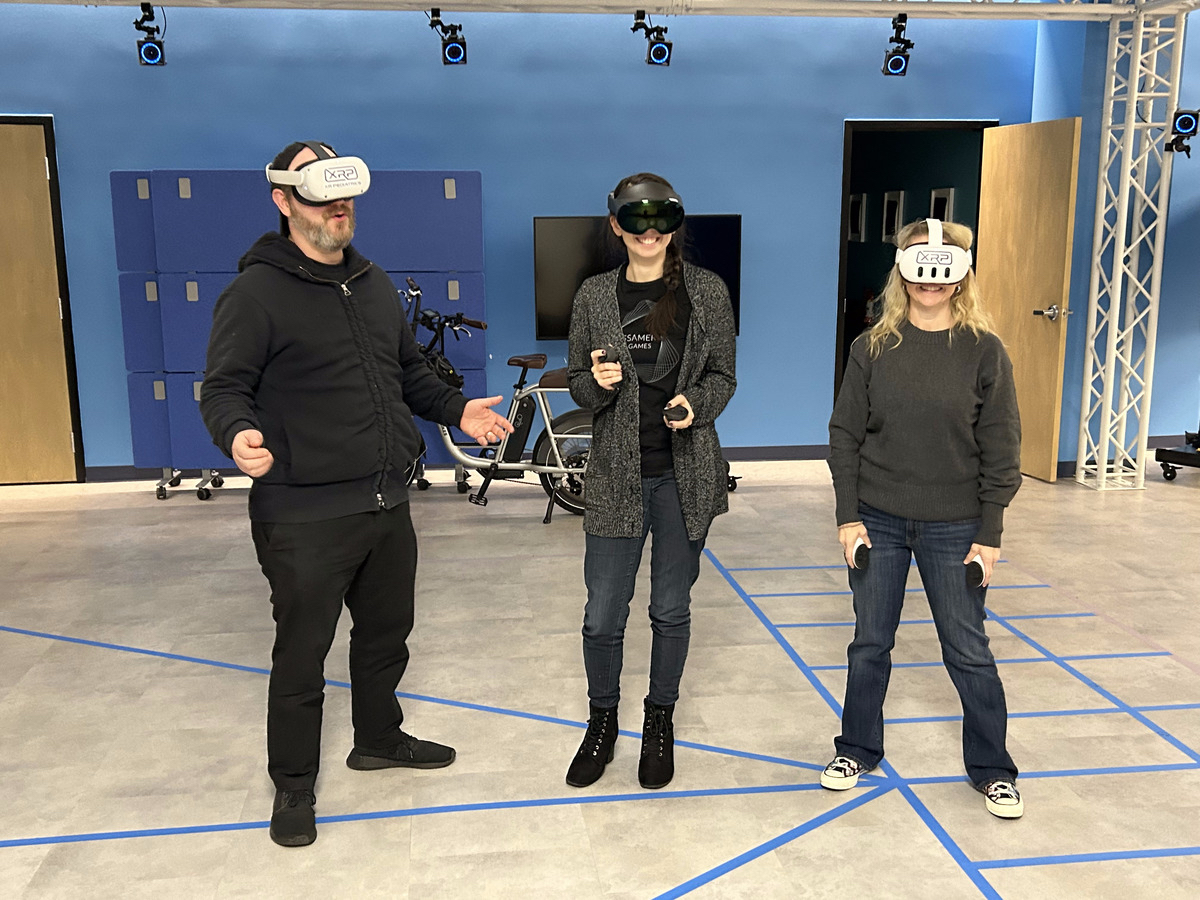
In a pioneering move to address youth mental health concerns, Yale researchers are building on their success in combatting youth marijuana use and vaping addiction through XR technologies. The XRPeds research group, known for its innovative applications of virtual reality (VR), is now delving into the realm of mental health therapy with the development of a groundbreaking VR application named “MindScape.”
Following their previous triumphs, where virtual reality proved effective in engaging and educating youth, XRPeds aims to harness the immersive potential of VR to create therapeutic scenarios for individuals facing diverse psychological challenges. Dr. Emily Carter, a leading researcher at XRPeds, highlights the transformative power of VR in mental health treatment, providing a controlled and immersive environment for individuals to navigate and confront their mental health challenges.
MindScape, the upcoming VR experience, offers users a unique opportunity to engage with tailored scenarios, promoting coping strategies, reflection, and skill-building. The interdisciplinary project team, consisting of psychologists, VR developers, and mental health experts, is committed to creating a versatile tool applicable to various psychological conditions such as anxiety, depression, and stress-related disorders.
With a focus on user feedback and collaboration with mental health professionals, the researchers emphasize ensuring the effectiveness and ethical implementation of the MindScape application. By incorporating the latest advancements in VR technology, XRPeds envisions offering a advanced therapeutic solution that has the potential to revolutionize mental health treatment.Similar to their successful XR applications in the past, the XRPeds team aspires to make MindScape accessible to a wide audience, including schools and individuals seeking alternative mental health interventions.
This initiative could mark a transformative era in mental health care, utilizing the immersive capabilities of XR technologies to promote emotional well-being and resilience.
XR innovation: Neuromersiv’s ulysses VR system advances clinical rehabilitation for brain injury recovery
For many individuals grappling with debilitating conditions such as strokes, heart attacks, aneurysms, and other brain-damaging illnesses, a lengthy period of rehabilitation and recuperation awaits post-diagnosis.
VR tools also find application in patients with traumatic brain injuries resulting from accidents, falls, and related incidents. Following such events, patients often undergo prolonged, monotonous, and repetitive treatments.
According to ADHAC, this repetitive and tedious approach, lacking enthusiasm from physicians in choosing therapies, may limit the potential recovery rates for patients.
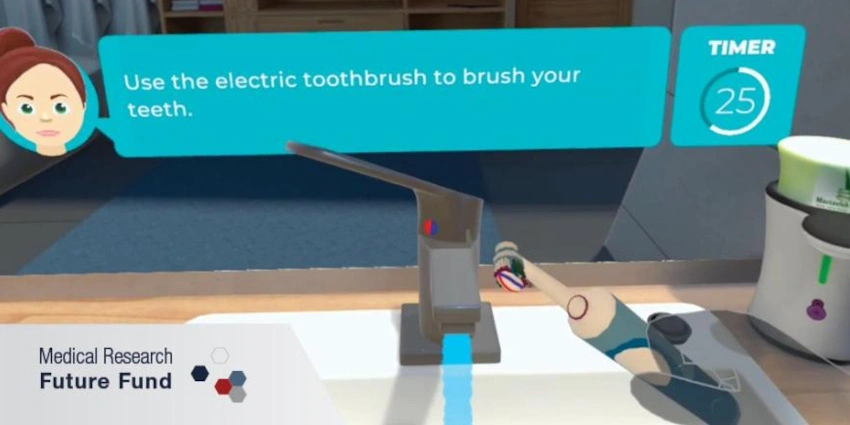
With the rise of VR, AR, and MR solutions, Australian doctors are turning to VR company Neuromersiv, which has developed the Ulysses VR Upper Limb Therapy System. Utilizing an all-in-one VR headset (Meta’s Quest 2 headset), doctors can employ Neuromersiv’s therapeutic activities to assist brain injury survivors in repetitive task execution, thereby expediting recovery times.
Neuromersiv secured funding for the Ulysses VR system through the Australian Medical Research Future Fund’s (MRFF) MTPConnect Biomedical Horizon program, receiving a grant of $994,000, as per the department’s statement.
Using gamified immersive activities with a reward system, doctors can motivate patients to complete their entire rehabilitation training, enhancing the effectiveness of the treatment.
Anshul Dayal, CEO of Neuromersiv, stated, “Once you put on the headset, you are completely immersed. Like gamers, dopamine kicks in, making them want to keep going. Thus, VR provides patients with the motivation to continue treatment, leading to better functional recovery.”
Neuromersiv’s Ulysses VR Upper Limb Therapy System also includes wearable devices, such as tactile feedback gloves stimulating patients’ muscles. These devices offer real-time sensory feedback for the VR platform and provide two treatment modes.
The VR wearable device combines Functional Electrical Stimulation (FES) therapy, reactivating muscles that patients cannot move normally. It sends small electric currents to the forearm and other body areas, “stimulating stretching and bending.”
Dayal added, “If a survivor tries to brush their teeth in VR but can’t grasp the virtual toothbrush, FES can assist them in completing the brushing motion by stimulating wrist and finger flexion. This stimulation forms a feedback loop, promoting the formation of new neural pathways in the brain to restore lost functions. This is often referred to as brain neuroplasticity, a key factor in long-term functional recovery.”
Embracing tomorrow: XR’s pioneering role in shaping the future of healthcare
In anticipation of the future, the integration of Extended Reality (XR) into healthcare signifies a groundbreaking era where the boundaries between technology and medical practices are blurred. XR’s influence extends beyond the realm of conventional methodologies, promising a dynamic shift in patient care, medical education, and therapeutic interventions.
As we peer into the horizon, XR holds the potential to redefine the doctor-patient relationship, offering more personalized and immersive healthcare experiences. From enhancing diagnostics to providing technology services for rehabilitation and mental health interventions, XR stands as a catalyst for evolving healthcare practices.
The collaboration between healthcare professionals, technology developers, and researchers is expected to yield novel applications and advancements, creating a synergy that propels the field forward. XR’s capacity to merge the physical and digital realms opens avenues for more effective, engaging, and patient-centric approaches to treatment and training.
In the coming years, we can anticipate the continued refinement of XR technologies, making them more accessible and seamlessly integrated into routine medical practices. The evolving landscape may witness the emergence of new XR applications that address specific healthcare challenges and contribute to improved patient outcomes.
The journey into the future of healthcare with XR is marked by innovation, adaptability, and a commitment to enhancing the overall well-being of individuals. As the boundaries of what is possible continue to expand, XR is poised to play an instrumental role in shaping a healthcare landscape that is not only technologically advanced but also more compassionate, inclusive, and responsive to the diverse needs of patients.