
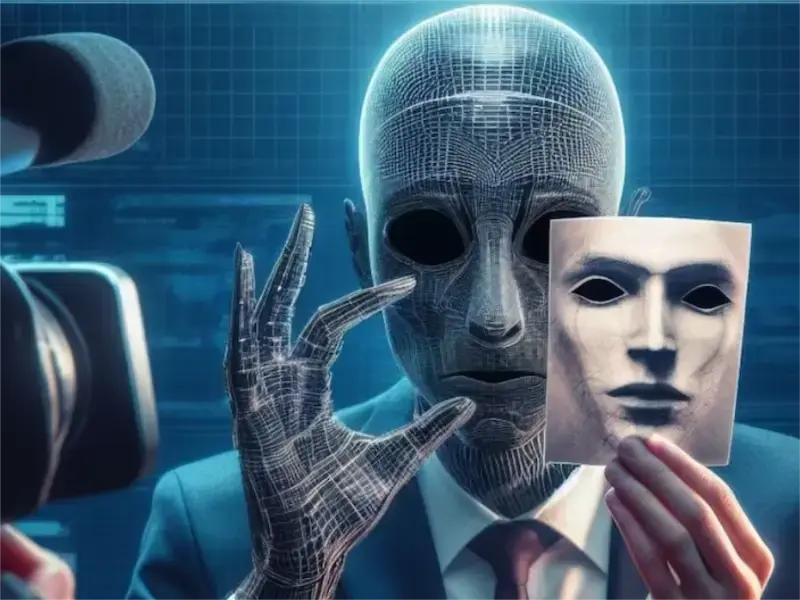
- Deepfake and AI are two different things, but they have certain connections, resulting in the mixture of the two words. Deepfake can be seen as an application and practice of generative AI.
- Deepfake is a portmanteau of “deep learning” and “fake”, which refers to a technique using deep learning for image synthesis to create falsified videos. It can also refer to computer-generated images of human subjects that do not exist in real life.
- Since the technical threshold of deepfake applications has been lowered, while the products of deepfake have become more similar to the genuine ones, some technology companies have started developing deepfake detection, using AI to fight against AI.
Deepfake refers to a technique using deep learning for image synthesis to create falsified videos. The legality of deepfakes can vary depending on their use and the jurisdiction.
What is deepfake content?
Deepfake is a portmanteau of “deep learning” and “fake”, which refers to a technique using deep learning for image synthesis to create falsified videos. It can also refer to computer-generated images of human subjects that do not exist in real life.
While the act of creating fake content is not new, deep forgery makes use of tools and techniques from machine learning and AI, including facial recognition algorithms and artificial neural networks such as variational autoencoders (VAE) and generative adversarial networks (Gans).
Also read: What are deepfakes in AI?
Therefore, deepfake and AI are two different things, but they have certain connections, resulting in the mixture of the two words. Deepfake can be seen as an application and practice of generative AI.
Legal pitfalls of deepfake content
The legality of deepfakes can vary depending on their use and the jurisdiction. In many places, creating and sharing deepfakes without consent for malicious purposes, such as defamation, harassment, or fraud, can be illegal and may be subject to civil or criminal penalties.
However, the use of deepfake technology for parody, satire, artistic expression, or other non-malicious purposes may be protected by freedom of speech laws. It’s essential to understand and comply with relevant laws and ethical guidelines when dealing with deepfake technology.
As the technique is becoming more and more sophisticated, one can easily replace a person in an existing video with someone else’s likeness, even with an animal’s face, or manipulate a person’s mouth shapes, all you need is a smartphone and a mobile application. Those fabricated images and videos appear to be real.
Deepfake has received widespread attention for its potential use in the production of child sexual abuse material, celebrity porn videos, revenge porn, fake news, hoaxes, bullying and financial fraud.
The spread of disinformation and hate speech through deepfakes can undermine the core functions and norms of democratic institutions by interfering with people’s ability to participate in decisions that affect them and determine collective agendas and decisions.
Deepfake extended its application to sounds. Nowadays with AI technology, your voice can be mimicked to create different conversations by capturing your voice in 5 seconds. With deepfake images and sounds, one can fabricate videos that never existed.
Also read: Video: Taylor Swift deepfakes spark AI ethics debate
Since the technical threshold of deepfake applications has been lowered, while the products of deepfake have become more similar to the genuine ones, some technology companies have started developing deepfake detection, using AI to fight against AI.
Some countries are considering legislative and regulatory approaches to deal with the ethical and legal concerns brought by deepfake. And the field of image forensics has in turn developed techniques for detecting manipulated images.