- A load balancer is not a server but a separate entity that assists in managing and distributing network traffic to servers.
- A server is a machine directly handling tasks such as data storage, processing, and application execution, while a load balancer is more of a traffic cop, directing traffic to the appropriate server.
In the realm of computing, “server” is a term commonly linked with machines that store, retrieve, and manage data. However, when discussing load balancers, the concept might not be as straightforward. This article will clarify whether a load balancer can be considered a server, using clear language and simple sentences.
What is a server
Firstly, let’s understand what a server is. A server is a computer system designed to process requests, manage data, and provide services to other computers or devices. Servers can be physical machines or virtual machines operating in a cloud environment. They are typically used for hosting websites, managing databases, and running applications.
Understanding load balancers
A load balancer, conversely, is a device or software that distributes network or application traffic across multiple servers. It acts as a traffic manager, ensuring that no single server is overwhelmed with requests. This helps in enhancing the performance, reliability, and availability of applications.
Also read: The backbone of digital infrastructure: Server management
How load balancers operate
Load balancers work by receiving incoming traffic and forwarding it to the appropriate server based on predefined rules. These rules can be based on various factors such as the server’s current load, response time, or the geographic location of the user. The process typically includes the following steps:
- Traffic reception: The load balancer receives incoming traffic from users.
- Traffic analysis: It analyses the traffic and determines which server can best handle the request.
- Traffic distribution: The load balancer then directs the traffic to the selected server.
- Monitoring and adjustment: Continuously monitors the performance of servers and adjusts the traffic distribution as needed.
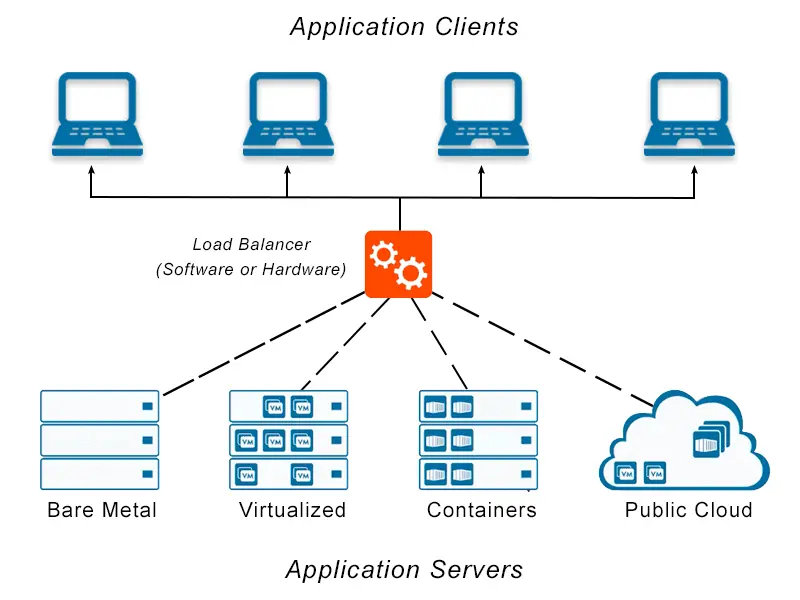
Types of load balancers
There are two main types of load balancers:
- Hardware load balancers: These are physical devices that perform load balancing tasks. They are typically more expensive but offer high performance and reliability.
- Software load balancers: These are applications that run on a server and perform load balancing. They are more flexible and can be easily scaled up or down.
Benefits of using load balancers
Utilising a load balancer brings several benefits to an IT infrastructure:
- Improved performance: By distributing traffic evenly, load balancers help in reducing the response time of applications.
- Increased reliability: If one server fails, the load balancer can redirect traffic to other servers, ensuring continuous service.
- Scalability: Adding more servers to handle increased traffic becomes easier with a load balancer in place.
- Cost efficiency: It allows businesses to use multiple, less powerful servers instead of a single, expensive server.
Load balancers and servers: A distinct relationship
While load balancers and servers both play crucial roles in managing network traffic and data, they are not the same. A server is a machine that directly handles tasks such as data storage, processing, and application execution. A load balancer, however, is more of a traffic cop, directing traffic to the appropriate server.
Also read: What is Network as a Service (NaaS) in cloud computing?
Examples of load balancers
Some popular examples of load balancers include:
- Nginx: A popular open-source web server that can also be used as a load balancer.
- HAProxy: Another open-source load balancer that is widely used for its high performance and reliability.
- AWS Elastic Load Balancing: A cloud-based load balancing service provided by Amazon Web Services.
A load balancer is not a server. It is a separate entity that assists in managing and distributing network traffic to servers. By doing so, it enhances the performance, reliability, and scalability of applications and services. Understanding the distinction between a server and a load balancer is crucial for designing efficient and robust IT infrastructures.