Summary
- IBEE Hosting's public record points to a local Indian infrastructure operator selling dedicated servers, VPS hosting, managed support, backup, CDN and network services; the central test is whether those pieces stay coherent when a customer changes a live workload.
- The evidence supports a real hosting surface and a registered autonomous system, but leaves important uncertainty around independently verified uptime, customer outcomes, restore performance, datacenter certification, legal entity continuity and the exact operational scope of newer IBEE cloud services.
IBEE Software Solutions Pvt. Ltd. belongs in the part of cloud infrastructure where the buyer is not buying an abstract platform. The buyer is often buying a place to put a website, a commerce system, an agency client, a media property, a game service, a back-office application or a database that cannot afford a sloppy handoff. The company's public IBEE Hosting surface presents dedicated servers in India, managed VPS plans, support, backups, CDN setup, root access, IPv4 and IPv6, and a Hyderabad contact point.
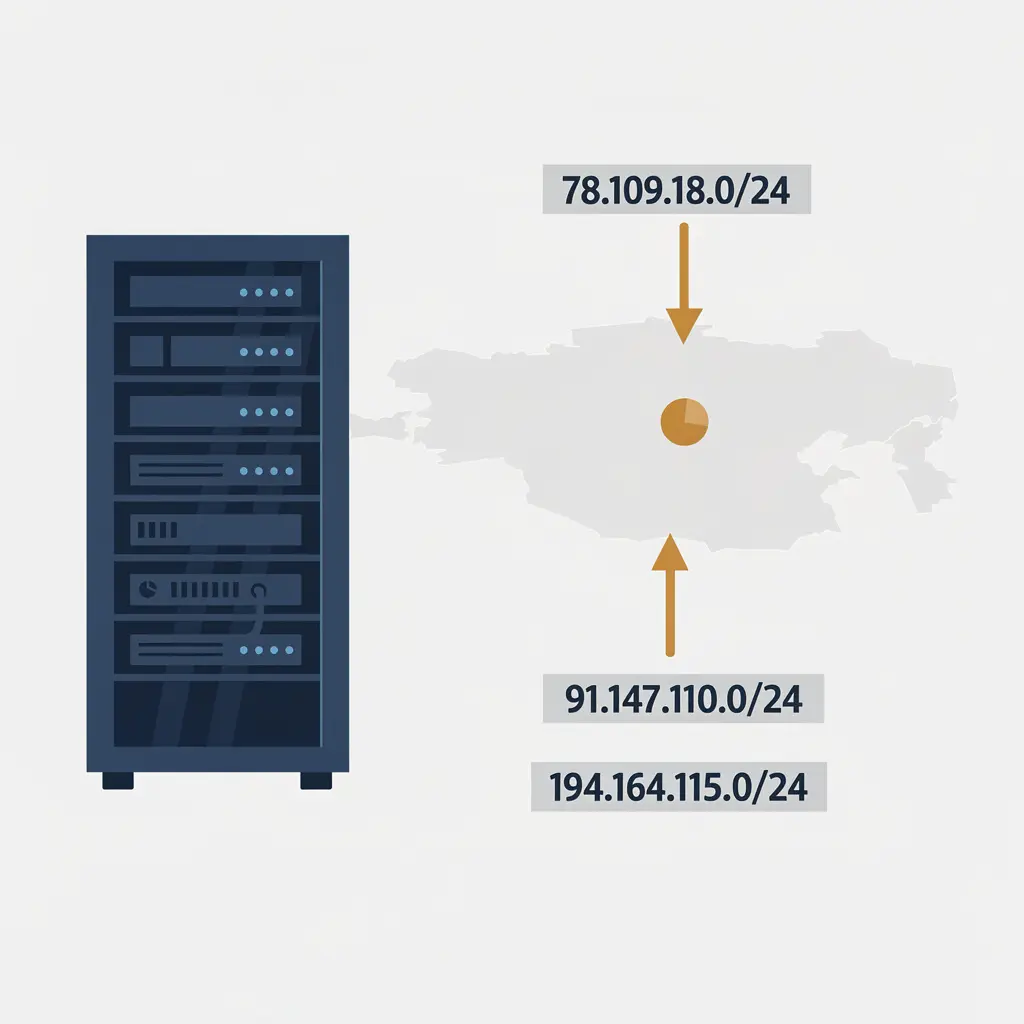
The public network record also shows AS58909, a long-standing APNIC-registered autonomous system associated with IBEE Software Solutions Pvt. Ltd. That combination matters because sovereign cloud value is not proved by the word "cloud". It is proved by whether an accepted workload can be provisioned, located, routed, protected, billed and supported with fewer surprises than the alternatives.
The phrase "accepted workload" is doing heavy work here. A prospective customer can compare plan descriptions, monthly prices and service claims before signing. A running customer judges something harder: does the allocated server match the order, does the address space route as expected, does the DNS state reflect the intended service, does support know who owns the next action, does backup exist in a recoverable form, and does the customer know where its data and operational responsibility sit? For a local hosting provider, the commercial argument is strongest when that chain is boring.
The customer should not need a senior systems engineer every time a disk, control panel, firewall rule, certificate, DNS record or migration window changes. If the provider reduces that supervision cost, it can justify a local premium or a local procurement choice. If it only resells infrastructure with uncertain ownership, the buyer is back to doing the work it meant to outsource.
IBEE's public service surface is not a hyperscale cloud catalogue. It reads more like an Indian managed hosting business that has layered cloud vocabulary onto a base of dedicated servers, VPS plans and operational assistance. The home page emphasizes bare metal dedicated servers, Dell and Super Micro hardware, quick deployment, support, a high uptime promise, root access, multi-location offerings, premium bandwidth, security controls, backup and free CDN setup.
The dedicated hosting page narrows the buyer's expectation: fully managed servers include operating system upgrades, software update monitoring, reboots, installations, hardware-level issue handling, network-level problems, maintenance and security patches, while support for third-party tools and software is excluded. The VPS page adds a lower-entry plan set with SSD storage, Linux and Windows, data transfer limits, backups, DNS record keeping and root access. Those details matter because they describe a repeatable workflow, not merely a brand.
The first workflow is provisioning truth. A customer that buys dedicated hosting or VPS hosting is not just ordering a generic capacity number. It is making assumptions about CPU class, memory, storage medium, disk size, data transfer, operating system, control panel, IP addressing, location, administrative access and support scope. IBEE's public plans and claims show the ingredients, but the operating value is in the reconciliation step after acceptance. The customer needs to know whether the actual machine, virtual server and network path match what was sold.
In local hosting, small mismatches can become expensive: a wrong OS image delays migration; missing root access blocks configuration; a control panel license dispute interrupts launch; an IP assignment not reflected in DNS creates a false outage; an unexpected bandwidth rule changes monthly economics. The provider's real capability is the discipline that keeps these small facts aligned.
That discipline is especially important for Indian small and mid-sized businesses, agencies and developers because many of them do not operate cloud infrastructure as a separate engineering discipline. A web studio may know WordPress, Laravel, PHP, MySQL and client support, but not want to manage routing policy, datacenter hands, kernel updates or emergency reboots. A commerce operator may understand order flow and campaigns, but not have the confidence to run a bare metal restore under time pressure. A media property may care more about latency and support responsiveness than the elegance of an API.
A local provider wins when it makes these buyers operationally safer without forcing them into a full enterprise cloud operating model. It loses when the buyer still has to supervise every handoff and dispute every ambiguous support boundary.
Locality is the second test. IBEE's public hosting material repeatedly frames India as a latency and hosting-location advantage. The contact page gives a Hyderabad head office. The APNIC record for AS58909 lists India as the country, the AS name as ISSPL-IN, and the description as IBEE Software Solutions Pvt. Ltd. with Banjara Hills. Public network intelligence services identify the ASN as hosting or cloud infrastructure, show IPv4 prefixes, and place important routers in Hyderabad. That does not by itself prove where every customer byte sits.
It does provide a useful operating signal: IBEE is not simply a marketing page with no network footprint. It has a public routing identity that buyers can inspect, and that identity is relevant when evaluating local cloud substitution.
The limitation is just as important. Data sovereignty is not established by a city name, a country code, or a claim that servers are in India. A buyer with regulatory, contractual or board-level locality requirements needs contract language, invoice entity clarity, data-processing terms, support access rules, backup location, logging location, disaster recovery geography and subcontractor disclosure.
IBEE's older hosting privacy and terms pages allocate broad customer responsibilities and reserve provider rights, while newer IBEE cloud privacy language refers to IBEE Solutions Private Limited in India and IBEE Software Solutions Inc in the United States, plus possible data transfers across countries. An official IBEE Hosting notice also states that IBEE Software Solutions Pvt Ltd changed its name to IBEE Solutions Pvt Ltd effective September 1, 2024, with continuity of management and operations. These records may be consistent, but they require careful contracting.
A public directory name, an older hosting page, a newer legal page and a customer invoice must all point to the same operating reality.
That identity boundary is not paperwork trivia. If a customer is using a local Indian provider partly to reduce jurisdictional ambiguity, the legal entity that signs the agreement matters. The public record contains at least three labels in play: IBEE Software Solutions Pvt. Ltd., IBEE Solutions Pvt Ltd, and IBEE Software Solutions Inc. The assigned hosting surface remains ibeehosting.com, and the public network registry still presents IBEE Software Solutions Pvt. Ltd. as the organization behind AS58909. A prudent buyer would treat the name-change notice as a continuity claim, not as a replacement for due diligence.
It should ask which entity contracts, which entity invoices, which entity operates the infrastructure, which entity has access to support data, and whether any support, billing or platform function crosses borders. That is the difference between local branding and auditable locality.
The third test is network state. For a hosting provider, uptime is not only a server metric. It is a chain across power, cooling, switch fabric, upstream transit, routing, DNS, customer firewall rules, CDN configuration, application health and support response. IBEE's public pages claim high uptime, Tier IV datacenter facilities, premium bandwidth, IPv4 and IPv6, and CDN services. Public BGP records show AS58909 with upstream or peer relationships including Bharti Airtel and Cloudflare in the independent snapshots reviewed.
IPinfo and BGP.Tools show originated prefixes and no obvious downstream customer network in their public presentation. None of this proves incident-free service. It does show that network dependency can be analyzed in concrete terms: which prefixes are originated, which upstreams appear, which routers are visible, how geolocation is held, and whether the service is operating like a hosting network rather than a static brochure.
This is where a local provider's strongest and weakest arguments meet. Local routing can improve latency for Indian users when the application, users, access networks and content delivery path are aligned. It can also be more fragile if upstream diversity is limited, if route changes are poorly communicated, or if the customer expects hyperscale-style self-service observability that is not present. IBEE's public record does not provide a detailed network status history, incident log, peering policy, service-level calculation method or route diversity statement. A buyer should therefore treat the network claim as testable, not settled.
Before moving a live workload, it should measure latency from the main user regions, verify DNS behavior, confirm failover expectations, understand whether CDN setup changes origin visibility, and clarify who owns action when a route problem sits between the provider and an upstream carrier.
The fourth test is backup recovery. IBEE's pages refer to backup solutions, free NAS backups on dedicated servers, incremental weekly or monthly backups for VPS plans, mirroring servers, and data protection in migration and management language. Those are useful promises, but backup value is only proven at restore time. Many hosting disputes begin with the sentence "we had backups" and end with an argument about what was actually restorable, how old it was, what was excluded, who requested it, whether the account was current, and how quickly the restore could be performed.
IBEE's public terms also state that if an account is suspended or terminated for certain reasons, the provider may permanently delete website contents and may not be able to reopen or restore them. That is not unusual in hosting agreements, but it is central to governance. A customer's recovery plan cannot depend on a vague belief that the provider will always rescue the data.
For an accepted workload, the relevant questions are practical. What is the recovery point for each server or VPS? Are databases quiesced or copied while live? Are backups stored in the same facility, a different facility, or an unspecified location? Are customer-controlled snapshots available? Are restores included in managed support or billed separately? Are backups encrypted, and who controls keys? Is there a written restore objective for a failed disk, corrupted file, deleted table, ransomware incident, or customer misconfiguration?
IBEE's public material gives enough to make backup part of the sales proposition, but not enough to close these questions. That is not a reason to reject the provider. It is a reason to make restore testing part of onboarding.
Support ownership is the fifth test, and it is probably the one that matters most to IBEE's target customer. The public material differentiates managed, semi-managed and unmanaged service. Managed hosting covers hardware, operating system and basic configuration issues, load or sluggishness, network problems, restart failures, hardware failure, package installation through package managers, basic named configuration, pre-existing configuration troubleshooting, basic task automation and firewall setup or troubleshooting.
Semi-managed support includes reinstallation, control panel work, added IP addresses, firewall rules, kernel upgrades, DNS management and common problems. Unmanaged service leaves server administration to the customer, while the provider handles failed components, reboots, network maintenance and keeping power and connectivity in place. This is a useful distinction because it exposes the real bargain.
The bargain is not that IBEE eliminates technical labor. It reallocates it. A developer or agency that buys managed hosting is still responsible for application code, content, credentials, data correctness, compliance decisions, customer communications and often third-party software behavior. IBEE, on its public terms, takes on infrastructure tasks, base system care and certain operational interventions. The customer's supervision cost falls only if this split is understood before trouble starts.
If the buyer assumes every problem is "hosting" and the provider treats every application symptom as out of scope, the support model becomes a dispute engine. If both sides define the runbook, the provider can absorb the repeated tasks that slow small teams down: reboot coordination, OS patching, control panel setup, DNS correction, basic firewall changes, backup checks and first-line performance triage.
That labor impact is commercially meaningful. In a hyperscale environment, a technically strong team may prefer APIs, infrastructure-as-code, autoscaling groups, managed databases, observability pipelines and extensive documentation. The cost is not only the invoice. It is the people and process required to run that environment well. In a local managed hosting environment, the invoice may buy less platform abstraction but more human assistance around familiar server operations. For an Indian SMB, a regional agency or a developer with many small client sites, that can be rational.
The provider's support desk becomes part of the customer's operating model. The risk is concentration: when the provider's support queue is slow, vague or underpowered, the customer's internal team has fewer self-service levers and more urgent dependency on a person answering the ticket.
Unit economics should be judged through that lens. IBEE's public VPS plans list monthly prices in rupees for basic, advanced and elite options, with vCPU, RAM, SSD storage, transfer and operating-system choices. The dedicated hosting page advertises entry pricing and managed dedicated server positioning. These numbers may look attractive against global cloud bills for simple, steady workloads, particularly where bandwidth, control panels and support are bundled. But the right comparison is not headline server price against hyperscale instance price.
The right comparison includes migration labor, control panel licenses, backup and restore work, monitoring, security patching, incident response, DNS operations, bandwidth overages, contract lock-in, support time and the cost of leaving. A cheap server that requires constant customer supervision is not cheap. A slightly more expensive server that removes recurring operational work can be good value.
There is also a substitution question. Local cloud substitution does not mean every Indian workload should leave AWS, Azure, Google Cloud, DigitalOcean, Akamai Linode, OVHcloud, Hetzner, Netmagic, CtrlS, ESDS, E2E Networks or other infrastructure options. It means that a specific workload should be matched to the governance, latency, support and cost profile it actually needs. A predictable PHP site, agency portfolio, regional commerce application or managed VPS may not need the full machinery of a hyperscaler.
A regulated financial workload, large SaaS platform, analytics pipeline, high-availability application or globally distributed service may need stronger contractual evidence, audited controls, service transparency, automation and multi-region architecture than IBEE's public hosting pages disclose. IBEE's value proposition is strongest where local support, simple capacity, Indian network presence and managed operations beat platform breadth.
The official customer page complicates the picture in a useful way. It lists solution areas including government, e-commerce, media and entertainment, gaming and business, with named organizations under each heading. Independent context also includes an older Google Workspace referral case study saying founder Betrand Yella started IBEE Hosting, employed 25 people and provided hosting and IT services to more than 10,000 customers in India, the United States and other countries at the time of that case study. A 2014 press release described IBEE Software Solutions Pvt.
Ltd. as founded in 2006 and offering hosting, web design, web and mobile application development, while positioning dedicated hosting as part of XBT Holding's wider infrastructure family. These are market signals, not audited performance proofs. They support the idea that IBEE has operated beyond a small hobby provider, but they do not verify the current state or quality of any individual deployment.
The age of the evidence is itself a signal. Some public hosting pages carry older design language and copyright marks, while newer IBEE materials describe a more current cloud infrastructure posture under the IBEE name. Independent review pages repeat claims about server locations, customer scale, support and features, but they vary in freshness and sometimes blend IBEE's own statements with reviewer interpretation. A careful article should not turn those pages into hard facts about current capacity, revenue, customer satisfaction or reliability.
The public record supports a bounded conclusion: IBEE has a longstanding hosting identity, a visible Indian network registration, public service descriptions, customer and support claims, and a newer naming transition. The public record does not support precise claims about uptime performance, market share, incident history, certified facilities, actual restore success or current customer count without direct verification.
The most obvious failure mode is provisioning mismatch. In a server business, the order is a contract of details. A customer can accept a plan believing it will receive SSD storage, a certain transfer allowance, Indian hosting, a particular control panel, root access, managed support and backup. If the delivered environment differs, the customer's launch plan degrades immediately.
IBEE can reduce this risk by making provisioning records explicit: plan, CPU, memory, disk, RAID or storage configuration, operating system, panel, IP addresses, IPv6 status, location, backup schedule, support tier, credentials handoff, monitoring scope and escalation contact. The customer can reduce it by preserving the order record, testing each attribute before migration, and refusing to treat "server is live" as equivalent to "server is accepted."
DNS error is the second failure mode. IBEE's VPS page refers to free DNS record keeping, and support materials include host-file guidance and DNS-adjacent operational help. DNS looks simple until a migration. A customer may need to lower TTLs, stage new records, validate mail records, preserve SPF, DKIM and DMARC, point a CDN to the correct origin, keep old and new environments synchronized, and roll back if the application fails. If the provider controls some DNS and the customer controls another registrar or CDN, responsibility can blur.
A local support team can be valuable here because it can help small customers avoid common cutover errors. But the provider should not be the only party that knows the final state. The customer's accepted record should include the authoritative zones, current records, TTLs, control-plane owner and rollback path.
Backup gap is the third failure mode. A backup gap can be technical, contractual or behavioral. Technical gaps include missing databases, inconsistent files, corrupt archives, same-site-only copies and backups that silently fail. Contractual gaps include unclear retention, excluded restores or deletion after suspension. Behavioral gaps include customers assuming the provider is backing up application data that the customer should have exported or tested. IBEE's backup language is a positive starting point, especially because it is presented as part of managed hosting and VPS plans.
It should not be confused with an audited continuity program. The customer should run a restore drill before the workload becomes critical, document the result, and repeat it after major application changes.
Route outage is the fourth failure mode. Public BGP context gives IBEE a concrete network identity, but a local ASN does not remove dependency on upstream carriers, route filters, RPKI state, datacenter cross-connects, DNS and customer firewalls. The public snapshots reviewed identify visible upstream or peer relationships including major networks, but do not provide a detailed outage history or redundancy guarantee. A route issue may present to the customer as "the site is down" while the server itself is healthy.
The support value is in fast localization: is the application down, the server unreachable, the route impaired, the DNS wrong, the CDN misconfigured, or the customer network blocking access? A provider that can answer that quickly saves real labor. A provider that only says "server is up" leaves the customer to troubleshoot the public Internet alone.
Billing dispute is the fifth failure mode. Hosting economics often become contentious around renewal dates, annual payments, cancellation notice, non-refundable prepaid service, extra IPs, licenses, overage, support labor and third-party tools. IBEE's public terms reserve the ability to modify prices and policies, require accurate billing information, and specify account cancellation and refund conditions. That is not unusual, but it means buyers should not treat a monthly server price as the whole financial relationship.
The accepted workload record should include renewal date, cancellation window, data export process, paid licenses, prepaid term, billing contact, suspension rules and the cost of emergency help. This matters more for small businesses because the same person may be owner, administrator and finance approver.
Support delay is the sixth failure mode. IBEE's public pages repeatedly emphasize support, round-the-clock monitoring and proactive service. A review page, however, notes customer service hours in a way that appears narrower than a fully managed claim, and public support-portal evidence was not enough to verify actual ticket response. The prudent conclusion is not that support is weak. It is that support performance is unproven from public pages alone.
A buyer should test support before entrusting critical traffic: open a pre-sales technical question, request a migration checklist, ask about restore procedure, verify escalation contacts, and understand whether emergency server access is available outside business hours. If the answer is specific, support is part of the product. If the answer is generic, support remains a sales claim.
Data-location uncertainty is the seventh failure mode, and it runs through the whole article. IBEE markets Indian hosting advantages and newer IBEE cloud material speaks to Indian infrastructure and Indian law, but the public legal material also refers to multiple IBEE entities and possible international processing. A customer with ordinary website hosting needs may find that acceptable. A customer with financial, health, government, education or personal-data obligations needs more. It should ask where primary data, backups, logs, tickets, monitoring data, billing records and support artifacts reside.
It should ask who can access them and from which jurisdiction. It should ask what happens during legal requests, abuse investigations, support escalations and account termination. Sovereignty is an operating control, not a slogan.
The technical system behind IBEE's public offer appears to rely on familiar hosting components: dedicated servers, virtualization for VPS, Linux and Windows images, cPanel or Plesk-style control panels, DNS records, IPv4 and IPv6 assignment, CDN configuration, backups, network monitoring, firewalls, patching, upstream connectivity and human support. That stack is not novel, and novelty is not the point. In this market, reliable repetition is more valuable than novelty.
The operator has to do the same work cleanly many times: build a server, hand over access, migrate a site, update an OS, trace a route, restore a backup, adjust DNS, close a port, respond to a ticket and explain a bill. The more routine these tasks become, the more valuable the provider is to the customer segment it appears to serve.
There is a risk in routine, though. Routine services can become complacent. A provider that sells managed support may keep doing manual fixes without making the customer's state legible. A provider that says "we monitor" may monitor only infrastructure and not customer service health. A provider that says "backup" may not define restore. A provider that says "Tier IV" may rely on a facility claim that the customer never verifies. A provider that says "local" may not document all operational data flows. These are not accusations against IBEE; they are the normal traps in the managed hosting business.
The accepted workload record is the antidote because it turns claims into operational facts that can be checked.
A good accepted record for an IBEE customer would be compact but specific. It would name the contracting entity and service address. It would list server or VPS specifications, location, operating system, control panel, root or administrative access, IP assignments, DNS owner, CDN use, backup schedule, restore test date, monitoring scope, support tier, escalation contact, billing terms, cancellation terms, and any compliance assumptions. It would record what IBEE owns and what the customer owns.
It would be updated after every material change: migration, IP change, domain change, operating-system upgrade, backup policy change, security incident, contract renewal or workload expansion. Without that record, the customer may discover during an outage that no one has the complete picture.
Deployment conditions set the floor for whether IBEE is a good fit. A workload with steady traffic, familiar server requirements, limited geographic reach and a clear Indian user base is a much better candidate than a volatile global service that needs automatic capacity expansion across regions. A customer moving from another host should enter with an inventory, not a wish list. It should know domains, DNS zones, mail routing, database size, application dependencies, cron jobs, certificates, traffic peaks, regulatory constraints, backup expectations and rollback requirements.
IBEE's public approach page uses language around design, build, migrate, manage and protect. The operating question is whether that sequence becomes a written plan for the customer's specific system. The more informal the migration, the more likely the customer will pay later in downtime, missed records or confused ownership.
Upstream dependency is also part of the service, even when it is invisible to the buyer. IBEE's public material mentions control panels, Linux, Windows, cPanel-style hosting components, Plesk-style Windows hosting, CDN setup, firewall work, package installation and third-party licenses. None of those components is fully under a single hosting provider's control. Operating systems change, control panel licensing changes, security vulnerabilities appear, upstream carriers have incidents, CDN behavior shifts, and domain registrars impose their own rules.
The dedicated hosting page's exclusion for third-party tools and software is commercially sensible, but it creates a boundary that must be understood. If an application fails after an upstream package update, the customer may see a hosting problem while the provider sees an application problem. The accepted record should state how such borderline cases are handled.
The repeated task behavior is the real automation task in this business. It is not necessarily automation in the hyperscale sense of self-service APIs and elastic orchestration. It is the ability to repeat operational steps consistently: collect an order, provision a server, configure the OS, assign addresses, set DNS, enable backups, perform a migration, monitor basic health, patch common issues, route support requests and close the loop with the customer. A managed hosting provider can automate parts of that chain with templates, checklists, ticket rules and monitoring alerts. The customer may never see those systems.
It will feel them through fewer errors. The risk is that repeated work remains trapped in individual technicians' memory. When that happens, service quality varies by shift, by ticket owner and by the customer's ability to explain the problem.
Supervision cost should be made explicit during procurement. A small business often chooses managed hosting because it cannot justify a full infrastructure role. But the business still needs someone to approve changes, hold credentials, read invoices, test restores and decide what risk is acceptable. If IBEE's service removes operating-system patching, hardware replacement and network first response from that person, the deal has value. If the same person still has to chase every ticket, interpret every route issue, correct every DNS change and verify every backup manually, the deal is only a server rental with a support phone number.
Good managed hosting reduces the number of decisions a customer must make under pressure. It does not remove accountability from the customer.
Security handoff follows the same pattern. IBEE's public approach material describes firewalls, closed ports, security audits and round-the-clock monitoring. The terms and acceptable use material put significant responsibility on the customer for uploaded material, lawful use, activity from the website and correct handling of content. That is the normal split in hosting, but it is often misunderstood. A provider can patch the operating system, replace failed hardware, set firewall rules and help investigate network problems.
It cannot make insecure application code safe, choose lawful content, rotate every application credential, decide role-based access for the customer's staff or certify that a business process complies with every regulator. For a sovereign workload, security is not only where the server is. It is also who can change it, who logs the change, who reviews it and who owns the next action after a suspicious event.
The labour impact can be positive if the customer treats IBEE as an operations partner rather than an emergency vendor. A web agency with many client sites can standardize builds, backup cadence, DNS records and support escalation with one provider. A regional commerce firm can use local support to shorten the path between a business outage and an infrastructure response. A developer can spend less time on routine server care and more time on the application. But labour does not disappear; it moves. Some of it moves to IBEE's support team. Some of it remains with the customer in governance, testing and application ownership.
Some of it becomes coordination work between the two. The best sign of maturity is not that no one talks about this labour. It is that the handoff is clear enough that the same issue is not reopened every month.
Customer evidence should be read in that operational frame. The official customer page lists sectors and names, and the Google Workspace case study gives historical scale and staffing context. The 2014 release describes a broader IT services company entering dedicated hosting with XBT-family context. These records make IBEE more visible than a newly created hosting reseller with no trace. They do not tell a buyer whether a specific government, media, commerce or gaming workload still runs on IBEE infrastructure, what the service-level experience was, or how support handled failure.
In procurement, the right follow-up is not to ask for a logo list alone. It is to ask for a comparable workload pattern: similar traffic, similar data sensitivity, similar migration difficulty, similar support expectations and similar recovery needs.
There is one more deployment condition that local providers sometimes understate: exit. A customer that moves to IBEE should know how it would leave IBEE. That is not a hostile question. It is part of responsible infrastructure placement. Exit requires data export, DNS control, backup access, credential transfer, license inventory, final billing, cancellation timing, retained logs and enough overlap to test the new host. IBEE's terms make clear that cancellation and account standing matter. A customer that cannot leave cleanly does not really control its workload, even if it has root access to a server.
The easier a provider makes orderly exit, the more credible its service becomes, because confidence does not depend on lock-in.
IBEE's commercial opportunity is therefore specific. It is not to out-feature the hyperscalers. It is to be the trusted local operator for workloads that need Indian presence, human help, predictable server economics and enough technical competence to prevent everyday hosting problems from becoming business events. The public evidence fits that opportunity: a Hyderabad base, Indian hosting messaging, managed server language, VPS plans, support positioning, customer categories, a visible ASN and a name-change continuity statement. The evidence also warns against overclaiming.
The public record does not prove that IBEE can meet the governance demands of every regulated customer, nor does it prove that it has the automation, observability or audited control depth of larger cloud platforms.
For customers, the decision should be framed as a workload placement decision. If the workload is steady, regionally focused, support-sensitive and server-shaped, IBEE may be a rational candidate. If the workload demands programmable infrastructure, multi-region resilience, formal compliance attestations, managed databases, granular access control, transparent incident history and large ecosystem integrations, the buyer should push harder before substituting a local provider for a larger cloud.
If the workload sits between those poles, a phased migration is safer: start with a non-critical service, measure support, test restore, inspect DNS handoff, confirm billing, document data location, and only then move the system that matters.
For IBEE, the product improvement path is also clear from the public record. It could make the accepted workload easier to govern by publishing clearer service definitions, restore expectations, incident and maintenance communication practices, support hours by severity, datacenter certification evidence, backup location options, locality commitments, legal entity mapping, and migration checklists. None of that requires inventing a new platform. It requires making operational truth easier to see. Local cloud buyers do not only need capacity.
They need confidence that the server, route, backup, support channel and invoice all describe the same service.
The strongest reading of IBEE Software Solutions Pvt. Ltd. is that it occupies a practical layer of India's cloud market: close enough to infrastructure to matter, close enough to customers to reduce operational work, and small enough relative to global providers that evidence discipline becomes essential. The weaker reading is that too much of the public story still depends on claims that are not independently tested: uptime percentages, facility tier, current customer scale, support responsiveness and exact data locality. Both readings can be true at once. That is why the right test is not ambition.
It is the accepted sovereign cloud workload record.
If that record is coherent, IBEE's value is concrete. A customer gets a locally anchored hosting partner, a server or VPS matching the order, a known network path, support that owns the infrastructure layer, backups that have been restored, and a commercial model that reduces the need to hire or retain deep infrastructure skills. If the record is incoherent, the customer gets the worst version of outsourcing: dependence without visibility. The public record gives IBEE enough substance to be taken seriously. It also gives buyers enough unresolved questions to insist on proof before moving systems they cannot afford to lose.