
Fiber vs.
- Fiber optic backhaul offers significantly higher bandwidth and faster data transmission speeds compared to microwave backhaul, making it ideal for high-demand applications and urban environments.
- Microwave backhaul is more cost-effective and quicker to deploy than fiber optic backhaul, especially in remote or difficult-to-access areas where laying fiber cables can be prohibitively expensive and time-consuming.
- A hybrid approach, combining both fiber and microwave backhaul, can optimise network performance and cost, providing flexibility and scalability to meet varying geographic and demand challenges.
In telecommunications, the backbone of data transmission is critical for ensuring reliable and high-speed connectivity. Two prevalent methods for backhauling data—transmitting data from remote sites to central points—are fiber optic and microwave backhaul. Each technology has its unique advantages, limitations, and ideal use cases. This blog will explore the differences between fiber and microwave backhaul, helping you understand how each method supports modern communication networks.
What is backhaul?
Before diving into the specifics of fiber and microwave backhaul, it’s essential to understand what backhaul means. Backhaul refers to the process of transmitting data from smaller, remote nodes (such as cell towers or base stations) to a larger, central network point, such as a core network or data center. Effective backhaul is crucial for maintaining the performance and reliability of telecommunications networks, especially as demand for high-speed internet and mobile data continues to grow.
Fiber optic backhaul
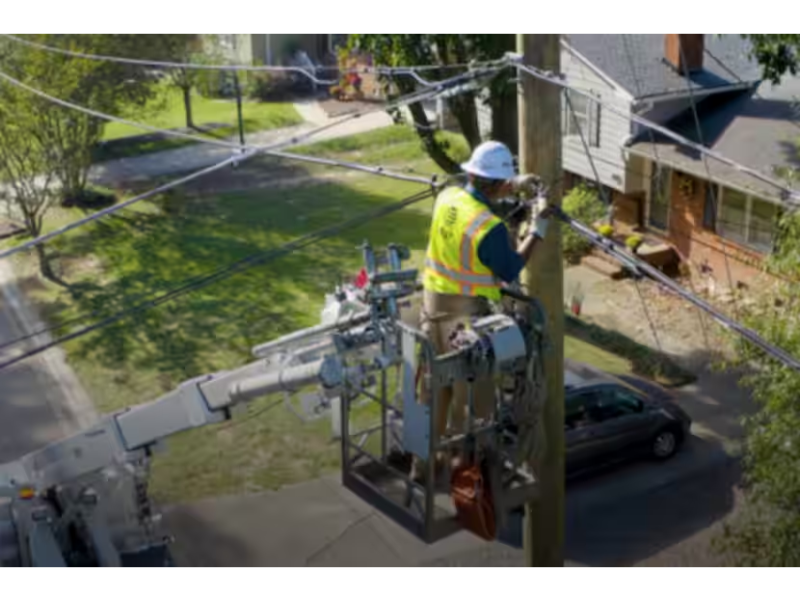
Fiber optic backhaul involves using fiber optic cables to transmit data. These cables contain strands of glass fibers that carry data as light signals. Here are the key characteristics and advantages of fiber optic backhaul:
High bandwidth
Fiber optic cables offer extremely high bandwidth capabilities, allowing them to carry vast amounts of data at incredibly fast speeds. This makes fiber ideal for supporting high-demand applications, such as video streaming, online gaming, and large-scale enterprise networks.
Low latency
Because data is transmitted as light signals, fiber optic backhaul experiences minimal latency. This is crucial for real-time applications, such as video conferencing and online gaming, where even slight delays can impact performance.
Reliability
Fiber optic cables are less susceptible to interference from electromagnetic signals, weather conditions, and physical obstructions. This makes them highly reliable and ideal for stable, long-term data transmission.
Future-proofing
With the continuous growth in data consumption, fiber optic backhaul is considered future-proof due to its ability to support increasing bandwidth demands without needing frequent upgrades.
However, fiber optic backhaul also has some limitations:
High installation costs
Laying fiber optic cables can be expensive and time-consuming, particularly in challenging terrains or urban areas with dense infrastructure. The initial capital expenditure is significant, making it less feasible for some projects.
Maintenance
While generally durable, fiber optic cables can be damaged by construction work, natural disasters, or other physical disruptions, requiring repairs that can be costly and time-consuming.
Also read: Virgin Media’s $12.7M program launches fibre routes to Equinix’s Manchester data centre
Microwave backhaul
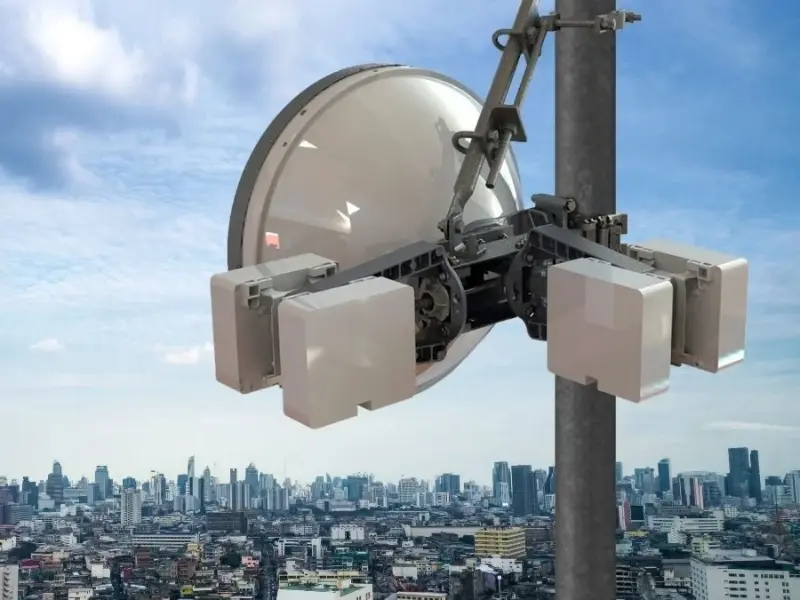
Microwave backhaul uses microwave radio signals to transmit data wirelessly between two fixed points. This method relies on line-of-sight communication, where the transmitting and receiving antennas must be within direct view of each other. Here are the key characteristics and advantages of microwave backhaul:
Cost-effective
Microwave backhaul typically involves lower installation costs compared to fiber optic backhaul. Setting up microwave links requires less physical infrastructure, making it a more cost-effective solution for remote or difficult-to-access areas.
Rapid deployment
Microwave systems can be deployed quickly since they do not require the extensive groundwork and trenching needed for fiber optic cables. This is particularly advantageous in emergency situations or when rapid network expansion is needed.
Flexibility
Microwave backhaul is highly adaptable to various geographical challenges, such as mountainous regions, bodies of water, and urban areas where laying fiber might be impractical.
Scalability
Microwave links can be easily scaled by adding more radio units or upgrading the existing equipment to increase capacity and coverage.
However, microwave backhaul also has its limitations:
Limited bandwidth
While microwave technology has improved, it still cannot match the bandwidth capabilities of fiber optic cables. This can be a constraint for networks requiring extremely high data transfer rates.
Line-of-sight requirement
Microwave signals require a clear line of sight between the transmitting and receiving antennas. Obstacles such as buildings, trees, and terrain can disrupt the signal, necessitating careful planning and sometimes additional infrastructure like relay stations.
Susceptibility to interference
Microwave signals are more susceptible to environmental interference from weather conditions (such as rain or fog) and other electromagnetic sources. This can affect the stability and reliability of the connection.
Use cases and choosing the right technology
The choice between fiber and microwave backhaul depends on various factors, including the specific requirements of the network, geographical considerations, budget constraints, and the anticipated data load. Here are some typical scenarios for each technology:
Fiber optic backhaul
Urban areas
In densely populated urban areas where high bandwidth and low latency are critical, fiber optic backhaul is often the preferred choice. The high data demands of businesses, residential users, and public services can be effectively met with fiber’s capabilities.
Long-term investments
For long-term infrastructure projects where future-proofing and reliability are paramount, fiber optic backhaul provides a robust solution that can handle growing data needs.
Microwave backhaul
Remote or difficult terrain
In rural or remote areas where laying fiber is impractical or too expensive, microwave backhaul offers a viable alternative. Its rapid deployment and lower costs make it suitable for connecting remote cell towers or temporary sites.
Rapid network expansion
For quickly expanding network coverage or responding to urgent connectivity needs, microwave backhaul allows for fast and flexible deployment without the delays associated with laying fiber cables.
Also read: Silicon Valley’s dark fibre: Cologix & Bandwidth IG team up
Hybrid solutions
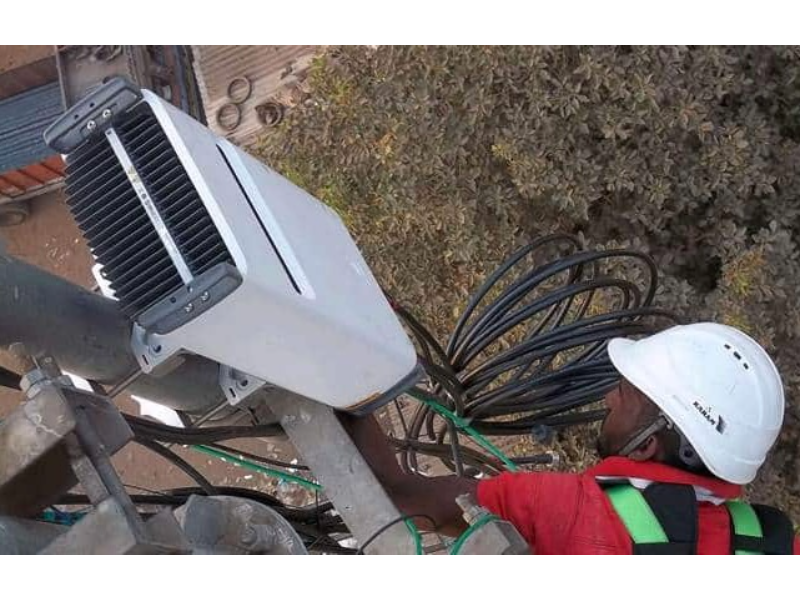
In many cases, the most effective approach is a hybrid solution that leverages the strengths of both fiber and microwave backhaul. For instance, fiber can be used for the core network and primary high-capacity routes, while microwave links can provide last-mile connectivity or serve areas where fiber deployment is challenging.
This hybrid approach allows network operators to optimise their infrastructure, balancing cost, performance, and deployment speed. It also offers a level of redundancy, ensuring network resilience in case of disruptions to either the fiber or microwave segments.
Fiber optic and microwave backhaul each play crucial roles in the telecommunications landscape, offering distinct advantages and facing specific challenges. Fiber optic backhaul excels in providing high bandwidth, low latency, and long-term reliability, making it ideal for high-demand urban environments and future-proof infrastructure projects. On the other hand, microwave backhaul offers cost-effective, rapid deployment and flexibility, making it suitable for remote areas and situations requiring quick network expansion.
Member Briefing
Deeper Profile Context
Sign in with the right membership level to unlock the full briefing and source notes.
Only for Strategic Circle
Strategic Circle
Open to all readers. Unlock profile briefings after joining and signing in.
Join Strategic CircleOnly for Leadership Alliance
Leadership Alliance
For qualified IP-asset owners and management; sign in to unlock alliance briefings.
Join Leadership AllianceSnapshot
Category
InstitutionRegion
GlobalSignal Focus
MarketContent Type
ProfilePrimary Domain
TechnologyTopic
MarketImpact
MediumConfidence
Limited confidence (82%)Confidence score guide
Several public sources