
Impact
Critical
Within the Impact facet, Critical impact intelligence highlights articles where the expected effect level, operational exposure, or decision relevance is comparable. Readers can use the page to separate routine market updates from higher-consequence governance, infrastructure, security, and investment signals that may affect planning, procurement, policy, or customer exposure. The page connects the consequence band to public evidence, related organisations, regional context, operating dependencies, service continuity, competition, investment timing, compliance, and customer risk. It helps readers decide which developments deserve deeper monitoring, which actors are most exposed, and how a signal may affect operations or market planning.

Asia-Pacific Institutional
Luckin Coffee made fabricated sales and transaction verification a financial-reporting accountability test
Luckin Coffee’s 2019 fabricated transactions are often remembered as a spectacular revenue scandal at a rapidly expanding retailer. For accountability, the more durable question is operational: what evidence should have connected a digital order, a voucher, a customer or…

Asia-Pacific Institutional
Noble Group made commodity valuation and noncash gain disclosure a market-governance accountability test
Noble Group's accounting controversy was not one undifferentiated fraud story and should not be written as one. Iceberg Research published allegations in 2015 about associates, long-term contracts, fair values and the gap between earnings and operating cash flow. Noble rejected…

Europe and Middle East Institutional
Deutsche Bank mirror trades made cross-border transaction monitoring an AML-governance accountability test
The Deutsche Bank mirror-trades record is an unusually clear test of whether a global bank can see one economic pattern when its formal components are divided among customers, offices, currencies, trading books and payment systems. The accountability question is larger than…

Latin America and Caribbean Institutional
Odebrecht made off-book payments and compliance monitorship a corporate-accountability test
Odebrecht's admitted bribery scheme was not simply a sequence of employees evading an otherwise functioning payment system. The United States resolution described a dedicated organisational capability—the Division of Structured Operations—that helped request, authorise, fund and…

Europe and Middle East Institutional
Rolls-Royce made intermediary payments and business-unit oversight a global compliance accountability test
Rolls-Royce’s 2017 coordinated resolutions are often summarized by a global penalty and the scale of the conduct described by authorities. That summary misses the operating question. An engineering group selling complex products and services across civil aerospace, defence…

North America Institutional
Goldman Sachs made 1MDB bond underwriting and compliance escalation a bank-gatekeeping accountability test
The Goldman Sachs–1MDB record asks what a bank must be able to prove before it commits its balance sheet, reputation and distribution network to a politically exposed, sovereign-linked transaction. The answer cannot stop at a completed checklist. It must show who established the…

Europe and Middle East Institutional
Siemens made off-book payments and business-consultant controls a corporate-compliance accountability test
The Siemens record is a study in how a global company can possess policies yet lack an operating control system capable of stopping concealed value transfers. It is also a warning against collapsing different defendants and different legal processes into one corporate headline.…

Europe and Middle East Institutional
ABB made Kusile subcontractor due diligence and payment approval a public-procurement accountability test
ABB’s Kusile record is not only a bribery case or a repeat-offender headline. It is a test of whether a multinational supplier can make every high-risk subcontractor and payment on a public infrastructure project independently explainable before funds move. The record describes…

Europe and Middle East Institutional
HSBC made Mexico correspondent risk and transaction monitoring an AML-governance accountability test
HSBC's Mexico correspondent-banking record tests whether a global group can recognise that an affiliate relationship may increase rather than reduce financial-crime risk. The accountability question is not whether one policy used the wrong label. It is whether country risk…

Europe and Middle East Institutional
Standard Chartered made sanctions screening and examiner disclosure a bank-governance accountability test
The Standard Chartered record is not one case or one period. It is a sequence of criminal, sanctions, prudential, state supervisory and anti-money-laundering actions whose facts and procedural effects differ. The bank accepted responsibility in a 2012 deferred prosecution…

North America Institutional
COSCO BUSAN made pilotage, bridge-resource coordination and oil-spill response an environmental accountability test
The COSCO BUSAN allision showed how one harbor transit can connect pilot fitness, bridge-team challenge, traffic monitoring, spill intelligence, ecological injury and legal remedy—and why each link needs its own evidence.

North America Institutional
Boston's Big Dig tunnel-ceiling collapse made epoxy-anchor design and inspection an infrastructure accountability test
The Big Dig ceiling collapse shows why a fastener cannot be accepted only at installation: material qualification, sustained-load design, installer practice, proof testing, anomaly follow-up, owner inspection and public handover all have to preserve evidence that an overhead…

North America Institutional
Sago Mine made sealed-area design and rescue information a mine-safety accountability test
Sago shows why an underground mine must treat sealed atmospheres, explosion resistance, escape, rescue mobilisation and verified family information as one accountable survival system rather than separate compliance tasks.

North America Institutional
Chatsworth made signal compliance and positive train control a commuter-rail accountability test
Chatsworth showed why a rule that depends on one person seeing and obeying one signal is not a complete collision-prevention system, and why the answer must connect human performance, supervision, automatic enforcement, emergency response and fair remedy without confusing their…

Asia-Pacific Institutional
Esso Longford made process-hazard training and gas-supply resilience an industrial accountability test
Longford shows how a technically comprehensible process upset can become a fatal plant failure when hazard knowledge does not reach operators—and how one facility's loss can become a statewide continuity crisis when an essential service lacks practical alternatives.
Europe and Middle East Institutional
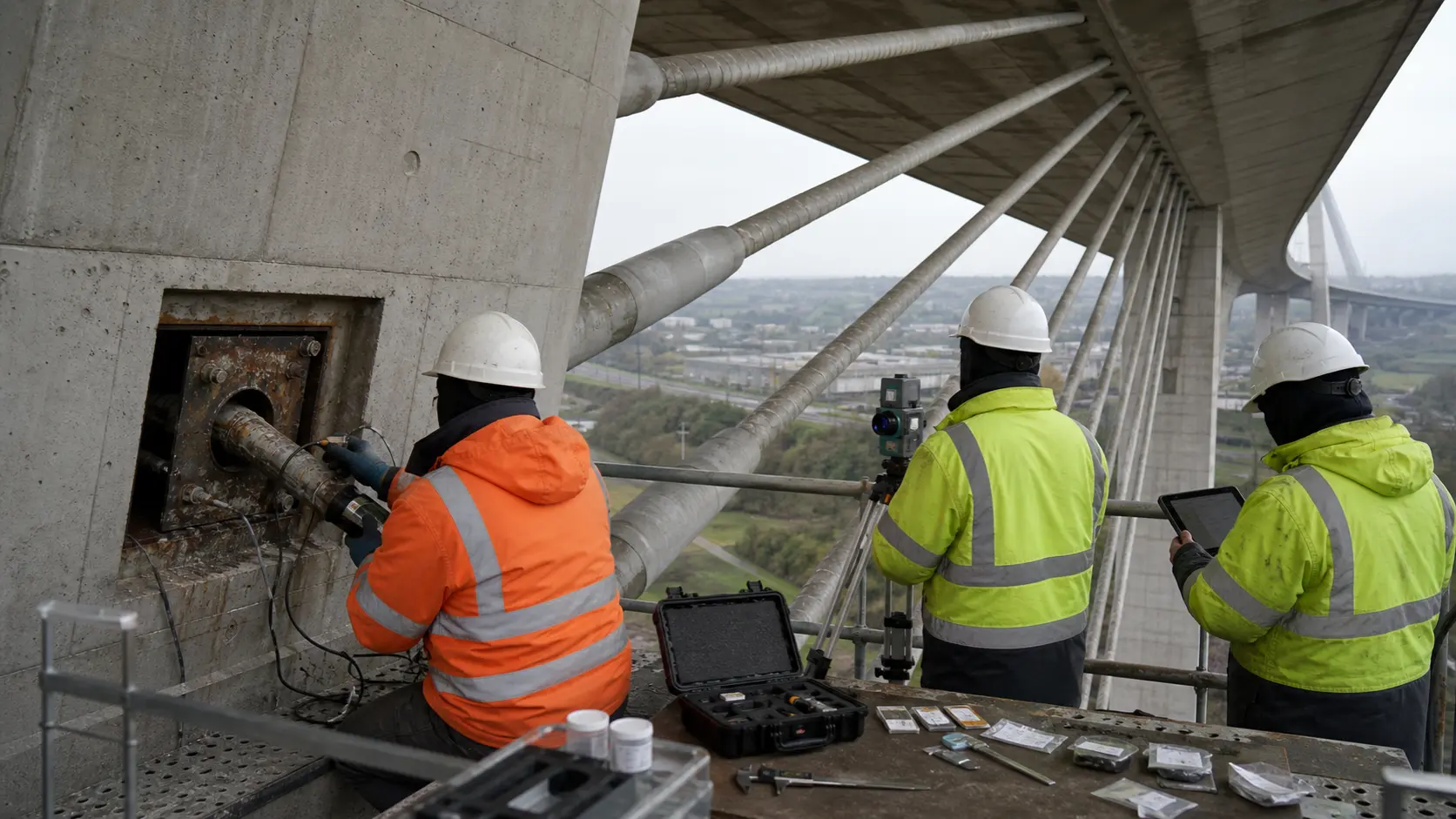
Morandi Bridge made cable-stay inspection and concession oversight an infrastructure accountability test
Morandi Bridge shows why an aging, technically unusual concession motorway structure needs a continuously evidenced safety case linking inspection visibility, structural analysis, maintenance escalation, closure authority and independent public supervision.

North America Institutional
Tesoro Anacortes made heat-exchanger metallurgy and process-hazard review an industrial accountability test
Tesoro Anacortes shows why a refinery must treat metallurgy, damage-mechanism knowledge, process-hazard analysis, maintenance switching, worker location and regulator verification as one accountable barrier against catastrophic loss of containment.

North America Institutional
L'Enfant Plaza made electrical maintenance and tunnel emergency command a transit accountability test
L'Enfant Plaza showed how a local electrical defect can become a system emergency when inspection, water control, train movement, power isolation, ventilation, communications and incident command do not work as one verified safety system.

North America Institutional
KPMG made inspection-target confidentiality and exam integrity an audit-quality accountability test
KPMG LLP's inspection-information and training-examination record asks whether an audit firm can prove that the people charged with quality control are measured by audit quality rather than by the appearance of cleaner inspection results. The answer requires more than an ethics…

North America Institutional
Morgan Stanley made hardware decommissioning and vendor inventory a financial-data accountability test
Morgan Stanley Smith Barney LLC's hardware-decommissioning record shows why a retired server remains a live financial-data system until every storage component is identified, controlled and rendered unreadable. The accountability question is not whether a vendor issued a…