
Content Type
Research Analysis
Within the Content Type facet, Research Analysis intelligence gathers BTW.MEDIA articles that share the same editorial format, helping readers compare briefings, profiles, risk notes, market analysis, and event coverage without mixing different kinds of evidence. The page explains how this content type frames internet infrastructure events, company movements, governance decisions, operational signals, and public evidence across the site. Readers can compare which actors or infrastructure systems appear most often, how source quality changes interpretation, and whether the material is a durable profile, a time-sensitive event, a strategic market signal, or a governance development. The result is a useful search page for operators, investors, customers, analysts, and policy stakeholders who need to understand the consequence, timing, and evidence behind similar article formats.

Story
RIPEstat Wants Better AS Names—and a Map of Which ASNs Are One Entity
RIPEstat Wants Better AS Names—and a Map of Which ASNs Are One Entity intelligence summary explains the development, the public evidence available to readers, the organisations involved, the regional context, market exposure, and the infrastructure consequences that may follow.…

Story
LACNIC's Delegation File Declares 49,894 Records. It Contains 48,214
A daily file built for machines fails the counting rule printed in its own specification, while its automatic alias and its dated signature offer two different paths to trust. The discrepancy is not evidence of missing Internet resources. It is a test of whether a registry…

Story
ARIN’s ROA Alerts Follow Deletion, Not the Change in Routing Authority
ARIN can commit several routing authorizations in one transaction, yet its documented alert boundary still follows a single verb: delete. Two public suggestions expose the resulting choice between inbox noise and silence. A safer design would report the net change once.

Story
APNIC Told Malaysia It Could Not Process a New NIR. The Rules for Saying Yes Do Not Yet Exist
APNIC has given Malaysia a reasoned answer without giving it an application path. That distinction protects equal treatment today, but it also leaves every future decision behind a sequence whose owners, completion evidence and treatment of earlier interest are not yet joined in…

Story
AFRINIC’s IPv6 Condition Names Three Percentages but Not the Meter
The proposal’s benign ambition is understandable: turn passive IPv6 holdings into actual, gradual deployment while using traffic information operators may already collect. The unresolved question is whether the proposed percentages can be reproduced, checked and fairly reviewed.

Story
AFRINIC Extended Its Bylaws Consultation. Its Only Named Form Went Down Four Days Before the Deadline
A deadline is a promise about access, not merely a date printed on a page. AFRINIC gave contributors until 17 May to use a designated constitutional-comment form; on 13 May it announced that the form host was unavailable, leaving the public record without the timestamps and…

Story
RIPE-861 Recommends Off-List Nominations. The Candidate List Needs a Receipt
RIPE's new guide gives a quiet volunteer a private way to approach a continuing working-group chair. That can widen participation. It also moves the first step outside the public archive, making the later conversion from interest to a complete candidate list the part that needs…

Story
LACNIC's FORT Can Validate ASPA. Its Router Feed Defaults to Version 0
LACNIC announced a validator that can carry ASPA data towards routers. The release also keeps that route behind a configuration value whose default is zero. That is not a contradiction or a defect. It is the difference between shipping a capability and establishing that the…

Story
A Date Is Not a Review Window: AFRINIC’s Missing Assessment-to-Agenda Record
AFRINIC’s staff impact assessment for `AFPUB-2026-GEN-002-DRAFT01` is dated 23 June 2026. AFRINIC-37 met on 24 June, with the Policy Compliance Dashboard scheduled for 15:15–16:05 local meeting time. The minutes preserve the PDWG Chair’s concern that providing an assessment only…
Story
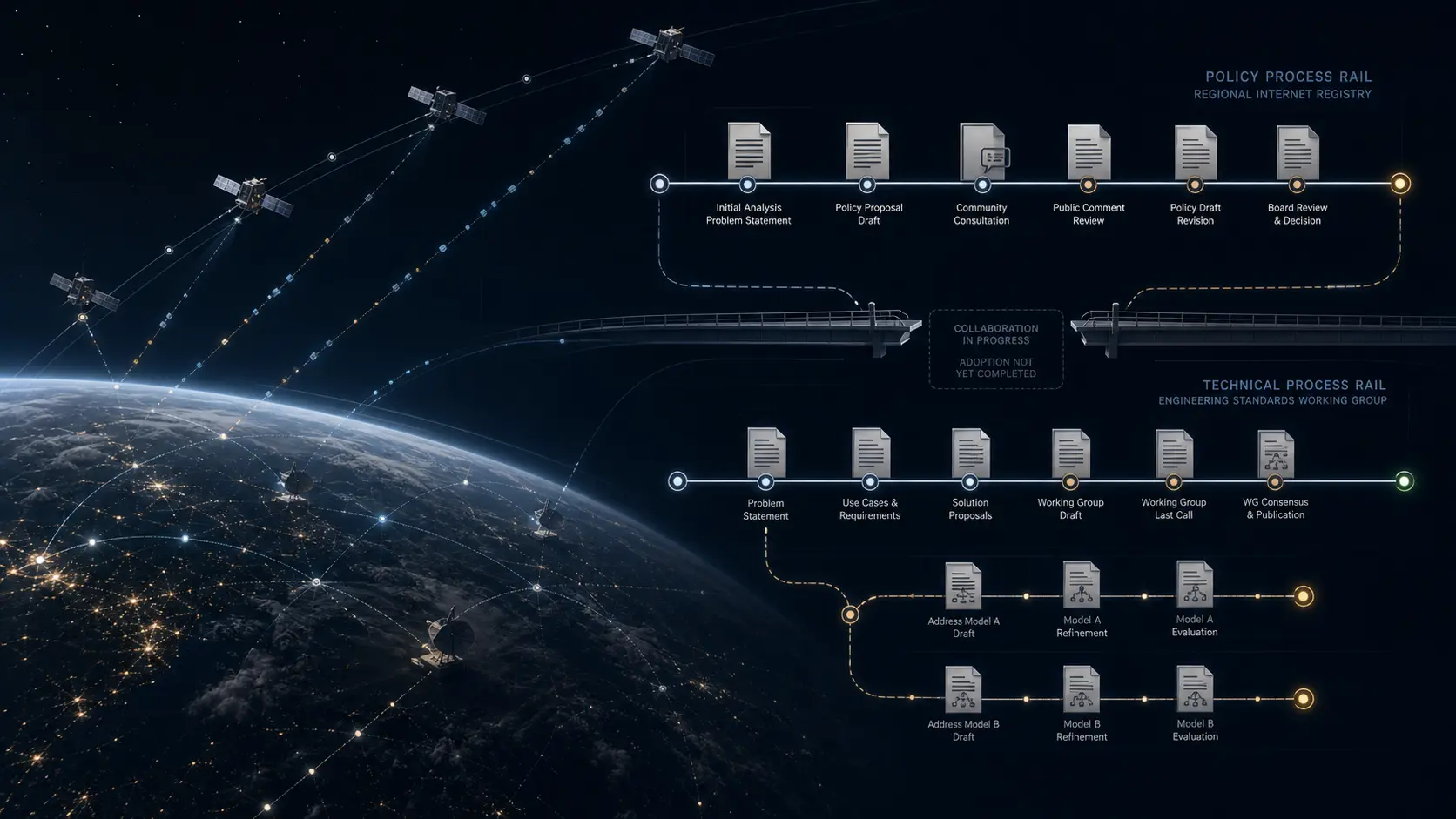
ARIN Calls Its Space Policy Joint. IETF Has Not Adopted the Address Model
ARIN-2026-1 says the proposal is joint with an IETF working group. The linked IETF record says the address model has no formal standing, and the working-group chairs found no clear consensus to adopt it as-is. Both statements can be faithfully recorded only if institutional…

Story
Where Member Notice Stops: RIPE-865 and the Burden of a Public Record
RIPE-865 preserves the general position that RIPE NCC members are informed when authorities seek their data or registry action, unless notice is expressly prohibited. Its eEvidence section creates a different notification state: confidentiality applies, and the RIPE NCC cannot…

Story
APNIC’s Service-Term Delegation Has No Public Classification Receipt
APNIC’s Executive Council gave the Secretariat room to change service terms without turning routine administration into policy making. The delegation is sensible and expressly bounded. What the public record lacks is the small entity that would let a later reader test the…

Story
AFRINIC’s $20,790 MyAFRINIC Line Cannot Count Its Staff Work
AFRINIC’s half-year accounts put USD 20,790 of capital expenditure against MyAFRINIC v2. Six days before the reporting cut-off, its policy-meeting record said human resources had been channelled to the same project. The statements can both be accurate because they count different…

LACNOG
One Meeting, Two Public States: The Transition Record LACNIC 46 Requires
On 27 January 2026, LACNIC said LACNIC 46 / LACNOG 2026 would be relocated from Guatemala and that a replacement location would follow. On 27 March 2026, a trilingual announcements-list message confirmed Mendoza, Argentina, moved the previously announced dates to 19–22 October…

Story
AFRINIC Opened a Member Survey. Its Value Depends on a Response-to-Action Record
AFRINIC has invited members and stakeholders to say what works, what should improve and what deserves priority. A short, optionally anonymous survey can widen participation. Its durable value, however, will be measured after collection: whether AFRINIC makes the path from…

Story
RIPE’s CoC Draft Joins Final Appeal and Team Removal
A second RIPE Code of Conduct draft would let the RIPE Chair appoint, continue and remove community reviewers at discretion. The current appeal process already names that office as the final assessor. Neither power proves interference. Their combination does create a hard…

Story
AFRINIC Reconstituted GovCom. Three Members Were Elected, Two Appointed
AFRINIC says its Governance Committee is constituted and ready to work. The five voting seats arrived by two routes: three through a membership election and two through Board appointment. That mixed design is explicit. The next accountability test is whether requests, conflicts…
Story
LACNIC’s 11 IXP Collectors Need a Vantage-Point Receipt
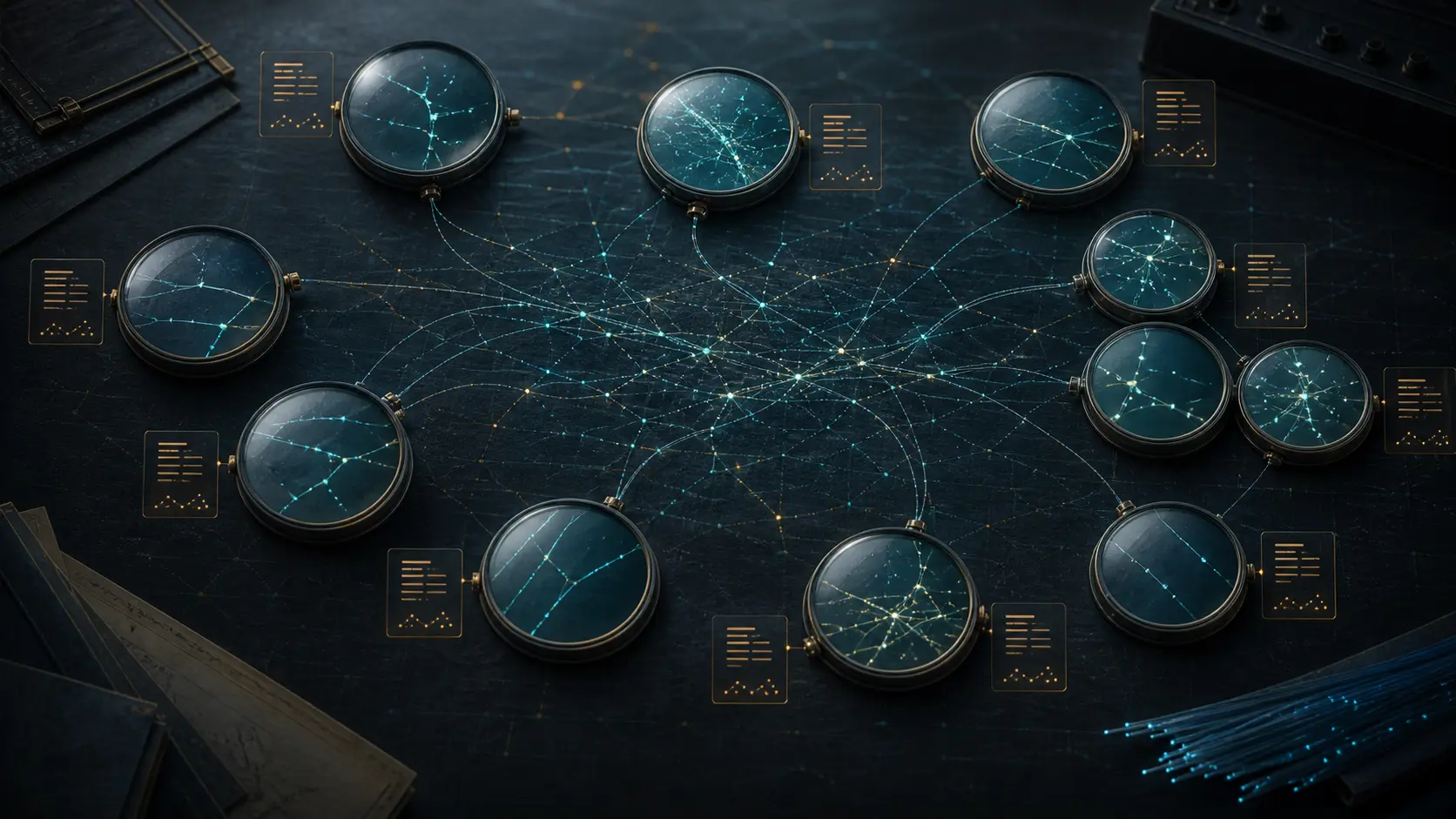
LACNIC has opened a useful window onto local routing: eleven BGP collector views, public MRT files and charts of prefixes, origin networks and paths. The problem begins only when a window is mistaken for the landscape. The portal does not bind each result to the peer cohort…

Story
ARIN’s 28 “Legitimate” Fraud Reports Were Not 28 Findings of Fraud
ARIN’s annual shorthand divided 223 policy-noncompliance reports into 195 outside its fraud process and 28 deemed legitimate. The arithmetic is exact. The meaning is not. ARIN’s own quarterly record shows that the 28 include corrected records, withdrawn routes, unconfirmed…

Story
APNIC Can Filter the Next WHOIS Download. It Cannot Recall the Old Ones
APNIC can remove contact fields from the next bulk-WHOIS dataset it generates. That is a real and testable privacy control. It cannot make the same edit reach backward into files that bulk-access users may already have downloaded under earlier terms. `prop-162` places both…