
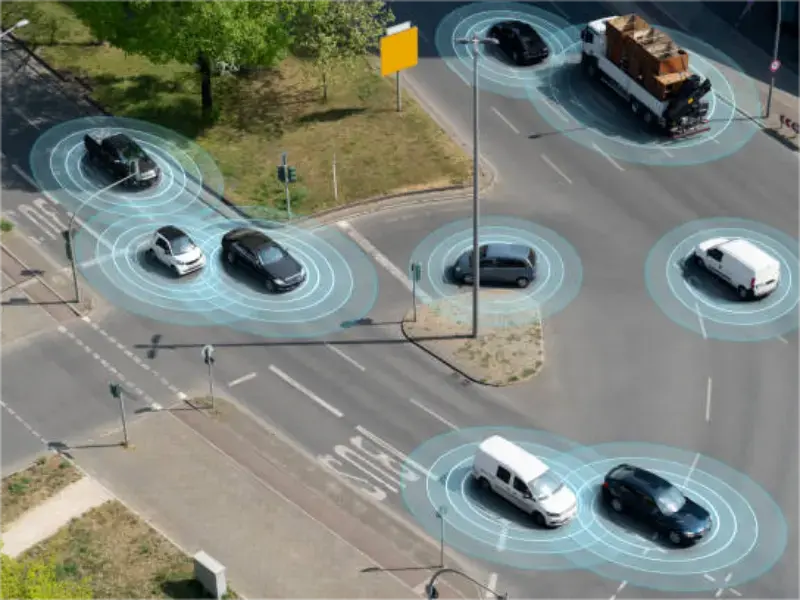
- Smart cities integrate advanced technologies into infrastructure to improve urban life through efficient, sustainable practices.
- These cities deploy Internet of Things (IoT) devices in public utilities and services, revolutionising everyday tasks and resource management.
- Smart city initiatives focus on sustainability, aiming to achieve the UN Sustainable Development Goals through innovative urban planning and technology.
A smart city makes use of digital technologies to make urban spaces more liveable and more efficient. By putting IoT devices like sensors and smart meters all over the city, these cities collect a lot of data. They use this data to make things better in lots of ways, like managing traffic and energy use, keeping people safe, and monitoring the environment. This makes life better for everyone who lives there.
As cities keep getting bigger, using smart tech helps them develop in a more sustainable way and meets wider social and environmental goals. It’s setting a new standard for how cities will develop in the future.
What is a smart city
A smart city is an intelligent city that integrates digital technologies into its networks, services and infrastructure, making it more efficient and liveable for its residents and businesses.
Characteristics of a smart city
Smart energy: making energy distribution and consumption smarter to achieve a broader energy transition and create a sustainable development model for cities. Through solutions such as public lighting, remote control and architectural lighting, the energy performance of urban areas will be optimised to make cities more efficient and sustainable.
Smart buildings: buildings that are designed to be more energy efficient, reduce pollution, minimise waste, save money and promote sustainability. Advanced smart technologies enable building managers to optimise heating, cooling, lighting, security and other services to ensure optimal energy performance of the building.
Smart safety and security: solutions that enable greater cost efficiency in all activities aimed at keeping citizens safe. Thanks to AI and IoT technology, they enable real-time monitoring of the urban environment, detecting events and irregularities and sending automatic alerts to facilitate a rapid response to dangerous situations.
Smart tourism: in the context of tourism, smart cities strive to provide solutions that enhance the tourist experience and improve the quality of life for residents during peak seasons through the use of digital platforms, e-mobility and energy efficiency.
Also read: Around the world from your living room: The magic of virtual tourism
Smart urban furniture: another characteristic is that their smart infrastructure – such as park benches, bus shelters and street lights – is embedded with digital technologies, interconnected, modular and multifunctional.
Smart mobility: Residents of smart cities have access to smart mobility options, including electric cars, buses, garbage trucks and other public and private vehicles. These vehicles are powered by renewable energy and connected through digitalised charging stations that form a network accessible through a mobile app.
Smart planning: Because they are digitalised, smart cities can be managed for efficiency and energy savings. For example, city managers and administrators can use platforms such as Enel X’s City Analytics to plan infrastructure and services based on real demand. This has great benefits for the quality of urban life.
Smart homes: Residents of smart cities live in smart homes that maximise their energy resources and minimise their energy expenditure. Smart homes integrate intelligent household devices and appliances, as well as heating, cooling and security systems, all of which can be remotely controlled through a single app.
Also read: The best smart home devices for seamless living
How does a smart city work and what technologies does it use
Smart cities use Internet of Things (IoT) devices such as connected sensors, lights and meters to collect and analyse data. Cities use this data to improve infrastructure, public utilities and services, making everyday tasks easier and more efficient while enhancing public safety, optimising traffic flows and improving the environment. By using smart city technologies and adopting strategies such as green urbanism, which reduces the ecological footprint of cities, smart cities can more easily achieve the UN Sustainable Development Goals.