
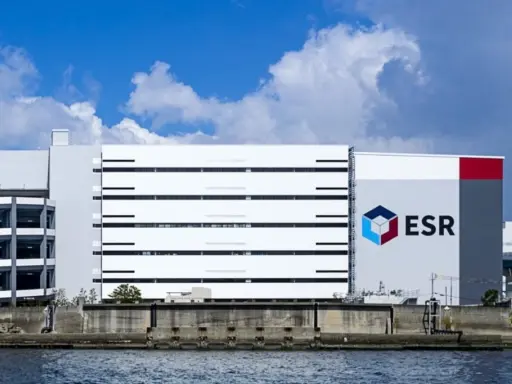
ESR Group plans to develop a 60MW data centre in Ariake, Tokyo, enhancing their portfolio with projects across Japan. The Ariake data centre will support AI and machine learning, focusing on energy efficiency and sustainability standards. ESR Data Centre Fund 1 has secured US$1.35 billion for digital infrastructure investments, expanding across APAC cities. ESR Group Limited, a prominent APAC real asset manager, has announced the development of its fourth data centre site in Japan.
The 60MW facility in Ariake, Koto-Ku, Central Tokyo, adds to their existing projects: 130MW Cosmosquare Data Centre in Osaka, 100MW Keihanna Data Centre in Kyoto, and 30MW Higashi Kurume Data Centre in Tokyo. Construction begins in Q2 2026, with completion expected in Q4 2028. ESR Cosmosquare Data Centre ESR Data Centres: An ESR Thought Leadership Webinar Stuart Gibson, ESR Group Co-founder and Co-CEO, said: “Data centres are a key growth engine for ESR, and our Ariake development expands our portfolio across Japan and APAC.
Our platform has a significant 1.5-gigawatt (GW) data centre published evidence in key cities including Hong Kong, Osaka, Tokyo, Seoul, Sydney, Mumbai, and Singapore. Japan is one of the largest and fastest growing data centre markets in the world and our Ariake project will be transformational in terms of the amount of capacity it will bring to Central Tokyo.” Diarmid Massey, CEO of ESR Data Centres, added: “Time-critical applications and future workloads in urban areas have created a need for data centres in areas such as Ariake, which are closer to urban population centres and existing data centre clusters.
In Tokyo and Osaka, there is increased demand for modern, energy efficient data centres to replace aging digital infrastructure. ESR continues to partner with operators and hyperscalers to grow our data centre portfolio across APAC.” The new Ariake site aims to provide hyperscale, cloud, and enterprise clients with scalable, high-speed services. The facility will support increasing workloads such as AI and machine learning, with reliable energy efficiency and sustainability standards. ESR’s data centre investment fund, ESR Data Centre Fund 1, has secured US$1.35 billion for digital infrastructure investments. Also read: Internet Multifeed Co.
expands JPNAP connection points in Osaka Also read: Digital Realty launches high-density colocation for AI workloads About ESR Group ESR Group: The Beat of New Economy Real Estate Development and Investment ESR is a significant real asset manager in the Asia-Pacific region, focusing on New Economy infrastructure. As of 31 December 2023, it manages around US$81 billion in fee-related assets. Its operations span across Australia/New Zealand, Japan, South Korea, Greater China, Southeast Asia, and India, with extensions into Europe and the U.S.
ESR provides a variety of investment solutions and development opportunities, emphasising sustainability and community impact. Listed on the Hong Kong Stock Exchange, it is part of the FTSE Global, Hang Seng Composite, and MSCI Hong Kong indices.