Summary
- Cloud Teknologi Nusantara should be judged by the operating record it can maintain for Indonesian customers after migration: identity control, server state, monitoring, ticket ownership, backup testing, carrier coordination, and supplier handoff.
- The public evidence supports a real network and support surface around AS137331, CTN's own cloud, managed service, colocation and connectivity language, Kenceng Solusindo's linked hosting channel, PeeringDB contacts, a looking glass, and status tooling; it does not support claims about named enterprise deployments, measured recovery performance, revenue scale, or fully documented automation.
The Company Is Easier to Overstate Than to Operate
Cloud Teknologi Nusantara sits in a familiar Indonesian technology category: the local cloud and managed-infrastructure provider that promises practical help where direct cloud accounts, fragmented hosting panels, telecom circuits, security tools, and customer administrators meet. Its public site gives the broad operating vocabulary. It presents Cloud Server, Global Connectivity, 24/7 Support, colocation, managed service, connectivity, and solutions for internet service providers, content providers, government, and retail.
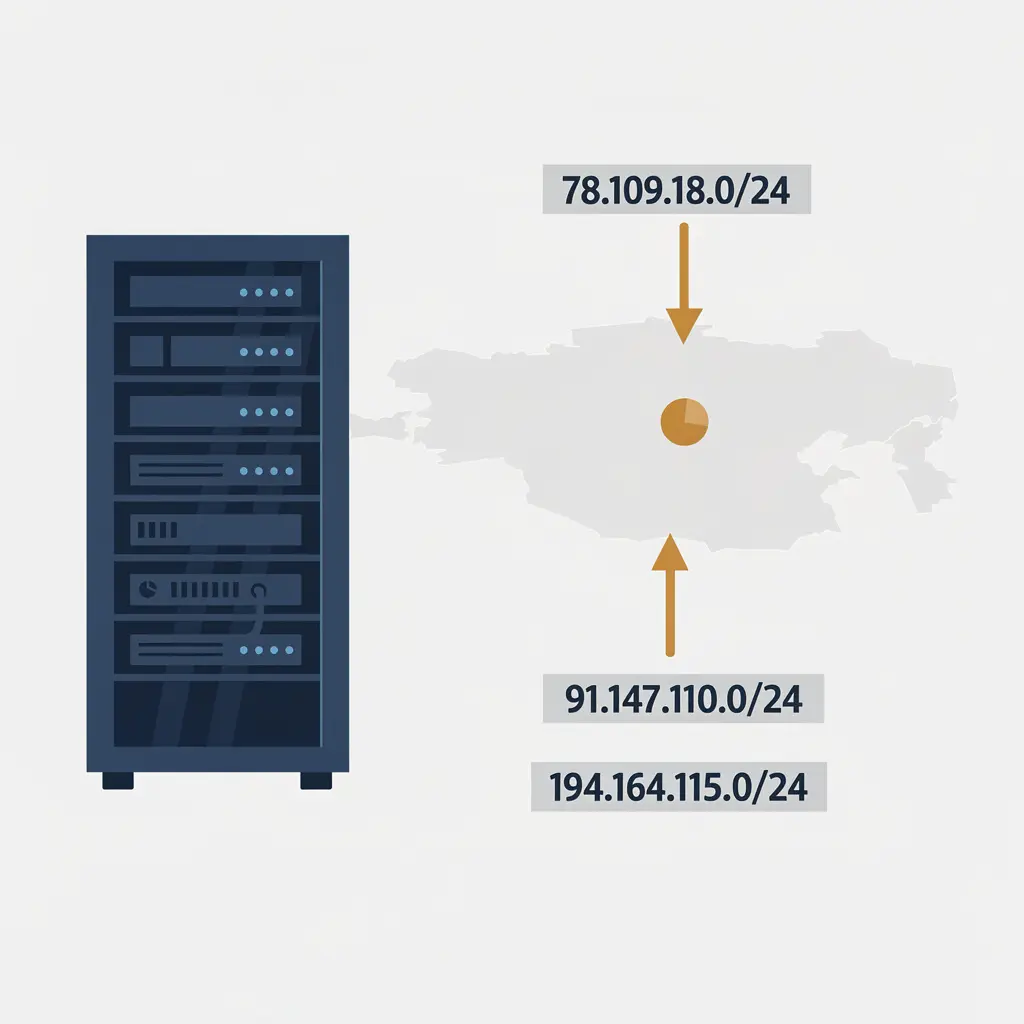
Network records ground the company more concretely as AS137331, PT Cloud Teknologi Nusantara, an Indonesian autonomous system with visible prefixes, exchange participation, upstreams, and network contact roles.
That combination matters because the company's real test is not whether it can say cloud, colocation, or support. Every regional provider can say those words. CTN's test is whether it can move a customer environment from proposal into an accepted operating record: accounts granted only to the right people, servers and virtual machines known by name, monitoring tied to support response, security controls owned after the project closes, backup work checked rather than assumed, and supplier coordination handled when the fault crosses the edge of CTN's own platform.
The public evidence is strong enough to show CTN as a live infrastructure and support participant, but too thin to treat the company as a fully transparent managed-cloud platform. That is not unusual for local providers. Many such firms operate through relationships, tickets, WhatsApp, remote access sessions, data-center visits, reseller channels, and customer-specific runbooks that never become polished public architecture documents. The issue for a buyer is not whether every detail is published. The issue is how much supervision the buyer must keep after signing.
For CTN, the accepted record begins with a plain question: what exactly changes when a customer stops running infrastructure alone and asks CTN to carry part of the cloud, hosting, connectivity, or operations burden? If the answer is just a server, a circuit, a control panel, and a support number, the customer has bought capacity. If the answer includes repeatable discovery, named access owners, backup cadence, monitoring thresholds, escalation paths, supplier responsibility, and recovery drills, the customer has bought operational leverage. The gap between those two answers is where CTN's value, cost, and risk sit.
What The Public Record Actually Shows
CTN's own homepage is spare but useful. It frames the company as an integrated IT solution provider and uses Indonesian enterprise language rather than a pure commodity-hosting voice. The service cards are broad: cloud server for reliable, efficient, flexible cloud computing; colocation for placing customer-owned servers in CTN's data-center environment; managed service for managing customer IT systems; connectivity for high-speed internet networking. It also displays the company address in Semarang and a direct care contact.
The network page sharpens the infrastructure story with a "100 Gbps Ready" claim and "n x 10Gbps InterDC Link" language, while linking outward to PeeringDB.
Network registries add the harder surface. APNIC and IDNIC-derived records identify AS137331 as IDNIC-CLOUDTEKNOLOGI-AS-ID, PT Cloud Teknologi Nusantara, a corporate or direct member record in Indonesia. RDAP shows the autonomous system as active, with a registration event in August 2019 and later updates. PeeringDB lists PT Cloud Teknologi Nusantara and the network Cloud Teknologi Nusantara, with NOC, abuse, and sales contact roles.
Independent BGP views show a routed footprint with originated IPv4 and IPv6 prefixes, upstream providers, public peering relationships, exchange points in Indonesia and Singapore, and RPKI-valid originated routes in the observed set.
That is not marketing varnish. A provider with an autonomous system, exchange ports, a looking glass, NOC and abuse contacts, and routed address space has a different operating surface from a reseller page that only points at someone else's control panel. CTN can still depend on upstream carriers, facilities, software vendors, and customer-side discipline. It does. But the public record supports treating the company as a networked infrastructure operator and managed-services participant, not merely a website front end.
The adjacent Kenceng Solusindo channel complicates and strengthens the picture. Kenceng Solusindo publicly describes itself as part of PT Cloud Teknologi Nusantara and offers cloud hosting, domains, cloud VPS, SSL, website and application services, reseller services, dedicated servers, colocation, and VPS products. Its contact page lists support channels, ticket support, data-center and point-of-presence references in Jakarta and Singapore, AS137331, a status page, and a looking glass link. That does not mean every Kenceng service is a CTN managed-cloud service in the enterprise sense.
It does mean the CTN legal and operational boundary includes a hosting-market channel where support, status, network tools, and customer-facing service desks appear in public.
The weakest public record is the detailed managed-operation layer. CTN does not publish a mature library of recovery-time commitments, backup verification procedures, identity-control workflows, compliance attestations, customer case studies, postmortems, or service architecture diagrams. Its CTNix page names an exchange-like service and port ranges, but the surrounding copy is not strong evidence of operational maturity. A buyer should not fill that silence with optimism. The absence of published runbooks does not prove CTN lacks runbooks, but it does move the burden of proof into procurement, onboarding, and the first live change.
The Managed-Cloud Record Starts With Discovery
The most important work in a local managed-cloud engagement usually happens before migration. Discovery is where the provider learns what exists, what matters, who can approve changes, what can break, and which old assumptions must be retired. CTN's public language points at integrated IT solutions and customer IT system management, but integration fails when discovery is treated as a formality.
A local provider can be excellent at rescue work and still create long-term fragility if the initial record misses an old database server, an undocumented firewall rule, a forgotten DNS dependency, or a payroll system that only one administrator knows how to restart.
For an Indonesian SME or mid-market enterprise, discovery is not an abstract architecture exercise. It is a practical inventory of access, servers, domains, certificates, control panels, software licenses, network circuits, branch dependencies, local backup devices, SaaS accounts, router credentials, user directories, endpoint policies, and vendor contracts. The customer may have grown through years of ad hoc purchasing. One department may own the domain, another may own a cloud account, a finance team may pay for security software, and an outside developer may still hold production credentials.
Managed cloud becomes expensive when those fragments are found only after the outage.
CTN's advantage, if it executes well, is proximity to this messy reality. A local support and integration provider can ask Indonesian customers the unglamorous questions in the language of daily operations. Which branch office calls first when the system slows? Which application must work before the store opens? Which server can be rebuilt, and which one is a pet machine that no one dares to touch? Which upstream vendor answers quickly, and which one only responds after payment confirmation? Which change windows are real, and which are aspirational?
The accepted record should turn those answers into a living baseline. That baseline does not need to be a beautiful architecture poster. It needs to be operationally useful. It should identify asset owners, access holders, backup scope, monitoring coverage, critical applications, network paths, public DNS, certificates, firewall rules, data locations, escalation contacts, and supplier dependencies. If CTN takes over a server without taking over the facts around the server, the customer has outsourced work but kept the risk.
Discovery also decides the economics. Direct cloud accounts look cheap when the buyer compares only compute and storage prices. They look different once the buyer counts the hours spent finding unmanaged assets, reconciling passwords, chasing renewal dates, paying for idle resources, interpreting alerts, and coordinating providers during failures. CTN's commercial case depends on converting local knowledge into lower supervision cost. That case must be proven in the customer's operating record, not just in an initial migration quote.
Access Control Is The First Reliability Feature
Cloud reliability is often discussed in terms of uptime, redundancy, and bandwidth. In managed environments, access control is the first reliability feature. A system that can be reached by too many people, by former vendors, by shared administrator accounts, or by unmanaged keys is not stable. It may appear stable until a change is made by someone who no longer understands the environment. Then the failure is not a hardware failure. It is a governance failure.
CTN's public material does not publish its identity-management model, so the buyer should test it directly. Who receives privileged access in a CTN-managed environment? Are customer administrators separated from CTN operators? Are emergency credentials created, stored, rotated, and retired in a defined way? Are cloud console accounts tied to named individuals? Does CTN support multi-factor authentication where the platform permits it? Are vendor accounts separated by role, and are logs retained after a support event? When a customer employee leaves, is access removal part of the service record or just the customer's hope?
The answer matters because local managed support often starts with convenience. A customer wants the provider to fix something quickly. The provider asks for a password. Someone sends it. The immediate problem is solved, but the long-term record becomes unclear. Over time, shared access can become the path of least resistance. That is the wrong direction for managed cloud. A professional managed-service relationship should reduce invisible access, not multiply it.
CTN's network-facing record shows NOC and abuse roles in PeeringDB and registry contacts. That is encouraging because it means the public network surface has named operational functions. But network contact discipline is only one layer. Customer environments need the same clarity. The operating record should show who can change routes, who can alter firewall policies, who can provision virtual machines, who can restore backups, who can see customer data, and who can approve risky changes.
Automation can help, but only when it is tied to authority. A script that creates users is useful if it follows a clean approval chain and leaves logs. It is dangerous if it simply makes credential sprawl faster. A ticket workflow is useful if it maps requests to known assets and named approvers. It is weak if it becomes a mailbox where urgent requests override discipline. CTN's value in access control would come from making safe behavior the normal behavior: named accounts, least privilege, change records, credential retirement, and repeatable emergency access.
The commercial implication is blunt. Customers do not pay local managed-cloud providers only for servers. They pay to reduce the number of technical decisions that depend on memory and favors. If CTN can remove that fragility, it can beat a direct cloud account even when its line-item price is higher. If it cannot, the customer may end up paying both CTN and its own staff to supervise the same risk.
Monitoring Is A Promise To Notice, Not A Dashboard
CTN's public record includes 24/7 support language, a status surface attached to the Kenceng channel, and a public looking glass for network troubleshooting. Those are useful signals, but they should not be mistaken for full managed monitoring. A status page can show whether selected services are reachable. A looking glass can expose route, ping, and traceroute tools. A support label can tell customers help is available. None of those alone proves that CTN knows when a customer's application is degraded, when backups are failing, when storage is filling, when a certificate is about to expire, or when a cloud bill is drifting.
Monitoring is a promise to notice the right thing in time. In managed cloud, that promise has layers. At the lowest layer are host checks: CPU, memory, disk, process status, and network reachability. Above that are platform checks: virtualization health, storage pools, DNS, load balancers, firewalls, and upstream links. Above that are service checks: can a user complete the transaction, can a customer log in, can a branch office reach the application, can a scheduled job finish before business opens? The higher the monitoring climbs, the more it depends on customer knowledge.
For CTN, the network layer is the easiest public layer to verify. AS137331 has observable routes, public exchange participation, and a looking glass that lets outside users issue route and diagnostic commands through a named router location. That does not guarantee perfect network operations, but it shows an operational habit: the network is not entirely hidden behind a brochure. The more difficult question is whether the same habit exists for managed customer systems.
An accepted operating record should define monitoring scope in plain language. Which servers are watched? Which applications are watched? Which alerts wake CTN? Which alerts go to the customer? Which are informational? What happens when a ticket fires outside business hours? Who decides that a warning is allowed to wait? How are false positives tuned without silencing real risk? Are backup failures monitored as urgently as server outages? Are security alerts treated as operational events or passed through as unread noise?
This is where local support can either create leverage or create dependency. A customer that receives raw alert floods still needs skilled staff to interpret them. A customer that receives no alert detail cannot supervise the provider. The durable middle ground is a shared record: CTN notices, classifies, acts where it has authority, escalates where the customer must decide, and leaves enough trace for the customer to learn whether the service is improving.
The cost of monitoring is mostly labor. Tools are cheaper than interpretation. The provider has to tune thresholds, update checks after changes, remove dead assets, add new services, and keep contact paths current. If CTN sells managed support without pricing that labor into the service, monitoring becomes a margin problem. If it prices the labor honestly and performs it well, monitoring becomes the reason a customer can run with fewer in-house interruptions.
Network Capability Is Real, But It Is Not The Whole Service
The clearest technical evidence around CTN is the network record. AS137331 is visible across public routing databases. Independent views show originated IPv4 and IPv6 prefixes, observed peers, upstreams, exchange points, and valid RPKI origin status for originated routes in the observed set. PeeringDB lists public peering exchange points and operational contacts. Hurricane Electric's BGP view shows Indonesian and Singapore exchange presence and a mix of upstream and peer relationships. CTN's own network page claims readiness for 100 Gbps and multiple 10 Gbps inter-data-center links.
That matters for a managed-cloud buyer because network control changes the support conversation. A provider with its own autonomous system can participate in routing, peering, prefix management, abuse handling, and network diagnostics in ways a pure reseller cannot. When a customer experiences latency, reachability problems, route leaks, or traffic-path changes, CTN can at least engage from a position of network visibility. The public looking glass reinforces that CTN exposes some diagnostic function rather than treating the network as a black box.
But network capability can be mistaken for full service maturity. A routed network does not automatically produce clean backups. Exchange participation does not automatically create disciplined access control. RPKI validity does not prove customer applications are patched. A NOC contact does not guarantee the customer's ERP system has meaningful service monitoring. Network competence is necessary for a provider selling connectivity-cloud and hosting-adjacent services, but it is only one part of the accepted record.
The buyer should separate three claims. The first is CTN as a network operator: AS137331, peering, prefixes, upstreams, exchange points, route contacts. The public evidence supports this. The second is CTN as a hosting and cloud-capacity provider: cloud server, colocation, VPS-adjacent services through Kenceng, data-center and POP references, support channels. The public evidence supports the existence of this surface, though not the quality of every product.
The third is CTN as a managed-operations partner: identity discipline, monitoring design, backup verification, recovery practice, change management, vendor coordination, and continuous improvement. The public evidence points toward the category but does not fully prove the operating method.
This distinction protects both CTN and its customers. CTN should not be punished for failing to publish every private runbook. But customers should not infer a mature managed-service process from routing records alone. The right procurement approach is to use the network evidence as a starting point, then ask for the operating evidence that does not appear publicly: onboarding checklist, access policy, sample monitoring report, backup test procedure, incident handoff example, and role matrix.
The best version of CTN's offer would turn network proximity into faster resolution. If a customer's application slows because of a route issue, CTN can diagnose from the network side. If the same customer has application errors because a database disk is full, CTN needs monitoring and server access. If the problem is a third-party SaaS dependency, CTN needs vendor handoff discipline. Network capability helps with all of this only when it is connected to the rest of the operating record.
Vendor Handoff Is Where Local Providers Earn Their Keep
Indonesian business infrastructure is rarely one clean stack. A typical customer may rely on a local internet provider, a hosting account, a domain registrar, a cloud server, a SaaS finance tool, a point-of-sale vendor, a payment gateway, a security appliance, a WhatsApp commerce workflow, and a developer who still understands an old application. When something breaks, the hardest work is often not technical diagnosis. It is finding who is responsible.
CTN's local value should be tested at that boundary. Can it coordinate with upstream carriers when routes shift? Can it speak to a domain or hosting channel when DNS changes are needed? Can it work with a customer's application vendor without creating uncontrolled access? Can it escalate to a data-center or facility contact when power, cross-connect, or remote-hands work is involved? Can it translate a customer symptom into a supplier ticket that gets action?
The public record gives partial confidence. PeeringDB contact roles, APNIC abuse and administrative records, Kenceng support channels, ticket support references, a status page, and a looking glass all indicate a support ecosystem rather than a single static website. The data-center and POP references on the Kenceng contact page, including locations in Jakarta and Singapore, also suggest that CTN's sphere includes multi-site coordination. Still, none of this proves handoff quality. Handoff quality appears during incidents.
A strong handoff process has a few visible traits. It records the customer symptom before jumping to supplier blame. It identifies the affected service, the relevant provider, the evidence already gathered, and the requested action. It tracks time spent waiting on each party. It keeps the customer informed without burying them in technical noise. It closes the loop after resolution by updating the runbook so the next event is faster.
Without that discipline, local support can become a human router that forwards messages but does not own outcomes. That is a common failure mode in managed services. The customer pays a provider to reduce vendor burden, but still has to chase the provider, the carrier, the developer, and the cloud console. CTN's commercial promise depends on avoiding that trap. Local integration beats fragmented vendors only if the integrator accepts responsibility for the handoff record.
The buyer should ask for examples. Not confidential customer names, not polished success stories, but sample incident patterns: route reachability issue, failed backup, compromised account, storage exhaustion, migration rollback, certificate expiry, bill surprise. For each, CTN should be able to explain who acts first, what data is collected, when the customer is contacted, when a supplier is engaged, and how closure is documented. The quality of those answers will reveal more than a generic service list.
Backup Discipline Is Where Optimism Goes To Die
Every managed-cloud provider says it can help keep systems running. The practical question is what happens when they do not run. Backup is the point where marketing optimism meets restore work. A backup that has not been tested is a comforting theory. A snapshot that cannot be restored into a usable service is not a recovery plan. A copy that excludes the database, the configuration files, the encryption keys, the license server, or the latest uploaded documents is a partial memory.
CTN's public material does not publish a backup architecture or recovery practice. That silence should not be inflated into either praise or condemnation. It means the buyer must make backup discipline a contract and onboarding issue. For every CTN-managed server, cloud instance, colocation system, or hosted application, the accepted record should state what is backed up, where it is stored, how often it runs, how long it is retained, who can restore it, what the restore target is, and when the last restore test occurred.
Backup discipline also depends on access control. If too many people can alter systems, backups may preserve damage as easily as they preserve data. If backup credentials are stored badly, the backup becomes another attack path. If backups sit in the same failure domain as the primary system, they may vanish during the incident that makes them necessary. If no one monitors backup failures, the customer learns the truth at the worst moment.
For Indonesian SMEs, backup failure often has a human cause. The system was inherited from a former vendor. The database dump was configured years ago. The backup disk filled quietly. The cloud snapshot policy was changed during cost cutting. The branch office upload link failed. The person who knew the encryption passphrase left. A local managed provider can create value precisely because these are process problems, not just storage problems.
CTN's operating value would come from turning backup into a repeated task with evidence. A monthly or quarterly restore test may sound mundane, but it is a better signal than a page full of cloud adjectives. A clear recovery runbook is worth more than a vague uptime promise. A customer-facing report that says which assets are protected, which are excluded by customer decision, and which tests passed would reduce supervision cost and make the service more defensible.
The economics are again uncomfortable. Backup storage, retention, restore testing, and staff time cost money. Providers that include serious backup discipline in low-cost bundles either lose margin or quietly reduce scope. Customers that refuse to pay for recovery should not pretend they have bought resilience. The honest CTN conversation is therefore not "do you provide backup?" It is "which recovery outcomes are included, which are optional, and which remain the customer's responsibility?"
Automation Has To Reduce Repeated Human Work
The managed-cloud market is full of automation language, but customers should ask what repeated task is actually being removed. In CTN's case, the plausible automation surface is not a grand artificial-intelligence story. It is ordinary but valuable operations automation: provisioning servers from a known template, applying baseline firewall rules, creating monitoring checks, rotating credentials, renewing certificates, opening tickets from alerts, checking backup success, generating customer reports, and pushing standard configuration to network or security devices.
That kind of automation matters because local support labor is finite. If every server setup, monitoring change, access request, and backup check depends on an engineer remembering the right sequence, the service does not scale cleanly. Quality varies by staff member and by workload. When the same engineer handles sales engineering, migration, troubleshooting, and after-hours tickets, the customer may receive heroics rather than process. Heroics can save an incident, but they are not a stable operating model.
CTN's public evidence does not reveal how automated its operations are. It shows a public looking glass, status tooling on the Kenceng surface, and standard web-facing service channels. Those are not enough to prove infrastructure-as-code, policy automation, or automated security remediation. The right conclusion is narrower: CTN operates in a category where automation would directly affect service quality, but the public record does not let an outside reader score that automation deeply.
The useful buyer test is to ask CTN to walk through a repeated change. Suppose a customer needs a new managed server for an application. Which steps are template-driven? Which require manual engineering? How is access created? How are patches handled? What monitoring is attached by default? Is the server entered into an asset list? Does backup begin automatically? Is the customer told what is outside scope? If the answers are consistent, CTN has an operating pattern. If the answers depend on who is in the room, the customer is buying skilled people without enough system around them.
Automation should also lower cloud bill surprise. One known failure mode in managed infrastructure is the resource that quietly grows: storage, bandwidth, snapshots, idle virtual machines, backup retention, or premium support. Local providers often win customers by promising simplicity, but simplicity disappears when bills are not explained. CTN's managed record should include cost monitoring, quota warnings, and periodic cleanup. A customer should know when growth reflects business demand and when it reflects forgotten resources.
The labor impact is not that CTN eliminates customer IT staff. It should change what those staff do. Instead of watching dashboards all day, they approve policy, understand risk, manage vendors, and focus on business systems. Instead of rebuilding the same server pattern manually, CTN should standardize it. Instead of the customer learning about backup failure during a crisis, CTN should surface it early. That is where automation earns its place: fewer repeated human checks, not less accountability.
Security Is Configuration, Evidence, And Response
Security in CTN's category is not a single product. It is the combined state of identity, network exposure, patching, backup, monitoring, customer behavior, supplier access, abuse handling, and incident response. CTN's public pages list security-adjacent managed infrastructure rather than a detailed security platform. Independent network reputation pages provide some external context, including low-risk views of visible CTN-addressed traffic, but those views are narrow and should not be treated as a security audit.
The practical security question is whether CTN can keep configuration from drifting. A new firewall rule is added for a migration and never removed. A temporary account becomes permanent. A cloud storage bucket is opened for troubleshooting. A server image is cloned with old keys. A customer asks for remote access from a home connection. A developer wants database access for debugging. Each request may be reasonable in the moment. Together, they can turn managed infrastructure into unmanaged exposure.
CTN's buyer-facing security value should therefore be measured by evidence. Does the operating record show who requested a risky change, who approved it, what scope it had, and when it expired? Are internet-exposed services reviewed? Are administrative ports restricted? Are logs available for incident review? Are abuse complaints routed to a real owner? Are customer and provider responsibilities separated? Does CTN have a process for suspected compromise that includes containment, communication, restore options, and evidence preservation?
Because CTN is visible as AS137331, abuse handling is not theoretical. Public registry and PeeringDB records expose abuse and NOC contact roles. That creates a responsibility surface. Hosting and transit providers will receive complaints about compromised sites, spam, bot activity, scanning, phishing, or misconfigured services. The quality of the response affects not only the offending customer but the reputation of the network. For CTN, security operations are therefore tied to both customer trust and network standing.
Security automation can help with baseline control: default-deny firewall policies, update checks, alert routing, certificate monitoring, backup verification, and identity reminders. But automation cannot replace customer decisions. If a customer insists on exposing a legacy application or delaying patches because of business constraints, CTN needs to record the risk rather than silently absorb it. A good managed provider makes the tradeoff visible. A weak one hides it until failure.
The strongest security posture CTN can offer is not theatrical. It is boring, documented, and repeatable: named access, limited privileges, known assets, monitored changes, tested restore, supplier escalation, and clear customer exceptions. That is also the posture most likely to survive local budget constraints.
Reliability Versus Capability
CTN's public record shows capability. It has cloud and managed-service labels, a routed network, a public network diagnostic tool, support contacts, status tooling through an associated channel, and marketplace offerings adjacent to hosting and VPS. Capability means CTN can plausibly deliver infrastructure services to Indonesian customers. Reliability is harder. Reliability means the same service remains knowable, recoverable, and accountable after the first project.
The distinction matters because customers often buy capability and expect reliability. They see a provider with network records, cloud servers, support language, and data-center references, then assume the messy operational work is included. Sometimes it is. Sometimes it is not. The difference usually appears in the first month after migration, when the project team leaves and support takes over.
Reliability requires transfer from project state to operating state. During migration, everyone is attentive. Credentials are fresh. Engineers are involved. The customer is responsive. The system is watched. After migration, normal life resumes. Tickets are smaller. Business changes accumulate. Staff leave. Vendors update products. Certificates age. Storage grows. Alerts get tuned or ignored. New applications appear. The operating record either absorbs those changes or decays.
CTN's accepted record should therefore include post-migration routines. A managed-cloud provider should review assets periodically, remove old access, check backups, compare monitoring to actual services, review open risks, update contacts, and report changes. It should distinguish between platform availability and application health. It should know which failures CTN owns, which failures the customer owns, and which failures sit with an upstream or software vendor.
For a customer, direct cloud accounts are the main substitute. They offer broad capability, transparent pricing, global documentation, and self-service automation. But direct accounts assume the customer can design, secure, monitor, and recover the environment. Fragmented vendors are another substitute: one hosting provider, one ISP, one security consultant, one developer, one domain registrar. That can look cheaper until coordination consumes the buyer's time. In-house operations are the third substitute. They provide control but require staff, tooling, and retention.
CTN beats these substitutes only when local integration lowers the total burden. If CTN can combine cloud capacity, network visibility, support, security hygiene, backup discipline, and vendor coordination into one operating record, it earns its role. If it only resells pieces, the customer may face the same complexity with another invoice added.
Unit Economics Live In Supervision Cost
The unit economics of a local managed-cloud provider are not only rack space, bandwidth, servers, virtual machines, and software licenses. They are the minutes of skilled attention required to keep each customer stable. Every unmanaged exception consumes margin: a custom firewall rule no one documented, a backup that needs manual checking, a customer who opens urgent tickets without clear scope, a vendor that requires repeated follow-up, a legacy application that breaks after routine patching, or a billing dispute over traffic growth.
CTN's public position suggests a business that may serve a wide range of customer sizes, from hosting buyers through SMEs and organizations needing integrated IT solutions. That range can be commercially useful, but it can also strain operations. Small customers need low-touch standardization. Larger customers need defined governance. Government or retail use cases may require more careful change windows and support communication. Internet service providers and content providers may care more about routing, capacity, and peering. One operating model will not fit all of them.
The provider's margin depends on segmentation. Commodity cloud hosting needs automation and self-service. Managed infrastructure needs paid labor and recurring review. Colocation needs remote-hands clarity, power and facility coordination, and network handoff. Connectivity needs routing visibility and escalation. Security support needs evidence and response discipline. If CTN bundles all of these under a single support promise without clear scope, customers will expect unlimited help and the provider will either overwork staff or disappoint buyers.
For customers, the cost comparison should include supervision. A direct cloud account may be cheaper per resource but expensive in staff time. Fragmented vendors may be cheaper per contract but expensive during outages. CTN may be more expensive per line item but cheaper if it removes coordination and reduces mistakes. That is the argument CTN should want buyers to make, because it moves the conversation from price to operating burden.
The evidence required is concrete. How many tickets recur because root causes are not fixed? How many alerts are actionable? How often are backups tested? How often are customer contacts updated? How many changes require rollback? How often are vendor handoffs delayed? How often does CTN catch cloud bill growth before the customer complains? These are the metrics that show whether managed support scales.
Public sources do not provide those metrics for CTN. That uncertainty should remain in the story. The correct conclusion is not that CTN lacks them. It is that the buyer must ask for them, and CTN must be prepared to answer if it wants to be judged as an operating partner rather than a capacity seller.
The Failure Modes Are Predictable
The likely failure modes for CTN are the same ones that test most regional managed-cloud providers. Incomplete discovery comes first. A migration can succeed technically while missing the dependency that matters later. Access-control drift follows. Temporary accounts, shared credentials, and vendor exceptions accumulate until no one can explain who can change what. Backup gaps appear when the assumed recovery plan is tested against actual systems. Monitoring blind spots hide the difference between server uptime and service usability.
Vendor handoff delay is another predictable risk. CTN may own the customer relationship but depend on upstream carriers, data centers, software vendors, domain providers, or application developers. If the handoff process is weak, the customer experiences CTN as a waiting room rather than a solution. Cloud bill surprise is equally common. Bandwidth, storage, snapshots, backups, idle machines, and support add-ons can grow quietly. Security configuration misses create exposure without immediately breaking service. Migration rollback failure turns a project into a crisis because the old state was not preserved well enough.
These are not exotic risks. They are the ordinary costs of managing mixed environments. The reason to name them is not to single out CTN. It is to define the test. A provider that cannot discuss these failure modes candidly is not ready to own managed operations. A provider that can discuss them, price them, monitor them, and show how it reduces them is much more valuable than its public service list suggests.
For CTN, the public network record creates one additional risk: the company's infrastructure identity is visible. Routing instability, abuse response weakness, or poor prefix hygiene would not remain entirely private. Public databases already track AS137331's peers, prefixes, exchange points, route objects, and contacts. That visibility can discipline operations, but it can also expose mistakes. RPKI validity and exchange participation are helpful signals, yet they are maintained states, not permanent trophies.
The most constructive way for customers to use the failure-mode list is during onboarding. Turn each risk into a question and an owner. Which assets are still undiscovered? Which accounts are temporary? Which backups have been restored? Which services are monitored only at host level? Which suppliers require CTN escalation? Which cost thresholds trigger review? Which security exceptions expire? Which migration rollback point is still usable? If those questions produce a shared record, CTN's managed service becomes more real.
Labour Impact Is Not Labour Elimination
Local managed-cloud providers are sometimes sold as a way to reduce IT headcount. That framing is too crude. CTN's best labour impact would be to move customer staff away from repeated infrastructure babysitting and toward higher-quality supervision. Someone still has to own business priorities, approve risk, manage budgets, understand applications, and decide when change is acceptable. CTN can carry more of the technical routine, but it cannot replace customer accountability.
In practice, good managed support changes the shape of the customer's work. Instead of logging into servers to check disk space, the customer reviews CTN's report and approves cleanup or expansion. Instead of chasing three vendors during an outage, the customer receives a coordinated status with clear next steps. Instead of keeping a spreadsheet of certificates and passwords, the customer relies on a controlled access and renewal process. Instead of discovering backup failure during a crisis, the customer sees restore-test evidence before it matters.
That is real labour reduction, but it is not magic. It requires CTN staff to do the work in a repeatable way. It also requires customers to stop treating managed service as an unlimited help desk for unmanaged decisions. If the customer changes applications without telling CTN, refuses maintenance windows, shares credentials outside the process, or delays approvals, the operating record decays. Managed cloud is a partnership, not a place to hide technical debt.
For CTN's own staff, the labour challenge is also significant. A provider serving hosting, VPS, colocation, network, and managed-service customers needs escalation tiers. Frontline support can handle known issues, billing questions, and basic checks. Network engineers handle routing and reachability. Systems engineers handle servers, backups, and platform health. Security-aware operators handle suspicious access and abuse reports. Account or service managers keep customers aligned. If all work flows to the same small group of engineers, service quality depends too much on individual endurance.
Automation and documentation are the escape from that trap. A runbook lets a support person handle a known incident without waking the senior engineer every time. A standard monitoring template reduces missed checks. A clean asset list avoids rediscovery. A supplier matrix speeds handoff. A backup test schedule creates confidence. The public record does not reveal how far CTN has built these systems. The buyer should assume neither absence nor maturity. It should ask.
Identity Boundaries Matter
Cloud Teknologi Nusantara should be assessed as the CTN directory entity and PT Cloud Teknologi Nusantara public identity, not as every customer, carrier, data-center, exchange, software product, or adjacent brand that appears around it. This boundary is important because network and hosting ecosystems are dense. PeeringDB records show other networks and exchange points. BGP tools show upstreams, peers, and downstreams. Kenceng Solusindo presents itself as part of PT Cloud Teknologi Nusantara while also operating as a hosting-market brand.
CTN's own pages point to services and solutions, but not every service label proves a specific deployment.
The correct reading is disciplined. AS137331 belongs to the CTN operating record. The public looking glass and PeeringDB contacts are CTN-relevant. Kenceng's public statements are relevant to the CTN commercial surface because it identifies itself as part of PT Cloud Teknologi Nusantara and uses AS137331 references. Upstream carriers are dependencies, not CTN-owned outcomes. Exchange points are connectivity venues, not proof of customer performance. Customer systems, if any, remain customer systems. Product categories are offers, not evidence that every category is delivered at the same maturity level.
This distinction also prevents a common mistake in technology-company coverage: turning infrastructure adjacency into exaggerated claims. A company with a routed network is not automatically a hyperscale cloud. A company with a status page is not automatically a fully observable managed platform. A company with a cloud-server card is not automatically a sophisticated platform engineering shop. CTN may be competent in ways the public record does not show, but the public record should not be stretched to fill the gaps.
For buyers, identity boundaries support better contracting. The agreement should say which legal entity is responsible, which brand channel provides support, which data centers or facilities are in scope, which upstream dependencies are outside CTN's direct control, which software vendors remain the customer's responsibility, and which customer actions can break service assumptions. Clear boundaries do not weaken the provider. They make accountability possible.
The same boundary applies to public reputation signals. External tools that classify CTN traffic, list prefixes, or show peer counts are useful context. They are not customer satisfaction scores. They do not prove that a managed backup restored correctly or that a migration finished without disruption. They should be used as evidence of infrastructure presence and network hygiene, not as substitutes for service proof.
The Procurement Questions That Decide The Value
A buyer considering CTN should start with the operating record rather than the product menu. The first question is discovery: what information will CTN collect before accepting responsibility, and what happens if the customer cannot supply it? A provider that accepts a messy environment without documenting unknowns may look flexible, but it is silently taking risk that will reappear later.
The second question is access: how are CTN staff, customer administrators, and third-party vendors granted, logged, reviewed, and removed? The third is monitoring: which checks are included by default, which require application knowledge, and which alerts trigger action outside business hours? The fourth is backup: what is backed up, how often restore is tested, and what recovery outcome is actually included? The fifth is vendor handoff: when a problem crosses into an upstream carrier, data-center, SaaS provider, registrar, or developer's system, who owns the ticket and who updates the customer?
The sixth question is cost control. CTN should be able to explain how cloud server growth, bandwidth, storage, snapshots, backup retention, and support scope are watched. A customer should not learn about cost drift only when an invoice lands. The seventh is change management. How are changes requested, approved, scheduled, tested, and rolled back? The eighth is security exception handling. If the customer asks for something risky, does CTN record the risk and expiry, or simply comply?
These questions are not hostile. They are how a customer gives CTN the chance to prove managed value. A provider with good operations should welcome them because they separate serious buyers from price shoppers. A provider without good operations will answer with generalities. In that case, the customer can still buy capacity, but should not expect full operating relief.
The public evidence suggests CTN can plausibly answer some of these questions from real infrastructure experience. The network surface is tangible. The support and hosting channels are visible. The managed-service language is present. The uncertainty sits in the process layer. That is exactly where procurement should focus.
The Verdict
Cloud Teknologi Nusantara is most interesting not as another company with cloud language, but as a local Indonesian infrastructure operator whose value depends on disciplined managed work after the sale. The visible network record gives CTN weight. AS137331, APNIC and IDNIC records, PeeringDB contacts, exchange participation, public routing views, and a looking glass show an operator with real internet-facing responsibilities. CTN's own service language and the Kenceng Solusindo channel show a broader commercial surface around cloud server, colocation, managed service, connectivity, hosting, support, and status tooling.
The public record does not justify stronger claims about named customers, measured service levels, recovery performance, automation maturity, revenue scale, or security certification. That limitation is not a footnote. It is the core of the analysis. CTN should be evaluated by what it can turn into an accepted operating record inside each customer environment.
The best case is clear. CTN becomes the local partner that reduces infrastructure friction for Indonesian organizations that do not want to assemble cloud accounts, carrier tickets, hosting panels, monitoring tools, backup scripts, and vendor escalations by themselves. It uses network visibility, support proximity, and managed-service routines to convert messy environments into known states. It lowers supervision cost without hiding responsibility. It gives customers enough evidence to trust the service and enough boundaries to understand what remains theirs.
The weak case is also clear. CTN sells broad integration language while customers still carry the real operating burden: incomplete discovery, access drift, backup uncertainty, monitoring gaps, supplier delays, bill surprises, and unclear recovery ownership. In that version, local support becomes another dependency rather than a reduction in dependencies.
The difference will not be decided by slogans. It will be decided by records: asset lists, access logs, monitoring scopes, backup tests, incident handoffs, supplier matrices, change approvals, cost reviews, and customer-facing reports. CTN's public evidence gets it into the conversation. Its operating discipline has to win the account after that.