Summary
- Cloud Servers Australia is best judged as an Australian server operations service, not as a broad cloud brand. The useful question is whether a requested server, route, firewall, backup, migration or support change becomes a durable operating record that both the customer and provider can later reconstruct.
- Public evidence shows a local hosting service surface, an Australian business-name and company-record trail, a visible APNIC/BGP routing footprint and support claims around VPS, dedicated hosting, private cloud, Equinix data centres and ticket handling. It does not prove customer-by-customer uptime, restore success, capacity depth, revenue scale or the legal contracting path a buyer will face.
The operating record is the product
Cloud Servers Australia enters the Australian infrastructure market with a familiar promise: local servers, local support and enough managed capability to keep smaller and mid-sized organisations from having to become cloud engineers. That promise is not trivial. A developer can buy a global VPS in minutes. A retailer, professional-services firm, agency or regional IT team can also sign up for hyperscale cloud and inherit a vast menu of compute, storage, identity, backup, logging and network services. The reason to choose a local hosting provider is therefore not the mere existence of virtual machines.
It is the hope that the operational work around those machines becomes clearer, faster and more accountable.
The important unit is the server operations record. When a customer asks for a VPS, a dedicated server, a migration, a firewall change, a storage increase or a recovery action, the value of the provider depends on whether the resulting state is documented well enough to survive the next problem. Which server was provisioned. Which operating system, resource allocation, IP address and firewall policy were applied. Which network path and upstream dependency were involved. Which backup was in scope. Who had access. Which ticket authorised the change. Which invoice line reflected it. Which support person can pick it up after hours.
A provider can look strong in a product menu and still fail this test if the accepted record is scattered across email, a portal, a call and an engineer's memory.
That is the standard this company should be held to. Public material for Cloud Servers Australia describes VPS hosting, dedicated hosting, cloud hosting, co-location, business internet, wholesale services, cloud desktop servers, business continuity services and support. It also refers to Australian and New Zealand data residency, SSD-backed instances, daily backups that can be kept for up to 30 days, high availability networks and network ports described as at least 1 Gbps.
The FAQ describes infrastructure in Equinix data centres, private cloud scaling, Layer 2 and Layer 3 connectivity, Nutanix, VMware, Microsoft Azure and Microsoft 365 integration, migration assistance and support availability. Those claims describe the operating surface. They do not, by themselves, prove what happens in a live migration, restore, routing incident or invoice dispute.
For a buyer, the question is not whether Cloud Servers Australia can say the right words about local infrastructure. It can. The question is whether its public service surface, contract path and support process give enough proof for ordinary workloads whose owners cannot afford ambiguity. A small business website can be simple until DNS, SSL, mail, backups and billing all need to be changed in one week. A line-of-business application can look modest until a storage performance problem appears after an upgrade.
A managed private cloud can sound reassuring until the customer needs to know whether the provider, the data centre, the upstream carrier or the customer's own firewall caused an outage. The record has to hold at those points.
A careful identity boundary
The first caveat is identity. Public records do not present a perfectly clean single surface. The Australian Business Register lists CLOUD SERVERS AUSTRALIA PTY LTD with ABN 24 164 527 020, active from 29 April 2025, as an Australian private company in Victoria. The same public service domain uses Cloud Servers Australia branding, while its contact page and legal pages identify The Trustee for THE CSAU TRUST, ABN 17 978 250 802, as the website operator or owner. The ABN record for that trust lists the business name Cloud Servers Australia from February 2017.
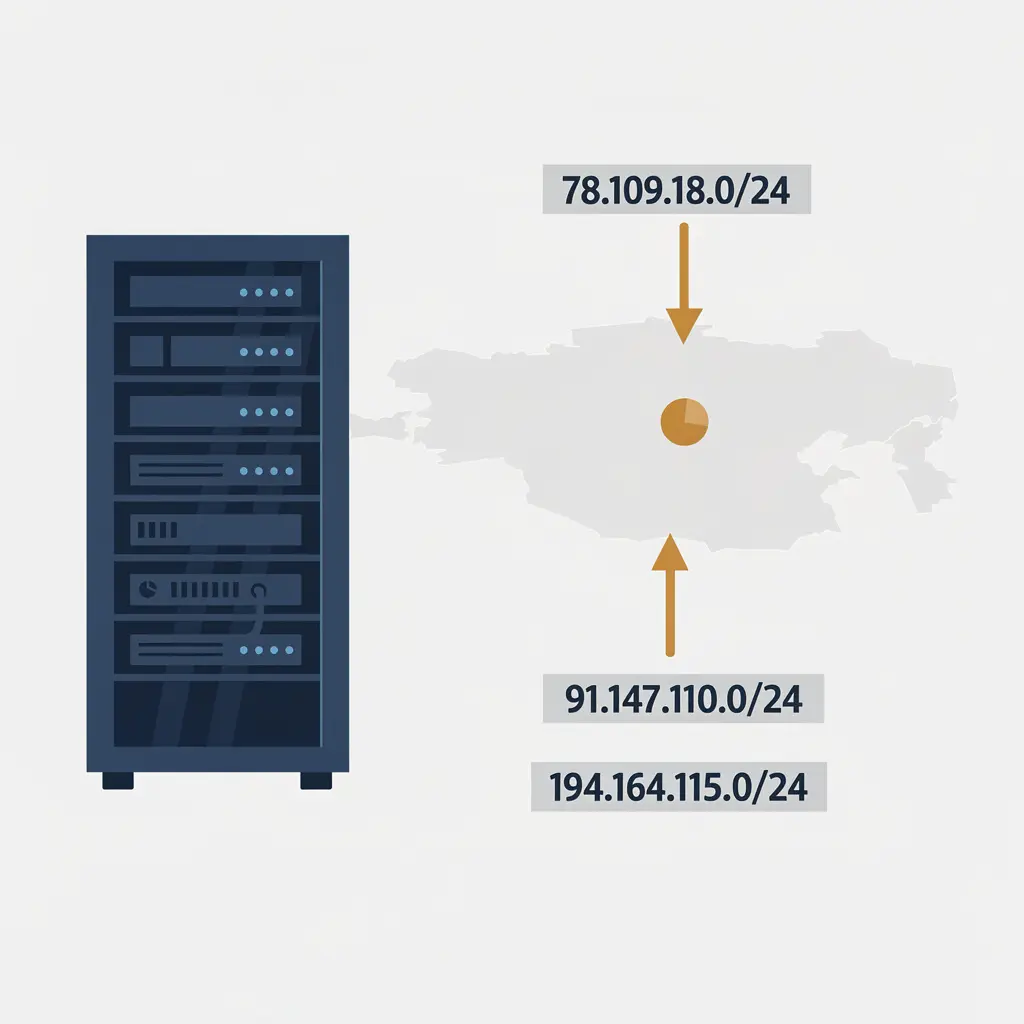
Network records, meanwhile, show CLOUD SERVERS AUSTRALIA PTY LTD associated with AS135107 and APNIC organisation ORG-CSAP1-AP.
That does not make the service fictitious. It does mean a serious buyer should separate brand, website operator, company record, business name and network registrant before relying on any legal, tax or risk conclusion. A hosting buyer needs to know which entity signs the service agreement, which entity invoices, which entity owns or controls the network resource, which entity appears on support terms and which entity is responsible if a dispute occurs. In ordinary procurement this is often treated as paperwork. In infrastructure procurement it is part of resilience.
If the legal path is unclear, escalation and accountability can become unclear at the worst possible time.
There is also a similarly named Australian infrastructure provider, Servers Australia Pty Ltd, with its own domain, ABN and public market footprint. Search results and market references can easily collapse Cloud Servers Australia and Servers Australia into one mental category, particularly because both operate in Australian hosting, cloud, dedicated server and data-centre language. This article does not read customer reviews, partner listings or service claims from that separate domain into Cloud Servers Australia.
Those materials are useful only as market context for the crowded local hosting category unless a page explicitly connects them to the Cloud Servers Australia service surface.
The boundary matters because cloud operations are full of dependency claims. A provider may use an Equinix facility without being Equinix. It may advertise Microsoft 365 or Azure competence without being Microsoft. It may use Nutanix or VMware while still being responsible for its own design choices, patching practices and customer handoff. It may have upstream carriers, peers and route objects without controlling every path a packet takes. Public routing and facility references are evidence of an operating footprint, not a blank cheque for claims about performance, redundancy, compliance or customer outcomes.
What the public service surface actually says
Cloud Servers Australia's public site presents three linked value propositions. The first is locality: Australian ownership, Australian or Australian and New Zealand server location, and support framed for Australian customers. The second is managed infrastructure: VPS hosting, dedicated hosting, cloud hosting, co-location, business internet, cloud desktop, business continuity and tailored support. The third is a relationship model: the site emphasises face-to-face contact, phone contact, online support, dedicated go-to people and personalised solutions rather than a fully self-service commodity cloud.
Those propositions are coherent for the target market. Australian SMEs and agencies often do not want to assemble an architecture from dozens of cloud services. They want a working server, a backup, a firewall rule, a stable invoice and a support contact who understands the account. Web agencies want hosting capacity that can be passed through to clients without creating a new operational mess. Regional businesses may care less about global cloud breadth and more about a local call path during a fault.
IT teams with legacy applications may need a provider that can host Windows or Linux servers, help with migration and keep enough manual support in the loop to avoid a failed cutover.
The evidence also shows where the proposition is thinner. Public pages describe resource selection, server location, backup retention, private cloud, support and migration, but they do not publish a detailed service catalogue with plan-by-plan limits, precise service-level terms, standard restore test procedures, capacity reservation rules, incident postmortems, public status history or named security certifications held by Cloud Servers Australia itself.
The FAQ says infrastructure is in Equinix data centres and names certifications associated with those data centres, but a data-centre certification is not the same thing as a certification of every managed service, support process, customer configuration or backup workflow layered above it.
That distinction is not pedantry. In hosted infrastructure, the facility is only one layer. Physical security, power and cooling may be excellent while a customer's firewall is wrong. A route may be valid while the application is misconfigured. A backup may exist while the restore procedure is untested. A support team may be available while the ticket lacks enough information for the night engineer to act safely. The provider's value is in making those layers legible to the customer and in proving that handoffs do not destroy context.
Provisioning truth
Provisioning is the first practical test. The public site describes VPS hosting across operating systems including Windows and Linux, with choices around CPU cores, RAM, storage and bandwidth. Dedicated hosting is described as isolated resources for businesses that have outgrown shared arrangements. In both cases the customer is buying a promise that the purchased resource will match the requested resource and that changes to that resource will be traceable.
For an ordinary customer workload, provisioning truth starts before the first boot. The order should make clear whether the service is VPS, dedicated server, private cloud, managed hosting, co-location, business internet or a bundled arrangement. It should identify the operating system, control panel, management scope, backup inclusion, support tier, IP allocation, data-centre location, contract term and billing unit. It should say what the customer controls and what the provider controls.
If the provider handles migration, the record should identify source systems, cutover window, DNS responsibility, rollback plan and post-migration validation. If the customer chooses a self-managed server, the record should still say where provider responsibility stops.
This is where local support can be valuable. A hyperscale cloud console will give a skilled engineer immense control, but it will not decide for an SME which ports should be open, which backup schedule matches the risk, whether old PHP code will survive a migration or whether a fixed monthly invoice matters more than elastic scaling. A local provider can convert messy requirements into a narrower, understandable server record. That conversion is labour, and it is part of the price.
The danger is that personalised service can also hide ambiguity. A phone call can solve a problem quickly, but if the final server state is not recorded in a ticket or account note, the next engineer may not know what was agreed. A custom plan can fit a workload, but if the customer cannot tell which parts are standard and which parts are bespoke, future changes become expensive. A migration can succeed once, but if it leaves no runbook, restore evidence or dependency map, it has not reduced long-term operational risk.
The buyer should therefore ask for a provisioning record, not merely a provisioned server. For each service, the record should answer five questions: what was created, where it runs, how it is reached, how it is protected and how it is recovered. Cloud Servers Australia's public material gives enough reason to ask those questions. It does not give enough public detail to assume the answers.
Network control is not the same as network certainty
The strongest technical evidence outside the company's marketing pages is the network record. Public APNIC and BGP records identify AS135107 with CLOUD SERVERS AUSTRALIA PTY LTD, country AU and APNIC-maintained objects. BGP aggregation pages show AS135107 as active, with IPv4 prefixes originated, no visible IPv6 originated in the observed summaries, upstreams including GSL Networks and Simtronic, and public peering information. PeeringDB lists Cloud Servers Australia Pty Ltd with ASN 135107 and a company website pointing to the Cloud Servers Australia domain.
That matters. A visible autonomous system is not just a brochure. It indicates that Cloud Servers Australia has a recognised routing presence in the public internet ecosystem. For customers, that can affect IP assignment, route visibility, abuse handling, upstream resilience, peering, troubleshooting and reputation management. If a website or application depends on stable public reachability, the provider's routing competence becomes part of the product.
But routing presence is not network certainty. A BGP record does not reveal every internal switch, firewall, maintenance practice, DDoS process, private cloud topology or customer segmentation method. It does not prove there is no single point of failure in a particular service. It does not prove latency to a given end-user population. It does not show how quickly a provider will respond to a route leak, blackhole, upstream failure or firewall misconfiguration. It also does not prove that every customer service sits behind the same network design. The public record establishes that there is something real to interrogate.
It does not replace interrogation.
Cloud Servers Australia's own pages claim high availability networks and no single point of failure, and its FAQ describes Layer 2 and Layer 3 connectivity options from business premises to private cloud services. Those are meaningful claims for customers with branch offices, hosted applications or private connectivity needs. They should trigger specific procurement questions. Is the customer's service dual-homed. Which upstreams are in scope. What failover has been tested. Is there a customer-visible status page. How are route changes approved. Are firewall changes peer-reviewed. Is there an emergency rollback process.
Are IP addresses portable if the customer leaves. How are abuse notices and blacklist issues handled.
For many SMEs, those questions feel too technical until the first outage. That is precisely why a local hosting provider can be useful. The provider can translate network control into a supportable customer record. Yet the customer still needs enough evidence to avoid blind dependence. A stable network service is not just built on routers. It is built on documentation, change control and the ability to explain a fault without shifting blame between provider, facility, upstream carrier, software vendor and customer.
Backup recovery is the moment of truth
Cloud Servers Australia's public home page says daily backups can be kept for up to 30 days. The broader site presents business continuity as part of the service mix. That is useful, but backup claims are often misunderstood. A backup is not the same as a recovery outcome. A backup that exists but cannot be restored within the required time is a comfort object, not a continuity plan. A backup that excludes databases, attached volumes, off-server files, mailboxes or application secrets may not protect the business process the customer actually cares about.
The operational question is simple: what can be restored, to where, by whom, how quickly and with what evidence. A VPS customer may need full server restore, file-level restore or database rollback. A dedicated server customer may need bare-metal rebuild, disk replacement or off-server replication. A migrated website may need a rollback to the pre-migration host. A business application may need consistent snapshots across application, database and storage layers. A customer using Microsoft 365 alongside private cloud may assume one backup covers both when it does not.
The support record should remove that ambiguity. It should name included backup scope, retention period, exclusions, restore request path, restore charges, expected response, encryption treatment and test cadence. If backups are optional, the invoice should make that visible. If the provider can keep daily backups for up to 30 days, the customer should know whether that is default, plan-dependent, discretionary or separately contracted. If business continuity is sold as a solution, it should come with a plain recovery design rather than a slogan.
This is not an argument against Cloud Servers Australia. It is the basic economics of hosted infrastructure. Smaller customers often buy managed hosting because they do not have staff to design backup and recovery properly. That makes the provider's backup explanation more important, not less. The provider may be able to deliver a perfectly adequate recovery process for ordinary workloads. The public evidence does not prove the process in enough detail for a buyer to skip due diligence.
Backup also links directly to labour impact. A provider that manages backups well saves customer labour during routine operations and during incidents. A provider that leaves backup scope vague creates future labour at the moment when staff are under pressure. The customer then has to reconstruct what was protected, negotiate priority, explain application dependencies and absorb downtime. The difference between those two outcomes is often not the storage technology. It is the quality of the accepted record before the incident.
Support as operating control
Cloud Servers Australia's site places heavy emphasis on support. The contact page gives phone and email paths. The support portal is public. The FAQ states sales hours and support availability, and says the company will aim to respond within one business day, with critical issues targeted within one hour. LinkedIn material associated with the brand describes weekday phone support and round-the-clock technical data-centre support through an online ticketing system. Public service pages describe face-to-face, phone and online support.
That support emphasis is commercially plausible. Local support is one of the few ways a regional provider can compete against global commodity infrastructure. The customer is not only buying CPU and RAM. It is buying a person who can interpret a failed migration, clarify an invoice, explain a firewall rule, recover a site or reassure a non-technical owner. For Australian SMEs, that may be worth more than access to a larger cloud catalogue.
Yet support should be treated as an operating control, not a feeling. Good support has intake discipline, severity definitions, authentication controls, audit trails, after-hours handoff rules and escalation authority. If a customer calls to open port 3389, reset an administrator password, restore a server, add an IP address or change a route, the provider must know who is authorised. If the request is urgent, the support team must move quickly without bypassing controls that protect the customer.
If the issue spans facility, network, server, OS and application layers, the ticket has to identify which layer the provider owns and which layer the customer or another vendor owns.
That is where many hosting relationships fail. The provider is responsive but the problem is outside scope. The customer believes support includes application troubleshooting, but the plan covers infrastructure only. The customer says a site is down, but the issue is DNS at a registrar. The provider restores a server, but the database was corrupted before the backup. The customer wants a quick firewall change, but no authorised contact is available. The support experience then becomes a negotiation over scope.
Cloud Servers Australia's public positioning makes support central enough that buyers should press for written support boundaries. What counts as critical. What evidence is needed to declare severity. What is covered after hours. Which support path is monitored continuously. What work is included in monthly fees. What work is billable. How are security-sensitive requests verified. How are completed changes documented. How are recurring problems reviewed. If the provider can answer those questions cleanly, local support becomes a real advantage.
If not, the customer may discover that support availability and support accountability are different things.
Deployment conditions that fit the provider
The service appears best suited to workloads that benefit from proximity, predictability and human support more than from hyperscale breadth. That includes small business websites, agency-hosted client sites, line-of-business servers, straightforward Windows or Linux workloads, dedicated hosting for predictable demand, private cloud for teams that want a managed virtualisation layer, and migration projects where the customer's internal staff need help.
Those deployment conditions favour a narrow provider. A customer with a stable application, limited engineering capacity and a preference for local contact may not want to learn every part of AWS, Azure, Google Cloud or DigitalOcean. A local host can package the common needs: server, storage, IP, firewall, backup and support. It can make billing less surprising if the plan is fixed and well explained. It can hold the customer's hand through migration. It can offer Australian data location as part of a broader governance story.
The provider is less obviously suited to workloads that require global multi-region architecture, complex managed databases, event streaming, large-scale object storage, advanced identity automation, container orchestration across regions, machine-learning accelerators, deep observability tooling or fine-grained infrastructure-as-code controls. Those workloads belong either with a hyperscale cloud, a specialist managed-service partner or an internal engineering team that wants direct platform control. Cloud Servers Australia's public site does not present enough evidence to treat it as a substitute for those ecosystems.
There is also a middle case: customers that could use hyperscale cloud but do not want hyperscale operations. This is where hosting economics becomes interesting. A local provider may charge more for raw compute than a self-service VPS. It may offer fewer knobs than a hyperscale cloud. But if it reduces migration errors, support labour, invoice confusion and recovery panic, the total cost can be lower for a business with limited engineering staff. The test is whether that reduction is real and durable.
Customers should model the whole operating cost. Include monthly hosting, backup, bandwidth, support, migration, after-hours work, restoration, security hardening, monitoring, software licences, control panel fees, email dependencies, domain and DNS management, and staff time. Include exit cost. A cheap server that absorbs hours of staff attention each month may be expensive. A managed service that avoids outages may be cheap. A managed service that leaves records vague may be expensive despite local support. The invoice is only one part of the unit economics.
Substitutes set the standard
Cloud Servers Australia competes with four broad substitute categories. The first is commodity VPS and cloud hosting, where buyers can obtain a low-cost virtual server from global providers and manage it themselves. The second is hyperscale cloud, where AWS, Microsoft Azure and Google Cloud offer Australian regions, deep service catalogues and extensive automation. The third is other Australian hosting and data-centre providers, including firms with stronger public review footprints or broader published service catalogues.
The fourth is owned hardware, either on-premises or in co-location, where the customer trades provider dependence for capital cost and internal labour.
Each substitute exposes a different pressure point. Commodity VPS pressures price and speed of provisioning. Hyperscale cloud pressures automation, resilience options, security tooling and ecosystem breadth. Other Australian providers pressure local support claims and facility depth. Owned hardware pressures control and predictability for teams that already have infrastructure staff. Cloud Servers Australia's defensible position is not to beat every substitute at its own game.
It is to serve customers who need a local, managed, accountable server operations relationship and who are willing to accept a narrower platform for that operating model.
The public market context makes that position harder than it once was. Global clouds have Australian regions. DigitalOcean has a Sydney region. Azure and Google publish Australian regional coverage. AWS has Sydney and Melbourne regional infrastructure. Those platforms make data residency and latency less exclusive as selling points. Locality alone is no longer enough. A local provider has to prove that support, migration, backup clarity, billing simplicity and operational interpretation are materially better for the customer.
That is why the article angle here is deliberately operational. The question is not whether Cloud Servers Australia has a menu that resembles other hosts. It does. The question is whether it can maintain dependable state across server, storage, firewall, routing and recovery tasks for ordinary customer workloads. Commodity cloud can be cheap. Hyperscale cloud can be powerful. Owned servers can be controlled. The local managed provider has to win in the handoff between a business problem and a reliable infrastructure record.
Reliability versus capability
Capability is easy to list. VPS, dedicated hosting, private cloud, Layer 2, Layer 3, Nutanix, VMware, Microsoft integration, backups, data centres, support. Reliability is harder. Reliability asks how those capabilities behave repeatedly, under pressure and during exceptions. Does a resource increase happen without downtime. Does a firewall change get recorded. Does a migration preserve file permissions and database consistency. Does a route problem get escalated to the right upstream. Does a backup restore work when the original server is unavailable. Does billing reflect the contract rather than a surprise.
The difference shows up in repeated tasks. Every hosting provider can perform a one-off manual rescue for a valued customer. The scalable question is whether ordinary tickets follow a dependable path. When ten customers ask for migrations in the same month, does the provider have a standard checklist. When after-hours support receives a storage alert, does it know which customers are affected. When a customer requests more bandwidth, does sales, engineering and billing update the same record. When a critical issue is downgraded because evidence is missing, does the customer understand why.
Repetition reveals whether the operation is a system or a collection of helpful people.
Public evidence does not show the inside of Cloud Servers Australia's operating system. That is normal for a private hosting provider. It means the buyer has to ask for demonstrations. Ask to see a sample migration plan with sensitive details removed. Ask what a restore ticket looks like. Ask how firewall approvals are recorded. Ask whether maintenance windows are notified in advance. Ask how capacity constraints are handled. Ask what happens if a primary engineer is unavailable. Ask for the difference between supported infrastructure and unsupported application work.
Reliability is also not the absence of failure. Every provider has incidents, maintenance, upstream dependency problems and customer mistakes. The question is whether failure is bounded. A bounded failure has a known owner, a known scope, a known rollback path and a known communication channel. An unbounded failure turns into a chain of guesses. The best local support provider is not the one that promises nothing will break. It is the one that makes failure smaller, clearer and faster to recover from.
Known failure modes
The main failure modes for a Cloud Servers Australia customer are not exotic. They are the ordinary ways hosted infrastructure disappoints. An instance template can be wrong, leaving the customer with the wrong operating system, package baseline, control panel or resource allocation. An IP or routing fault can make the server unreachable even when the server itself is healthy. A firewall rule can block legitimate traffic or expose management ports. A backup can miss the relevant data or fail to restore cleanly. Storage performance can degrade under contention or hardware issues.
A bill can surprise the customer because optional support, backup, bandwidth or migration work was not understood. A support delay can turn a manageable issue into an outage. Capacity can be constrained if the customer needs growth faster than the provider can allocate resources. A migration can lose data if source, sync, cutover and validation are not tightly controlled.
None of those risks is unique to this provider. They are the reason managed hosting is a serious business. Cloud Servers Australia's public claims, especially around support, private cloud, backups and local hosting, should be evaluated against those failure modes. If the provider has strong internal practice, it should be able to explain how each risk is reduced. If it cannot explain, the customer should not assume the risk disappears because the provider is local.
The most dangerous failures are cross-layer failures. A website outage may involve DNS, SSL, the web server, database storage, firewall policy, an upstream route and a customer code deployment. A cloud desktop issue may involve user credentials, network latency, server load and Microsoft licensing. A migration issue may involve old application assumptions, file paths, database encoding and external API allowlists. These failures require coordination more than raw infrastructure. The support record has to connect the layers.
That is also where customer supervision remains necessary. Managed does not mean unattended. The customer still has to keep an asset list, name authorised contacts, classify critical systems, approve maintenance, define recovery priorities, test restore assumptions and monitor application health. The provider can reduce the customer's work, but it cannot remove the customer's responsibility to know which workload matters. Australian cyber guidance on cloud responsibility is clear in spirit: security and resilience are shared. Buyers should apply that principle to operations as well.
Data residency and compliance need precision
The public site leans on Australian-based hosting and data sovereignty. For many buyers, that is a real concern. Privacy, contractual obligations, industry rules, customer expectations and latency can all make local hosting attractive. Public legal and regulatory context supports the idea that cross-border disclosure, security of personal information and service-provider resilience are serious issues for Australian organisations.
But data residency language can become sloppy. Keeping data in Australia may reduce some risks, but it does not automatically satisfy privacy, cyber-security, financial-sector or customer-contract obligations. The Australian Privacy Principles focus on the handling, disclosure and security of personal information. Operational risk rules for regulated financial entities focus on resilience, material service providers and continuity. Cyber guidance emphasises shared responsibility. None of those frameworks says that an Australian server location is enough by itself.
The practical procurement question is narrower. Where is the data stored at rest. Where are backups stored. Who can access management systems. Are support staff in Australia. Are any monitoring, ticketing, backup, security or billing tools hosted overseas. Are logs or diagnostics sent to third parties. What encryption is used. What happens during legal requests. What facility certifications apply, and which provider-level controls sit above the facility. What evidence can the customer keep for its own auditors or customers.
Cloud Servers Australia's FAQ references Equinix data centres and associated certifications. Equinix publishes Australian data-centre compliance information. That helps frame the facility layer. It does not answer every question about the service layer. The buyer should distinguish facility assurance, network assurance, host assurance, operating system assurance, application assurance and support-process assurance. Those are different layers, and a gap at any layer can matter.
Customer and market evidence
Cloud Servers Australia's own pages include named testimonials and logos, and its LinkedIn page describes customer retention, support hours and technical ticket coverage. Those are market signals, not audited proof. They suggest that the company has served business customers and wants to compete on responsiveness. They do not establish customer count, revenue, churn, uptime or service consistency across the installed base.
Independent market evidence is thinner for Cloud Servers Australia than for some larger Australian hosting providers. Search results surface more public review material for the similarly named Servers Australia than for Cloud Servers Australia itself. That should not be held against Cloud Servers Australia as proof of weakness, but it does limit what can be claimed. The absence of a large public review trail can mean a smaller customer base, a less review-driven market, older private relationships or simply low public visibility. It cannot be converted into a quality score.
For a buyer, the right response is to request relevant references or anonymised case patterns, not to rely on generic web sentiment. If the workload is a migrated Windows application, ask for a similar migration pattern. If the workload is agency web hosting, ask how multi-client support is handled. If the need is dedicated hosting, ask about hardware replacement, remote hands and spare capacity. If the need is disaster recovery, ask for restore examples and test cadence. The reference should match the operating risk.
Market context also shows why the buying decision is not purely technical. Local hosting buyers often value trust, voice contact and continuity. The customer may want to speak to the same people. That can be rational. But relationship value should still be written down. The best support relationship is one that produces records, not one that depends on memory.
Billing clarity and exit cost
Billing is a reliability issue. Cloud Servers Australia's public service mix includes many components that can be billed separately: compute, storage, bandwidth, backups, licensing, control panels, support, migration, connectivity, co-location and project work. The customer should know which parts are fixed, variable, included, optional or hourly. A support relationship can feel good until a surprise invoice arrives after a migration or incident.
Local providers can beat hyperscale cloud on billing legibility if they package services well. A fixed monthly server with included support and backup can be easier for an SME than cloud usage meters, egress charges, snapshots, managed services and marketplace licences. But fixed pricing can also hide constraints. The customer needs to know what happens when storage grows, bandwidth spikes, support load increases or a project falls outside standard scope.
Exit cost belongs in the same conversation. Can the customer export backups. Are VM images portable. How are IP addresses handled. What notice is required. Are there migration-out charges. Are DNS, domains or licences controlled by the customer or provider. Does the contract allow access to data during a billing dispute. These questions are uncomfortable at the start of a relationship but cheaper than asking during a breakdown.
The unit economics of Cloud Servers Australia therefore depend on supervision cost. If the provider supplies strong records, clear bills, tested backups and responsive support, it can justify a premium over commodity VPS. If the customer has to supervise every change, chase documentation and re-check backup scope, the local-provider premium loses force. The economic value is not in being local alone. It is in reducing the customer's operational burden without hiding risk.
What a buyer should ask
A serious buyer should ask Cloud Servers Australia for a plain operations pack before moving a critical workload. That pack should identify the contracting entity, ABN, service terms, support scope, escalation path and authorised-contact procedure. It should describe the server type, data-centre location, resource allocation, network design, IP treatment, firewall management, backup scope, retention, restore process, monitoring, maintenance notification, billing model and exit process. For migrations, it should include a cutover plan, validation checklist and rollback path.
The buyer should also ask for proof that repeated tasks are handled consistently. Show how a firewall change is requested and approved. Show how a restore is initiated. Show how a server resize is billed. Show how after-hours support verifies authority. Show how an incident is communicated. Show how a customer can see current services and tickets. Show how a migration closes with evidence that the source and destination match. A provider that wants to win on support should welcome those questions.
The questions should be proportionate. A five-page website does not need the same governance as a regulated financial platform. But every workload needs a minimum operating record. Even a small site needs to know who controls DNS, where backups live and how restore works. Even a basic VPS needs patch responsibility and firewall clarity. Even a simple dedicated server needs hardware replacement terms. The level of formality changes, but the need for a record does not.
The narrow verdict
Cloud Servers Australia appears to be a real Australian hosting and server-services operation with a public service site, support portal, business-name trail, company-record trail and visible routing footprint. Its public materials point to the right operating themes for its likely customers: local hosting, VPS and dedicated servers, private cloud, migration help, support, Australian data location, backups and network services. The offer makes sense for SMEs, agencies, developers and IT teams that value a local relationship and want fewer moving parts than a hyperscale cloud program.
The unresolved question is not whether the company can host servers. It is whether its operations create enough evidence for dependable customer outcomes. Public materials do not prove restore performance, uptime history, staffing depth, capacity management, exact service-level commitments, detailed security controls or the legal contracting path. The identity boundary between the Pty Ltd record, the CSAU trust website operator and similarly named market players needs explicit confirmation before procurement. That is not a reason to dismiss the provider. It is a reason to buy carefully.
The best case for Cloud Servers Australia is pragmatic. A customer with ordinary Australian workloads may get more value from a provider that answers the phone, understands the migration and keeps a clear server record than from a cheaper self-service instance. The worst case is also pragmatic. If the records are loose, local support becomes another dependency to supervise, and the customer pays a premium without reducing risk.
For this company, the hosting menu is not the story. The story is the handoff. If a server change, route change, firewall change, migration or recovery request enters the service and leaves behind a precise accepted record, Cloud Servers Australia has a defensible role. If that record is incomplete, the customer is left with a familiar cloud problem in local clothing: infrastructure that works until the day everyone needs to know exactly what was promised, what changed and who owns the next action.