
Summary
- Bentley-Walker Limited is an active UK private company, a RIPE NCC Local Internet Registry and the resource-holder behind a small public IPv4 allocation, but its latest public accounts do not disclose revenue, gross margin, customer count, churn or segment profitability. That makes the economic question less about whether the company has telecom credentials and more about whether those credentials create pricing power.
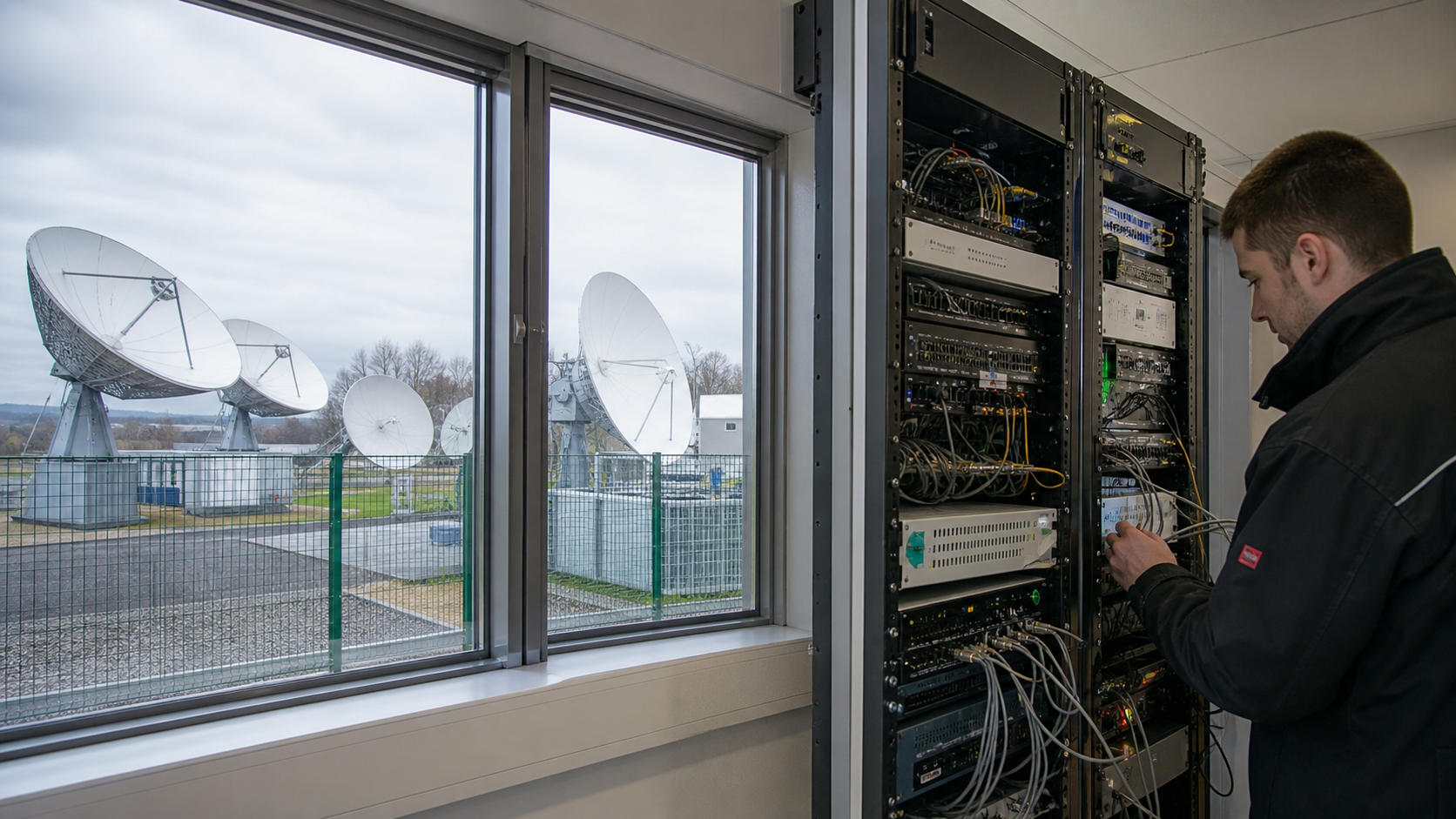
- The strongest public evidence points to a family-controlled telecom group whose current customer-facing activity is presented mainly through Bentley Telecom and Freedomsat: full fibre, digital voice, business failover, managed hardware, 4G and satellite connectivity. The margin risk is that these are valuable services, but many are assembled from wholesale access, third-party equipment, mobile networks or satellite capacity rather than owned infrastructure at cloud or carrier scale.
Management's real problem is staying useful below cloud scale
The first economic question for Bentley-Walker Limited is not whether a small telecom company can describe itself as experienced. It can. The current Bentley Telecom website says the business has more than 25 years of experience, began by connecting customers worldwide with satellite internet, and is now applying that experience to full fibre. Freedomsat pages connected from the Bentley Telecom site still market satellite broadband, 4G broadband and rural connectivity.
The RIPE database separately records Bentley-Walker Limited as a Local Internet Registry with the description "Freedomsat." Those facts put the company in a recognisable niche: a specialist connectivity operator with roots in satellite broadband and a current retail proposition around fibre, voice, failover and support.
The problem is that experience does not automatically become economic rent. In connectivity markets, the customer pays for working service, not for heritage. A household comparing full fibre offers can move between brands on speed, price, installation friction and support confidence. A small business comparing broadband, voice and failover wants continuity for card machines, cloud software, phones and remote access. A remote-site customer wants a line that works even when fibre, cellular or local exchange infrastructure is unavailable.
Those are real needs, but they are also needs that large incumbents, altnets, mobile networks, satellite operators and managed-service resellers can all address in different ways.
That is why the incentive for Bentley-Walker is specific. Management has to turn a below-scale position into a reason customers stay. The company cannot win by outspending national fibre builders. It cannot create a global cloud backbone. It cannot rely on RIPE membership alone as proof of operating depth. The relevant test is narrower: can the group identify demand pockets where customers prefer a specialist with practical continuity experience, then serve those pockets at a margin that survives wholesale costs, support costs, hardware costs and supplier price changes?
The current public proposition suggests an answer, but not a complete one. Bentley Telecom advertises full-fibre broadband up to 2.5 Gbps, fixed contract pricing, public IP availability, UK-based support, one-touch switching and a TP-Link Wi-Fi 6 router. Its business pages emphasize proactive monitoring, automatic failover using cellular or satellite backup, digital voice migration and managed network hardware. Freedomsat pages emphasize 4G broadband for home and business users, satellite broadband where fibre or 4G are unavailable, static IP options for business GEO satellite services, priority data and remote-site use cases.
These are sensible propositions for customers who value continuity and support more than the lowest headline price.
But the source of value is still uncertain. If customers buy only commodity fibre access and can switch easily to a larger provider, Bentley-Walker becomes an infrastructure price-taker. If customers buy a managed continuity bundle because downtime costs more than a monthly access premium, the group may earn a support-and-integration margin. The public evidence points to the second strategy, but it does not prove the second outcome.
The legal entity is a resource holder, while the retail face sits across a sibling company
The public boundary matters because the assigned company is Bentley-Walker Limited, not simply the Bentley Telecom brand. Companies House records Bentley-Walker Limited as company number 00403127, incorporated on 15 January 1946, active, private and registered at 116 Elm Grove, Hayling Island. RIPE records the same registration number and the same broad address context for ORG-BL124-RIPE, naming Bentley-Walker Limited as an LIR. Those records anchor Bentley-Walker as a real legal and resource-holder entity.
The customer-facing website, however, is more complicated. The old bentley-walker.com domain resolves to bentleytelecom.com. The Bentley Telecom footer and terms refer to Bentley Telecom Ltd or Bentley Telecom Limited, with company number 04080726, also registered at 116 Elm Grove, Hayling Island. Companies House records Bentley Telecom Limited as active, incorporated on 29 September 2000. The two companies therefore share address context and overlapping personnel, but they are not the same legal company. That distinction is not a legal technicality for an economic article.
It determines where contracts, assets, liabilities and operating obligations may sit.
The overlap is still meaningful. Companies House officer pages show Matthew Anthony Walker and Stephen John Murphy as active officers in both Bentley-Walker Limited and Bentley Telecom Limited, with Matthew Walker also appearing as secretary in both. Bentley-Walker persons-with-significant-control records show Matthew Anthony Walker as an active person with significant control, with more than 25 percent but not more than 50 percent of shares and voting rights. Bentley Telecom filings show related Walker control changes and the same office address.
This looks less like an unrelated brand redirect and more like a family-controlled telecom group with several legal containers.
For readers, the practical boundary is this: Bentley-Walker is the RIPE member and resource-holder entity, while the current public service contract language appears to sit mainly under Bentley Telecom Limited. That does not make the operating story irrelevant to Bentley-Walker. The group identity, Freedomsat descriptor, shared address, shared officers and website redirection connect the evidence. But it does mean public filings for Bentley-Walker alone may understate or misplace the operating economics of the customer-facing business.
This boundary creates two opposite risks. One is understatement: Bentley-Walker might hold resource, historic relationships or group obligations while the operating cash flow sits in Bentley Telecom. If so, looking only at Bentley-Walker accounts could make the business look weaker than the trading operation. The other is overstatement: if Bentley Telecom is the contracting ISP and Bentley-Walker is mainly the resource-holder, then RIPE status should not be read as proof that Bentley-Walker itself owns the customer base, the network equipment or the retail margin.
The safest interpretation is to treat Bentley-Walker as part of a small telecom group, but to separate resource-holder evidence from customer-contract evidence.
That separation strengthens the article's core question. The economic issue is not whether the name is real. It is. The issue is whether the resource-holder footprint and group operating propositions create defensible value, or whether they are administrative infrastructure around a retail model that remains exposed to larger access networks and satellite platforms.
The service proposition is practical continuity, not a proprietary network moat
The current Bentley Telecom site does not read like a carrier selling a national access network. It reads like a specialist ISP and managed-connectivity provider trying to own the customer relationship above multiple access technologies. The homepage leads with full-fibre speeds up to 2.5 Gbps, one-touch switching, a claimed 4.8 Trustpilot rating, digital voice, fixed contract pricing, public IP availability, UK-based support and full-fibre service. The FAQ says full-fibre packages include a dual-band Wi-Fi 6 TP-Link router configured before shipping and that installation material comes from CityFibre.
That is a service-and-support proposition, not a claim to own all underlying infrastructure.
The business pages make the same point more explicitly. Business Broadband is framed around professional connectivity, proactive management, transparent VAT-exclusive pricing and migration away from legacy copper lines. Business Continuity says a primary fibre interruption can be backed up by a dedicated cellular or satellite-based broadband connection, with automatic switching and later restoration. Business Voice describes cloud-based phone service, number migration, hunt groups, IVR, hybrid work support and preconfigured VoIP hardware.
Managed Hardware and Support says engineers use enterprise-grade cloud management software to monitor network health, identify sync issues, remotely intervene, update firmware and manage Wi-Fi performance.
Those are valuable claims if delivered well. They also reveal the business model. The company is selling integration, configuration, monitoring, continuity and support around access inputs that customers could often obtain separately. A household could buy fibre from a national provider. A business could buy a cellular backup router, Starlink terminal or managed firewall from another reseller. A rural customer could buy satellite directly.
The economic case for Bentley-Walker and the wider group is that customers do not want to assemble and manage those pieces themselves, and will pay a specialist to reduce downtime, migration risk and support friction.
That is a plausible SME service-continuity model. It is also labour-sensitive. Proactive monitoring, direct technical access and zero-touch deployment sound attractive because they substitute know-how for customer time. But know-how has to be staffed. It requires technicians who can answer, configure, troubleshoot, replace equipment, coordinate with wholesalers and interpret failures across fibre, Wi-Fi, cellular, satellite and voice. If the group has enough customers per technician and enough automation, support can be a margin enhancer.
If each customer exception consumes manual intervention, support becomes the cost centre that consumes the premium.
The website's wording shows management understands this. The business proposition repeatedly describes downtime as lost revenue, emphasizes card machines and VoIP lines, and sells automatic failover as a revenue-protection service. This is the right economic framing because it asks what the customer loses when the connection fails. A cheap broadband line is enough for a low-stakes household. It is not enough for an SME that cannot process payments, answer calls, reach cloud accounting or run a remote site.
Bentley's strongest demand pocket is therefore not generic speed; it is the gap between consumer broadband and enterprise-grade managed connectivity.
The risk is that the company has not publicly shown how many customers occupy that gap, how long contracts last, what average revenue per user looks like, how much support time each customer consumes, or how often failover converts from feature to paid need. The service proposition makes strategic sense. The public accounts do not yet prove that it earns attractive returns.
RIPE evidence shows resource competence, not current routing leverage
The network-resource evidence is real but modest. RIPE records Bentley-Walker Limited as ORG-BL124-RIPE, an LIR in the United Kingdom, with company registration number 00403127 and the descriptor Freedomsat. RIPE also records an IPv4 inetnum, 164.215.107.0 to 164.215.107.255, netname Bentley-Walker, country GB, status LIR-PARTITIONED PA. The record was created in June 2013 and last modified in March 2019. Administrative and route maintenance fields include named RIPE contacts and maintainers.
That is enough to say Bentley-Walker has participated in the RIPE resource system and held address resources associated with its own name. It is not enough to say it operates a currently visible independent autonomous system or a large routed network. RIPEstat routing-status data for 164.215.107.0/24 shows the prefix was first observed with origin AS198381 on 27 June 2013 and last observed on 13 February 2020. At the query time, RIPEstat showed zero RIS peers seeing the prefix and no current origins.
Separately, AS198381 is recorded by RIPE as ES1, held by Star Satellite Communications Company - PJSC, and RIPEstat showed AS198381 as currently announced with many other prefixes. In other words, the historical route origin was a separate satellite communications operator, not Bentley-Walker itself.
That distinction is central. A small LIR allocation can support customer addressing, static IP offerings, historical satellite service, internal infrastructure or delegated services. It can also become dormant or routed through partners. It does not by itself demonstrate peering depth, transit bargaining power, backbone control or cloud-scale unit economics. Bentley-Walker's prefix history points more to resource-holder competence and partner-routed satellite-era operations than to present independent routing leverage.
The current terms reinforce this narrower reading. Bentley Telecom's standard terms say that if a customer requests an IP assignment of eight or more real IP addresses, the company may add the customer's contact details to the RIPE database. That clause makes sense for an ISP with address-management responsibilities. It is an operational detail that many pure resellers would not foreground. It suggests the group still sees public addressing as part of the service set. But it again stops short of proving that resource status drives a margin premium.
The economic value of scarce IPv4 is also easy to overstate. IPv4 addresses have market value, and a provider that can assign static public addresses can solve specific customer needs: VPNs, remote access, point-of-sale systems, cameras, servers, whitelisting and business continuity. But a single /24-scale allocation is not a strategic moat if competitors can supply static IPs through their own networks, wholesale arrangements or cloud VPN alternatives. The address resource can improve service completeness. It does not guarantee pricing power.
The best conclusion is balanced: Bentley-Walker's RIPE footprint gives the group credibility in number-resource administration and supports the technical plausibility of static-IP and managed-connectivity services. But the routing evidence does not show current independent scale. Below cloud scale, resource competence has to be monetised through specific customer problems, not admired as an asset in isolation.
The accounts make margin opacity the central fact
The latest public accounts for Bentley-Walker Limited are the sharpest evidence in the file because they do not let the reader hide behind branding. The 2025 Companies House filing is for the year ended 30 September 2025. It is unaudited, prepared under the small companies regime, and the directors elected not to include a profit and loss account. The filing explicitly provides no description of principal activity in the hidden iXBRL field. It records average monthly employees, including directors, of seven in 2025 versus nine in 2024.
The balance sheet is small and strained. Tangible fixed assets were GBP 3,699 in 2025, down from GBP 4,932 in 2024. Current assets were GBP 110,240, including GBP 84,170 of stock, GBP 20,865 of debtors and GBP 5,205 of cash. Creditors due within one year were GBP 32,508. More important, creditors due after more than one year were GBP 437,825, all described as amounts owed to group undertakings and undertakings in which the company has a participating interest. Net liabilities were GBP 356,394, compared with GBP 245,156 a year earlier.
The going-concern note says the accounts are prepared on the understanding that directors will continue to financially support the company for at least twelve months from signing.
Those figures do not prove commercial failure. They also do not prove operating value. They show that the assigned legal entity is not publicly presenting itself as a cash-rich, asset-heavy infrastructure owner. Its tangible asset base is tiny. Its cash balance is small. Its net liability position worsened. Its balance sheet relies on long-term group support. Because the profit and loss account is omitted, the reader cannot see revenue, gross margin, operating profit, interest, depreciation, support payroll, customer acquisition cost or churn.
The sister-company accounts change the group picture but not the uncertainty. Bentley Telecom Limited's 2025 accounts show much larger tangible assets of GBP 1,248,233, current assets of GBP 3,696,123, cash of GBP 2,649,881, creditors due within one year of GBP 1,486,336, creditors due after more than one year of GBP 197,978, provisions of GBP 217,410 and net assets of GBP 3,042,632. It had average monthly employees of 13, up from 11. It also had an outstanding Lloyds Bank PLC charge registered in October 2024.
Those figures point to a more substantial operating company, but they are not Bentley-Walker Limited's accounts and they still omit the profit and loss account.
The result is a two-layer accounting story. Bentley-Walker, the RIPE member, looks balance-sheet weak and dependent on related-party support. Bentley Telecom, the public service-contract company, looks larger and more asset-backed but still opaque on revenue and margin. For valuation or strategic judgment, that is not a minor disclosure inconvenience. It is the central fact. Without customer count, recurring revenue, gross margin, renewal rates and segment contribution, the only defensible conclusion is conditional.
The conditional conclusion is this: the group may have a viable specialist connectivity business, but the public record does not prove that Bentley-Walker Limited itself captures the economics. The value case would strengthen materially if management disclosed recurring revenue, business versus consumer mix, churn, average revenue per connection, gross margin after wholesale access and support cost, and the amount of revenue attached to failover or managed-service bundles rather than plain access resale.
The cost base sits in people, hardware, wholesale inputs and working capital
Below-scale telecom economics are unforgiving because fixed complexity arrives before fixed scale. Even a small provider must maintain ordering, billing, support, routers, number migration, fault handling, data protection, complaints, accessibility policies, emergency calling obligations, supplier relationships and customer communication. The public service pages show those functions clearly. Bentley Telecom says its accounts and sales teams operate Monday to Friday, technical support has its own line and email, customers can use a portal, and preventive and corrective maintenance is part of the operating model.
Business pages promise proactive monitoring and remote intervention. Those commitments create differentiation only if they are actually staffed and systematised.
Hardware is another cost centre. The homepage says full-fibre packages include a Wi-Fi 6 TP-Link router configured before shipping. Managed Hardware and Support says supplied equipment is preconfigured through cloud management software. Terms say equipment remains the property of Bentley Telecom or its suppliers unless sold and paid for, and customers may be charged if they fail to return it. That implies capital tied up in routers, replacement stock, shipping, provisioning and recovery. In the Bentley-Walker balance sheet, stock was GBP 84,170 against GBP 110,240 of current assets.
In the Bentley Telecom balance sheet, stock was GBP 142,955, down from GBP 419,370, while tangible fixed assets still exceeded GBP 1.2 million. Hardware and inventory are not peripheral in this model.
Wholesale access is the larger but less visible cost. The full-fibre proposition references CityFibre installation material, while the terms include annual price-change mechanics tied to the company's supplier BT. The business continuity proposition relies on cellular or satellite backup. Freedomsat 4G broadband uses mobile masts and depends on strong 4G coverage. Satellite broadband depends on dish, modem and network operations infrastructure beyond the customer's local wireline network. None of that means Bentley is weak; using wholesale and partner networks is normal for many ISPs.
But it means the company bears supplier cost exposure without necessarily controlling the underlying capacity, coverage or repair cycle.
The terms make this downside explicit. They say third-party network or service providers used by Bentley Telecom may suspend or terminate their connection for commercial, technical or other reasons, and that such suspension or termination is not a breach by Bentley Telecom. They also say broadband activation dates are estimates, that third-party work can affect timing, and that services are provided without a guarantee of uninterrupted error-free availability. This is sensible legal drafting. Economically, it shows the downside chain.
Customers look to the retail provider when service fails, while the retail provider may be dependent on third-party access networks, mobile coverage, satellite capacity, equipment vendors and field installation schedules.
Working capital is the final pressure point. Monthly billing in advance helps cash flow, but small providers still finance equipment, installation administration, support, supplier payment timing and bad debt. Bentley-Walker's 2025 accounts show GBP 20,466 of trade debtors, GBP 22,169 of trade creditors and GBP 437,825 owed to group undertakings after more than one year. Bentley Telecom's accounts show much larger trade creditors of GBP 1,151,858 and cash of GBP 2,649,881.
The public record does not reveal whether supplier credit terms are favourable, whether customer prepayments fund hardware, or whether group support absorbs losses in legacy activities.
That is why the margin risk sits below the surface. A small provider can look asset-light and still be operationally demanding. It can promise expert support and still struggle if every support promise requires skilled labour. It can market failover and static IPs, yet remain exposed to wholesale price increases, customer acquisition costs and supplier outages. Scale does not have to be global to work, but there must be enough repeatable demand per operational unit.
Supplier dependence shifts the downside into service design
Bentley-Walker's most persuasive strategic answer to supplier dependence is not to pretend it owns everything. It is to design around failure. Business Continuity says the company equips customer networks with a dedicated cellular or satellite-based broadband backup, switches traffic automatically when the fibre line loses synchronisation, keeps IP phones and card machines active, and alerts the technical team when a site moves to backup. That proposition directly addresses the weakness of relying on one third-party network.
The product is economically interesting because it converts supplier fragility into a paid feature. A business that cannot process card payments during a local fibre cut may care less about who owns the access line and more about whether someone has designed a working backup path. In that scenario, Bentley's margin is not just the spread between wholesale fibre and retail broadband price. It is the value of continuity design, router configuration, monitoring, support and customer trust. If that value is high enough, supplier dependence can be managed rather than fatal.
But the design is not free. A redundant cellular or satellite path brings its own supplier exposure. 4G and 5G backup depends on mobile coverage, congestion, antenna placement and commercial terms from mobile network providers. GEO satellite backup depends on dish installation, weather resilience, latency, capacity policies and satellite operator pricing. LEO satellite substitutes such as Starlink may offer lower latency and direct customer purchase options, while also creating a rival path around traditional satellite resellers.
Failover is valuable precisely because infrastructure fails; it is also expensive precisely because the provider must manage more than one infrastructure layer.
Freedomsat's satellite pages show the legacy logic. Satellite broadband is marketed for areas where traditional broadband options such as fibre or 4G are unavailable, and as an independent redundant connection because it does not depend on local communications infrastructure. The business satellite page emphasizes static IPs, multi-site management, priority data, PAYG disaster recovery, renewable-energy telemetry and rural business operations. These are coherent use cases. They are also niche use cases. The customer must need independence enough to tolerate satellite economics, installation and performance trade-offs.
The current full-fibre market changes the calculus. As fibre coverage expands, satellite becomes less compelling as a primary connection for ordinary premises. That does not kill satellite; it shifts it toward backup, remote sites, resilience, energy, rural estates, temporary locations and customers outside terrestrial coverage. For Bentley, that means satellite heritage is still useful but no longer enough. The company has to attach satellite know-how to the broader managed-continuity bundle.
Supplier dependence therefore creates a strategy test. If Bentley sells only access, its suppliers own too much of the value. If Bentley sells operational assurance across suppliers, it may own the customer problem. The public website has moved toward the second story. The public accounts do not yet show whether the second story has enough scale.
Customer durability depends on continuity, support and migration moments
The strongest customer-retention moments for the group are not generic. They are moments when switching risk, service failure or technical complexity matters. The homepage highlights One Touch Switch and says the team coordinates directly with the current provider to avoid interruption. Digital Voice pages say customers can keep their existing phone number through porting and should not cancel the old service before migration. Business Voice says established numbers are a vital asset and that the company manages migration. These are moments when a customer may value competence more than a small price difference.
The UK's copper and analogue voice transition adds another demand pocket. GOV.UK guidance says communications providers are replacing analogue fixed telephone networks, including PSTN and ISDN, with digital voice services using an internet connection, and most customers are expected to have switched by the end of January 2027. The guidance warns businesses to consider devices connected to phone lines, including lift alarms, burglar alarms and card payment systems, and highlights resilience and power-backup issues.
Bentley's business voice and continuity pages map directly onto that problem set: VoIP migration, card-machine continuity, cloud access and digital phone resilience.
That does not guarantee durable revenue, but it gives the company a reason to call customers. A small provider with legacy satellite and telecom experience can approach SMEs that have old lines, remote sites, payment terminals, alarms, rural locations or support dissatisfaction. The sales message is not merely "buy faster broadband." It is "do not let the migration break your phones, payments or cloud software." That is a more valuable conversation.
Customer durability also depends on support. Bentley Telecom's code of practice emphasizes customer-first support, contact lines for sales, accounts and technical support, monthly billing, a customer portal, complaints handling and special needs. The homepage says the company advertises a 4.8 Trustpilot rating. Because direct Trustpilot verification was not available from the public page access used for this research, that rating should be treated as company-presented market evidence, not an independently audited satisfaction metric. Still, the fact that the company foregrounds support is economically relevant.
Support is one of the few levers a small ISP can use against large providers whose call-centre experience frustrates customers.
The trade-off is that support-led durability is fragile if the cost to serve rises faster than the premium. A business customer may be loyal after a good migration or a saved outage. The same customer may churn if support is slow, if failover fails, or if a national provider offers comparable managed backup at lower cost. Consumer customers may appreciate UK-based support but still compare broadband prices aggressively once the line is working. The One Touch Switch regime also lowers friction for future switching, not only for switching into Bentley.
The key undisclosed evidence is contract durability. We do not know the proportion of customers on minimum terms, the renewal rate after minimum terms end, how many business continuity customers maintain backup subscriptions, how often digital voice customers add broadband or failover, or whether static IP and managed hardware create sticky bundles. Those facts determine whether customer support is an asset or a cost. Publicly, the company has a plausible retention mechanism. It has not disclosed retention proof.
Competition is a ladder of substitutes, not one rival
Bentley-Walker and its group do not face one obvious competitor. They face a ladder of substitutes at different levels of customer sophistication. At the lowest rung, a household can buy mass-market broadband from BT, Virgin Media O2, Sky, Vodafone, TalkTalk or an altnet-backed ISP. Virgin Media's public broadband page, for example, markets M125, M250, M350, M500 and Gig1 tiers, 99.86 percent network reliability, zero mandatory setup fees on many packages and social tariffs from GBP 12.50 per month. That is the kind of scale marketing a small provider must compete against.
At the next rung, customers can buy fibre access through specialist ISPs that also use wholesale networks. Some will compete on service, some on static IPs, some on transparency, some on business support. Bentley can compete here if its support and continuity bundle is credible. But if the customer's need is simply a fast fibre line, the margin is exposed to price comparison and wholesale cost.
At the third rung, SMEs can buy managed IT or telecoms support from local IT firms, MSPs or voice specialists. Those firms may not be ISPs, but they can bundle broadband procurement, VoIP, routers, mobile backup and support. Bentley's advantage is that it presents itself as an ISP with telecom history, not a generic IT reseller. Its disadvantage is that many MSPs already own the local business relationship and can source connectivity from multiple carriers.
At the fourth rung, remote and backup customers can buy satellite or cellular connectivity directly. Freedomsat remains a satellite and 4G brand within the Bentley orbit, but LEO services have changed customer expectations for remote connectivity. Industry reporting on Starlink's continuing deployment pace shows LEO satellite as a live substitute for traditional satellite broadband in many remote and mobile use cases, with lower-latency positioning and direct-to-customer simplicity.
GEO satellite still has roles in static IP, business continuity, PAYG disaster recovery and coverage, but it is no longer the only visible option for remote broadband.
At the fifth rung, enterprise customers can buy direct from national carriers, SD-WAN providers, managed network operators and cloud-security platforms. That is probably not Bentley's main volume market, but it matters because enterprise-grade features keep moving down-market. Once large providers package backup, routers, managed Wi-Fi and voice migration for SMEs, small specialists must either be more responsive, more local, more flexible or cheaper to serve.
This ladder explains the title's "below cloud scale" risk. Cloud-scale and carrier-scale operators do not need to win every niche to compress margins. They only need to make standard connectivity cheap and reliable enough that fewer customers pay specialists for exceptional support. Bentley's defensible demand is therefore in non-standard sites, migration moments, continuity-sensitive SMEs and customers who want one accountable party across fibre, voice, cellular and satellite. The risk is that this niche is narrower than the public service menu suggests.
Satellite heritage helps where terrestrial networks still fail
The legacy satellite identity is not obsolete; it is narrower. RIPE records Bentley-Walker with the Freedomsat descriptor. Freedomsat says satellite broadband is ideal where traditional options such as 4G or fibre are not readily available, and that it can be an independent redundant internet connection if fibre or 4G fails. The satellite technical explainer says an installation includes a dish, cables and satellite modem operating independently of local telecommunications infrastructure.
The business satellite page positions GEO satellite for businesses beyond local exchanges, with static IPs, PAYG disaster recovery, multi-site management, priority data and remote green-energy telemetry.
Those facts matter because not every customer sits in a city fibre footprint with strong mobile coverage. Rural business sites, renewable-energy assets, farms, estates, temporary sites, remote home offices and resilience-focused SMEs may still value satellite knowledge. The business continuity page's claim that backup can be cellular or satellite-based shows how satellite moves from primary access into insurance. A fibre line can be fast and cheap; an independent satellite path can be valuable when a local cable strike, power issue or exchange problem takes out terrestrial service.
The economics, however, shift from volume access to targeted resilience. In the early satellite broadband era, satellite could be the only way to connect certain customers. As full fibre, fixed wireless, 4G, 5G and LEO satellite expand, customers have more substitutes. Traditional GEO satellite still offers coverage and static-IP options, but it has to justify latency, installation and data-policy trade-offs. LEO satellite offers a different performance profile and direct-purchase model. Mobile broadband offers easy deployment where coverage is strong. Fibre remains the default where available.
This makes the satellite heritage valuable as credibility rather than as a standalone moat. A provider that understands dishes, modems, priority data, static IPs, backup and rural faults can design better continuity packages. It can talk to customers whose needs are messier than "one fibre line to one house." It can support customers moving from satellite to fibre without treating the old service as a stranded problem. The Freedomsat technical page even says customers receiving a fibre rollout can switch subscription to fibre broadband with no penalty, a useful retention bridge if the same group can serve both stages.
But the heritage can also distract. If management clings to satellite identity after terrestrial substitution improves, it may support legacy products with declining relevance. If it uses satellite experience to build resilient managed connectivity, it may keep the part of the capability customers still pay for. The public website suggests the second move is underway. The revenue and margin proof is still missing.
Regulation raises standards and narrows the room for small-provider mistakes
The regulatory backdrop creates both opportunity and risk. The opportunity is migration. GOV.UK guidance on analogue-to-digital landlines says the industry expects most customers to move by January 2027, and businesses should consider phone-connected devices such as lift alarms, burglar alarms and payment terminals. That is exactly the kind of messy, support-heavy transition a specialist can monetise. Bentley's digital voice, business voice and continuity pages are well aligned with that market need.
The risk is compliance and customer protection. Digital voice is not just another app. GOV.UK notes that digital landlines cannot carry power from the exchange in the way analogue lines can, and that handsets and routers need power at the premises. Ofcom guidance requires providers to ensure uninterrupted access to emergency organisations, including during power cuts, and to have at least one solution that enables access for a minimum of one hour for at-risk customers who depend on landlines. The customer-facing provider must identify vulnerabilities, communicate clearly and support resilience.
For a small provider, these obligations add process cost.
Price regulation also affects the model. Public reporting on Ofcom's January 2025 rules says telecom providers must state future in-contract price rises upfront in pounds and pence, prominently and transparently, and can no longer rely on unknown future inflation-linked increases in the old way. Bentley Telecom's own terms say fixed monthly charges will not change during the contract term unless required by a regulatory body, and that annual price changes apply after the contract term based on the higher of CPI or the percentage price increase received from supplier BT.
The interaction between customer-facing fixed pricing, supplier changes and regulatory clarity is an obvious margin management issue.
Switching rules add another pressure. One Touch Switch reduces friction by letting customers move broadband providers through the gaining provider. Bentley uses that as a selling point when winning customers. It also means customers can leave more easily when a larger provider offers a better price or bundle. Lower friction is good for challengers during acquisition and bad for weak challengers during renewal.
Finally, complaints and accessibility obligations matter. Bentley Telecom's code of practice covers complaints, special needs, confidentiality and customer communication. Accessibility pages exist on the site. Those are necessary for a consumer-facing telecom provider, but they also show that even small operators carry public-service style obligations. Below-scale providers need enough recurring margin to fund this compliance layer. If the business is priced like a commodity reseller, the compliance burden eats the return. If it is priced as a managed continuity provider, the burden can be absorbed as part of trust.
Regulation therefore reinforces the article's thesis. The market is not simply "broadband demand is growing." The market is "customers need reliable migration and resilient connectivity under stricter rules." That is a better environment for a competent specialist than for a low-effort reseller. It is still not proof of economic surplus.
The judgment changes only if demand proves repeatable and supply risk is controlled
The current judgment is cautious: Bentley-Walker Limited has enough evidence to be treated as a real telecom resource-holder within a small operating group, but not enough public evidence to conclude it earns attractive economic value from that status. The best case is that RIPE resource competence, satellite heritage, business continuity design, static IP capability, voice migration and direct support create a sticky SME and rural-customer niche. The bear case is that the company sits below infrastructure scale, depends on suppliers for the access network, and lacks publicly visible margin, customer concentration or routing leverage.
The facts that would change the conclusion are specific. First, recurring revenue disclosure would matter. If the group showed a growing base of business broadband, voice, failover and managed-support contracts with low churn, the service proposition would become more than marketing. Second, gross margin after wholesale access would matter. A premium service can still be a poor business if wholesale fibre, mobile backup, satellite capacity and support labour absorb the premium. Third, customer concentration would matter.
A small number of large satellite or business accounts could create volatility, while a broad base of SMEs on recurring bundles would be more durable.
Fourth, contract durability would matter. Minimum terms are less important than renewals after the first term. Customers who keep paying for failover and managed support after the migration moment are evidence of real value. Fifth, support productivity would matter. If cloud-managed hardware, remote monitoring and zero-touch provisioning allow each technician to support many customers, the company can scale below carrier size. If support remains manual and exception-heavy, growth may dilute margin. Sixth, supplier concentration would matter.
A model overly dependent on one fibre wholesaler, one mobile input, one satellite platform or one hardware stack carries more downside than a model that can route demand across suppliers without confusing customers.
Seventh, resource use would matter. If Bentley-Walker's RIPE resources are actively routed, assigned to paying customers and embedded in static-IP or business-continuity products, resource-holder status has more economic content. If the /24 remains largely invisible and administrative, the status is useful but not value-defining. Eighth, group structure would matter. A clear explanation of which legal entity owns customers, which owns resources, which carries debt and which captures cash flow would reduce the risk of reading the wrong balance sheet.
Until those facts are public, the prudent answer to the core question is mixed. Bentley-Walker does have differentiated ingredients: history, resource administration, satellite know-how, continuity products and a support-led message. Those ingredients can earn value from customers who cannot tolerate downtime or migration failure. But the public evidence also shows below-scale risk: a weak Bentley-Walker balance sheet, no disclosed profit and loss, dependence on group support, dormant routing for the named prefix, and customer-facing contracts sitting in a sister company.
The company may be more than an infrastructure price-taker, but the proof requires economics that the public record has not yet provided.