
Summary
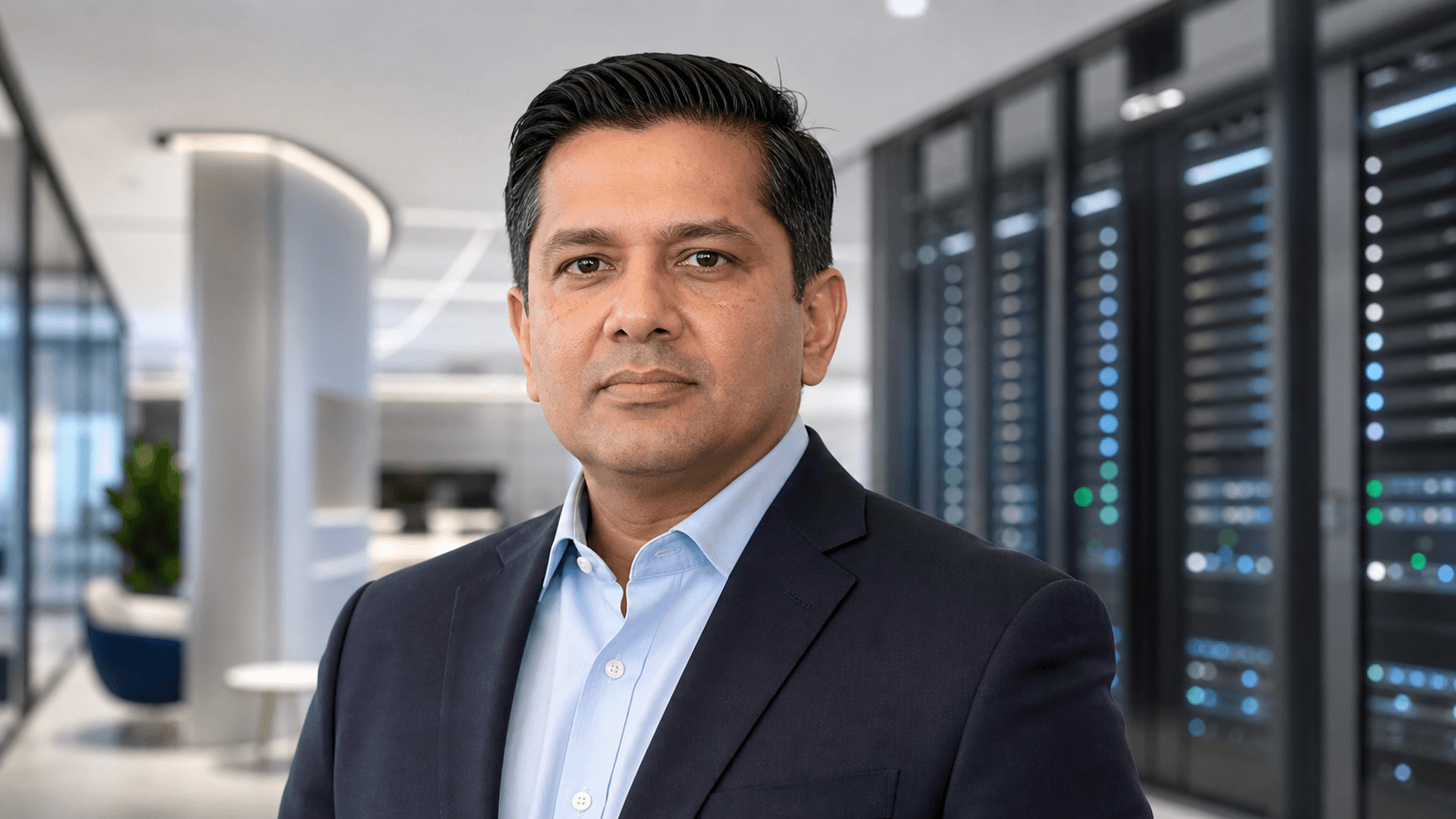
- Vishal Dalal joined Pismo in 2021 to lead expansion beyond Brazil, then became the public executive tied to Pismo's international banking-platform thesis before and after Visa agreed to buy the company for $1 billion.
- The strongest evidence for his record is not personality or biography, but a sequence of observable operating claims: international hiring, core-banking education, customer migrations, India bank coverage, and the use of Visa's distribution after the acquisition closed in January 2024.
- The later move from Dalal as global CEO in 2025 sources to Leonardo J. Collado as SVP and General Manager on Pismo's current leadership page should be read as an integration and succession signal, not as evidence by itself of failure, dispute, or motive.
The Short-Tenure Question
Vishal Dalal's Pismo tenure is best understood through a simple question: what power does a chief executive title carry when the company has just been bought by a global payments network whose own product, risk, sales, compliance and client-relationship systems already shape the available choices?
That question matters because Dalal's public record at Pismo does not follow the familiar arc of founder takes company to exit, or hired executive scales the machine for many years. He arrived in 2021 as the person Pismo said would lead its international expansion. He had the right public credentials for that task: banking technology experience, McKinsey core-banking work, and prior roles at large banks. Pismo was already presenting itself as a cloud-native platform that could process card issuing, digital accounts, marketplace payments and other financial products for serious institutions.
Dalal's job, as announced, was to carry that proposition outside its original Brazilian center.
Then the company became something else. In June 2023 Visa agreed to acquire Pismo for $1 billion in cash. In January 2024 the deal closed. Visa and Pismo said the combination would give financial institutions core banking and card-issuer processing capabilities through cloud-native APIs, while also supporting emerging payment schemes and real-time payment networks. That language placed Pismo inside a much larger strategic argument. It was no longer merely trying to win expansion accounts as an independent financial-infrastructure company.
It had become part of Visa's answer to how banks and fintechs might modernize issuing, ledgers and payment connectivity without waiting for a full replacement of every legacy core system.
In October 2025, Economic Times described Dalal as Pismo's global chief executive officer. The article said he had become global CEO about four months earlier after leading non-Brazil businesses for more than four years. It also said Pismo was working with eight Indian banks and preparing a ninth, managed about 500000 accounts in India and around 170 million globally, and was using Visa's bank relationships to build confidence in a market dominated by incumbent banking-technology providers. That is the peak of the public Dalal record: the regional expansion executive had become global CEO of a Visa-owned platform.
By July 2026, however, Pismo's public leadership page no longer presented Dalal in that role. It listed Leonardo J. Collado as SVP and General Manager of Pismo, described Collado as a Visa executive who had joined Visa in 2011, and placed Pismo's mission inside a Visa-linked leadership structure. The same page kept Pismo's founder and product leadership visible. It did not explain Dalal's absence, the date of the transition, or the terms of any departure. The responsible reading is therefore narrow. Dalal's short global CEO tenure is a signal of post-acquisition succession and control limits.
It is not, on its own, a judgment on performance.
The profile that follows stays inside that boundary. It asks what Dalal inherited, what he could plausibly change, what results can be tied to the public record, and where the evidence ends.
What Pismo Asked Dalal To Do
Pismo announced Dalal's arrival in February 2021 as CEO for the United States, Europe and Asia. The assignment was explicit: he would head international expansion. Pismo presented him as a banking-technology specialist, a former McKinsey partner, and an executive with prior experience at Citi and Barclays across Asia, Africa and the United Kingdom. Those details matter less as biography than as fit. Pismo was moving from a Brazilian base into a trust-heavy market where banks would need to believe that a relatively young cloud platform could handle regulated financial workloads.
The company Dalal joined was already making a broad claim. Pismo described itself as a next-generation banking and payment-services platform with a platform-as-a-service model covering card issuing, digital accounts, marketplace management and other payment solutions. It named large Brazilian financial institutions such as Itau and BTG Pactual as customers. It also cited a very large API volume in early public materials. The point was clear: Pismo wanted buyers to see it not as a lightweight fintech vendor, but as infrastructure already handling serious traffic.
Dalal's initial job was therefore not simply to sell software. It was to translate a Brazilian operating proof into markets where banks were already surrounded by established core-banking vendors, consulting firms, card processors, cloud providers and regulators. A modern banking-core sale is not like a normal software contract. It asks a bank to move accounts, balances, product logic, transaction records, compliance controls and customer journeys onto a new foundation.
A smaller vendor must convince a buyer that its technology is sound, that its operating controls are mature, that migration risk is manageable, and that the vendor will still be around after the implementation.
Pismo's October 2021 post about Dalal's Sky News interview shows the early operating thesis. The company had just announced a $108 million Series B funding round. Pismo said that funding would accelerate international expansion led by Dalal. In the same framing, Dalal positioned the platform as competing across credit cards and core banking instead of a single narrow category. That distinction matters. If Pismo had remained only a card-issuing provider, the expansion story would have been about one product line. By claiming core banking, digital accounts and payment infrastructure, the company entered a harder but larger market.
That also expanded the risks Dalal inherited. International expansion required hiring, partner coverage, regulatory knowledge, regional sales, implementation capacity, and a credible answer to why banks should take migration risk with a company that was still building global recognition. It required a sales story broad enough for chief executives and boards, but technical enough for bank CTOs and operations teams. It required proof that cloud-native architecture was more than a slogan.
Dalal's public activity before the Visa deal fits that assignment. Pismo pointed to his McKinsey collaboration on core banking systems. It hosted a webinar in which he discussed modernization of legacy core systems. Industry coverage in 2023 called him Pismo International CEO and placed him in the context of fintech growth pressure after transaction volumes and funding conditions became more difficult. Pismo then highlighted him as a finalist for a Tech Leadership award in connection with international operations and platform recognition. None of those items proves an operating result by itself.
Together, they show how Pismo used Dalal: as the executive bridge between technical modernization language and international bank confidence.
The Platform Thesis He Carried
Dalal's Pismo record is built around a thesis about core banking: the bank's core technology is not back-office plumbing that can be ignored while digital channels are polished at the edge. It is the foundation that decides whether new products, real-time payments, customer onboarding, ledger integrity, card issuing, lending and account changes can move quickly and safely.
That argument appears repeatedly in Pismo's public materials. The company says clients use its cloud-native microservices platform to launch new solutions and migrate legacy systems. It says the platform lets firms build and launch financial products rapidly while maintaining security and availability. In a Dalal-attributed article, Pismo framed the test of a modern core system around real-time capability, ledger trust, microservices and documented APIs.
The article also argued that modern migration approaches can reduce the old "big bang" replacement risk by letting banks run old and new systems side by side and by using repeatable migration practices.
For Dalal, this was a useful but demanding position. It gave him a sharper market claim than cost savings. Pismo was not merely saying it could run old bank products more cheaply. It was saying that cloud-native core infrastructure could change how banks create products, connect to new payment schemes, and move from legacy constraints to modular operating models. That is the kind of argument that can interest large institutions. It is also the kind of argument that invites intense scrutiny.
Three constraints follow from that thesis.
First, modernization buyers require proof at the system level, not only at the presentation layer. A bank can change a front-end app quickly. It cannot easily change ledger behavior, settlement connections, customer account records or card issuing without deep operational risk. Pismo therefore had to show that its microservices and APIs could handle real workloads, not only demonstrations.
Second, the platform had to support product breadth without becoming vague. The more Pismo talked about card issuing, digital wallets, core banking, lending, seller management and financial-market infrastructure, the more buyers could ask which product was mature, which region was live, and where client references existed. Dalal's job in international markets was partly to keep that breadth credible.
Third, the migration story had to recognize bank politics. Core replacement often fails not just because technology breaks, but because old products, old processes, old compliance routines and old organizational habits get carried into the new system. Dalal's public modernization argument treated simplification as part of the work. That is commercially smart: it suggests Pismo understood that a new platform cannot magically fix a bank that refuses to rationalize its product set. But it also means some outcomes would depend on customer behavior, not on Pismo alone.
This is why the article's assessment cannot simply ask whether Dalal "scaled" Pismo. A better test is whether the market record shows Pismo becoming more credible as a migration partner in multiple regions, and whether that credibility survived the move into Visa ownership.
The Visa Deal Changed The Control Surface
Visa's June 2023 acquisition agreement changed the meaning of Dalal's job before he was publicly described as global CEO. The deal valued Pismo at $1 billion in cash and positioned the platform as a way for Visa to provide core banking and issuer-processing capabilities across debit, prepaid, credit and commercial cards through cloud-native APIs. The release also said Pismo could help Visa support emerging payment rails such as Pix in Brazil.
That was a major validation of Pismo's market thesis. It suggested that a dominant global payments network saw strategic value in Pismo's platform, not only in its customer list. For Dalal, who had been leading international expansion, the deal likely strengthened the external case to banks. A buyer that might have hesitated to trust a smaller independent platform could now see Pismo as backed by Visa's balance sheet, client relationships and network reach.
But the same deal narrowed some kinds of executive autonomy. The acquisition release said Pismo would retain its current management team, and the January 2024 closing release said the team would remain led by co-founder and CEO Ricardo Josua. That language matters. It means that even after the acquisition closed, the public chain of leadership did not immediately become "Dalal runs Pismo globally." It remained founder-led in the closing language, with Pismo becoming part of Visa's product and strategy frame.
Visa and Pismo also embedded a list of risks in the acquisition materials. They mentioned regulatory approval, competitive shifts, cybersecurity, pace and success of integration, operational plans and other uncertainties. Those are not filler items when the target company sells bank infrastructure. They are the conditions under which any Pismo leader would operate after closing. Integration with Visa could bring distribution and credibility, but it also meant tighter scrutiny over product promises, security controls, go-to-market sequencing, brand use, partner relationships and regional priorities.
The public record therefore suggests two simultaneous effects. Dalal inherited a stronger commercial badge after Visa acquired Pismo. He also inherited a more complex control environment. A Pismo customer in India, Australia or Thailand could see Visa ownership as confidence-building. A Pismo executive, however, would need to coordinate with Visa's own regional banking relationships, product organization, compliance standards and strategic priorities.
That is the core of the integration test. If Pismo won new accounts after the deal, how much came from Dalal's international sales leadership? How much came from Pismo's founder-built technology? How much came from Visa's relationships? How much came from customer demand that already existed before closing? The record does not let us allocate percentages. It does let us say that Dalal operated at the junction of those forces.
This also explains why the later succession should not be overread. When a company is absorbed into a larger network, a shift from CEO language to general-manager language can reflect governance design as much as personal replacement. The parent company may want a leader steeped in its own operating system. It may split founder product authority, commercial leadership and integration leadership across several roles. It may reduce the independence implied by a CEO title. Without an explicit transition announcement, all of those remain possibilities. The only safe conclusion is that the leadership structure changed.
What Could Be Attributed To Dalal
The fairest way to assess Dalal is to separate direct attribution from contextual attribution.
Direct attribution is strongest where public records name him in a role or connect him to a specific market action. Pismo directly announced his 2021 appointment for international expansion. Pismo identified him as the executive leading that expansion after the Series B. Pismo tied him to core-banking modernization webinars, market education, and leadership recognition. Pismo named him in the Tyro announcement as CEO for North America, EMEA and APAC. Pismo named him in the T2P migration release as CEO at Pismo.
Economic Times named him as global CEO and connected him to India bank expansion, global account numbers, and the explanation that he had been brought in during 2021 to lead global expansion.
Contextual attribution is broader but weaker. Pismo's $1 billion sale to Visa happened during the period in which Dalal led international expansion, but the deal cannot be credited to him alone. The founders built the platform. Investors funded it. Visa's product strategy created the buyer's logic. Customers supplied proof points. Dalal's role was likely important in making Pismo credible outside Brazil, but the public record does not show him as the sole architect of the sale.
The same caution applies to customer migrations. Tyro's January 2024 announcement said the Australian fintech adopted Pismo's payment-processing platform to enhance its product portfolio, with technical teams working toward full operation in the first quarter of 2024. Dalal was quoted in his regional CEO role. That is a direct role signal. It does not mean he personally led the technical implementation. Product, engineering, client-success and customer teams would have carried the migration detail.
T2P's September 2025 announcement is more useful because it came after the Visa acquisition. It said T2P had chosen Visa and Pismo to migrate and launch card products in Thailand. It said the collaboration began in March 2025 and moved 320000 customer accounts in under three months. It identified Dalal as CEO at Pismo. It also framed the work around Pismo's microservices, APIs, Visa network integration and cloud-native infrastructure. This is a strong operating proof point for the Pismo platform during Dalal's CEO period. It is still not proof of individual causation.
It shows that the organization he led publicly could deliver a notable migration in Asia under Visa ownership.
Economic Times adds a market-expansion lens. It said Pismo was working with eight Indian banks, preparing a ninth, managing about 500000 accounts in India and about 170 million globally, and employing 60 to 70 people in India out of a roughly 700-person company. It also said Pismo ran on AWS and that Visa backing should help reassure banks in a market historically dominated by large IT companies and vendors such as Oracle. Those details support the article's central interpretation: Dalal's real test was not whether he had a global CEO title.
It was whether Pismo could turn cloud-native claims into credible bank adoption across markets where trust is expensive.
The public record suggests progress. It does not prove enduring outcomes. We do not have audited Pismo revenue, client-retention data, post-migration uptime, cost savings, implementation margins, or bank-by-bank delivery records. We do not have a Visa segment disclosure that isolates Pismo's contribution. The evidence therefore supports a disciplined conclusion: Dalal presided over visible internationalization and post-acquisition market traction, but the durable operating impact remains partly unverified.
India As A Control Test
India is the most revealing market in the public record because it concentrates several constraints at once: scale, regulation, intense local competition, bank conservatism, and the need to connect card processing, prepaid and debit products, core banking, digital lending and local payment schemes.
Economic Times reported in October 2025 that Pismo was already working with eight banks in India and preparing to go live with a ninth. It also said about a quarter of Pismo's India business was credit cards, with the rest in prepaid and debit cards. That mix is important. Credit cards can be complex, but prepaid and debit portfolios can also require high-volume operational reliability, ledger accuracy, fraud controls, reconciliation and regulatory reporting. A platform that wants to move from issuing into core banking must prove it can handle these everyday financial flows without drama.
The same article described Pismo as using Visa's relationships with banks to scale in India and other markets. That is a central integration fact. Visa ownership did not simply add a logo. It gave Pismo access to a trust network built over decades. For a bank evaluating a core or issuing platform, Visa's presence could reduce perceived vendor risk. But it could also change the sales conversation. A Pismo leader would need to sell through, beside, and sometimes behind Visa's own relationship owners. In that setting, the line between Dalal's commercial authority and Visa's distribution power becomes hard to see from outside.
India also exposes product limits. Economic Times reported that Pismo offered UPI payment processing but was using a third-party switch and planning to seek the required licenses for its own switch. That detail is useful because it prevents the article from overstating platform completeness. Pismo had a global core and issuing thesis, but local payment infrastructure still required country-specific dependencies, licenses and integrations. The presence of AWS was framed as an advantage because AWS had a strong India presence.
Yet that also reinforces the cloud-service dependency part of the story: Pismo's value proposition relied not only on its own software but also on public-cloud infrastructure, local regulatory acceptance and confidence in the resilience of that stack.
Dalal's personal link to India, reported by Economic Times, may have helped with credibility. The article said he studied in India, worked across global banking markets and lived in London. But the more durable question is not personal familiarity. It is institutional adoption. Could a Visa-owned Brazilian-origin platform convince Indian banks to move sensitive workloads to a cloud-native system in a market where large IT vendors and established core platforms had long relationships? That was the real test.
By the public record, Pismo had moved from aspiration to activity. Eight banks working with the company is not a minor claim. A ninth going live would suggest implementation momentum. Around 500000 managed accounts in India is meaningful, though still small relative to the scale of large Indian financial institutions. The 170 million global account figure is large enough to support credibility, but without independent verification it should be treated as a company-reported or interview-reported scale marker rather than an audited fact.
India therefore shows both progress and unresolved proof. Dalal's Pismo was in the market. It had banks, headcount, Visa support and a product road map. But the public record does not yet show whether it turned those openings into a durable, profitable, resilient business at the scale required by major banks.
Customer Migrations As Hard Evidence
In a record heavy with executive titles and platform language, customer migration announcements are the hardest public evidence. They show that a buyer selected the system and that some technical work moved beyond a pitch deck.
The Tyro announcement, published in January 2024, placed Pismo in Australia. Tyro adopted Pismo's payment-processing platform to enhance its product portfolio and support its banking offering. The release identified Tyro as serving more than 68000 businesses in the Australian market. Pismo named Dalal as CEO for North America, EMEA and APAC and said the technical teams expected the systems to be fully operational in the first quarter of 2024. This was still just before the Visa acquisition closed, so it should be seen as evidence of Pismo's independent international pipeline at the moment of transition.
The T2P announcement in September 2025 is stronger for the post-acquisition record. T2P, a Thai fintech, chose Visa and Pismo to migrate and launch card products. Pismo said the collaboration began in March 2025 and completed a migration of 320000 customer accounts to the new platform in under three months. The release presented that as a record time for an upgrade of that scale and said the move improved uptime, scalability and resilience. It identified Dalal as CEO at Pismo and tied the result to the platform's cloud-native, API-first and microservices design.
This type of evidence matters for two reasons.
First, migrations reveal whether Pismo's sales proposition could survive contact with implementation. Many infrastructure companies can describe a modular future. Fewer can move live accounts. A customer migration does not prove long-term success, but it is a more serious signal than an award, webinar or strategic partnership announcement.
Second, migration results connect Dalal's expansion role to the integration thesis. Tyro and T2P are not Brazil-only proof points. They sit in the international markets Dalal was hired to build. They also show Pismo serving fintech and payment customers in Australia and Thailand, not only banks in Latin America. This supports the view that Dalal's tenure helped move Pismo's story across regions.
There is still an attribution ceiling. The migration work belongs to teams. Customer executives made their own decisions. Visa's ownership may have influenced T2P's confidence. Pismo's founders and engineers built the platform before Dalal became global CEO. The article can therefore say that these migrations occurred during the arc of Dalal's public leadership and supported the strategy he represented. It cannot say he personally delivered them.
That may feel unsatisfying, but it is the right standard for an infrastructure executive. The meaningful record is often organizational, not theatrical. Good leadership in this context is not measured by a speech or a single charismatic decision. It is measured by whether the organization wins trust, ships migrations, reduces risk, and survives the change from startup promise to parent-company accountability.
The Succession Signal
The current Pismo leadership page is the most important counterweight to the expansion story. It lists Leonardo J. Collado as SVP and General Manager of Pismo, noting his long Visa experience and his role in leading Pismo's mission to deliver banking and payments technology worldwide. It also lists Pismo founders Daniela Binatti, Juliana Binatti and Marcelo Parise in product and engineering roles, plus commercial leadership. It does not list Dalal.
That page does not say Dalal failed. It does not say when he left the global CEO role. It does not say whether he resigned, moved elsewhere, completed a transition, or was replaced as part of Visa's integration design. The only reliable inference is structural: by July 2026, Pismo's public leadership frame had moved away from Dalal as global CEO and toward a Visa-linked general manager model.
That shift is consistent with the logic of acquisition integration. A parent company may initially preserve acquired-company leadership to protect continuity, customer confidence and employee stability. Later, after integration work advances, it may shift the unit into a general-manager structure aligned with the parent company's reporting lines. That can happen even when the acquired business is performing. It can also happen when priorities change. Without a direct announcement, the public record does not tell us which.
For Dalal's profile, the succession matters because it limits the interpretation of his global CEO period. He appears to have been global CEO for a short window, publicly described that way in mid-to-late 2025 and in Pismo's later CEO attribution. By 2026, he no longer held the visible public role. That means the article should not frame him as the settled long-term builder of Pismo inside Visa. It should frame him as the executive who carried Pismo through the transition between independent international expansion, Visa acquisition, and early post-acquisition market tests.
The distinction is important. Some executives build durable institutions over decades. Others occupy narrower but consequential transition roles. Dalal's Pismo record, as publicly visible, belongs to the second category. He was not the founder who created Pismo. He was not the current Visa general manager now presented as leading Pismo. He was the international expansion executive who became global CEO for a period when Pismo had to prove that its platform could use Visa's confidence while preserving the technical promise that made the acquisition attractive.
That is a meaningful role, but it is not an unlimited one.
Reputation And Record
Pismo's public materials gave Dalal a strong reputation frame: former McKinsey partner, prior major-bank executive, core-banking thinker, international expansion leader, award finalist and visible spokesperson. Industry reporting added the language of international CEO and global CEO. These are useful signals, but they should not become the assessment itself.
The record is narrower and more interesting.
Dalal joined to internationalize a Brazilian fintech infrastructure company. Pismo then raised substantial growth capital, continued market education around core modernization, won visibility in banking-technology circles, agreed to be acquired by Visa for $1 billion, closed the deal, and announced customer progress across Australia, Thailand and India. During that arc, Dalal moved from regional expansion executive to a global CEO designation in public reporting. After a short period, the public leadership frame shifted to a Visa general manager.
This record supports neither a simple triumph story nor a quiet failure story. The triumph version would say Dalal scaled Pismo globally and completed the Visa integration. That overstates what the evidence proves. The failure version would say his short tenure shows he could not hold the role. That also overstates the evidence. The better version is more grounded: Dalal was a credible operator for Pismo's international expansion and post-acquisition market case, but the company moved into a control structure where the CEO label was not the final center of authority.
The most important contribution may have been translating Pismo's technology into a bank-executive language. Core modernization is an abstract market until a buyer believes a platform can move accounts, support products, pass internal scrutiny and survive regulatory attention. Dalal's background helped Pismo tell that story. The customer announcements and India reporting show that the story found buyers. Visa's acquisition showed that a global network saw strategic value in the platform. The current leadership page shows that Visa eventually put the business under its own general-manager frame.
That sequence is the article's actual finding. Dalal's Pismo career is not mainly about personal charisma. It is about the changing location of authority in a financial-infrastructure company as it moved from startup expansion to network-owned operating unit.
What Remains Unproven
Several facts would materially change the assessment if they became public.
The first is the exact transition record. A formal announcement explaining when Dalal became global CEO, when he ceased to hold that role, and why Collado became SVP and General Manager would sharpen the story. Without it, any claim about motive or performance would be guesswork.
The second is operating performance after migration. Customer announcements are useful, but they do not show long-term uptime, cost, client satisfaction, product velocity, regulatory performance or post-launch incident history. If Tyro, T2P or Indian banks disclosed detailed outcomes, the assessment could move from "credible migration evidence" to "verified operating improvement."
The third is financial contribution. Pismo's role inside Visa is strategically clear, but public reporting does not isolate Pismo's revenue, margin or growth contribution. A platform can be strategically important and financially slow. It can also be early in a long adoption cycle. Without segment-level data, the article cannot say whether Dalal's expansion translated into material economics for Visa.
The fourth is internal authority. After the Visa deal closed, who controlled product road maps, pricing, regional sales priorities, cloud-vendor dependencies, compliance standards and staffing? Public titles do not answer that. A global CEO inside an acquired unit may have broad authority, or may operate within tight parent-company boundaries. The leadership-page succession suggests the latter possibility became more relevant over time, but does not prove how decisions were made during Dalal's tenure.
The fifth is competitive response. India, in particular, includes incumbent banking-technology vendors, local fintech infrastructure companies and banks with deep relationships. Pismo's reported bank count is meaningful, but the next test is whether it can expand from controlled issuing and prepaid/debit workloads into deeper core-banking penetration with large lenders.
These gaps do not make the article weak. They define the correct confidence level. Dalal's record is visible enough to analyze, but not transparent enough for a definitive verdict.
The Assessment
Vishal Dalal's Pismo tenure should be read as a transitional leadership case in financial infrastructure.
He inherited a company with a strong technical claim, early large-bank proof in Brazil, and a need to make that claim believable in markets where bank infrastructure sales are slow and reputation-heavy. He helped carry the public argument that Pismo was not just a card processor, but a cloud-native core-banking and payments platform. He was tied to international expansion, market education, customer acquisition, and later global-CEO messaging. During the same arc, Pismo became a $1 billion Visa acquisition and continued to announce international customer migrations and market progress.
He also inherited constraints that no title could erase. Pismo's strongest customers still needed to migrate real accounts. Banks still needed evidence, not promises. Regional payment systems still required local dependencies and licenses. Visa ownership gave Pismo more credibility but also moved it into a larger governance structure. The eventual public leadership shift to a Visa veteran general manager suggests that integration authority did not remain permanently centered on Dalal's CEO role.
That is why the short tenure is not a footnote. It is the main analytical point. Dalal's Pismo record shows what happens when an expansion executive becomes the face of a platform at the exact moment that platform is absorbed by a larger network. He could shape the market story, support regional growth, and represent the modernization thesis. But he could not fully control the parent-company structure that would decide how Pismo was ultimately governed.
For readers tracking cloud banking, issuer processing and enterprise software automation, the lesson is wider than one executive. Infrastructure acquisitions often preserve acquired-company language at the start: founders, CEOs, platform independence, retained teams. Over time, the operating reality tends to sort itself into parent-company roles, risk structures, sales channels and product-accountability lines. Dalal's move from regional expansion leader to global CEO and then out of the visible top role is a concise example of that pattern.
The strongest judgment, therefore, is deliberately measured. Dalal was not merely a resume name attached to Pismo's global push. The public record shows him as a central spokesperson and executive for the international expansion that made Pismo valuable outside Brazil and usable inside Visa's strategy. But he was also not the final institutional owner of Pismo's post-acquisition future. That future, at least as of July 2026, is being presented through Visa's general-manager structure.
In a market full of exaggerated transformation claims, that is a useful distinction. The person matters. The platform matters. The buyer matters. The control structure matters most.