
Summary
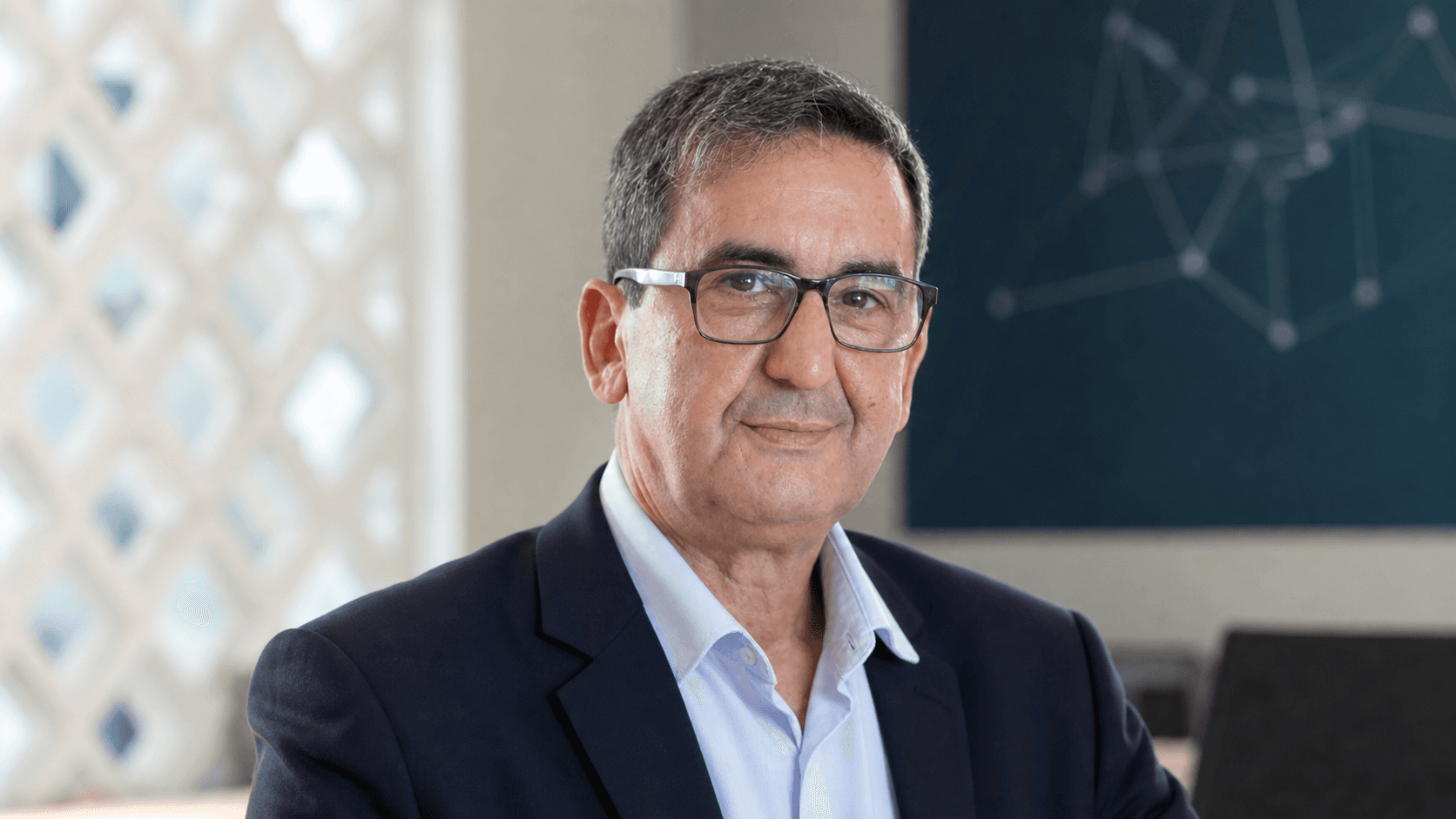
- Abdelaziz Hilali is publicly listed by AFRINIC as vice-chair of its board and as the Seat 1 Northern Africa director, after appearing on the 2025 election portal as the Seat 1 candidate from Morocco.
- His stronger institutional record is not a narrow board-title biography: the public file links him to INPT, ISOC Morocco, ICANN At-Large and African internet-governance forums, although several of those claims are supported mainly by candidate material rather than independent outcome data.
- The right way to read his significance is as a test of whether long-form academic and community institution-building can translate into disciplined registry governance, not as proof that one vice-chair can repair AFRINIC alone.
A board title with a long institutional tail
The easiest version of Abdelaziz Hilali's public profile would begin and end with the line AFRINIC now publishes on its board page: Aziz Hilali, vice-chair, Seat 1, Northern Africa. That line matters. It places a Moroccan internet-governance figure inside the small set of directors charged with governing the African regional internet registry after a period in which AFRINIC's legitimacy, election mechanics and institutional continuity became public questions rather than background administration.
It also makes him one of the visible faces of North African representation in an institution whose decisions affect number-resource trust across the continent.
But that is also the least useful way to study him. A vice-chair title can hide more than it explains. It can suggest authority without showing where authority begins or ends. It can make a long public career look like a late appointment. It can turn institutional recovery into a personal story, even when registry governance is deliberately designed to divide power among members, bylaws, board seats, staff, committees, courts, policy communities and operational procedures. Hilali's role is therefore worth examining only if the board line is treated as an endpoint in a longer route, not as a substitute for the route itself.
The public record makes that route visible in outline. AFRINIC's 2025 election portal identified Abdelaziz Hilali as Moroccan, resident in Morocco, affiliated with ISOC Morocco and holding the position of president. The same profile described him as an emeritus professor at Morocco's National Institute of Posts and Telecommunications, known by its French initials INPT, with senior academic and administrative roles over several decades.
It also listed a set of internet-governance positions across ISOC Morocco, the Moroccan IPv6 Task Force, the Mediterranean Federation of Internet Associations, the North African Internet Governance Forum, the UN Internet Governance Forum's Multistakeholder Advisory Group, ICANN's At-Large structures and the ICANN Nominating Committee.
Those lines cannot all be treated equally. The AFRINIC page is a primary election source for the candidacy, but much of the professional background is candidate-supplied material hosted by the election portal. It is strong enough to define the public basis on which Hilali presented himself to voters and the internet community. It is not, by itself, a full independent audit of every institutional claim, budget, program, committee output or personal contribution. That distinction matters because Hilali's case is less about whether he has a long list of affiliations.
It is about whether those affiliations describe an institutional habit that is relevant to a stressed registry.
The basic pattern is clear enough to proceed. Hilali's public career sits at the junction of three systems: Moroccan technical higher education, national internet-community organization and regional or global multistakeholder governance. None of those systems gives a person unilateral operating power over a regional internet registry. Together, however, they can create a particular kind of authority: familiarity with committees, representation, technical policy language, educational capacity, cross-border meetings and the slow work of keeping institutions legible to people who do not run them every day.
AFRINIC's 2025 reconstitution put that type of authority under pressure.
The pressure is the point. AFRINIC's election documents described the 2025 process as a board-reconstitution exercise, held in a setting where the receiver had election authority and where eligible resource members voted through a specified online process. The guidelines described a nine-director board structure, with eight elected seats and the CEO as an ex officio director. They set Seat 1 as Northern Africa, made each eligible resource member's voting role part of the machinery, and treated candidate verification, declarations and the publication of the slate as formal steps rather than social endorsement.
Hilali did not inherit a quiet honorary seat. He entered a governance surface built from institutional constraint.
That makes his profile interesting beyond personal reputation. The question is not whether Hilali has been present around internet governance for a long time. The record says he has. The question is what that kind of presence can do when a registry's need is not more visibility but stronger credibility: clear board boundaries, cleaner election legitimacy, better communication with regions that often sit at the edge of English-speaking internet policy rooms, and an officer role that must not be confused with executive control.
The record begins outside AFRINIC
The first risk in reading Hilali is to let AFRINIC dominate the frame. AFRINIC is the current reason he is visible to a registry audience, but it was not the only institution in the record before the board seat. His candidate profile placed INPT at the center of his professional background. The institute's own public site identifies it as the Institut National des Postes et Telecommunications, a Moroccan institution in the field of telecommunications and information technologies. Its public presentation includes engineering education, doctoral studies, enterprise-facing material and digital-technology training context.
That matters because it locates Hilali's claimed career in a specific institutional world rather than in vague technology advocacy.
The profile attributed to Hilali more than forty years of academic, scientific and leadership experience, a doctorate in computer science and applied mathematics from Universite Joseph Fourier in Grenoble, and senior INPT posts including deputy director, director of enterprise relations and internships, director of continuing education, and director of the engineering program. Some of those dates and responsibilities are visible only through the election profile. They should therefore be handled carefully. Still, the content of the roles is useful even before every outcome is quantified.
They describe work at the hinge between technical education, students, public-sector context and industry relations.
That hinge is not the same as network operation. Hilali's public file does not show him running an ISP, managing an autonomous system, selling transit, handling a data-centre outage or allocating capital across a commercial telecom balance sheet. His institutional surface is different: curricula, continuing education, enterprise relations, internships, training, policy forums and association work. In a founder or CEO profile, that might be a weakness if the task were to explain product-market choices or commercial execution.
In a registry-governance profile, it may be directly relevant, because regional internet institutions depend heavily on people who can translate between technical systems and public institutions without pretending that translation is the same as command.
That difference is the first useful boundary around Hilali. He should not be inflated into a classic infrastructure operator if the public file does not show operating control. Nor should his academic-administrative background be dismissed as ceremonial. Registry governance is full of technical claims that become institutional problems: who has standing, who can vote, who understands scarce number resources, who can read policy procedure, who can explain why IPv4 scarcity or IPv6 deployment is not just an engineering issue, and who can make a regional voice intelligible inside global governance.
A professor-administrator and internet-society organizer can be consequential in that world without being the person who configures routers.
The distinction separates two kinds of building. One kind is direct asset building: networks, addresses, revenues, customers, teams, operating systems. The available record does not support attributing that kind of builder role to Hilali. The other kind is institutional building: educational programs, professional bridges, association structures, meetings, representation channels and capacity-building routines. His public record is much stronger there. The question becomes whether those forms of institutional building are enough for an AFRINIC board seat during a recovery period.
That is not an abstract question for Africa's internet ecosystem. Technical capacity and institutional capacity have often been unevenly distributed across the continent. National regulators, universities, operators, civil society groups and technical communities do not all enter regional governance rooms with the same language, money, travel budgets, legal support or time. A person whose career has moved through education and association work may understand those asymmetries differently from someone whose route is purely commercial. That does not make the person more correct. It changes what they are likely to notice.
Hilali's INPT and ISOC Morocco record, as presented publicly, points to that noticing function. It suggests a career spent around institutions that prepare people, convene communities and translate technical systems into public and professional vocabulary. The cost is that such work often leaves fewer hard metrics than commercial operating records. A company founder can be studied through revenue, acquisition, layoffs, customer churn, product releases and board filings. A community-institution figure is harder to audit.
The durable outputs are often networks of people, repeated meetings, training capacity, policy familiarity and the persistence of local organizations. Those outputs matter, but they require more caution in attribution.
ISOC Morocco and the slow kind of internet work
Hilali's candidate page identified him as president of ISOC Morocco and said he co-founded and currently presides over the Moroccan Internet Society. It also described that organization as the first African chapter of the Internet Society. That is a notable claim because Internet Society chapters are one of the ways national technical and civic communities connect to global internet debates without becoming government agencies or commercial lobbies.
Yet the strongest available evidence for Hilali's current ISOC Morocco role remains the AFRINIC election profile and secondary ICANNWiki identity material, not an independently fetched current officer page from ISOC Morocco itself. The role is therefore best read as a public election-record claim, not as a fully audited chapter history.
Even with that limit, the ISOC Morocco line is central. The chapter form says something about the kind of work Hilali chose to keep doing. ISOC chapters tend to live in the long middle ground between technical education, public debate, standards culture, access issues and local internet literacy. They rarely control hard infrastructure directly. They can, however, shape who understands the stakes of infrastructure decisions and who shows up when those decisions are discussed. That is slow work. It does not produce a clean quarterly metric, and it does not always protect institutions from failure.
But in a region where representation can be thin, the work can decide whether national communities have a route into regional debates at all.
Hilali's candidate material leaned into that kind of work. It presented him as someone involved in internet governance across Africa for many years, with a focus on transparency, institutional stability, inclusive governance and North African representation. It also listed national initiatives around IPv6 adoption and internet literacy. Those statements should be read as the argument he presented to an electorate, not as independent proof that the initiatives produced measurable adoption or literacy gains.
The more interesting feature is the pattern: he framed his eligibility not around personal executive power, but around repeated participation in forums where legitimacy is built by process.
That process orientation can be valuable. AFRINIC's problem after years of public stress was not merely technical continuity. A registry can keep databases running while confidence erodes around voting rights, board composition, membership authority, court orders, transparency, conflict management and the difference between policy and enforcement.
In that environment, a director with community-governance experience may bring habits that are useful precisely because they are procedural: listening to multiple constituencies, knowing when a debate is about substance and when it is about standing, understanding how regional representation can become symbolic if it is not backed by participation, and recognizing that public explanations are part of infrastructure.
It can also be limited public evidence. Community legitimacy does not automatically solve registry failure. A chapter president cannot repair a broken governance architecture by virtue of having chaired meetings. Multistakeholder language can become a shield for vague consensus if it is not attached to decisions, records and accountability. The public file does not yet show which concrete AFRINIC board actions Hilali has shaped as vice-chair. It does not show his votes, committee assignments, internal disagreements, attendance record or the specific North African concerns he has put on the board agenda.
Those gaps do not disqualify the profile. They define its present boundary.
The distinction is important because Hilali is easy to overpraise in the language of representation. North Africa has a real stake in AFRINIC governance. Morocco, Egypt, Tunisia, Algeria, Libya, Sudan and Mauritania do not share one identical internet economy or political context, but the region often sits between African, Arab, Mediterranean and European institutional spheres. A director from Morocco can help make that position visible. Yet representation is not an outcome by itself.
It becomes an outcome only when the representative turns regional knowledge into better board oversight, clearer institutional communication or fairer participation mechanisms.
That is the test Hilali now faces. His earlier ISOC Morocco and forum roles show that he understands the vocabulary of inclusive governance. The hard question is whether that vocabulary will produce visible board discipline inside AFRINIC. The answer is not yet fully public.
The regional-governance ladder
The most striking feature of Hilali's public profile is the accumulation of governance venues. The AFRINIC candidate page listed the Mediterranean Federation of Internet Associations, the North African Internet Governance Forum, the UN Internet Governance Forum's Multistakeholder Advisory Group, ICANN's At-Large Advisory Committee, AFRALO leadership, ICANN's Nominating Committee and ICANN Academy capacity-building work. ICANNWiki, a secondary community source, also ties Aziz Hilali to ICANN At-Large and Moroccan Internet Society activity. This is not a record of one dramatic turn.
It is a record of repeated entry into rooms where internet policy is made through committees, not command.
That kind of career has a particular logic. A person can begin in national technical education, move into a national internet society chapter, participate in regional forums, then appear in global ICANN or IGF structures. Each step adds exposure to process: charters, working groups, nominations, public comments, regional representation, agenda setting, minutes, elections and consensus calls. The work is often frustrating because no one actor controls the system. That is also why the experience can matter for a registry board. Regional internet registries are not ordinary companies, even when incorporated as companies.
They are membership institutions carrying public dependency.
Hilali's record suggests he has spent years around that dependency. His candidate answers did not present AFRINIC as a normal corporate asset. They described it as part of a global internet ecosystem in which regional registries coordinate number resources, policy development and community participation. They linked his INPT experience to multistakeholder practice by emphasizing curriculum and training decisions involving professors, students, industry partners, alumni, authorities and administrative services.
That answer is revealing because it shows how Hilali wanted voters to interpret his academic background: not as a credential alone, but as experience in balancing constituencies under institutional rules.
The claim is plausible, but it needs a limit. University program management is not the same as registry governance. Students and professors are not resource members. An engineering curriculum is not a scarce IPv4 allocation policy. Industry partners are not litigants. An internship program does not carry the same legal exposure as a board decision during receivership. The analogy is useful only if it describes habits of governance, not if it pretends the domains are identical.
Those habits include patience with process, ability to work across technical and non-technical communities, comfort with formal roles, and awareness that legitimacy depends on who is included before a decision is announced. They also include the risk of mistaking participation for performance. A long list of committees can show credibility. It can also become a resume of presence. The missing evidence in Hilali's public record is not whether he attended or held roles in many institutions.
It is which contested decisions he changed, which programs survived because of his choices, which communities gained durable capacity, and which trade-offs he accepted when consensus was unavailable.
That uncertainty should not be hidden. It is part of the story. Hilali's profile belongs to a category of internet-institution figures whose influence is real but hard to isolate. Their work often happens before a crisis becomes visible: training people, hosting meetings, making policy vocabulary available, connecting national and global networks, and keeping regional concerns in circulation. When a crisis arrives, the same people are suddenly evaluated by harder standards. Did the prior institutional work prepare them to govern? Or did it merely make them familiar names?
AFRINIC's 2025 election turned that question into a live test. The organization did not need only candidates who could describe the internet ecosystem. It needed directors able to rebuild credibility under external scrutiny and internal distrust. Hilali's advantage was the breadth of his institutional vocabulary. His risk was that vocabulary can sound like reform before reform is proven.
What the 2025 election actually proved
The 2025 election documents are useful because they prevent Hilali's election from becoming a myth of personal authority. The candidate slate placed him in Seat 1, Northern Africa. The elected-candidates page later listed him for the same seat. The election guidelines described the board as nine directors, eight elected and one CEO ex officio. They also said the election was conducted online, that proxy and power-of-attorney voting were not permitted, and that the candidate receiving the most votes for a seat would be the winner subject to completion of required formalities.
The election stats page reported 581 total voters and 484 votes cast.
Those facts prove a procedural transition: Hilali moved from candidate to elected director in a documented AFRINIC process. They do not prove that every stakeholder accepted the process as sufficient, that the registry's broader disputes disappeared, or that Hilali personally carried a continent-wide mandate. A board election is a gateway to responsibility. It is not a performance record.
This distinction matters because AFRINIC's 2025 board was not elected in ordinary calm. The guidelines defined AFRINIC as being in receivership and described the election as part of reconstituting the board and appointing a CEO in the absence of directors then in office. They placed the receiver, election committee and nomination committee inside the process architecture. They also defined eligible members, designated voters, e-voting procedure, vote counting and result announcement. That machinery was not background color. It was the institutional condition under which Hilali entered the board.
For a director, that condition creates both legitimacy and constraint. It gives legitimacy because the seat is not self-appointed. It was published, contested through a candidate slate, and tied to a member-voting process. It creates constraint because the director arrives after rules designed by others, under court and receiver context, in an organization whose governance credibility has already been stressed. Hilali's authority begins inside that architecture. It does not float above it.
The election criteria sharpen the point. Candidates had to meet minimum criteria such as age, natural-person status, consent to appointment and written willingness to sign required forms. They also faced specific criteria around understanding AFRINIC's mandate, commitment to multistakeholder governance, integrity, board or organizational leadership, business management, budgeting, ICT policy, telecom regulation, network operations, internet services or non-profit governance in Africa, internet infrastructure and time commitment.
The published criteria gave NomCom power to reject candidates who did not meet standards or who presented false or misleading applications. Hilali's appearance on the final slate shows he passed that gate. It does not show more than that.
That measured reading is fairer to him than inflated praise. Hilali's candidacy was not built on celebrity. It was built on a claim that his academic and internet-governance record met AFRINIC's need for board competence. The voters and election machinery accepted him for Seat 1. From that point, the relevant assessment moves from eligibility to conduct: how he uses board authority, whether he helps clarify institutional boundaries, whether he contributes to transparent communication, and whether North African representation becomes more than a name on the board page.
What a vice-chair can control
AFRINIC's current board page lists Hilali as vice-chair. The title is meaningful, but it must be kept narrow. A vice-chair can help structure board work, support chair functions, participate in governance oversight and carry officer visibility. A vice-chair does not automatically control member votes, court orders, receiver authority, staff operations, public database entries, address-allocation decisions, policy consensus, RPKI systems, finances or every public statement. Giving him more power than the office supplies would create a false biography of control.
The public record does not yet expose the board minutes and officer-work details needed to say which actions Hilali personally drove. That is the main open question. Did he chair or help structure particular meetings? Did he push for specific transparency practices? Did he sponsor a board process to repair public trust? Did he build better communication with Northern Africa's technical community? Did he influence CEO appointment work, audit priorities, committee assignments or member-facing disclosure? Those are the questions that would turn a title into a performance record. They remain largely unresolved in the frozen public file.
What can be said now is more restrained. Hilali holds a formal board-office role in a registry whose legitimacy depends on bounded authority. His prior public record is unusually aligned with the language of governance, education and representation. That alignment makes his appointment intelligible. It does not make his effectiveness proven. The correct judgment is conditional: his background is relevant to the problems AFRINIC faces, but only subsequent board behavior can show whether relevance became institutional improvement.
There is a useful way to think about the vice-chair office here. It is not an engine. It is a control surface. It gives the holder contact with agenda, board discipline, succession of chair functions and public interpretation of what the board is doing. In a registry after governance disruption, those surfaces matter because weak process can become operational risk. If members do not trust election rules, if the board cannot explain decisions, if officers blur their authority with staff execution, or if regional communities feel represented only after decisions are made, registry confidence declines even if technical systems keep running.
Hilali's experience could help on those surfaces. His academic background may matter less as a credential than as repeated exposure to institutional design: programs with stakeholders, training systems, public objectives, industry relations and administrative limits. His ISOC Morocco and ICANN-related work may matter less as titles than as evidence that he has lived inside consensus-shaped governance for years. His North African seat may matter less as geography than as a reminder that AFRINIC is continental but not regionless.
The danger is that the same profile can become too comfortable with process. Institutions in recovery often do not need more general statements about openness. They need records, deadlines, minutes, responsibilities, conflict handling and a culture in which officers know what they can decide and what they must disclose. A candidate who has long spoken the language of multistakeholder governance is not exempt from that harder demand. In fact, the demand is higher because the language raises expectations.
That is why Hilali's vice-chair title should be watched through concrete indicators. The relevant evidence over time will be board attendance, public minutes, committee assignments, decisions on CEO appointment and governance repair, member communication, published financial and policy oversight, and whether AFRINIC can separate ordinary registry work from litigation or election controversy. None of those indicators should be attributed to Hilali alone. They can, however, show whether the board on which he serves is becoming more legible and disciplined.
Reputation, record and the temptation to overread presence
Hilali's public reputation in the available material is that of a long-serving academic and internet-governance entity. The candidate profile uses the vocabulary of experience, transparency, inclusive governance and African internet development. ICANNWiki, as a secondary source, reinforces the picture of an ICANN At-Large and Moroccan internet-community figure. The record is therefore not thin in the sense of lacking identity. It is thin in the sense that public materials compress decades of role claims into a few paragraphs and leave many outcomes unmeasured.
That compression creates a biographical temptation. A writer can move from "professor," "president," "chair" and "member" to a conclusion that Hilali built the institutions named beside him. That would be too strong. A title may mean a person founded, led, inherited, chaired, represented, coordinated, participated or was simply present during a period. Each of those verbs has a different evidentiary burden. Hilali's public file supports some role claims. It does not allow every organizational result to be assigned to him personally.
The careful verbs matter. He is listed as president of ISOC Morocco in the election profile. The profile says he co-founded and presides over the organization. It says he chaired North African IGF during a defined period and held AFRALO and ICANN roles. It says he worked in senior INPT administration. Those points are profile-record claims. They do not, without more evidence, show that he caused IPv6 adoption, transformed Moroccan internet literacy, rebuilt North African governance, or personally delivered AFRINIC stability.
This is not a legalistic quibble. Character is described through observable decisions and boundaries, not through flattering labels. In Hilali's case, the observable pattern is not "visionary leader" or "elder statesman." It is a repeated choice to work through educational and multistakeholder institutions rather than through commercial operating control. That choice has consequences. It gives him fluency in representation and process. It also means his achievements are harder to isolate and easier to overstate.
There are unresolved reversals and gaps. The available record did not show a personal controversy. It did show institutional turbulence around AFRINIC. It did not show clear post-election board deliverables attributable to Hilali. It did not independently verify every INPT administrative date or every ISOC Morocco program outcome. It did not provide current ISOC Morocco officer archives. It did not give a detailed vote total for Hilali from the extracted election stats. Those gaps do not invalidate the profile. They lower the confidence level and force a narrower thesis.
The thesis is that Hilali matters because he tests a particular succession problem in internet governance: whether people who spent years building or inhabiting community institutions can become effective fiduciaries when those institutions face hard continuity questions. The record so far supports the relevance of the test. It does not yet show the result.
North African representation is necessary but not enough
Hilali's Seat 1 role is not just personal. AFRINIC's seat structure gives Northern Africa a formal place in the board composition. That design recognizes a reality that regional internet governance can otherwise flatten. Africa's internet ecosystem contains different languages, legal systems, telecom markets, cable routes, state capacities, academic institutions, civil-society cultures and operator structures. A board without credible regional awareness risks governing a continent as if it were a single stakeholder group.
Hilali's Moroccan route gives him a credible entry point into that problem. Morocco sits in a layered position: African, Arab, francophone, Mediterranean, commercially connected to Europe, and institutionally active in telecom and digital education. INPT's existence as a national posts and telecommunications institution places his academic background inside the state-technical formation of telecom capability. ISOC Morocco places him in a civic and technical community structure. ICANN and IGF roles place him in global governance.
The combination does not make him representative of all North Africa, but it does make the seat more than a board listing from nowhere.
Still, representation has to do work. A North African director should be assessed not by the fact of origin alone, but by whether regional concerns become visible in board decisions and member communications. That might include language access, meeting participation, outreach to operators and civil society, understanding of regulator relationships, sensitivity to different legal systems, and attention to how AFRINIC's governance failures affect smaller or less internationally networked members. The current public file does not yet show those outcomes.
This is where Hilali's earlier career can either matter or fade. If ISOC Morocco and INPT gave him durable channels into Moroccan and North African technical communities, he may be better placed to understand how registry uncertainty affects universities, operators, government services and training institutions. If those channels are mostly historical titles, their relevance will be weaker. Public evidence will need to show which is true.
The same applies to internet literacy and IPv6 claims. The candidate page describes national initiatives on IPv6 adoption and internet literacy. These subjects are central to AFRINIC's region, where IPv4 scarcity and IPv6 transition have economic and institutional consequences. But an initiative is not an outcome. Adoption, training reach and continuity cannot be counted without program records.
The safer conclusion is that Hilali's claimed work puts him in contact with the kinds of capacity problems AFRINIC must understand: not only how to allocate resources, but how to help communities use number resources responsibly, securely and transparently.
For a registry board, the value of that perspective is practical. AFRINIC's work can appear remote from everyday connectivity until registry uncertainty touches procurement, routing trust, abuse handling, resource transfers, public-sector continuity or investor confidence. A board member with an educational and community background may be more attentive to how technical institutions explain themselves to non-specialists. That can help legitimacy. It can also become soft language if not attached to records and decisions.
Hilali's next public record therefore matters more than his last title. The question is not whether North Africa is represented on the board page. It is whether North African representation changes the behavior of the board in ways members can see.
The useful skepticism around an institution-builder
Skepticism toward Hilali's profile should not take the crude form of dismissing academic or civil-society work. The internet's institutional layer was not built only by commercial operators. It also depends on people who organize meetings, teach technical ideas, maintain local associations, translate global governance into national participation, and keep public-interest vocabulary attached to infrastructure. Those activities can be dull until they are absent. When they are absent, institutions become easier for lawyers, incumbents, insiders or crisis managers to dominate.
The more useful skepticism is about attribution. Which institutions did Hilali personally build? Which did he inherit? Which did he help sustain? Which roles were elected, appointed, rotational, honorary or administrative? Which programs produced measurable continuity? Which claims are self-presented in election material? Which have independent institutional records? The public file answers some of these questions and leaves others open.
For example, the candidate page's account of INPT roles suggests long administrative responsibility. If official INPT archives later confirm the dates and describe program changes, industry partnerships, budget responsibilities or training outputs, the academic side of Hilali's profile would become stronger. If ISOC Morocco records confirm founding documents, officer continuity, projects, events and member engagement, the chapter side would become stronger. If AFRINIC publishes board minutes tying Hilali to specific governance-repair steps, the vice-chair side would become stronger.
Without those records, the article remains a bounded institutional profile.
That boundedness is not a failure. It is the honest shape of the evidence. A person can be worth studying because the incomplete record itself reveals how internet governance works. Many of the field's consequential actors are not CEOs with filings. They are conveners, professors, standards contributors, chapter leaders, committee members and regional representatives whose value appears when institutions need trust. Their records are often scattered. Their contributions are difficult to price. Their titles can be both meaningful and misleading.
Hilali's case shows all of that. He is not a founder myth. He is not a crisis savior. He is not a mere name on a slate either. He is a Moroccan institution-builder whose public career intersects with AFRINIC at a moment when the registry needed directors who understood process as more than ceremony. The open question is whether that process knowledge will produce the hard outputs AFRINIC needs.
The watchpoints are clear. Does the board publish enough for members to evaluate decisions? Does it keep officer authority distinct from staff execution and from court/receiver history? Does it explain how regional representation informs board work? Does it show discipline around conflicts, finances, election legitimacy and registry continuity? Does Hilali's vice-chair role become visible through documented responsibilities rather than through a title alone? Those are the questions that will decide whether his long route into registry governance becomes more than biography.
Why Hilali matters beyond the title
Hilali matters because AFRINIC's problem is not only a registry problem. It is an institutional-legitimacy problem around critical internet infrastructure. Number resources are technical identifiers, but the trust around them is social, legal and organizational. When a registry's governance becomes contested, the costs travel outward: operators worry about continuity, members worry about voting rights, resource holders worry about recognition, communities worry about representation, and global peers worry about whether the regional ledger remains reliable.
In that setting, the type of person on the board matters. A board made only of commercial operators might understand networks but underweight civic legitimacy. A board made only of policy figures might understand process but underweight operational consequences. A board made only of public-sector figures might understand authority but underweight bottom-up trust. Hilali brings the academic and community-governance version of the mix. That is useful, but only as part of a board that can combine it with operational, financial, legal and member-accountability competence.
The record gives him a plausible role in that mix. INPT connects him to technical education and telecom institutions. ISOC Morocco connects him to national internet-community work. ICANN and IGF-related roles connect him to multistakeholder practice. AFRINIC's 2025 process connects him to a concrete board seat. The vice-chair title connects him to officer-level responsibility. The unresolved gap is proof of performance after the seat.
That is why the fairest assessment is neither celebratory nor dismissive. Hilali's public record is strong enough to support a distinct profile that goes beyond the existing short AFRINIC-board note. It is not strong enough to claim that he has repaired AFRINIC, delivered North African influence, or turned academic institution-building into measurable registry reform. His importance lies in the test now before him.
The test is demanding. AFRINIC needs directors who can respect legal constraints without letting court history define the institution forever. It needs officers who can speak about transparency without replacing records with slogans. It needs regional representatives who can broaden participation without treating geography as a credential by itself. It needs people who understand that governance failures have market consequences and that market consequences can damage public-interest infrastructure.
Hilali's long route through Moroccan education and internet-community institutions gives him reasons to understand those demands. It does not guarantee he will meet them. The next evidence will come from the board's published work, member confidence, institutional repair and whether AFRINIC's governance becomes easier to verify. Until then, Abdelaziz Hilali should be read as an institution-builder entering a harder arena: a person whose past roles explain why the board title makes sense, and whose future record will decide whether the title mattered.