
V.
V.tal unveils Synapse US–Brazil submarine cable Scheme is tracked as an internet infrastructure institution within the internet infrastructure ecosystem.
V.tal unveils Synapse US–Brazil submarine cable Scheme has public-source relevance to network operations, governance, dependency mapping, or market structure.
V.tal unveils Synapse US–Brazil submarine cable Scheme is tracked as an internet infrastructure institution within the internet infrastructure ecosystem.
Public-source signals support medium-impact monitoring for infrastructure visibility and dependency analysis.
Public-source signals support medium-impact monitoring for infrastructure visibility and dependency analysis.
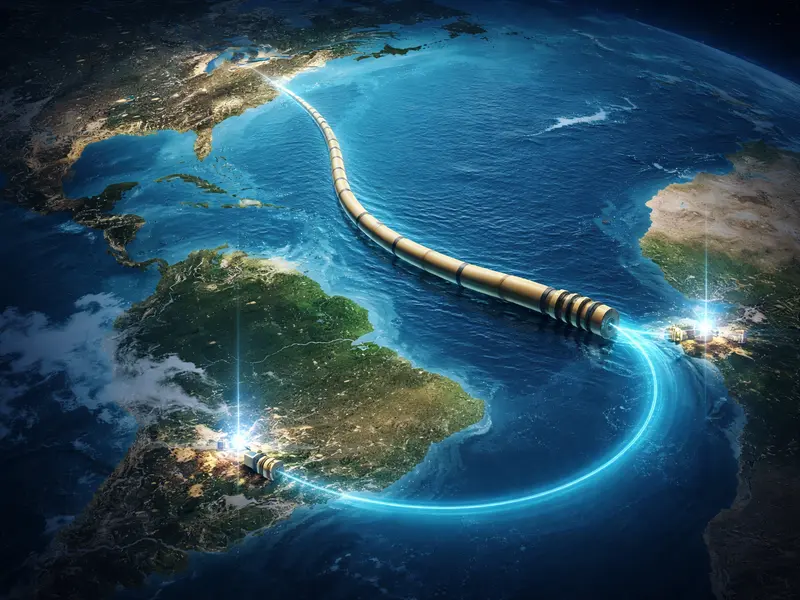
V.tal unveils Synapse, a 9,700 km submarine cable to link the US and Brazil, boosting cloud and AI data flows.
Public-source signals support medium-impact monitoring for infrastructure visibility and dependency analysis.
Several public sources
- Synapse will span ~9,700 km with 16 fibre pairs and support up to 800 Gbps circuits, targeting hyperscale, cloud and AI traffic growth.
- The project will include branching options to cities such as Fortaleza and direct links to major data hubs like Tecto’s Mega Lobster facility.
What happened: New subsea route to meet accelerating demand in west hemisphere
Brazilian digital infrastructure provider V.tal has announced a new international submarine cable system called Synapse that will connect Tuckerton, New Jersey, in the United States with São Paulo, Brazil. The announcement came on 21 January 2026 at the Pacific Telecommunications Council (PTC) event. Spanning roughly 9,700 kilometres and built with Space Division Multiplexing (SDM) and open cable architecture, the system is designed to support up to 800 Gbps transport services and feature 16 fibre pairs.
V.tal said Synapse responds to accelerating demand for capacity from hyperscalers, cloud providers and content platforms driven by artificial intelligence and data-intensive workloads. The cable will land at Praia Grande in Brazil and connect to São Paulo via terrestrial fibre, with planned expansions to Recife, Salvador, Rio de Janeiro and Colombia. A branching unit near Fortaleza will extend the system by ~460 km to link directly with Tecto’s 20 MW Mega Lobster data centre, reinforcing that city’s role as an international connectivity hub.
Construction is slated to begin in the second half of 2026, with service expected between 2029 and 2030.
Also Read: Synapse collapse triggers $160M crisis, BaaS model questioned
Also Read: US FTC to Review Big Tech Talent Acquisition Deals
Why it’s important
Synapse represents a significant expansion of trans-Americas data infrastructure at a time when robust cross-border digital links are commercially strategic. Brazil previously relied on systems such as the Seabras-1 cable linking New York and São Paulo, the first express route connecting the two economies in 2016. With AI and cloud services intensifying data flows between North and South America, new capacity and resilience are commercially and technically vital.
Financially, improved intercontinental connectivity supports higher-value cloud and content business, reduces latency for enterprise customers, and enhances competition among carriers and data centre operators. According to industry analysts, investments in subsea systems are increasingly tied to hyperscale operators’ growth strategies, with capacity often pre-sold to large tech firms to de-risk build-out costs.
For Latin America’s digital ecosystem, Synapse could reduce latency and network congestion, broaden access to US-based cloud platforms, and help position cities like Fortaleza as regional interconnection hubs. As noted by global telecom commentators, strengthening such digital arteries is critical for economic digitalisation and can attract further cloud and AI-driven enterprise investment.
Signal Brief
- Signal: V.tal unveils Synapse US–Brazil submarine cable Scheme
- Signal Type: Internet Infrastructure Institution
- Region: North America
- Market Class: Cloud Service
Operating Surface
- Published sources should identify the affected parties, operating surface, and market exposure before this trend map is treated as complete.
Market Context
- Public-source signals support medium-impact monitoring for infrastructure visibility and dependency analysis.
- Operational relevance: Medium
- Time Horizon: Next quarter
What To Watch
- Watch for official statements, regulatory updates, customer or partner exposure, and follow-up disclosures.
Member Briefing
Deeper Trend Context
Sign in with the right membership level to unlock the full briefing and source notes.
Only for Strategic Circle
Strategic Circle
Open to all readers. Unlock trend briefings after joining and signing in.
Join Strategic CircleOnly for Leadership Alliance
Leadership Alliance
For operators, investors, and policy teams that need relationship evidence, failure paths, and source notes. Sign in to unlock.
Join Leadership Alliance