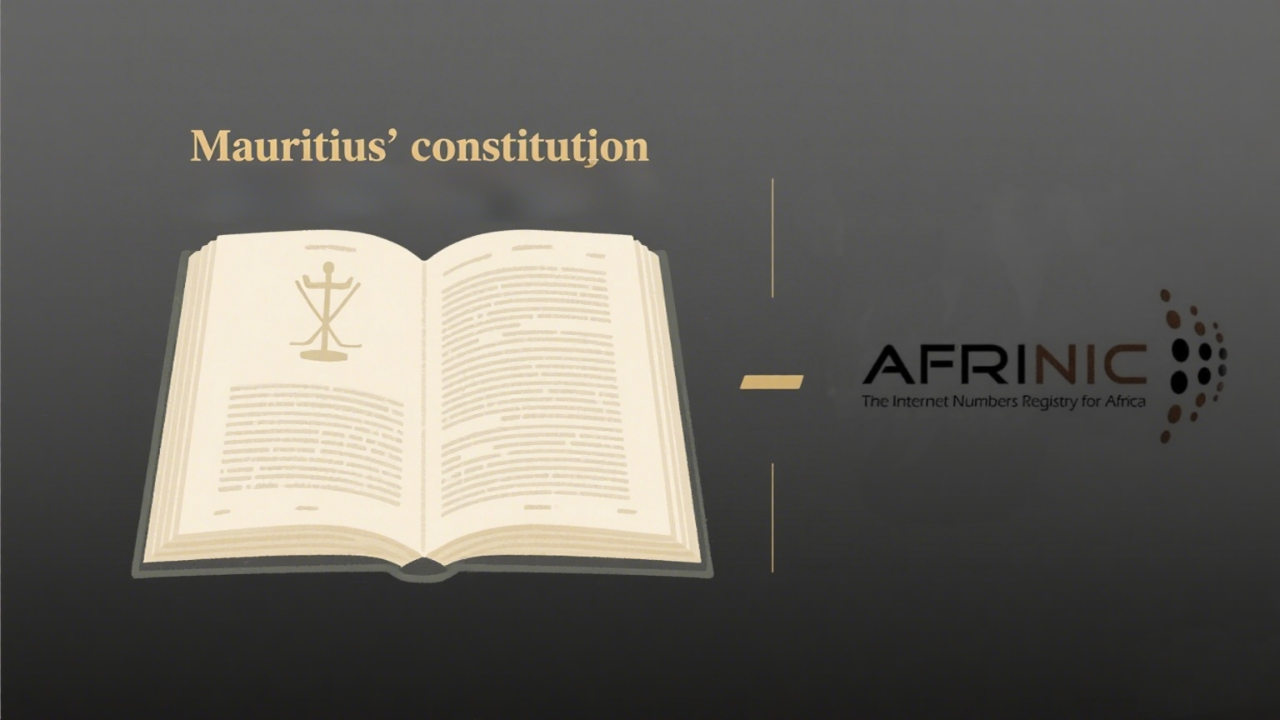
The link between constitutional reform in Mauritius and AFRINIC’s election fairness is tracked as a internet infrastructure institution within the internet infrastructure ecosystem.
The link between constitutional reform in Mauritius and AFRINIC’s election fairness has public-source relevance to network operations, governance, dependency mapping, or market structure.
The link between constitutional reform in Mauritius and AFRINIC’s election fairness has public-source relevance to network operations, governance, dependency mapping, or market structure.
The link between constitutional reform in Mauritius and AFRINIC’s election fairness is tracked as a internet infrastructure institution within the internet infrastructure ecosystem.
Public-source signals support medium-impact monitoring for infrastructure visibility and dependency analysis.
Public-source signals support medium-impact monitoring for infrastructure visibility and dependency analysis.
| 0.90–1.00 | A | High — direct sources |
| 0.75–0.89 | A/B | Strong |
| 0.55–0.74 | B/C | Medium |
| 0.35–0.54 | C/D | Weak–medium |
| 0.10–0.34 | D | Weak signal |
| 0.00–0.09 | D | Internal monitoring |
Several public sources
- Mauritius government intervention undermines court-approved AFRINIC elections.
- AFRINIC’s governance failure risks Africa’s internet autonomy.
The constitutional crisis and its impact on AFRINIC
Mauritius’ government has tried to overrule judicial decisions that approved AFRINIC’s election process. This challenges the independence of the courts and sets a worrying precedent for governance. Such actions threaten the fairness of AFRINIC’s operations, especially as it manages crucial internet resources for Africa.
The government’s intervention complicates an already troubled election process. AFRINIC’s electoral system has been criticised for lack of transparency. The recent annulment of an election, over an “unverified proxy dispute,” highlights serious flaws. Valid votes were discarded, eroding trust in AFRINIC’s ability to manage Africa’s digital infrastructure.
Also read: AFRINIC election: Voter fraud uncovered as ECom member threatens to resign
AFRINIC’s failures and the future of Africa’s digital resources
AFRINIC’s failure to hold fair and transparent elections endangers Africa’s digital future. Africa’s internet ecosystem relies on stable management of IP addresses. Yet, AFRINIC’s governance issues jeopardise this critical resource. Stakeholders are growing concerned about AFRINIC’s ability to maintain control over the continent’s connectivity.
Cloud Innovation Ltd., AFRINIC’s third-largest member, has called for reform. They have demanded AFRINIC’s dissolution, claiming its governance system is beyond repair. Cloud Innovation also urges ICANN and the NRO to appoint a new Regional Internet Registry (RIR) to ensure Africa’s IP resources are managed effectively. This urgent call for action highlights the need to safeguard Africa’s digital infrastructure.
Also read: AFRINIC and the risk of disputed elections in a weak legal framework
The urgent need for reform
The Mauritius crisis and AFRINIC’s governance failures highlight the need for immediate reform. Without effective governance, Africa’s internet autonomy is at risk. The region needs control over its digital resources, especially as demand for IP addresses rises globally, driven by AI and cloud services.
Reform is critical to restoring stability. Cloud Innovation and others push for AFRINIC’s dissolution and a new, transparent governance system. ICANN’s statement on governance transparency emphasises the need for regional autonomy. The Mauritius Supreme Court ruling further exposes the ongoing legal challenges that undermine AFRINIC’s credibility.
Also read: AFRINIC’s electoral integrity depends on Mauritius’ rule of law
Domain of operation
The link between constitutional reform in Mauritius and AFRINIC’s election fairness is profiled by BTW Media because published evidence links it to internet infrastructure, governance, operational dependencies, or market visibility.
- Public role: The link between constitutional reform in Mauritius and AFRINIC’s election fairness is framed by the link between constitutional reform in mauritius and afrinic’s election fairness is tracked as a internet infrastructure institution within the internet infrastructure ecosystem. and public governance context. Evidence basis: The link between constitutional reform in Mauritius and AFRINIC’s election fairness article record; The link between constitutional reform in Mauritius and AFRINIC’s election fairness article record
- Operating surface: Governance and Africa provide the public context for this institution profile. Evidence basis: The link between constitutional reform in Mauritius and AFRINIC’s election fairness article record; The link between constitutional reform in Mauritius and AFRINIC’s election fairness article record
Timeline
- The link between constitutional reform in Mauritius and AFRINIC’s election fairness public profile updated
Public coverage records The link between constitutional reform in Mauritius and AFRINIC’s election fairness as a subject for role, operating context, and evidence review.
At A Glance
- Name: The link between constitutional reform in Mauritius and AFRINIC’s election fairness
- Type: Internet infrastructure institution
- Base: Africa
- Profile focus: Institution
What It Does
- Public records support monitoring of its role, services, and key relationships.
Why it matters
- Public-source signals support medium-impact monitoring for infrastructure visibility and dependency analysis.
- Operational criticality: Medium
- Time Horizon: Next quarter
What To Watch
- Monitoring focuses on verified service continuity, governance changes, and relationship signals.
Track verified source updates, role changes, and current public evidence.
Public-source signals support medium-impact monitoring for infrastructure visibility and dependency analysis.
Longer-term relevance depends on verified operating, policy, and relationship changes.
Member Briefing
Deeper Profile Context
Sign in to unlock the full profile briefing and source notes.
Only for Strategic Circle
Strategic Circle
Open to all readers. Unlock profile briefings after joining and signing in.
Join Strategic CircleOnly for Leadership Alliance
Leadership Alliance
For qualified IP-asset owners and management; sign in to unlock alliance briefings.
Join Leadership AlliancePublic View
The public read of The link between constitutional reform in Mauritius and AFRINIC’s election fairness is limited to visible role, operating context, and relationship evidence.
Watchpoints
- New public role, affiliation, product, policy, or market disclosures.
- Verified relationship changes involving named organizations or people.
Caveats
- Private or unverified claims are excluded from this public view.
FAQ
Why is The link between constitutional reform in Mauritius and AFRINIC’s election fairness included?
The link between constitutional reform in Mauritius and AFRINIC’s election fairness has public evidence that makes the institution relevant to BTW's coverage of digital infrastructure, governance, or markets.
What is public about this profile?
The public layer covers visible role, operating context, linked organizations, and evidence-backed watchpoints.
What should readers watch next?
Readers should watch for source-backed role changes, new partnerships, regulatory exposure, operating expansion, or evidence that changes the public assessment.