
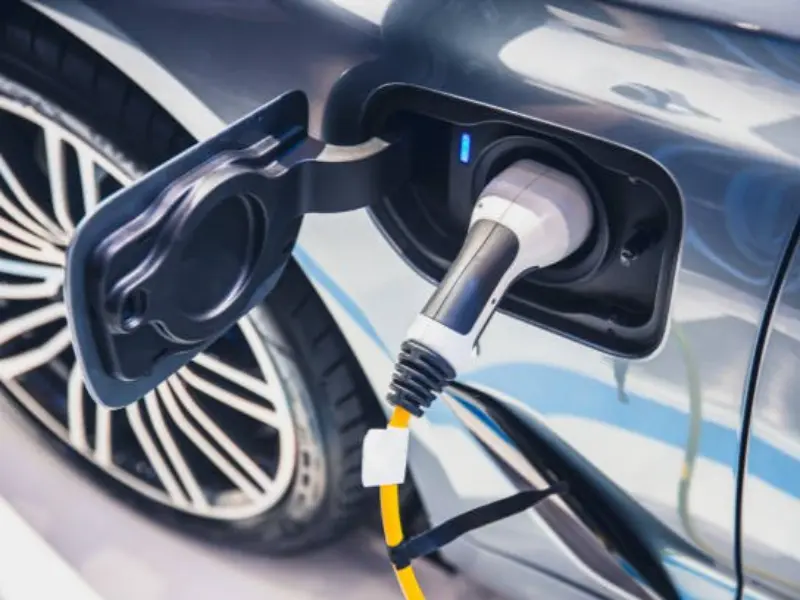
- DC chargers are significantly faster and ideal for quick top-ups during long trips, while AC chargers are slower but perfect for overnight home charging.
- DC chargers are more expensive and require complex infrastructure, whereas AC chargers are cheaper and simpler to install, making them common in residential settings.
As electric vehicles (EVs) become more mainstream, understanding the different types of chargers available is crucial for owners and prospective buyers. The two main types of EV chargers are AC (Alternating Current) and DC (Direct Current) chargers. Each type has its unique advantages and ideal use cases. This blog will explore these two types of chargers, highlighting their differences and helping you decide which one suits your needs best.
What are AC and DC chargers?
1. AC Chargers: The Home Charging Solution AC chargers are the most common type of EV charger, typically used for home charging and found in many public charging stations. These chargers provide power in the form of alternating current, which is the standard form of electricity supplied to homes and businesses.
When using an AC charger, the power is converted to direct current (DC) by the vehicle’s onboard charger, which then charges the battery. This conversion process is relatively slow, making AC chargers ideal for situations where the vehicle can be left to charge for several hours, such as overnight at home or during the workday.
For example, a typical Level 2 AC charger can add about 20-30 miles of range per hour of charging, depending on the vehicle’s efficiency and the charger’s power output.
2. DC Chargers: The Fast Charging Option DC chargers, also known as fast chargers, provide direct current directly to the vehicle’s battery, bypassing the need for the onboard charger to convert the power. This allows for much faster charging speeds compared to AC chargers.
DC chargers are commonly found in locations where quick charging is essential, such as along highways and in commercial areas. They can add significant range in a short amount of time, making them perfect for long trips where stopping for an extended period is not feasible.
For instance, a DC fast charger can charge an EV from 20% to 80% in about 20-40 minutes, depending on the vehicle and charger specifications.
Also read: The 5 biggest EV charging companies
Also read: Understanding charging networks: An overview
5 key differences between AC and DC chargers
1. Charging Speed
AC Chargers: Generally slower, adding about 20-30 miles of range per hour. Suitable for overnight or extended charging sessions.
DC Chargers: Much faster, capable of adding 100-200 miles of range in about 30 minutes. Ideal for quick top-ups during long journeys.
2. Use Cases
AC Chargers: Best for home charging and locations where vehicles will be parked for several hours. Commonly found in residential areas and workplaces.
DC Chargers: Designed for rapid charging needs, commonly located along highways, at service stations, and in busy urban areas. Perfect for long-distance travel and quick stops.
3. Cost
AC Chargers: Cheaper to purchase and install, making them a popular choice for personal and residential use.
DC Chargers: More expensive due to their advanced technology and faster charging capabilities. Often installed by businesses and in public charging networks.
4. Infrastructure Requirements
AC Chargers: Require standard electrical infrastructure, similar to other household appliances, making installation straightforward and affordable.
DC Chargers: Require more complex infrastructure, including high-voltage connections and advanced cooling systems. Installation is more involved and costly.
5. Power Conversion
AC Chargers: Power conversion occurs within the vehicle’s onboard charger, which limits the charging speed.
DC Chargers: Power is converted outside the vehicle, allowing direct delivery of high-voltage power to the battery for faster charging.